Deborah Pearson

1996

Originally written for the Guardian.

Deborah Pearson wants to talk about white privilege – a desire the writer and performer recognises is a huge privilege in itself. For people of colour, she suggests, there is an expectation to be conscious of race relations, whereas “if you are white then you can not think about it, and not talk about it, and nobody will necessarily call you out on that”.

In her show at the Yard theatre in London, Made Visible, Pearson makes the choice to discuss these issues. The show is influenced by Peggy McIntosh’s 1988 essay White Privilege: Unpacking the Invisible Knapsack, which lists 50 everyday examples of white privilege (No. 21: “I am never asked to speak for all the people of my racial group”; No. 32: “My culture gives me little fear about ignoring the perspectives and powers of people of other races”). Made Visible similarly reveals some of the ways in which invisible systems confer privilege on some at the expense of others.

“I don’t know if I really know how to talk about this,” Pearson admits. With the show, she is anxious to join ongoing conversations about racism and privilege in a way that is “productive and useful”, without replicating the same power structures she’s critiquing by taking over the debate. The show stages a conversation between three women – one white, two of Gujarati heritage – sitting on a bench in Victoria Park, east London. The conversation is undercut by interjections that expose the workings of privilege and debate the politics of representation. “The actors swap characters quite a lot and they are constantly complaining about particular forms of appropriation,” Pearson explains. One of the performers, for example, protests against the sari her character is forced to wear, calling out lazy representations of Indian culture. “So it becomes this meta-commentary on the consequences of a white writer approaching this kind of material,” says Pearson.

With its actors frequently disrupting the scene and addressing the audience, the play draws attention to the problematic assumptions we are all too used to seeing on stage, setting up racial and cultural stereotypes in order to undermine and question them. It’s deliberately messy – much like the complex conversations it is responding to. “It needs to be less tidy,” says Pearson, who is still making final tweaks to the script when we speak. “It needs to let the white character off the hook a little bit less.”

The difficult balance for Pearson in the process of writing Made Visible has been between unpacking her own privilege and giving room to other, non-white voices. “There was a draft of the piece where I just gave over the entire ending to different theorists of colour,” she says. “That was really dry and theatrically it didn’t work, but conceptually I know why that’s what I wanted to do, because it’s about using my privilege to amplify other voices.”

While attempts to address racism often focus on political and social institutions, Pearson is clear that “culture is not blameless in this”. If anything, she adds, culture has to answer for the dominant white narratives it reproduces. “I think that as people who work in culture, albeit a very small fringe area of culture, we have to be aware of the fact that we contribute hugely to this discourse,” she says.

These are issues for theatre to confront as a sector. Despite numerous diversity drives, theatre organisations remain overwhelmingly white. Last year the Warwick commission found that black, Asian and minority ethnic (BAME) workers represent only 6.7% of the workforce in music and performing and visual arts, while Arts Council England reported that 13.7% of those working in its national portfolio organisations in 2014-15 were BAME. “The fact that so few of the people who work professionally in theatre aren’t white is not an issue for people of colour to deal with – that’s an issue for all of us,” says Pearson. “As a white person who’s working in theatre, you have to think about it really carefully and just be aware of the choices that you make in terms of what you see, what you curate, which voices you’re paying attention to.”

In response to racially motivated hate crimes and police violence, novelist Marlon James has argued that being non-racist is not enough. “We need to stop being non and start being anti,” he insists. Pearson agrees that in an unjust, unequal society, staying silent is not an option.

“The easy thing for white people to do is to not talk about it,” says Pearson. “If we don’t talk about it we don’t risk being criticised. But at the same time, if you don’t talk about it then you are complicit in enabling that power structure to continue.”

Photo: Ian Willms.

Comeback Special, Shoreditch Town Hall

Comeback-Special-Greg-Wohead-1-please-credit-Manuel-Vason-600x422

Originally written for Exeunt.

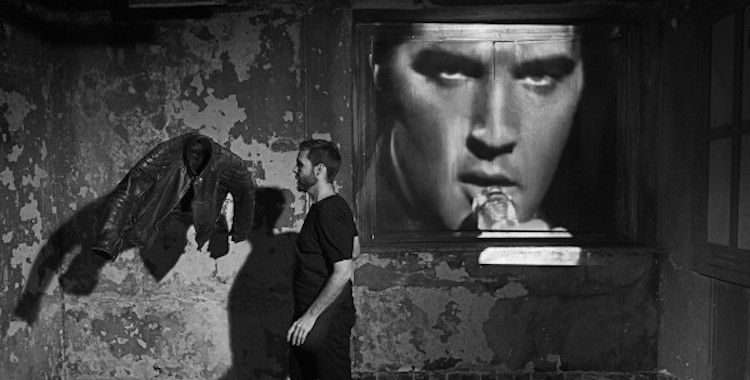
1968, Burbank, California. Six years after his last number one single, Elvis Presley records an intimate television concert surrounded on all sides by screaming fans.

2016, Shoreditch Town Hall, London. Greg Wohead re-enacts the television broadcast, now known as the 1968 Comeback Special. Well, sort of re-enacts it.

In The Ted Bundy Project, Wohead dissected our morbid fascination with violent figures and his own disturbing attraction to serial killer Ted Bundy’s confession tapes.Comeback Specialonce again unravels the fabric of fascination, though this time it’s the famous rather than the infamous under the microscope. What makes an icon, a King? And what might happen if we try, briefly, to bring him back?

Wohead arranges the audience on four sides of a raised square stage in Shoreditch Town Hall, mirroring the layout of the Burbank studio. Chairs and a microphone stand are placed just so. It’s a perfect reconstruction in some ways, deliberately imperfect in others. Drained of the bright, synthetic colour of 1960s fashion, Wohead’s version is a shadow or skeleton of the original event. Recreated in monochrome, this is a black-and-white negative of the 1968 Comeback Special. An echo. A ghost.

The whole event is, supposedly, about authenticity. “I want you to see who I really am,” says Wohead/Elvis in a seductive drawl. That was the whole point of the television broadcast: to offer fans a glimpse of Elvis the man as well as Elvis the star. The King and his musicians jam together, while Elvis talks to the audience between songs. Yet at the same time, as Wohead tells us, this was all carefully constructed: the television show was pre-recorded and released in multiple different versions. How is it even possible to recreate something that exists under myriad guises?

Wohead builds his re-enactment slowly, in careful layers. At first, the dynamism of the gig is rendered oddly static. Everything is told, not shown: Elvis’s appearance, the layout of the television studio, the position of the cameras, the clothes worn by the fans. Wohead talks us through every last detail of the recording, the meticulous description juxtaposed with a complete refusal to imitate. “You can see that my hair is black, obviously,” says Wohead, looking at us through his mousy mop. Even the lyrics are spoken, deadpan, rather than sung.

And then gradually, bit by bit, Wohead takes on aspects of Elvis’s physicality. A curling lip. A thrusting hip. Then, later, that distinctive voice. That unmistakeable “uh-huh”. Wohead’s is a fragmented impersonation, isolating individual elements of Elvis’s performance. He works like a forensic scientist, as if in search of some elusive essence. Is it in the voice? The recognisable quiff of hair? Those hips?

But meaning resides as much with the audience – the audience then, in the television studio, and the audience now, in Shoreditch Town Hall – as it does with either Elvis or Wohead. Attention is drawn to the ways in which individual spectators cherish moments of eye contact or precious souvenirs: a sweat-soaked handkerchief or a piece of lint plucked from Elvis’s cheek. A good chunk of the show is dedicated to recreating one small moment of interaction between Elvis, the audience and one of his band members, Wohead building the encounter piece by tiny piece with the help of the audience.

The choice of re-enactment also feels crucial. The 1968 Comeback Special is the scene of Elvis’s career resuscitation. But it is also, perhaps, the moment everyone realised for the first time that he was human and fragile and as vulnerable to time and age as the rest of us mere mortals. This is not Elvis as he was in the years before his death – fat, drug-addled, washed-up – but he is no longer quite the untouchable young man he once was. He is, as Wohead puts it, “caught between”.

Scrolling through YouTube the day after watching the show, there’s something hypnotic about the videos of the 1968 Comeback Special. It’s the way the whole event flirts with failure: Elvis interrupts his own songs, jokes about forgetting the lyrics, laughs in a way that is at once exposed and in control. This is not Elvis at the height of his powers. And the footage of the television show itself, when it finally appears in Wohead’s performance, seems flimsy and thin, projected onto translucent cloths hanging behind the four sides of the stage. The King is little more than a flickering image, fleeting and insubstantial.

Photo: Manuel Vason.

Cressida Brown

Cressida-Brown-2-700x455

Originally written for The Stage.

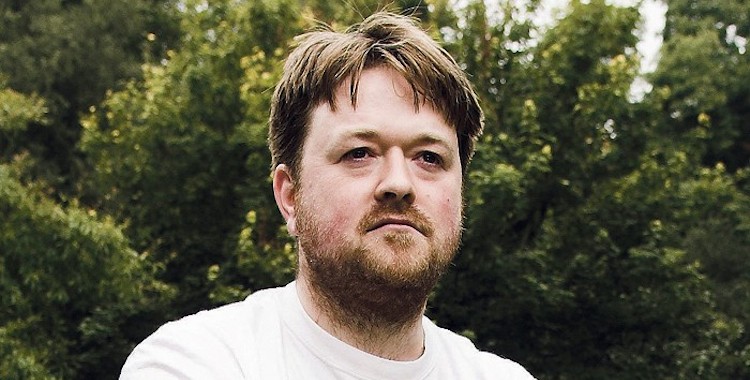
Not many directors start their career with an ambitious site-specific project that generates headlines. Cressida Brown made an immediate impression 10 years ago with Home, a show set in one of the tower blocks of Leyton’s Beaumont Estate and based on the stories shared by its residents. It was, she suggests, an extraordinary fluke. “I didn’t even realise that I was a director until someone told me,” she remembers.

At the time, Brown was training as an actor at Central School of Speech and Drama. Wanting to do a site-specific version of an Edward Bond play during her Christmas holidays, she spoke to someone at the local council about available spaces and was pointed towards the Beaumont Estate – then in the process of being emptied ready for demolition.

“He said, ‘We have these three tower blocks and they’re being emptied’, and I said, ‘Great, can I go in there with a Bond play?’. He said, ‘We have enough violence on that estate, why don’t you interview the people who are leaving and create a play with their words?’. So actually it was somebody else’s idea that set me on the path for my whole life.”

Read the rest of the interview.

Gary Owen

GaryOwen-by-kirstenmcternan-43-700x455

Originally written for The Stage.

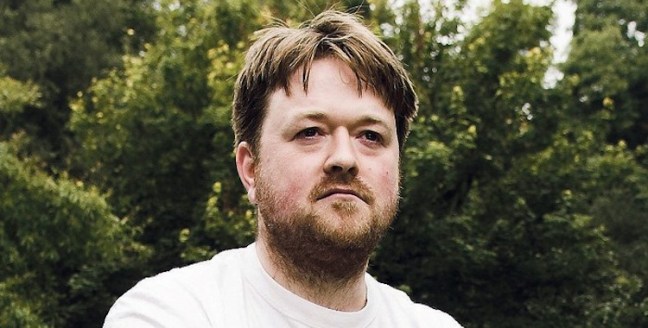
A certain philosophy characterises Gary Owen’s work as a playwright, in which complexity of subject matter is married to simplicity and clarity of storytelling. “There’s something very simple about someone standing on a stage telling you a story,” he says. In one-person shows such as Iphigenia in Splott or collections of monologues such as Crazy Gary’s Mobile Disco, characters simply address the audience and share their experiences. Directness and narrative are key.

Owen never intended to be a playwright. Growing up in rural west Wales, he hadn’t even seen much theatre in his youth – he describes his theatrical education as “very minimal”. But when plans for a career in academia began to founder, Owen found himself in Aberystwyth, where he fell in with a group of actors who persuaded him to write a play for them. That play turned into Crazy Gary’s Mobile Disco, which – via a long chain of readers – ended up on the desk of Vicky Featherstone at Paines Plough.

“To my extreme good luck it arrived when a couple of their commissioned plays were late arriving,” Owen remembers. “She decided to do it not having met me, which is probably something she’ll never do again. But it worked out well for me.” The play toured, Owen became writer-in-residence at Paines Plough, and Featherstone immediately commissioned him to write another play.

Read the rest of the interview.

Photo: Kirsten McTernan.

Access all areas

1093

Originally written for the Guardian.

Captioned and signed performances have become common in theatre, with BSL interpreters and LED displays a familiar presence at the side of the stage. But theatres are increasingly making their work accessible for deaf and disabled audiences in a more creative, integrated fashion and are placing issues of access right at the heart of their design.

Graeae theatre company’s touring production of Jack Thorne’s play The Solid Life of Sugar Water, which arrives at the National Theatre in London this week, imaginatively incorporates live captioning at all of its performances. Birmingham Rep, meanwhile, is preparing to open a new version of Nikolai Gogol’s The Government Inspector with an integrated cast of deaf, disabled and able-bodied performers. Rather than being hidden away, the latter show’s audio describer and sign language interpreters will be incorporated as characters within the world of the play and have been involved in the production right from the start.

Roxana Silbert, artistic director of Birmingham Rep, is enthusiastic about the ways in which creative access can open up aspects of Gogol’s play. “Sign language is great for The Government Inspector,” she says, “because there are a lot of secrets and lies in the play and a lot of people who are saying things that other people don’t understand. So having that second language enhances what the play is already trying to do.”

The show’s aesthetic has been affected in more subtle ways by the access needs of its performers. “Once you start looking at it from the actors’ point of view and what they need to make the stage work for them, actually what it does is make the stage a really interesting place,” Silbert says. The set for The Government Inspector suggests the lobby of a hotel, with various levels accessed by ramps and a lift as well as stairways and ladders.

Graeae has championed disabled artists and accessibility since it was founded in 1980. Those decades of work are now informing new initiatives aimed at improving access and widening opportunities for disabled artists across the sector. One of these is Ramps on the Moon, a collaborative network of theatres being funded by Arts Council England and supported by Graeae to create three new pieces of touring theatre that put disabled artists and audiences at their heart. The Government Inspector is the first of these.

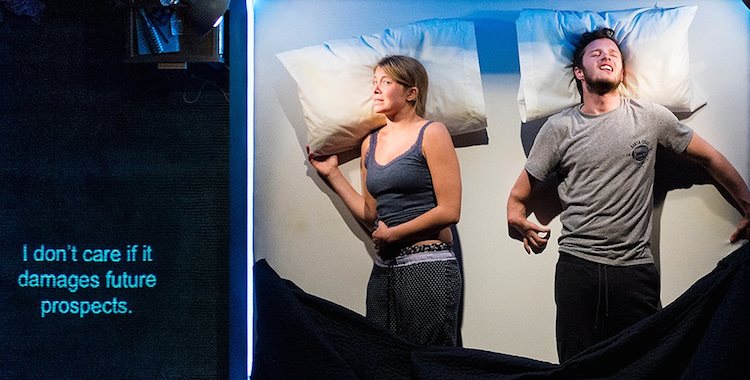
Graeae’s Amit Sharma, the director of The Solid Life of Sugar Water, is also interested in how access can be incorporated in ways that speak to the themes of the piece. Thorne’s play tells the story of a couple attempting to overcome grief and regain intimacy. The whole show is set in the protagonists’ bedroom and takes an incredibly candid approach to relationships, sex and the difficulty of communication.

“Because of the nature of the text and it being very explicit in how it’s describing certain sexual acts, I made the decision very early on of not using British Sign Language,” says Sharma. Instead, captions are projected on to the bed that the two characters share, which the audience see as if from above. “When we were working with the set and the elements of access … we always said there are three characters in the play: there are the actors and there’s the bedroom,” he says, stressing the importance of the design. The prominence of the captioning in this intimate shared space highlights the play’s themes of communication – and lack of it. As Sharma puts it, “to have those words spelt out gives it an extra meaning, an extra layer”.

Within the play, references to the specific disabilities of the performers are incidental rather than integral. “We just went for the actors who felt right for the roles,” says Sharma. After Genevieve Barr and Arthur Hughes had been cast, Thorne made small changes to the script to refer in passing to Barr’s deafness and Hughes’s arm impairment – details that are always secondary within the narrative. “Disability is irrelevant,” Sharma says. “It’s the story that matters.”

The Solid Life of Sugar Water was staged at the Edinburgh festival last summer where it was one of many shows representing a game-changing year for disabled artists at the fringe. It prompted audiences and theatre-makers to think about accessibility in different ways. This kind of work, however, requires support. In addition to the backing of the Arts Council, which has awarded £2.3 million of funding to Ramps on the Moon, Silbert stresses the importance of safeguarding schemes such asAccess to Work. “It is about performers who have specific requirements being able to get the Access to Work support they need,” she says. “That’s where the problem is going to lie, not in theatre funding.”

Photo: Patrick Baldwin