“There’s nothing I can do in my life to compensate for the fact that the world would be better without me in it,” says Duncan Macmillan, smiling over his coffee. It’s a bleak statement, but one that the writer and director explains is grounded in climate science. Each of us in the west, with our hefty carbon footprints, is a drain on the planet’s resources.
When we meet, Macmillan is buried deep in research about the worsening state of the environment. This is all in aid of 2071, a new project for the Royal Court that he is co-writing with climate scientistChris Rapley. For the past six months, the two men have been meeting regularly at University College London, trading their respective expertise in an attempt to bring climate change centre stage.
Directed by Katie Mitchell, 2071 follows her 2012 show Ten Billion, in which scientist Stephen Emmott painted a gloomy picture of our planet’s future. Macmillan tells me that Rapley’s outlook is more complex, challenging our understanding of how we affect the environment. “I thought I was concerned and had read well about it,” he says, “but it’s a whole other thing talking to Chris.”
“I sound like a broken record,” Macmillan laughs a moment later, catching himself using the word complicated yet again to describe Rapley’s insights. Conversation with Macmillan is punctuated with these moments of thoughtful, anxious self-awareness. Intense but amiable, he has a tendency to pause mid-thought, picking apart his own statements as soon as he makes them.
It’s a tendency that Macmillan’s plays share. Monster, the play that scooped two awards in the inaugural Bruntwood prize for playwriting, prodded uncomfortably at ideas of responsibility. In Lungs, a conversation about starting a family is folded into concerns about the state of the planet, interlacing the personal and the global. And when approaching George Orwell’s Nineteen Eighty-Four, Macmillan and co-adapter Robert Icke set out to “represent the challenge” of the novel’s ambiguities rather than attempting to solve them.
“I can’t speak for what theatre can or should do, but I know from my perspective I’m interested in complexity,” says Macmillan. “Chris [Rapley] keeps saying, ‘It’s a little bit more complicated than that.’ And I’ve always thought that would be a really good subtitle for any good play.”
The same complexity applies to Macmillan’s career. Increasingly, he has been working in a number of different roles, from co-directing Headlong’s 1984 with Icke to collaborating with Mitchell on her multi-media productions in mainland Europe. One frustration, however, is the pigeonholing impulse of the British theatre industry. “I think there’s a perception that the playwright is someone who writes the spoken text and that everything else is the domain of the director,” says Macmillan, adding that this is not the case with many of his projects.
Not that spoken text doesn’t interest Macmillan any more. He admits that Lungs, for instance, “is essentially just talking”. That play, which is currently on the road with touring company Paines Plough, spans one long conversation over several years. Its agonised back and forth between a couple deciding whether or not to have children was Macmillan’s attempt to wrestle with some of his own anxieties.
“I found myself worrying about these things and I didn’t know the solution,” he says, discussing the “anxiety debt” that his generation has inherited. “Putting characters on stage who talk about those anxieties makes them quite absurd. And they are. It is absurd that you can have a conversation now about whether or not you want to start a family and at the same time you can be talking about the industrial revolution.”
At the same time as travelling the UK, Lungs is also part of the repertoire at the Schaubühne in Berlin, in a German production directed by Mitchell. While the form that Macmillan initially imagined for the play – no sound, no lights, no props – was an attempt to “break out of a certain kind of formal cul-de-sac”, Mitchell’s production finds a new visual metaphor to communicate the narrative. In her version, the two actors are poised throughout on static bikes, powering the stage lights as they pedal.
“What I enjoy most as a theatre-maker and as an audience member is getting my brain to do more than one thing at once,” says Macmillan, pointing to Mitchell’s production of Lungs as one example. Another isEvery Brilliant Thing, which tours alongside Lungs this autumn. In this interactive monologue, misery and ecstasy are two sides of the same coin. The subject might be suicidal depression, but the show itself manages to be joyously life-affirming.
“It’s the least cool piece of theatre ever, in some ways,” says Macmillan. Staged in the round in Paines Plough’s portable Roundabout auditorium, the formal gesture of the show is deliberately democratic, while its message for those struggling with depression is unashamedly heartfelt. “You’re not alone, you’re not weird, you will get through it, and you’ve just got to hold on. That’s a very uncool, unfashionable thing for someone to say, but I really mean it.”
Like so much of Macmillan’s work, Every Brilliant Thing came out of a desire to say something that wasn’t being said. “I didn’t see anyone discussing suicidal depression in a useful or interesting or accurate way,” he says. Similarly, at the time of writing Lungs, he felt that he “wasn’t seeing enough about what it’s like to be alive now”. He positions both of these plays as interventions of a kind, adding with an apologetic smile, “that sounds really grand”.
Theatre at its best is, he says, “incredibly direct and incredibly interventionist”. He talks about Wallace Shawn’s monologue The Fever, which the actor and playwright took into people’s homes to shock them into a crisis of conscience. “I find that really inspiring.”
So is 2071 an intervention? The questions it poses – “What is happening to our planet, and what is our role in that?” – would suggest so. Still, Macmillan insists, it is not quite as simple as issuing a manifesto for saving the planet. As Rapley might say, it’s a bit more complicated than that.
Middle England is revolting. Flower arrangers are building bombs, the Morris dancers have their axes at the ready and the village choir are armed with AK47s. In Rory Mullarkey’s new play, violent overthrow is instigated not on city streets but in provincial church halls. Unlike the urban unrest that Alecky Blythe has attempted to capture over at the Almeida, the Royal Court is staging an altogether more parochial brand of revolution.
On the surface, this vision of OAPs raiding Buckingham Palace and pub quizzers razing the City of London to the ground is deliciously absurd. The idea that cosy rural villages are brimming with hidden discontent is not necessarily new, but there’s still plenty of comic mileage in revealing the violent predilections of hobbyists preparing for armed insurrection. Beneath that very English humour of incongruity, however, is a much trickier play.
At the close of Men in the Cities, Chris Goode poses the implicit, troubling question of whether now is the time for violence. Whether it’s even a question is debateable, but certainly the possibility of violence is powerfully present in the final sequence. Or, in Goode’s words, “fuck ‘em”. Mullarkey’s play imagines that violence into reality, but in ways that vividly, surreally animate its complications. Must a two finger salute to the state be accompanied by machine gun fire?
Lady Catherine, the steely aristocrat spearheading the revolution dreamed up by Mullarkey, certainly thinks so. “This is the only way to start again,” she insists, briskly preparing to smash apart her own privilege. The ever-extraordinary Anna Chancellor inhabits the role as only she can, somehow blending cool, wry disdain with an incendiary – yet always dignified – passion for radical change.
The play follows Catherine and Leo, her rootless young protégé, as they spark the uprising from coffee mornings, supermarkets and roadside cafes, sending out a flare to community groups across the country. Lady Catherine advocates “the beautiful violence which brings change”, but with seemingly little thought as to what that change might actually be. Equality is the one certainty; everything else is a bit woolly.
This vagueness about the new order is just one of the many facets of Mullarkey’s revolutionary vision that make it far more interesting and problematic than it initially appears. This is no straightforward rebellion. Aside from the absurdity of a-capella groups and historical re-enactors tearing down the halls of government, there is something complicatedly ironic about a society brought down from the top. For all the distrust of hierarchy, it is still the toffs who lead the way.
The leader who is to be installed when these revolutionary elites honourably allow themselves to be liquidated, meanwhile, is an intriguingly blank slate. Leo, a naive yet mysterious figure as played by Calvin Demba, has no job, no home, no family. And like the elusive Messiah figure at the heart of Mike Bartlett’s 13, whose only belief is belief, he is remarkably empty of opinions. This unlikely, semi-Biblical saviour, paired with the surprising source of the play’s revolutionary fervour, seems almost to skewer the whole possibility of violent overthrow.
To complicate matters further, ambivalence around revolutionary violence is built right into the theatrical framework of James Macdonald’s production. Not so much as a drop of blood is spilled on stage all evening, as visceral brutality is replaced with the cool, distanced reading of stage directions (“he chops his head off”; “she shoots her in the head”). In a theatre with such a history of represented violence, it’s a curious choice, and one that immediately raises a question mark over the use of force. It also begs questions of the whole practice of representation on stage, not quite taking a torch to theatrical convention but certainly tearing away at some of its illusions.
Tom Pye’s design is similarly multi-layered and self-aware. There’s a feeling of the community hall about the green plastic chairs and fold-up tables that stand in for all of the play’s locations, flanked by village fete-style white marquees in place of wings. It all beautifully sends up the bunting festooned “Keep Calm and Carry On” aesthetic, without ever being too smug about it. I’m less convinced, however, by the large screen at the back of the stage, onto which is projected scene numbers and images to indicate the setting at any given time. It adds to both the strangeness and constructedness of the drama, but to uncertain effect.
Uncertainty is a lingering sensation throughout The Wolf from the Door. Take the relationship between Catherine and Leo. At one level, their dynamic embeds a crucial question about the efficacy of individual care and action versus the greater ambitions of ideological and systemic change. Or, to put it another way, what use is revolution without compassion? But this central pairing is also trying to do something else, culminating in a lacklustre and surprisingly sentimental couple of closing scenes which frustratingly undercut much of what has gone before.
For all its wonkiness, however, there’s something compelling and oddly galvanising about this peculiar allegorical drama. It also features some truly stunning scenes, the standout among these being a one-sided exchange between a mini-cab driver and passengers Catherine and Leo, which is a blackly comic combination of the mundane and Beckettian. From the bleak patter of the writing to the precise rhythms of Pearce Quigley’s delivery, it is exquisitely excruciating. And perhaps it’s here, in presenting the indignity of this everyday despair, that the play’s real politics reside.
“How can we grow old being valued and respected?” asks David Slater, artistic director of participatory arts company Entelechy Arts. In a country with an ageing population, this is an issue that is set to become ever more urgent.
Home Sweet Home, the new community project that Entelechy has produced in collaboration with Freedom Studios, hopes to begin answering just that question. It takes an honest look at the realities of getting old, discarding media stereotypes and talking to older people themselves about the experience of ageing.
“We wanted to find out about what the experience of being older in contemporary Britain is and how we might interpret that as artists,” explains Deborah Dickinson, creative producer at Freedom Studios in Bradford. The company had previous experience of participatory work from 2011 production The Mill – City of Dreams, but turned to Deptford-based Entelechy Arts for their expertise in working with older people.
While a show was always the intended end point of this partnership, process was just as important as product. Over two years, both organisations ran workshops and interviews with older people from their respective cities. It was also vital that writer Emma Adams and director Tom Wright were involved throughout the journey, allowing them to draw from the experiences being gathered.
“They were absolutely critical in informing the way that we made the piece of work,” Dickinson says of the project’s many participants. “You always end up compromising to a certain extent, but those people’s voices are very much there in the writing.” With work of this nature, there is a question around who really has ownership over the material. Slater admits that “it’s a delicate line to tread,” but one that he believes Home Sweet Home has succeeded in doing.
One priority was to challenge popular perceptions of old age. “A lot of it is to do with the way that other people see you,” says Dickinson, a realisation that led them to adopt the phrase “see the person, not the age”. Slater adds that it was vital to keep the experiences of older people central. “Every other week you pick up a newspaper and you read about the latest crisis to do with neglected older people,” he says. “It’s rarely that you hear their voices at the centre of the discourse.”
For Wright, it was important to bear in mind the potential preconceptions of audiences. “My role has been about imagining myself as that audience member and thinking how can we take them literally by the hand and take them on a journey where they come out the other end having laughed, cried and stamped their feet and dealt with some very difficult issues in a way that was fun and enjoyable.”
The research, which included speaking to academics at Newcastle University and Kings College, London, has also turned up surprises. While many of us think of ageing as an inevitable process, scientists now believe that there is no prescribed way of getting older and that social interaction plays a considerable role in our experience of ageing.
“If we see everybody as a potential agent of change and capable of contributing to society right to the end, then people can carry on being just that for much longer,” explains Wright, adding that the production’s chorus of older community performers are an onstage demonstration of this capability.
81-year-old chorus member Florence Remmer is a perfect example. Explaining that she had always wanted to perform but never had the opportunity, she describes how being involved in the project helped her to engage with the community again after losing her husband. “I never knew anything like that existed,” she says. “It’s opened my eyes.”
The show that has emerged from this two-year process of research and development is designed with older people in mind at every level. As well giving voice to older characters, its staging is intended to be as welcoming and accessible as possible to audiences of all ages. Wright describes it as “a cross between somebody’s living room and the theatre”.
Home Sweet Home will now be performed in both Bradford and Deptford, as well as at ARC in Stockton, which also has an impressive record for including older people in the life of its building. As pensioners make up more and more of the population, this will increasingly become a key consideration for arts centres across the UK.
“The Arts Council has said that they want great art for everyone and I don’t think there is enough work done for the everyone,” suggests Dickinson, referring to both older people and other groups who often feel excluded from theatres. Wright agrees that theatres and arts centres “should be a place for the whole community to come and meet”.
Slater, meanwhile, is unequivocal about the necessity of making work with and for the growing population of older people. “This is something that we have to address as a society. The theatre is one of the places where we’re able to do that.”
“I would like to talk to the capitalists about money, but they only wanted to tell love stories”– René Pollesch
For as long as I’ve been an adult, I’ve been pretty independent. Less in a loud, Destiny’s Child, “throw your hands up” way, more in a quiet, fairly content, getting on with it way. Most of the time, I think I’m OK with the idea of being alone. Yet still there’s this voice socially hardwired into the back of my brain somewhere that periodically shouts “OH HOLY FUCK IF I DON’T SETTLE DOWN SOON I’M GOING TO DIE ALONE SURROUNDED BY CATS”. And no matter how coolly indifferent I think I am to it, I can never completely silence it.
—
There’s a scene in Alice Birch’s brilliant Revolt. She said. Revolt again. which articulates all of my ambivalence about marriage in ways that I hadn’t even articulated to myself before seeing it. In it, a woman responds to her boyfriend’s marriage proposal with meticulous logic, picking apart the ideology knitted around this institution thread by thread. What her boyfriend has actually just said that he wants, she concludes, is to turn her into “a thing to be traded”.*
—
I’m thinking about both of these things as I’m watching Oh, I Can’t Be Bothered, RashDash’s latest show. About that culturally embedded demand to MATE NOW WHILE YOU STILL CAN and about the idea that marriage, this state we’re all taught to aspire to, is essentially about ownership. I’m not particularly comfortable with either idea. No, more than that: as a feminist, I feel I should probably reject both – the voice and the institution.
But it’s not quite as easy as that, as RashDash recognise. Oh, I Can’t Be Bothered is about those conflicting desires to be independent and to be secure; about what we really ask of one another in modern relationships; about whether we should be asking something different, something more. It’s about different kinds of love and how our culture values them. It’s about the idea of “The One” and it’s about every love song you ever heard on the radio.
Bea and Dee are best friends. They love each other. They used to live together, but now Bea has left to live with her boyfriend. Dee misses her. Dee wants her back. Why can’t they just stay together forever?
Representations of female friendship are nothing new, but RashDash dramatically shift the ground on which this one stands. Bea and Dee are no pale imitation of Carrie Bradshaw and her mates in Sex and the City, dissecting relationships over brunch while sporting the latest pair of Manolo Blahniks. RashDash even dare to suggest (*gasp*) that female happiness might rest on more than footwear and fornication. Why do romantic pairings have to be the relationships that define our lives?
There’s something at once bracing, optimistic and sadly resigned about the central suggestion that the two women bind their lives together – not as lovers, but as partners nonetheless. The whole in sickness and in health thing, as Dee puts it. Right from the start, however, it’s clear that this experiment is unlikely to succeed. The hopeful gesture of a new way of relating to one another is balanced by the social and cultural pressures that make it unthinkable. That voice that screams “GET MARRIED OR DIE ALONE”.
RashDash tell this story with a blend of blunt dialogue and striking physicality. In one moment, performers Abbi Greenland and Helen Goalen are rubbing their heads against one another, nuzzling like animals. In the next, they are rolling and jumping, flinging one another around the space. The struggles of their friendship and the pressures of the surrounding world are played out physically, the challenges and disagreements unmistakable in their bodily collisions.
And although the speech exchanged between the two women is sharp and often funny, the most powerful moments play out in the visual and the abstract. In one hilarious yet heartbreaking scene, Greenland yells song lyrics into a microphone (“You’re still the one I run to, the one that I belong to”; “If you’re not the one then why does my hand fit yours this way?”) while Goalen runs blindly and fitfully around the stage, covered in a plastic sheet that is wedding veil, suffocation device and shroud all at once. It’s hard to imagine a more powerful visual metaphor for the stifling demands of romantic love, as shouted out from every love song, every romcom, every thoughtlessly saccharine Valentine’s Day card.
Andy Field and Ira Brand’s put your sweet hand in mind – which I fell giddily head over heels for – was originally born from the desire to make a show about love “in which no one falls in love”. In the end the piece that they made, while it was also about other loves, didn’t quite fit that initial bill. Somehow, somewhere along the line, romantic love crept in. It’s hard to keep out.
In Oh, I Can’t Be Bothered, Dee and Bea make a similar discovery. Turning one’s back on the promise of romantic love and the fiction of “The One” is no small feat. Given that it seeps into every last corner of our culture, it’s unsurprising that we find it so hard to get away from. As Field once put it, “love turns everything into a love story”.
But voicing the desire for a way of living that is not solely constructed around a romantic partner feels important, both in the context of feminism and in the simple sense of how we relate to one another. If we can uncouple our sense of identity and wellbeing from an inward-looking dependence on one other human being, perhaps we can begin to look outwards to each other, our communities, the world we live in. We can take joy in other kinds of love, kinds of love that aren’t bound up in a lucrative commercial package.
At the moment, however, it remains difficult to imagine. If Dee and Bea fail, and if put your sweet hand in mine fails, then the real failure lies with the society that plants that nagging voice in our heads.
*Incidentally, Alice Birch is currently working with RashDash on two new projects, which is very good news indeed.
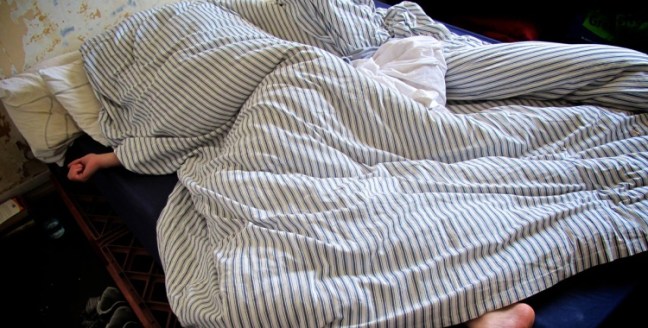
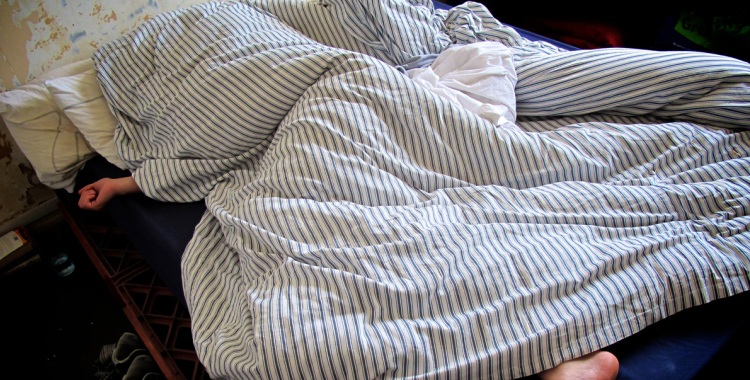
I’m sitting on a cushion, knees drawn protectively to my chest, feet covered by the edges of a massive duvet. In a small room in a block of flats somewhere in Edinburgh, I am listening to James Leadbitter (aka artist-activist the vacuum cleaner) share his experiences of mental illness and activism, while medical assessments and police records flash up on a overhead projector. He talks about depression and anxiety. He talks about being suicidal. And I listen, arms curled around legs, biting the inside of my mouth, tears prickling at my eyes.
—
Ordinarily, I’m not particularly prone to crying – especially in public. So often I emerge dry-eyed from films or shows or exhibitions at which everyone around me is audibly sobbing, feeling oddly shamed by the chorus of sniffles and sighs. Is it that I simply don’t feel as much as them? Or that the public nature of the theatre auditorium or art gallery is too exposing a place to reveal emotion? Or, perhaps, that I feel inhibited as a critic, conscious of my responsibility to be rational rather than emotional?
One piece of criticism that I keep returning to, acknowledging again and again its impact on me, is academic Jennifer Doyle’s reflection on Franko B’s I Miss You. Oddly, it is a piece of art that I never saw. What I’m struck by, though, is Doyle’s emotional response to the piece and her attempts, through this piece of writing, to work through that emotion. The provocation of the unexpected tears elicited by I Miss You expands into a much wider discussion about art, emotion and the position of the critic, who has been encouraged to treat crying with suspicion and disdain.
Two suggestions made by Doyle catch at my mind every time I read them. The first is that, in the space of the gallery or classroom (to which I mentally add the theatre), the act of crying “can leave us feeling a bit naked”. The second is the idea that the impulse of the critic is not unlike “the boundless narcissism of the lover who loves in vain”; that the critical presentation of feeling masked by restraint might be compared with “the lover’s need to have his struggle to hide his feelings acknowledged”. In other words, we can’t admit to naked emotion, but we are desperate for readers to acknowledge the garments in which we have clothed it.
This year at the Edinburgh Fringe, an environment in which emotion is so often heightened and laid bare, I found myself wondering again about the role of emotion in criticism. Not least because my own emotions were frequently tapped in a way that startled me, leaving eyes and cheeks damp to the cool Edinburgh air. Talking to friends and fellow critics, I joked – in that way that everyone knows is not really a joke at all – about what a weepy festival I was having, to the extent that the slightest hint of sentimentality could set me off. No dry eyes now.
But how, as a critic, is it possible to render those tears on the page? Do they contaminate criticism, blurring thoughts like ink on paper, or just offer another lens through which it’s conducted? The answer is … I’m not sure. I have huge admiration for the way in which feeling suffuses the prose of others’ theatre writings – most notably (and brilliantly) Maddy Costa and Megan Vaughan – but it’s a different matter entirely when it comes to tapping out my own emotions on my computer keyboard. I feel far more comfortable with analysis and reflection, whereas I often wince when I see my own feelings held at one remove, suddenly appearing trite and artificial in unforgiving black and white. In a culture saturated with emotion, a culture fed on sob stories and Hollywood romance and X Factor montages, feeling feels cliched.
There’s one section in Ross Sutherland’s Standby for Tape Back-Up that I remember vividly from the work in progress I saw last summer and that jumps out at me again when I see the show for a second time in Edinburgh. Sutherland is recalling the death of his grandfather, a moment in his life that frames the whole piece, and talking about his emotional response. All he can think of as he tries to comprehend the enormity of this loss is the way in which people react to death in films and television programmes. His bereavement is filtered through pop culture, through all of the possible behaviours he has experienced through the screen. It’s a state of emotional uncertainty and paralysis so familiar it hurts. Is this really how I feel, or is this how I’ve been told I should feel?
Another moment that punches me in the stomach with its familiarity and somehow – paradoxically, uncannily – with its unfamiliarity arrives towards the end of Men in the Cities. Chris Goode is telling the story of Brian, just one of the many broken, contorted men who populate his play. Brian is drunk and grieving and heartbroken, walking through the busy streets of London surrounded by the pre-Christmas crush of shoppers. Until suddenly a singing voice breaks through the crowd and the whole piece lurches in a furious new direction. Goode is vomiting an extraordinary stream of text, words that break and fall over me and half of which I don’t really comprehend until I read the script later. In the moment, all I’m aware of is the pure, throbbing, exquisite anger of it all.
People are crying, but this is one of the moments I don’t feel close to tears for a change. Instead I feel emptied out, as though my insides have angrily leapt up on stage with Goode, as though every murmur of rage I’ve ever felt and tuned out has been ear-splittingly amplified. In life, I’m bad at being angry. But like the glorious noise of #TORYCORE, Men in the Cities is angry for me – though not with any of the passivity that suggests. It transforms my anger into something external, something shared. I look at this anger, this hurt that is at once recognisable and alien, and it is nothing like the emotion relentlessly beamed from screens.
—
I don’t cry during Men in the Cities. I do cry during Clara Brennan’s monologue Spine, though less for the human relationship at its core than the intertwining of this very personal story with the play’s angry, energised and tentatively hopeful politics. I leak a quiet couple of tears during Bryony Kimmings’ new work in progress at Forest Fringe. My eyes well up as my heart thumps during Greg Wohead’s small but beautiful Hurtling. Countless other shows lead me to the brink of tears, sometimes with the profound and sometimes with the painfully banal. One morning, I almost cry while queuing to buy coffee, staring hard at a display of croissants until my eyes clear.
Not all those tears are bitter. Sometimes, like in Hurtling, they are little beads of relief and gratitude. But the show that really feels like a gift, that triggers all the right emotions at just the right time, is Every Brilliant Thing. Those occasions when a piece of theatre feels as though it has been created precisely for you to encounter in the particular parcel of time in which you encounter it are rare. Every Brilliant Thing, on one of the few sunny mornings of the festival, is one of those precious occasions.
My response to Duncan Macmillan’s play is hardly unique. The packed audience on the day I see it is all sniffs and smiles; a collective outpouring of joy and anguish. At one point the show uses, I think, the phrase “happy-sad”. It’s a simple contraction of two simple words – so simple that they conjure emotions little more complex than line drawings of faces with the mouth upturned or downturned – yet it’s somehow just right. Every Brilliant Thing is happy-sad, in the same way that so many moments in life are stained with the feeling of their opposite. Ecstasy is laced with sorrow and despair is pierced with hope.
It’s that heady cocktail of all the brilliance and heartache of simply existing in the world that intoxicates me. Sitting in the beautifully sociable space of Paines Plough’s Roundabout auditorium, I laugh and cry with relative decorum, but if left alone I would be heaving great, shoulder-shaking sobs, a stupid grin plastered on my face and tears rolling down my cheeks. There is no way in which Every Brilliant Thing turns away from the realities of depression and the bitter impossibility of making others happy, but still it is somehow joyous.
And so back to the cushion, the duvet, the tears gathering at the corners of my eyes. I find myself profoundly affected by Mental, Leadbitter’s almost-too-intimate show. This is another facet of depression, not entirely shorn of the optimism that tempers Every Brilliant Thing but certainly with more jagged edges. It is raw and painful and personal. At times I find it incredibly hard to watch, in part out of concern for Leadbitter and what he is forcing himself to revisit every time he performs this show, and in part for a hundred tiny other reasons entirely my own. Reflecting on the piece in the minutes, hours and days afterwards, I struggle to think about it in a way that isn’t deeply coloured by that emotion and difficulty. I wonder if that’s a problem.
—
Since returning from Edinburgh, and as part of an ongoing effort to make more time in my life for thought and reflection alongside the endless work I foist on myself, I’ve been listening to some of the conversations that Alex Swift has been recording and uploading to his website (if you have some time, do yourself a favour and check them out). In one, artist Harry Giles talks about how politics feels. It’s not something that usually gets raised (at least not explicitly) in political discourse, which tends to be steeped in ideology or, in the case of party politics, policy and spin. But really, when you stop and think about it, the feelings tied up in politics are what tend to have the most impact on our lives and opinions.
I’m not going to add my voice to the debate about Scottish independence – mainly because, being English, it’s not really my voice that matters. But what is astonishing and exciting about the impending referendum, particularly in recent days, is the way in which it has truly engaged a huge range of people in political discussion and how that political discussion has been vitally inflected by feeling. There is a passionate sense that this really matters. Not only that, but it matters not just in terms of the economic arguments that have dominated headlines; it matters at the level of identity and democracy.
In all thought, be it critical or political (and of course those two things are so often intertwined), emotion contains both danger and potential. Feeling in art has a tendency to be equated – often rightly – with catharsis, escapism and conservative sentimentality. But there is also another kind of catharsis to be found in art, one in which emotion is politically charged and straightforward sentiment is replaced by radical collective feeling. It is this collective feeling which Giles emphasises when he discusses how politics feels. And, though far from all of my tears in Edinburgh were provoked by this kind of emotion, it is a similar collective feeling that the space of the theatre is able to hold. When our bodies tense during Men in the Cities or we cry at the end of Spine, our emotions meet in the room, however fleetingly. We feel together.
—
I’ve now been wrestling with this unwieldy piece of writing for so long that its meandering train of thought is no longer clear to me. I’m not quite sure how I’ve travelled from Jennifer Doyle to tears to the Edinburgh Fringe to the Scottish independence referendum. What I’m clumsily grasping towards is something about emotion, art, criticism and politics; something about how feeling is provoked, experienced, processed and harnessed; something about crying in the theatre and what that really means.
The other night, with complete disregard for my own once again fragile feelings at that precise moment in time, I re-read Men in the Cities. Experiencing it again on the page, a good month after seeing it in Edinburgh and with more space in which to think about it, I was bowled over a second time by just what an extraordinary piece of art it is. It’s fucking stunning. And this time, tears did begin to pool in my eyes. It was these words, directed at the audience, that got me:
“I know. I know. Can we not just put it all down. Aren’t you tired of it all. Aren’t you just tired.”
That’s exactly how it’s written – no question marks. And if I’m remembering the performance correctly, those questions never really felt like questions in the moment either. If they were questions, if it were a genuine invitation to put “it” – anger, violence, hatred, the thousand tiny ways in which we hurt one another – down, then the catharsis would be too complete. It would be a bit of a cop-out, for theatre-maker and audience. Instead, in a world where we can’t (at least not yet) “put it all down”, this possibility is suggested and denied. Emotion is provoked, but never fully released.
—
In lieu of any real conclusion, I leave you all (or, rather, the handful of poor souls who have made it this far) with this, because a) it’s what I’m listening to this afternoon and b) Secret Theatre’s A Series of Increasingly Impossible Acts is the best barometer I know of how I’m feeling each time I revisit it.




 Catherine Love