Opus No 7, Barbican

opus2

If you haven’t seen Opus No 7 and you still have an opportunity to, stop reading now.

Go see it.

There’s not really a plot as such to spoil, but the below will unavoidably outline some of the images that gain so much of their power from surprise. So be warned.

Dmitry Krymov has a talent for making the ordinary appear strange, for transforming the familiar into the singular. Limbs explode from cardboard walls, startlingly divorced from the bodies that own them. Splashes of black paint morph into shadowy figures. A blizzard of newspaper scraps conjures debris one moment and confetti the next. The dead hold hands with the living. The inanimate is given life. Image bursts into reality and reality solidifies into image.

Opus No 7, the designer turned director’s latest production, is a dazzling procession of such transformations. So composed is it of images, the performance does not yield willingly to language. As elusive as it is astonishing, its qualities slip from the critical grasp – shape-shifting, like Krymov’s captivating pictures, just as the mind begins to outline them. This is theatre made for feeling, not thinking.

There is a structure of sorts, though this too is elusive. The first half, Genealogy, yawns with loss. In it, a group of figures sift through fragments of history, clutching at names, photographs, items of clothing. Phoenix-like, they move among the ashes of the past. Though abstract, the scenes allude in their haunting imagery to the Holocaust – but strikingly unshackled from the now familiar visual markers that history has attached to it. In its sudden, surprising evocation of loss, there is something inexplicably moving about a performer walking along a pair of tiny red shoes by their laces, or a cardboard arm suddenly reaching up to take that same performer’s hand.

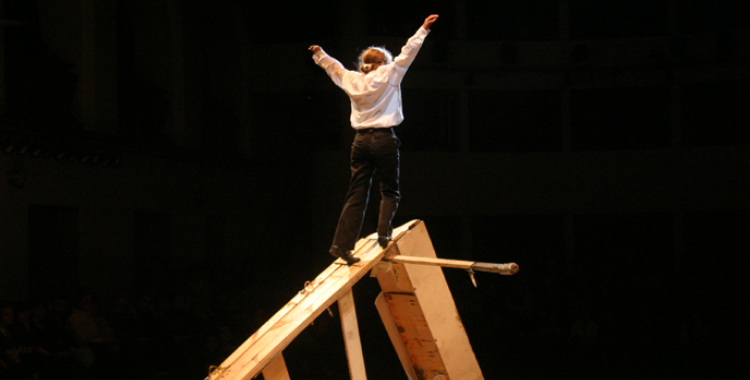
The second half offers us a visual biography of composer Dmitry Shostakovich, who we see first nurtured and then smothered by an oppressive Mother Russia. As a child-like figure at the opening of the act, hugging to Mother Russia’s skirts, the wooden skeleton of a piano is Shostakovich’s climbing frame, his creativity given free and playful rein. But the same power that initially encouraged the composer later ensnares him, pinning a medal on his chest that stabs him through the heart. As Soviet repression and censorship reaches its height, Mother Russia pulls the trigger on her artists and the piano bursts into flame.

opus1

Fittingly, given the subject of the second act, Opus No 7 operates more like music than theatre. It is, for a start, largely wordless. There are echoes and refrains: the chilling tread of an SS officer in the first half becomes the boot of Mother Russia – realised as a huge and often terrifying puppet – in the second. Silence and stillness are juxtaposed with furious flurries of activity, as pitch and tempo both fluctuate. The theatrical crescendo, as rusty pianos invade the stage and crash violently into one another, is powerful as much for the accompaniment of Shostakovich’s “Symphony No 7” as it is for what we see.

And the performance provoked in me the kind of raw, visceral, emotional response that I more readily associate with music – and, interestingly, with visual art – than with theatre. When I walk around a gallery or listen to a piece of music, my reaction (at least my first reaction) is instinctive rather than cerebral. If I really, really love a painting or a sculpture or a song, the feeling it stirs is perhaps best described as an ache; pleasure bruised with just a hint of pain. Opus No 7 leaves behind that same sort of ache.

At one point during the first half, I remember thinking: there’s too much. Not, I should hastily add, in a negative way. At the Barbican, we are seated on the stage of the main theatre, thrillingly close to the action. It is a wide, wide stage. Placed right up close to the performance, it is therefore impossible to take in everything that is happening at one time – the playing space is just too big. The experience of watching, then, is to a degree overwhelming. And I wonder if this is part of its power. Like the aesthetic sublime, it is too much to take in at once, to comprehend as a whole. For that reason, it both awes and captivates.

Watching theatre like this, I’m aware more than ever of the visual poverty of so much of what we see on Britain’s stages. Where, apart from a scattering of bold efforts, is our designer-led theatre? The visual, as Krymov and his team prove, can be just as eloquent as the verbal. Opus No 7 is no less rich for its scarcity of language; ideas, though slippery, still move under its mesmerising surface of unforgettable images. The impact is indescribable, yet indelible.

Photos: Natalia Cheban.

Rock Pool, Discover Children’s Story Centre

Rock Pool DSC_0793 (2)

Inspector Sands had me at “crustacean version of Waiting for Godot“. Theatre for kids that takes Beckett as a reference point arouses curiosity if nothing else. In Rock Pool, Vladimir and Estragon are swapped for Crab and Prawn, two shellfish (almost) out of water. A storm has swept them from their separate homes in the ocean and into the small, evaporating rock pool of the title, where they are stranded in wait for another wave to rescue them. Until then, they are stuck together.

This set-up prepares the ground for classic odd couple comedy, as Crab and Prawn adapt to their new environment and one another. The two performers make a charismatic double act: Giulia Innocenti brash, headstrong and petulant as Crab, while Lucinka Eisler’s nervy Prawn is an altogether more sensible – and occasionally exasperated – presence. Squabbling looks as though as it might turn serious when a ravenous Crab takes knife and fork to her new frenemy, but ultimately (and happily) this is a piece about overcoming differences rather than gobbling them up.

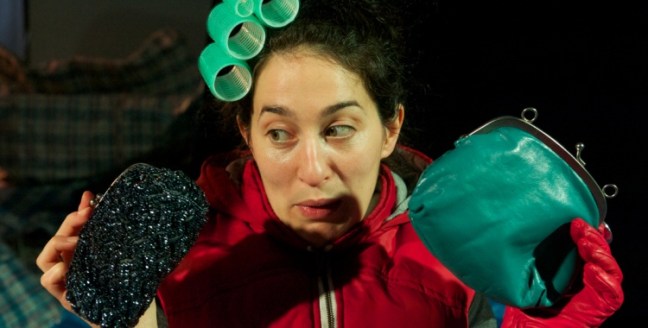
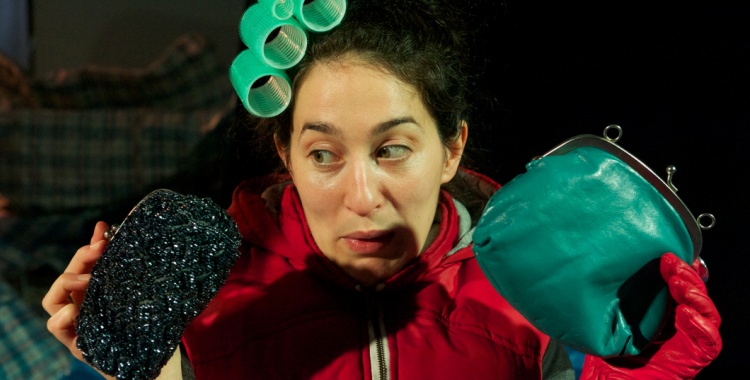
There might be lots of hanging around, but fortunately it’s far from an interminable wait. The momentum sags in a few sequences, including an overlong lullaby during which the room grows visibly restless, but for the most part Inspector Sands carry their young audience along with them. Music plays a key role, as do the company’s limited but cleverly deployed props. There are even some fishy puns (“The Prawn Identity”, anyone?) to entertain the adults, while a scene involving ever-shrinking handbags is a sublime little slice of surreal comedy.

The show also offers, thanks to its soothing voiceover, just a hint of the children’s nature documentary. I’m reminded a little of The Adventures of Alvin Sputnik, which takes the looming issue of climate change as its backdrop rather than its substance. In this ridiculously charming family show from Perth Theatre Company and Weeping Spoon Productions, the future flooding of the planet is never explicitly addressed, but simply by adopting this as its premise the show refuses to present kids with an airbrushed version of the world we live in – and the catastrophe it might be hurtling towards. Here, the natural world is very much a canvas, but somewhere in the background of the piece lurks a light reminder of the delicate ecosystem supported by our oceans.

Mostly, however, the emphasis of Rock Pool is on friendship, fun and mischief. Play is even built into the production’s simple DIY aesthetic, which suggests the sort of basic make-believe that children are adept at. A red cycling helmet and barbecue tongs stand in for Crab’s shell and claws, while Prawn gets a simple raincoat. Why bother with realistic costumes when we’re here to use our imaginations? The gleefully splashy conclusion, too, embraces playfulness with grinning abandon. It’s just a shame that between the gentle pre-show interaction and the joyfully inclusive ending, the involvement of the young audience feels uneven and a little under-thought.


Not Working But Wandering

DSC01519

“Walking, ideally, is a state of mind in which the mind, the body and the world are aligned, as though they were three characters finally in conversation together, three notes suddenly making a chord. Walking allows us to be in our bodies and in the world without being made busy by them. It leaves us free to think without being wholly lost in our thoughts.”
Rebecca Solnit, Wanderlust

Walking has always been my cure of choice. When feeling beaten down or uninspired, I have a habit of taking my frustrations outside, of treading my anxieties into pavement or path. Even living in London for the past year and a half, where walking for its own sake feels less natural (especially – oh, how I hate that this remains the case – as a woman), wandering has been a refuge.

Slowly reading my way through Rebecca Solnit’s Wanderlust, then, is an amble of delight and recognition. I love the unapologetic subjectivity of its voice; I love its idiosyncratic approach to the narrating of a history; I love its easy traversing of different terrains, moving fluidly through anecdote to literature to politics. And in its very form it finds the harmony of thought that walking allows, its intellectual rambling at once free and yet absolutely grounded in the landscape of the world we live in.

For days now I have been wrestling with how to write about all the things I have not been writing about, the shows that have been accusingly piling up behind me while work is tugging my attention in other directions. Until, devouring another chapter of Wanderlust in the snatched moments before sleep the other night, I thought of turning this too into a wander – a liberating meander rather than a joyless trudge towards my destination.

And how apt that two of the pieces of theatre that have been itching at my mind are about landscapes both literal and metaphorical, places to be walked and thought through. Both were seen at the caravan showcase in Brighton, where I was busy blogging and tweeting for Farnham Maltings, doing my best to act as a window for the outside world. Over the course of three days, I packed in as many shows and discussions as possible, punctuated by frantic tapping at my laptop keyboard.

So when I saw Landscape II, the new Melanie Wilson show that I had been kicking myself for missing ever since its run at BAC last year, I was tired. A small detail, but an important one. Because Landscape II, Wilson’s delicate tapestry of the lives of three women, requires a certain quality of concentration – one that I found myself struggling to give it. Its exquisite layering of story, sound and video offers a sort of sensory overload; as an audience member, you are required to sift through the information even as the narrative runs on. But strangely, at the same time as the mind scrabbles to piece things together, the pace of the show itself feels gorgeously unhurried. Time does funny things.
???????????????????????????????

Reflecting on the piece now, a couple of weeks after seeing it, I find it hard to draw together all its separate strands. What I remember is that it is about three women, separated by time and brutal circumstance, their stories overlapping with one another, the personal and the political bleeding together. Wilson narrates these stories from a desk to the side of the stage, the majority of which is dominated by an off-white, roughly textured wall – much like that of the cottage that is central to the action – which vividly blooms into life thanks to Will Duke’s projected video (perhaps the most stunningly simple use of projection I’ve seen used in a theatre). There is also a beautifully textured sound design, manipulated live on stage by Wilson, lulling and occasionally jolting us in our seats.

Wilson has a very particular quality as a performer, a quality that is not easy to render in words. It is something about her presence in the room – her half smile, the way she holds herself – but it is mostly about her voice. Gentle, hypnotic, almost sustained at one level tone, but peppered with the lightest of inflections. Sometimes, dangerously, soporific. During Landscape II, that mesmerising mode of delivery found me drifting. Not unpleasantly, I might add, and I wonder if that is the very experience the piece invites, though I would like to see it again and focus more intently on its different elements. While drifting, I found myself thinking about Gertrude Stein and her comments on the doubled, dislocated time of theatre, demanding as it constantly does an effort on the part of the spectator. I also thought, aptly, of her “landscape theatre”. Perhaps Wilson’s various landscapes invite a sort of imaginary walking, in which wandering off the path can be just as rewarding as sticking closely to its tracks.

There was a similar quality, I found, to the experience of watching Ours Was the Fen Country. Again, I was tired. Before seeing it, I had heard Dan Canham’s show described as “verbatim dance theatre”, a concept that intrigued me all by itself. What might that look like? As it turns out, this hybrid genre manifests itself as a series of recordings, performed interview material (using the same headphone technique that Alecky Blythe is now well known for), sound and movement. It all stems from Canham’s research in the Fens, a fading landscape that is evoked on stage by its words and images and a careful physicalisation of its atmosphere.

Like the place it explores, Ours Was the Fen Country is strange, haunting, sometimes bleak and sometimes beautiful. As with Landscape II, it is possible to drift in and out, at some times tuning in to the words of the Fen inhabitants, at others to the movements of the performers. I would have loved to have seen more of that movement, which suddenly elevates the piece each time it breaks through. There is one particularly magical moment, early on in the piece, where the leap from spoken to embodied history elicits a collective shiver. Words fall into a rhythm, pattered out by one pair of feet, then more, until all of the performers are moving as one. It is dance, but it is also work and walking and tracing the same steps day after day, animating the landscape as a collective body.
???????????????????????????????

Perhaps one of the reasons I love walking is because it offers one of the few interludes when I feel completely untethered from work. I like the idea, articulated by Solnit, that “walking is an amateur act”. When walking as an act in its own right rather than as a way of propelling myself from A to B, I am aimless in the best of ways; no destination or deadline directs the rise and fall of my feet. Elsewhere, I am either working or feeling guilty about not working, but when I walk I am absorbed by the gentle physical activity, comfortable in my thoughts and my body.

Recently I have been thinking a lot, both personally and academically, about work. I repeat to myself the words “work is not a moral good” (I think I need a sign to put up somewhere in my room) but I still act as though it is. I write these sentences in a paper about artistic labour, knowing as I do that they uncannily describe my own relationship to my work:

“In many ways, cultural work presents an ideal example of immaterial labour, marrying as it does often intangible outputs with precarious working conditions, ever-lengthening hours and the insidious erosion of distinctions between work and life – all of which is endured and even celebrated under the banner of creativity, self-expression and flexibility. Love for one’s work becomes an agent of one’s own exploitation.” 

I do love my work, but I also love the moments around it, the moments that are not work in any real sense but that feed richly into both work and life. The time that I am lucky enough to spend in rehearsal rooms (time that has happily found a bit of space in my life again in the last few weeks) seems to fall into that latter category. There is something about those spaces – at least, the spaces that I have been fortunate enough to be welcomed into – that feels freeing, weightless almost. I’ve almost always experienced an atmosphere of calm of the kind described by Chris Goode, even when the making itself might be at its most frantic. As when walking, I feel that I am in a place somehow apart, yet still closely connected with the world outside. And then, of course, there’s that breathless thrill of witnessing the moments when stuff really happens, when discoveries are made for the very first time and the thinking in the room suddenly shifts.
???????????????????????????????

I wonder if part of the reason why I loved Secret Theatre Show 5 so much was that it takes place in a rehearsal room – more specifically, the rehearsal room at the Lyric Hammersmith, where the Secret Theatre company have been experimenting for the past year. This space could not be more appropriate for the company’s latest show, which feels in many ways like the absolute expression of the collective way of working that the ensemble have been playing with over a process of months. It is a piece which is clearly born from this particular group of people and from the room that they have created together; the room that we now sit in, with them.

Walking in, everything about the framing of the piece immediately appeals to me. The intimate sharing of the space, the inbuilt risk and spontaneity, the visible traces of the company’s process on the very walls of the room. And watching it produces the palpable sensation of sharing a room with a group of people just having a brilliant time together – a sensation which is fiercely infectious. It’s thoughtful and complex and messy, but also joyful and chaotic, full of music, play, dancing. Oh, the dancing. Rarely (if ever) have I grinned and gurned so much during a piece of theatre.

Speaking to Joel Horwood (who acted as dramaturg on this show) afterwards, he told me that the starting provocations for the piece were community, hope and transcendence. Add joy and anarchy to that list and – without giving any more away – that just about captures what the company have produced.

I can’t pretend that Show 5 is perfect. When I see it, still early in the preview run, there are moments that stutter, while I wonder if it needs a slightly more robust dynamic at its heart to drive it along. But its imperfections only make me more fond of it. Not for a minute to dismiss its intelligence, my reaction to Show 5 operated firmly on the level of feeling rather than intellect. It made my heart skip, sing and burst. It made me want to go back again and again and again, both to watch the shifts in the piece and to be swallowed whole by it once more. I just fucking loved it.

There is, as ever, more to write about. I want to pin down why I was so utterly, strangely compelled by A String Section and everything it so implicitly yet so powerfully says about being a woman; to capture the spine-tingling marriage of music and storytelling in The Bullet and the Bass Trombone; to unpack the almost unbearable tension that pervades Ivo van Hove’s astonishing production of A View from the Bridge, which I finally saw on Friday night; to write once again about what a tight, gripping piece of writing Grounded is and how much of a rock star Lucy Ellinson is in it.

But every wander comes to a halt, and I fear I have already rambled (in both senses of the word) too much. So I will bring my (metaphorical) feet full circle and end, as I began, with Solnit:

“Walking shares with making and working that crucial element of engagement of the body and the mind with the world, of knowing the world through the body and the body through the world.”

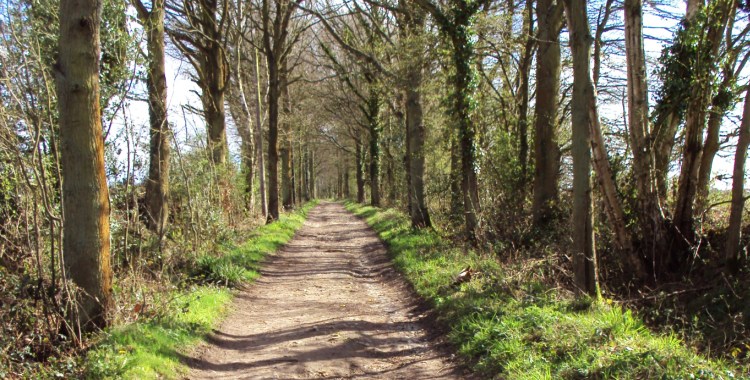
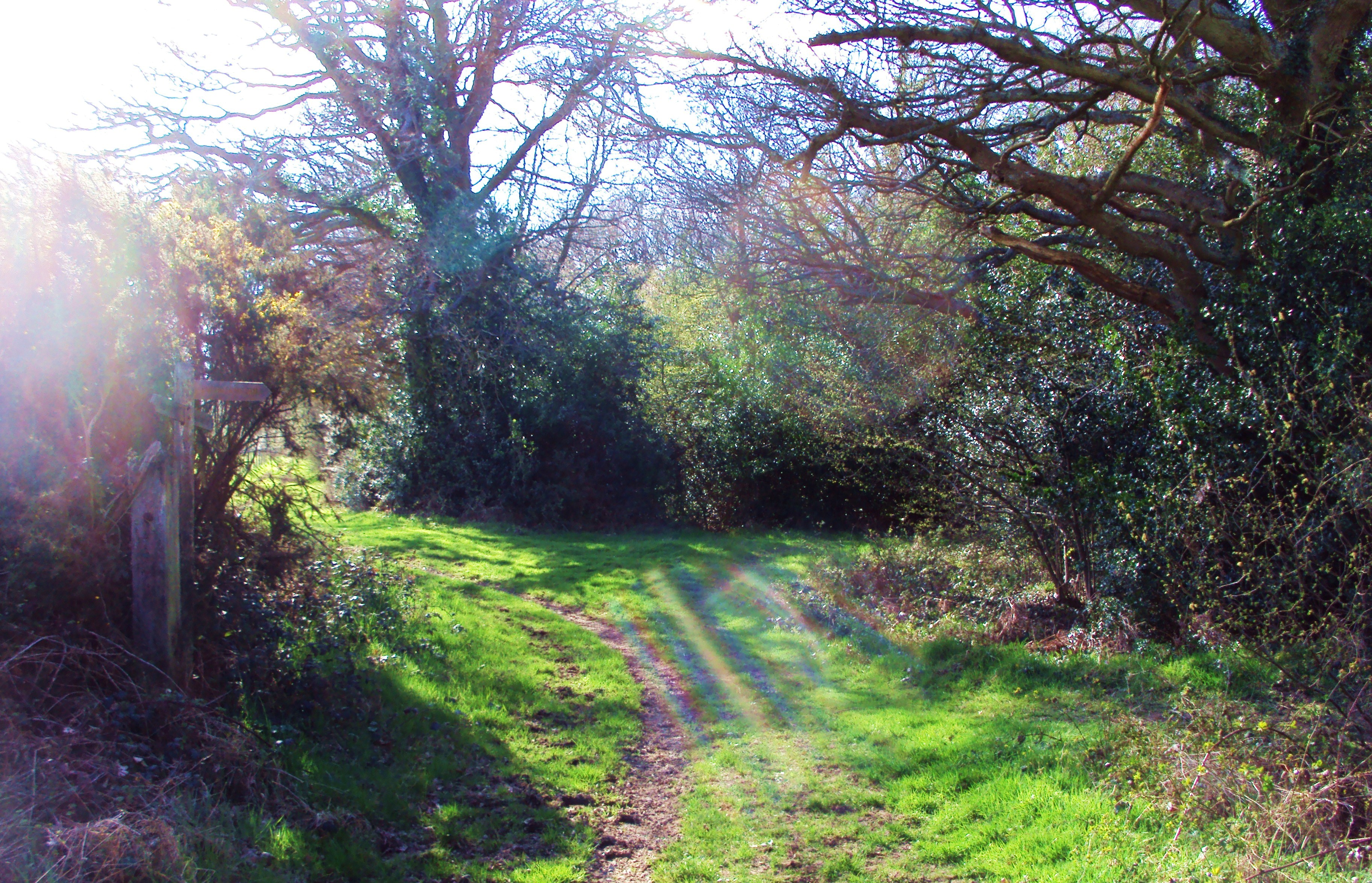
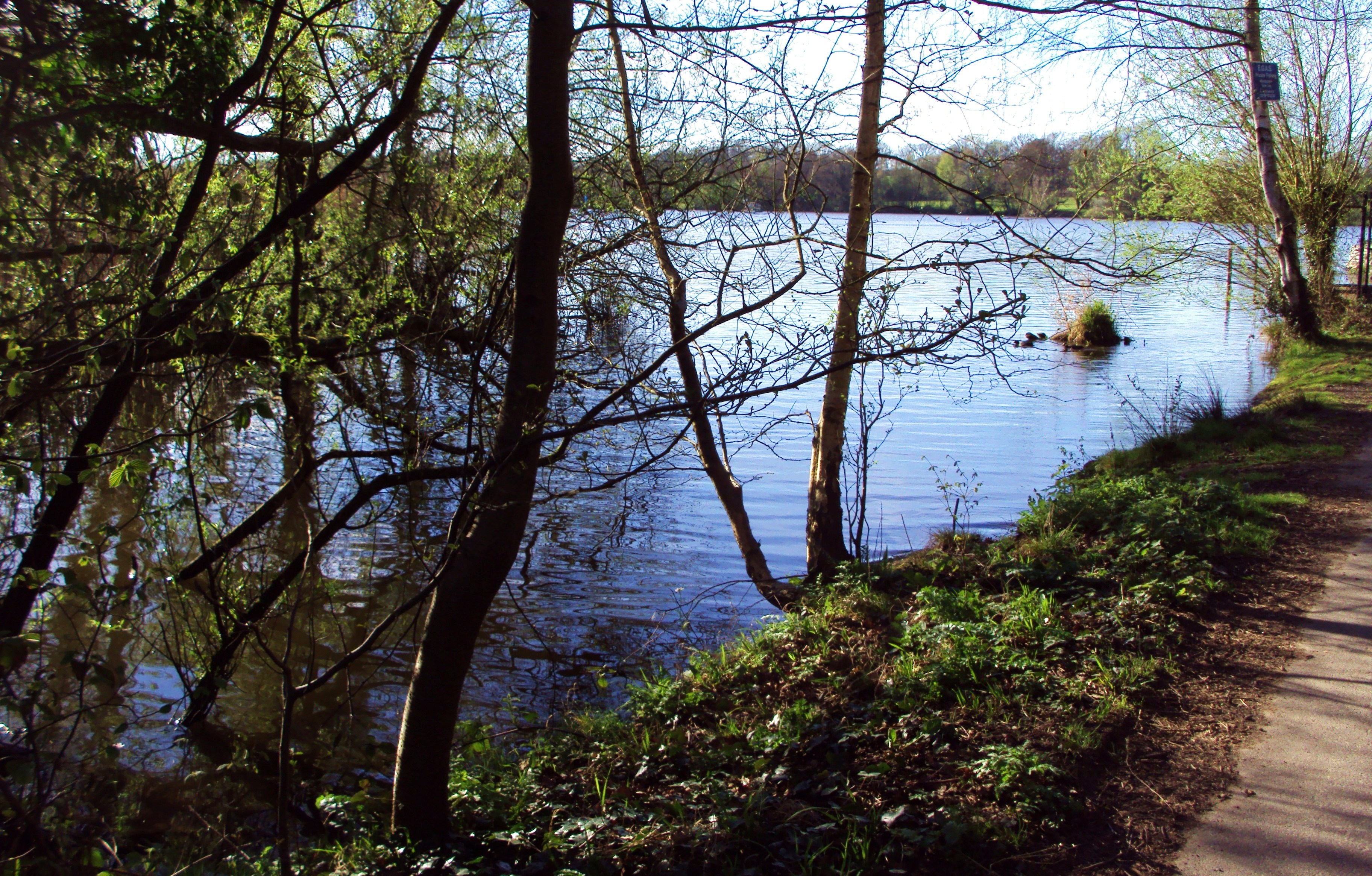
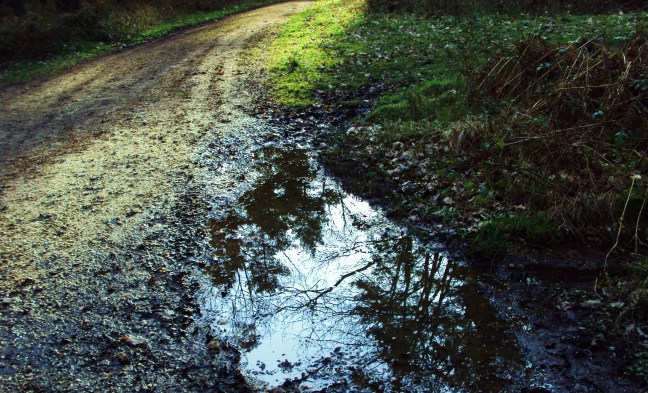
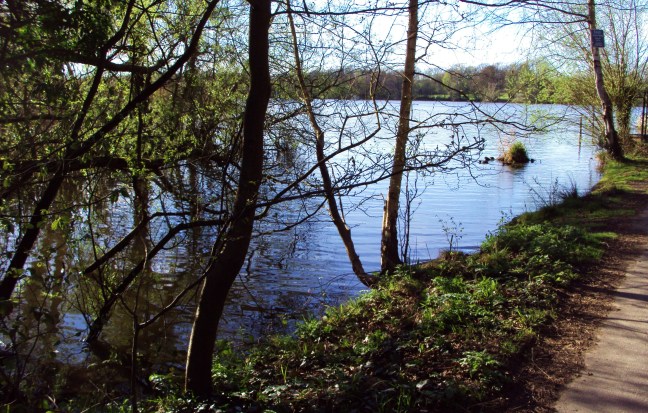
(The photos above were all taken on some of my favourite walks, and I also used a couple of them in my write-up of The Forest and the Field – a meander in prose if ever there was one)

33, New Diorama Theatre

33

Originally written for Exeunt.

When I last saw The Wardrobe Ensemble, they were scrapping for flat-pack furniture, energetically retelling the story of a riot in a newly opened Ikea store. For their latest outing, they have fastened once again on fascinating real life inspiration, imagining the ordeal of the Chilean miners trapped underground for 69 days in 2010. Engaging in one long game of Chinese whispers, the company explore the events of those 69 days from the fictionalised perspectives of the miners and their families, the media frenzy forming on the surface, and the people all over the globe who found a strange sort of hope in the crisis.

Again, however, The Wardrobe Ensemble’s focus does not match their energy and invention. By taking on so many different viewpoints, the company find themselves moving frenetically from one to the next, failing to invest any one element with the attention it needs. In the mine itself, the trapped men struggle with the physical and mental pressures of their confinement, while also contending with a controlling psychologist who censors the letters from their loved ones; in the world outside, media and public alike get drunk on the story of miraculous survival. The lightly sketched scenes that these locations offer us are all enjoyable enough, but rarely achieve the impact of clearly delineated outlines.

At the outset of the show, the company admit that theirs must be a shaky reconstruction, continuing the sort of speculation that abounded during the crisis itself. But to acknowledge this continuing chain of information and misinformation without interrogating their own act of appropriation is either disingenuous or naive. The ravenous vultures of the world’s press are vividly captured here, frantically waving papers and yelling headlines, but surely The Wardrobe Ensemble themselves are guilty of a similar act of narrative theft and manipulation. The potentially problematic implications of this, however, remain underexplored outside of their prologue.

Oddly, one of the most fascinating and effective strands of the show is not set around the mine at all. Thousands of miles away, a man alone in his apartment in the middle of the night watches beaming Chilean faces on his television screen, the sound and brightness turned right up, and can feel the hope seeping into him. One by one, others join him – strangers united in their shared feeling for a group of people they will never meet. It is this overwhelming global response that feels as though it is the real heart of the piece, prodding gently at ideas of contemporary alienation and disconnection, as well as beginning to hint at the company’s own motivations for seizing on this widely documented subject matter.

Despite the frustrating distraction of the piece, as the narrative reaches its heady climax the diffuse elements come briefly together, demonstrating once again the company’s promising aesthetic. As in Riot, The Wardrobe Ensemble have a thrilling ability to use their bodies in surprising ways and are often at their best in the show’s more physical sequences. Objects, too, are used economically but inventively, building a whole world from scant resources. The company just need that visual ingenuity and instinct for intriguing material to be moulded into tighter dramaturgical shape.

Così Fan Tutte, London Coliseum

6371

Originally written for Exeunt.

How to solve the silliness and dodgy sexual politics of Mozart and De Ponte’s comic opera? Director Phelim McDermott’s answer is to embrace and subvert both at the same time, while gleefully transplanting the whole thing to the fairground. In this new ENO production, created in partnership with Improbable, the two pairs of lovers are vacationing in 1950s Coney Island, surrounded by the vivid swirl of the carnival. In this environment, where nothing is quite as it appears, it hardly seems surprising that the two men would reappear to their beloveds in the guise of teddy boys in the plot’s central test of fidelity. Here, the usual rules are suspended and all bets are off.

This colourful framework established, the concept allows McDermott and his creative team to riff playfully on their theme, balancing invention upon invention. From its joyfully witty curtain-raiser onwards, this Così Fan Tutte is a dazzling sideshow of visual ingenuity. Tom Pye’s stunning design, complemented by beautifully evocative lighting from Paule Constable, is every bit as enchanting as Mozart’s music – all brilliant colour, twinkling fairy lights and dramatic sunsets. McDermott’s direction has fun with the pliable playground that Pye has created, finding cheeky solutions to the story’s subtext. The lovers bounce euphemistically on carousel horses, while the revolving chambers of the motel where sisters Fiordiligi and Dorabella are staying hint mischievously at the women’s fickle passions.

The performers, too, inject an infectious sense of fun into Da Ponte’s story of love, confusion and deceit – none more so than Mary Bevan, whose sparkling Despina is deliciously manipulative in her nudging of the two women being cruelly tricked by their fiancés. Christine Rice’s spirited Dorabella is wonderfully unapologetic in the swift transferral of her desire, while Fiordiligi’s eventual submission to her feelings is made all the more affecting by the journey that Kate Valentine takes us on. The men lag behind both vocally and in the vividness of their characterisations, although Marcus Farnsworth and Randall Bills both attack the seduction sequences with energy and brio, and it’s a neat touch to have Roderick Williams’ charismatic Don Alfonso as the scheming ringmaster of the ensemble of circus performers.

But it’s not all about the fun of the fair. Beneath the amusement and allure, there is a grubby underside to the Coney Island setting, offering a necessary counterpoint to the candyfloss silliness of the plot. There’s an uncomfortable sleaziness sitting under the opening scene between Don Alfonso and the officers, hinting lightly at the misogyny implied in the opera’s central wager. Improbable’s skills ensemble, meanwhile, provide a brilliant visual commentary on events from their hovering presence in the background of scenes. As Fiordiligi and Dorabella expressively grieve and swoon, stall-tenders roll their eyes and chew gum; the saccharine romance of the seduction scenes is offset by sword swallowing and bearded women.

The function of this constant undercutting is to question the normalised wooing and manipulation deployed by Guglielmo and Ferrando and prevent the main thrust of the plot, which is gorgeously funny in this telling, from becoming a mere harmless comedy of disguises. There is certainly an emphasis on the lighter, more amusing aspects of the opera in McDermott’s production, enhanced by the sparkling wit of Jeremy Sams’ English translation, but the use of contrast also points up the ridiculousness and cruelty of the central plot device. In the fairground workers and sideshow performers, we find a foil and an alternative.

And the fairground itself, like one of Shakespeare’s forests, acts as a liminal, magical space – an arena in which anything can happen. Just as we delight in the surface humour and beauty of McDermott’s production, we might relish the escape that this space can offer, but grey, complicated reality always waits just around the corner.