Playing the Fool

NTTAH-48-3097586146-O-2-600x399

Originally written for Exeunt.

There is a common misconception about the origin of Told by an Idiot’s name. Most people tend to assume – “quite understandably”, co-artistic director Paul Hunter admits – that it is a quote from Macbeth. Instead, it acts as a gesture towards the company’s perspective. The Idiots aren’t interested in typical heroes; they prefer to look at narratives from the edges, picking up the fools who usually provide the comic relief and dumping them right in the centre of the action.

This skewing of narrative focus says a lot about Told by an Idiot’s approach. The company, who are this year celebrating their 21st anniversary, are committed to their own distinctive brand of theatrical anarchy, one that walks a giddy tightrope between the silly and the serious. Using comedy as a vital tool, they bring clowning to dark or cerebral topics in a way that makes their theatre accessible without sacrificing intelligence.

“I don’t think theatre should be elite,” insists Hunter. “Not to say that you still can’t do difficult, interesting, profound things, but you can do that in such a way that lots of people can engage in it.”

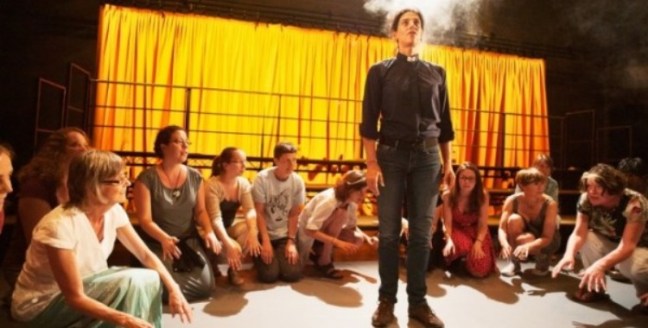
Their current production, Never Try This At Home, is a case in point. The show, which playfully prods at the dark underbelly of 1970s children’s TV, was born out of a provocation from Birmingham Rep’s artistic director Roxana Silbert. Asked to work on a show rooted in the city, Birmingham born and bred Hunter lighted upon a memorable childhood appearance on Tiswas, the chaotic Saturday morning magazine show that was recorded in Birmingham’s ATC/Central television studios. Although Hunter and the company were always interested in exploring the uncomfortable edge of the behaviour exhibited on such shows, real life events soon overtook the piece they were working on.

“When we started two years ago, none of this was in the news at all,” says Hunter, alluding to the Operation Yewtree revelations that now form an unavoidable backdrop for the show. While Hunter insists that this cannot be hidden or ignored, he was keen that the show remained “robustly comic” and operated on its own terms, rather than becoming a vehicle for exploring the scandals unfolding in the news.

“For a show that’s incredibly anarchic, we were very rigorous about how we presented the material,” Hunter explains, adding, “I was very clear that I wanted a completely fictitious world.” Their fabricated Tiswas equivalent is Shushi, a show that was abruptly cancelled in the seventies following an escalating series of catastrophes broadcast live on air. While there are certainly parallels with real behaviour and situations, Hunter stresses that the show’s power lies in its lack of specificity. “As soon as it becomes specific, it becomes too small,” he argues. “Because theatre’s a metaphor, for me it doesn’t hold a lot of water when you become too literal.”

Watching back old footage of Tiswas and its like during the research and development of the show has been an eye-opening experience for the company. “Even stuff that’s seemingly innocent, you go wow, I can’t believe they’re doing that,” says Hunter. This contemporary vantage point is reflected in the staging of the piece, which is framed with a modern day documentary looking back at Shushi’s demise. This structure allows audiences to challenge the habitually misogynistic and racist attitudes they see in the seventies segments, Hunter explains, but also to question the behaviour of the 21st century presenter, whose prejudices are “more insidious and more subtle”.


The bold discomfort of the piece – “there are moments when it’s literally buttock-clenching” – is layered with Told by an Idiot’s characteristic humour and anarchy. The chaos, confusion and custard pies of shows like Tiswas have all been retained, while brave front row audience members are being ominously equipped with plastic macs. “It sort of explodes off the stage,” warns Hunter.

While Never Try This At Home stops just shy of direct audience involvement in the action, Told by an Idiot have always believed in the importance of acknowledging an audience’s presence; “we never ignore them,” Hunter emphasises. This awareness of the live theatrical situation, he believes, is central to the work’s success, and is what it can offer audiences over film and television.

“We want the feeling that we are making it up,” Hunter says simply. This, he recalls, was the primary impetus behind Told by an Idiot’s formation in the early nineties: “Initially it wasn’t about starting a company, it was about doing a show, and it was about doing a show that was ours, that we had made up”. After the success of that first show, On The Verge of Exploding, the company quickly settled on another driving creative principle for their work: not doing the same thing twice.

As if to demonstrate the variety of their output, the other show that Told by an Idiot have coming up this year is a world away from the custard pies and casual sexism of Never Try This At HomeMy Perfect Mind, returning for a second run at the Young Vic in September, intertwines the story of classical actor Edward Petherbridge’s recovery from a stroke with text from King Lear, the title role of which Petherbridge was rehearsing for at the time of the stroke. The show is performed by Petherbridge and Hunter; a Lear and his fool.

It is, in many ways, an improbable pairing. “On paper, the notion of me and Edward Petherbridge as a double act is very unlikely,” Hunter concedes. But Told by an Idiot have a habit of seeking out challenging and surprising collaborations, from working with poet Carol Ann Duffy to being commissioned by the Royal Shakespeare Company. Typically, these partnerships are the result of a gut instinct on the part of the company. “I use the word hunch a lot,” says Hunter. “It’s just a feeling about something.”

While on paper My Perfect Mind’s premise is absurd, in practice Hunter’s hunch pays off. Petherbridge’s theatrical anecdotes and acerbic asides are delicately balanced by Hunter’s zany tomfoolery, just as the tragic poetry of Lear is offset by the clowning that surrounds it. Here, in the marriage between the solemn and the ridiculous, is where Hunter and Told by an Idiot have drawn the creative inspiration that has kept them going for the last 21 years. “That’s what interests me, that you can have those moments of comic ludicrousness right up against some of the most extraordinary writing ever written.”

I’d Rather Goya Robbed Me of My Sleep Than Some Other Arsehole, Gate Theatre

goya-600x339

Originally written for Exeunt.

If stress is the number one modern malady, sleeplessness might just be a close second. Distracted by technology, preoccupied with work and perpetually pumped with caffeine, it is harder now than ever to get a good night’s kip. This is certainly the experience of Rodrigo García’s restless narrator – hence the cumbersome title of this slender, slippery monologue. Railing against the tedium of insomnia and the spectres of capitalism that keep him up at night, García’s unnamed protagonist is adamant that “you have to do something”.

His idea of doing something is blowing his life’s savings, shipping over a fashionable philosopher and breaking into Madrid’s Prado museum out of hours to gaze at Goya’s Black Paintings. An unlikely brand of rebellion. Along for the ride are his two young sons, who in Jude Christian’s bold production take on a startling, scene-stealing form. Joining lone actor Steffan Rhodri on stage are two small, cute and surprisingly loud piglets, greeted with a ripple of excitement from the audience. Immediately, we are in surreal territory.

Like the piglets, who wriggle and squeal in Rhodri’s arms, García’s play is difficult to get a grip on. The furious, fidgety stream of thought goes round in circles – or, perhaps more accurately, spirals, as we never return to quite the same place as before. The narrator is at crisis point, that much is clear, his words a wounded howl against the plastic deities of Coca-Cola and Disneyland. There are hints at a fractured family and a lifetime of disappointments, but all we can be certain of is an underlying queasiness towards the modern world. As our protagonist succinctly puts it, “life’s a bloody mess”.

If modern existence is a cesspit, then we are all rolling in the filth. This is perhaps the point of the piglets, who also stand in for the animal urges and images of gluttony that crop up periodically in García’s text. When the animals’ unpredictable bathroom habits play momentary havoc on stage, it seems apt that Rhodri is literally cleaning up shit. But beyond these obvious associations, the piglets also have a distancing effect, enhancing the protagonist’s dislocation from his sons, the world around him, and possibly even his own existence.

The strange inner world of García’s narrator is strikingly drawn out by Christian’s production, which has created a captivating visual and aural landscape. The show opens with Rhodri’s tall form crammed into a grubby miniature kitchen mounted on the back wall, which suddenly begins to turn on its axis; the world is off-kilter and the protagonist is a hamster trapped inside an ever-turning wheel. This visual fluency is characteristic of Fly Davis’ design, which hems Rhodri and the piglets inside a clinical white space, surrounded by toys as brittle as the happiness they promise. Adrienne Quartly’s uneasy sound design, meanwhile, presses in on an already beleaguered mind with a tumult of heartbeats, ticking clocks and blaring sirens.

At the centre of this bewildering, claustrophobic world, Rhodri makes a compellingly embattled anti-hero. In spite of the anger, self-destruction and unsavoury streak of misogyny glimpsed in the character written by García, Rhodri renders him surprisingly sympathetic – more of a bitter lost soul than a listless misanthrope. There is also a sense, supported by the visual language of the piece, that his response to the modern world is the only one left available; even if his pursuit of Goya ultimately lacks meaning, it’s better than the Disneyland his sons would prefer. García’s short monologue might be a frustrating, evasive slip of a thing, but this arresting production makes its searching, impotent fury feel uncannily resonant.

An Innately Optimistic Profession

events1-600x336

Originally written for Exeunt.

At the close of his introduction to the latest book in the Methuen Modern British Playwriting series, Andrew Haydon departs on a distinctly optimistic note. Surveying British theatre at the end of the 2000s, he sees a landscape of possibilities, looking towards a “future where old divisions between ‘New Work’ and ‘New Writing’ had turned into fertile breeding grounds for collaboration” and “where a progressive spirit of inquiry and confident uncertainty had begun to replace condescension and refusal”.

Almost halfway through the decade following that with which the book concerns itself, the barrier between ‘New Writing’ and ‘New Work’ – although productively challenged – has not entirely dissolved, while continued funding cuts pose a threat for that “progressive spirit of inquiry and confident uncertainty”. But what comes through strongly, both in the period discussed by the book and the years since, is an increasing spirit of collaboration, as pointed to by Haydon. Faced with the rise of new forms and shifting understandings of the relationship between theatre and its audiences, a number of contemporary British playwrights have adapted their practice accordingly, embracing new and varied ways of working.

Two prime examples, both discussed in Methuen’s volume, are Simon Stephens and David Greig. As Jacqueline Bolton points out in her excellent chapter on Stephens’ work, his prolific output is “distinguished by a willingness and enthusiasm to work collaboratively”. Perhaps his most striking collaboration is that with German director Sebastian Nübling, which Ramin Gray has suggested is unique, but beyond this he has a sustained interest in opening up his writing. Stephens has spoken on many occasions about how his encounters with other theatre cultures and artists – and, indeed, with critics – have invigorated his practice. Talking to me in a recent interview, he described his plays as “the starting point of a conversation between myself and a director, a director and a cast of actors, director and artistic team, artistic director and a director, and then artistic collaboration and an audience”. The play is not the thing; it’s a point of departure.

Bolton’s chapter goes one step further by linking Stephens’ interest in and commitment to collaboration with the recurrent preoccupations of his writing. While many have noted the bleakness and brutality of the worlds Stephens puts on stage (with the help of his collaborators, of course), Bolton sees instead – or, rather, in addition – a compassion for his subjects and a genuine quest for communication and understanding. This chimes with the spirit of collaboration pursued in Stephens’ work; as Bolton puts it, “To work collaboratively is, after all, to affirm the importance and significance of truth, of respect and of generosity”. This can be supported by Stephens’ own assertion that theatre is “an innately optimistic profession”.

Greig’s work has an equally complex relationship with optimism, as The Events knottily demonstrated last year. He has also worked in a number of different ways, with an output that ranges from shows created through devising processes to the libretto for the musical Charlie and the Chocolate Factory; from plays for children to epic, abstract, internationally focused pieces. In her chapter for the Methuen collection, Nadine Holdsworth describes him as “deeply invested in the possibilities of the collective imagination, pursuing ideas across different media as well as linguistic and stylistic boundaries”. He shares with Stephens an interest in travel as a narrative theme and an openness to different collaborations.

Similarly to Bolton, Holdsworth moves away from a familiar critical narrative about Greig’s work – in this case, his engagement with Scottish national identity – and chooses to focus on the “passionate internationalism” of his plays. Her analysis opens up a consideration of how Greig offers audiences different perspectives on the world, positing brief and delicate moments of communication across seemingly irreconcilable cultures. While this is not her primary concern, her study also reveals Greig’s willingness to experiment with structure and storytelling, clashing together different theatrical styles and techniques, and how through this process the playwright often questions his own authorial status in the creation of his plays.

Some of these ideas, which I have only briefly sketched out above, will be discussed further at two upcoming symposia in Lincoln and Brighton, addressing the work of Greig and Stephens respectively. The University of Lincoln’s David Greig symposium at the end of this month will feature papers examining a wide range of different aspects of Greig’s work, including the role of dissonance, empathy and conflict in his plays, the way in which he deals with questions of place and nationality, his engagement with Scottish identity and the independence debate, and the historical dimension of his work.

At a separate symposium at the University of Sussex in April, meanwhile, scholars will be engaging with Stephens’ plays and in particular his dialogue with Europe. I’m looking forward to making a contribution of my own to this conversation, with a paper exploring how Stephens’ work in Germany has shifted his perspective on British theatremaking processes and the implications this might have for our own theatre culture. As Stephens has suggested, “when we travel abroad we see our home with a clarity that we may never have been offered before”, offering him an intriguingly distanced view of British theatre.

It feels important that events such as these carry on the conversation, provoking the sort of new insights into these playwrights’ work that they both habitually seek. The best we can hope for is, to return to Haydon’s words, “a progressive spirit of inquiry”.

The University of Lincoln’s one day symposium on the work of David Greig is being held on 29th March. Registration is now open here.

 The University of Sussex’s symposium on Simon Stephens’ connection with Europe will take place on 30th April 2014.

Photo:Stephen Cummsikey.

Steffan Rhodri’s theatrical road trip with piglets as passengers

Steffan-Rhodri-in-Id-Rath-013

Originally written for The Guardian.

On the tiny stage of Notting Hill’s Gate theatre, Steffan Rhodri is joined by a pair of unlikely co-stars. Director Jude Christian’s production of the awkwardly titled I’d Rather Goya Robbed Me of My Sleep Than Some Other Arsehole has added two small, headstrong piglets to Rodrigo García’s surreal monologue.

“I was bemused by this decision at first,” the actor says, “but I’ve sort of learned to love it.” He adds that the pigs, who stand in for the protagonist’s two sons, are “unpredictable”, but the chaos and absurdity of their presence is oddly fitting for the piece. The animals and their unscripted behaviour send out a strong signal to audiences: “It immediately sets that surreal tone, that absurd tone of we are not in naturalistic reality here, this is up to you to interpret what this man is on about.”

García’s play follows a man in the grip of a midlife crisis; he is “railing against the materialism of life, but also searching for some meaning”. As the man questions his own existence, he tells the story of a hedonistic road trip with his sons, which culminates with breaking into the Prado museum, in Madrid, to look at Goya’s Black Paintings. The line between fantasy and reality, however, is constantly blurred.

This character’s experience mirrors, to an extent, Rhodri’s reasons for taking on the role. The actor is best known as Dave Coaches from the television comedy Gavin and Stacey, which quickly became a runaway hit for the BBC. Rhodri says of the show that he was “lucky to be involved, but not defined by it”. He has since taken on a string of roles at the Royal Shakespeare Company and in the West End, as well as making a brief appearance in the penultimate Harry Potter film. This production is an opportunity to break out of that mainstream trajectory and do something “completely off the wall”. It is Rhodri’s window-smashing moment.

He is also firm in his belief that this sort of risk-taking, form-pushing work should be the purpose of fringe theatre, pointing out that a play such as this one would never be produced in the West End. “Quite often these days fringe theatre can be used in a very safe way as a vehicle for smaller, cheaper versions of mainstream theatre,” he says. “I think this is very different.”

As well as contending with the whims of the piglets, Rhodri has the formidable task of carrying García’s anarchic narrative alone each night. Although this is Rhodri’s first solo show, he describes himself as “a sucker for a challenge” and is excited about standing the piece up in front of an audience. “I never imagined myself doing a one-man show,” he confesses. “If I’m going to do one, I’d rather do one that breaks all the rules.”

Rhodri is also relishing the challenge of the “particular openness” that this slippery, ambiguous play allows. He compares it to Beckett and the absurdist tradition, as well as identifying “a sort of dreamlike quality that is reminiscent of Pinter”.

What most excites Rhodri – and, he hopes, the audiences who will come to see it – are the ideas that García is grappling with. “It is about the big questions of life, in a very short, punchy piece. How should life be lived? How should life be experienced? Do we need to make plans and be safe, or do we just need to do things?”

Photo: Tristram Kenton.

Building Innovation

NORTH14 group photo credit Topher McGrillis

Originally written for The Stage.

Theatregoers and theatre-makers alike can breathe a sigh of relief as The Shed, the National Theatre’s temporary riverside venue, is granted a longer life. The 225-seat space could now be open for up to another three years, extending its programme of new and experimental work. Under the National Theatre’s associate director Ben Power, this little red powerhouse has stretched the remit of the theatre’s programming since opening last April, bringing in exciting new artists and different ways of working.

But The Shed is not alone. Across the country, a range of subsidised venues are investing in innovative, experimental programming, developing the next generation of artists from within their walls. From festivals to scratch nights, artist residencies to audience development initiatives, these regional producing houses are dedicated to developing the theatre ecology around them, even in lean times.

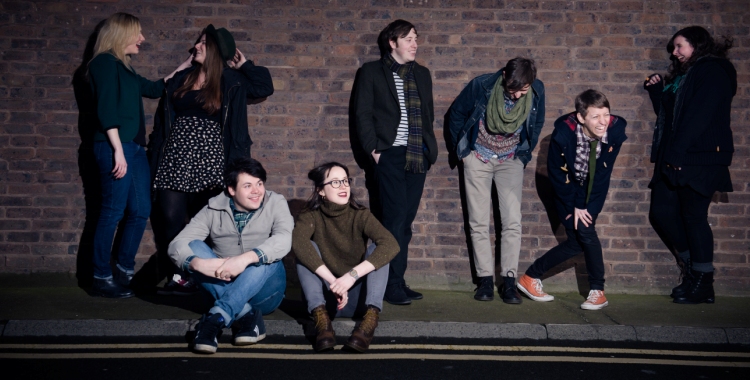
For Lorne Campbell, artistic director of Northern Stage in Newcastle, new ways of working with artists are not an accessory to the theatre’s core work – they are essential. “The old systems simply aren’t of use,” he says simply, referring to how funding cuts have altered the landscape. In their place, the venue is looking at strands of work that feed the ecosystem of young artists – such as its NORTH scheme for performing arts graduates – and offer the space for new companies to test their work in front of audiences.

This latter need is filled by the theatre’s Stage Three space, which Campbell is developing into a fringe venue for the city. The work on this stage will not be produced by Northern Stage, but instead the venue will be thrown open to Newcastle’s young artists. “Unless there’s a space for those artists to get their work on and make their mistakes in public, they aren’t going to evolve,” Campbell explains the intention. “Unless those young artists can grow an audience at the same time as they’re beginning to grow themselves as artists, nothing is ever going to change.”

For Emma Bettridge, curator of Bristol Old Vic’s artist development department Ferment, it is equally important to offer artists the opportunity to evolve within the theatre’s programme. She describes Ferment’s work as “an ongoing conversation with artists”, emphasising its flexibility in response to artists’ needs. “It’s become about working with artists that we’re really excited about and facilitating them in whatever way is suitable for them,” she explains.

One development in which Bettridge has been instrumental since joining the Old Vic is the backing of more work to full production. It is essential, she stresses, to get the work seen and give it a longer life, as well as connecting it to larger audiences. This is partly achieved through the two Ferment fortnights of work-in-progress showings each year, but Ferment also now supports between six and eight productions a year.

Elsewhere, festivals have become an important outlet for experimental and often unfinished work. Two such examples are Transform in Leeds, produced by the West Yorkshire Playhouse, and the New Wolsey Theatre’s Pulse Festival in Ipswich. Both festivals feature a mixture of finished productions and works-in-progress, placing the work of young artists alongside more established companies.

Rob Salmon, associate director at the New Wolsey, explains that the theatre has honed the Pulse Festival over the years in order to be able to simultaneously support bold programming and retain an audience. The festival now supports a mixture of high profile work and embryonic scratches, combining these different levels of experimentation in a way that manages the risk for theatregoers. Similarly, this year’s Transform Festival includes full-scale commissions, visiting shows from mid-career artists and showings of work in development.

What both Salmon and West Yorkshire Playhouse’s associate producer Amy Letman are adamant about, however, is the need to extend this kind of work beyond the isolated pocket of a short festival. Salmon has recently started up Pulse Presents, a strand of work that keeps the festival’s spirit alive throughout the year. The aim behind it, he says, was to “keep that work ongoing rather than it being something that crashed into the programme at one point in the year and then disappeared”.

Letman agrees: “I think the key thing is people know that there’s an ongoing commitment and desire for this work, and that it’s not something that flashes up and that we do once, but that it’s an ongoing part of our programme. The fact that the work is coming back helps to develop the audience.”

For all of these theatres, they understand this commitment to pushing their programming and supporting new artists as absolutely key to their artistic purpose. Asked how this work fits into his vision for Northern Stage, Campbell responds, “it is the vision”. Meanwhile Peter Rowe, artistic director of the New Wolsey, describes it as the theatre’s “particular mission” to help companies make the leap from small-scale to mid-scale work.

These sentiments are echoed by James Brining, artistic director of the West Yorkshire Playhouse, who tentatively suggests that theatres like his have a leadership role in their regions. “The problem with leadership roles in the past with big organisations is that they set an agenda which is about how you should do it, and that isn’t what I mean by leadership role. What I mean by leadership role in a city, in an area like this, is that our leadership role is about facilitation, it’s about collaboration.”

In times of stretched funding, that notion of collaboration could become increasingly crucial. Importantly, in all of these examples it is the theatres’ status as larger, regularly funded organisations that allows them to take the necessary risks in showing and developing new work. About the necessity of subsidy, Bettridge is unequivocal: “We fill a gap for risk-taking. We always need to have a subsidised pot of money that can we can invest in the ideas stage.”

Photo: Topher McGrillis.