School Links Are Proving an Education

DSC_0298 (2)

Originally written for The Stage.

In straitened times, collaboration is a word that seems to be constantly on the lips of those working in theatre. While this is no reason to drop the fight for arts funding, financial challenges have had the silver lining of producing a number of surprising but fruitful partnerships, be they between fellow artists, artists and venues, or across organisations.

Among these collaborations, some of the most creative and supportive are those that have developed between theatre makers and higher education institutions. This is not a new link, as universities and drama schools have long nurtured the next generation’s theatre makers, but now several organisations are looking at how to strengthen, build and innovate these connections, offering benefits that go both ways.

In many cases, such partnerships are born out of financial necessity. Clean Break, for example, have a 14-year, “multi-faceted” relationship with Royal Central School of Speech and Drama which was originally part of a funded education initiative, but their more recent partnerships with institutions including the University of the Arts and Rose Bruford had “an economic imperative” alongside the broader goal of widening participation. Director and writer Vicky Jones, meanwhile, admits that a real advantage of DryWrite’s partnership with Oxford School of Drama is that they do not have to raise funds for the projects they collaborate on.

Although higher education institutions are also facing cuts, universities and drama schools usually still have more resources at their disposal than independent artists – resources which are increasingly being shared. James Stenhouse, one half of performance duo Action Hero, explains that a great benefit of their relationship with the University of Chichester is the opportunity this affords them to make work in a well resourced environment, an opportunity they might not otherwise have.

Often the starting point for more extended partnerships is a simple teaching relationship which then develops into something deeper. Practitioners from Clean Break regularly deliver lectures for Central, while the foundation of DryWrite’s relationship with Oxford School of Drama is the company’s collaboration on the students’ third year show, which forms a cornerstone of their course. DryWrite now work to deliver a “unique and bespoke” final piece with third year students, bringing in playwrights such as Patrick Marber, Penelope Skinner and James Graham.

However, as Stenhouse is keen to point out, independent theatre makers do not necessarily have to take on regular teaching posts in order to make a living. Despite Action Hero’s long relationship with the University of Chichester, neither Stenhouse nor fellow artist Gemma Paintin are on the staff, and Stenhouse stresses the danger of getting “caught in a loop where we’re training the next generation of artists to teach the next generation of artists”.

In an attempt to break this loop, several of the organisations nurturing such relationships point to their vital role in bridging the gap between higher education and the reality of the theatre industry. At the most basic level, theatre companies working in partnership with higher education organisations can offer work experience for students, but often relationships extend much further than this.

Paul Hunter of Told by an Idiot, whose relationship with RADA was the product of “completely artistic reasons”, explains that the school’s principal Edward Kemp was “very interested in the notion of actors making more of their own work”. As a result, Told by an Idiot have begun developing work with students right from its earliest stages, a practice that they hope to build on. Similarly, one of the crucial aims of the University of Chichester’s relationship with Action Hero – and, more recently, with artists’ collective Forest Fringe – is to offer their students a real sense of what it means to be a working artist.

While most of these relationships have developed through a combination of necessity, accident and artistic curiosity, the longstanding partnership between Accidental Collective and the University of Kent has roots that go back as far as the company’s inception. When co-artistic directors Daisy Orton and Pablo Pakula decided that they wanted to make work together after graduating, the university offered them the opportunity to become their first supported graduate company, acting as “guinea pigs” for a new initiative to retain theatre makers in the region.

The company have since taught at the university, collaborated with academics on a number of research projects, events and publications, and established Pot Luck, a performance platform supporting contemporary theatre makers in Kent. “It’s set us on a very particular path,” says Pakula, recognising how rooted they now are in the local area. “Our practice has been strongly shaped by the region, and by our position between the university and the region. We have, in some ways, acted as a bridge.”

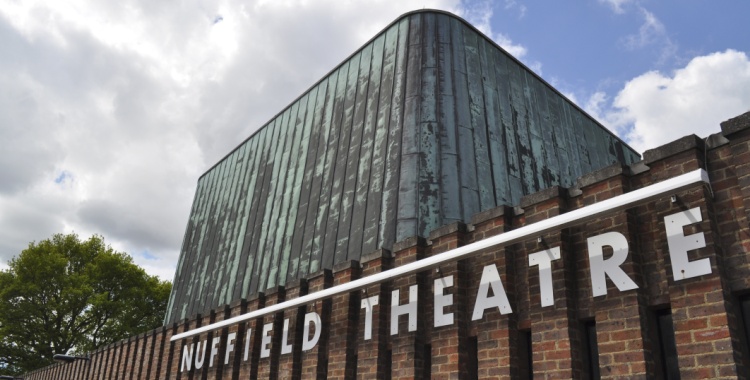
For Sam Hodges, the new artistic director of the Nuffield Theatre, it is important that the theatre’s relationship with the University of Southampton – on whose campus it sits – stretches further than just its arts departments. Since taking the reins he has been working simultaneously on a number of new initiatives, many of which link the activities of the theatre with the university’s leading science and engineering departments, with the aim of creating a “pooled vision and strategy”.

“It makes sense that in a bid to perfectly reflect and embody the qualities of its environment, the theatre should create work that is provocative and intellectually stimulating, provide opportunities of training and professional development, and develop a profile and reputation which reaches well beyond Southampton into the national and international field,” Hodges explains.

Perhaps the most exciting element of these emerging partnerships is their potential to create unique and unexpected outcomes, often through the collision of different artistic approaches. Hodges’ attempt to bring together art and science is one such instance, while the pairing of Told by an Idiot’s highly visual aesthetic with the more traditional actor training of RADA is another prime example. These unanticipated benefits can even have international reach, as with the cultural exchange that the University of Chichester have helped to establish between Action Hero, Forest Fringe and a group of artists in San Francisco.

The real opportunity of these new collaborations, as Hunter recognises, is to open up both artists and students to new possibilities. “Sometimes I think you can learn and be provoked more by going to a place that feels different, rather than aligning yourself always with people who feel familiar.”

Superior Donuts, Southwark Playhouse

Superior-Donuts-600x437

Originally written for Exeunt.

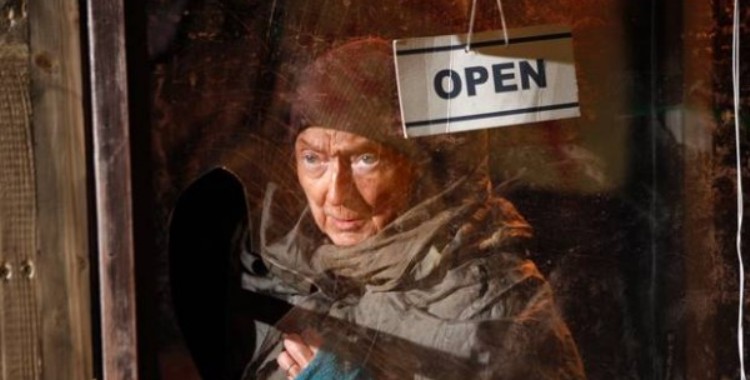
Arthur Przybyszewski’s donut shop, a relic of an American dream past its sell-by date, is being taken away from him piece by piece. In this UK premiere of Tracy Letts’ 2008 play, Fly Davis’ deliberately dilapidated design is falling away at the edges, its grubby walls at once sturdily worn and precariously fragile. It’s the sort of place that radiates the permanence of having been around forever and yet might disappear tomorrow, stamped out by the unstoppable advance of Starbucks.

Such is the contemporary America of Superior Donuts. The context of Letts’ drama is rootedly specific, making frequent reference to its surroundings in Chicago and taking the donut shop of the title as a focal point for the lives of those who pass through it, but it equally speaks to a wider sense of modern malaise. Arthur, an ageing hippie nursing the failures of his idealistic youth amid the ruins of his family business, exhibits a paralysis that seems to typify contemporary apathy. There’s a stubbornness to his resistance to change, but also a weary resignation that can be read in every gesture of Mitchell Mullen’s performance. Here is a man who greets life with slumped shoulders.

Into these stale surroundings, where most of the donuts go to a pair of passing cops and an old wino who never pays a penny, enters the requisite young American dreamer. Jonathan Livingstone’s infectiously energetic Franco is a bundle of enthusiasm, ideas and audacious ambitions, both for the “great American novel” that he has penned in dog-eared exercise books and the donut shop that is falling apart around him. The set up, and subsequently much of the action, is typical clash of the generations, old-cynic-meets-young-optimist stuff, as the new employee grapples with his jaded boss in his attempts to ring in the change. Superior Donuts rehearses a familiar and distinctly American narrative, one littered with the wreckage of dreams but faintly illuminated by friendship and hope.

And yet, hard as it is to pin down, there’s something more to it than that. Letts’ play – and indeed Ned Bennett’s production – has a way of sneaking up on its audience. It is delicate, meandering and unapologetically slow, its rhythm capturing the ebb, flow and occasional eddies of everyday life in this fading staple of uptown Chicago. The pace is slowed even further by the occasionally frustrating interjection of Arthur’s introspective monologues about his past, which have more of a literary than a theatrical quality. Just as the itch comes to check your watch, however, you discover that the play has somehow grabbed you – ever so gently, mind – right by the scruff of the neck.

It is possibly down to the characters, who are deftly captured by Bennett and his cast. Mullen and Livingstone in the central pairing are particularly compelling, their relationship endearing without giving in too much to sentimentality, while Sarah Ball’s policewoman packs a world of yearning into a few snatched glances. Each of the individuals who passes through Arthur’s donut shop, however fleetingly, feels convincingly, compassionately sketched.

But perhaps it has more to do with the play’s relationship to hope, a relationship that is more complicated than it might appear at first glance. Bennett has described the piece as “hugely optimistic”, which it is in many ways, but neither the play nor this production are quite that straightforward. Just as Davis’ design has stripped whole panels from the walls, this is a world in retreat, being dismantled bit by bit in the wake of corporate expansion. It’s telling that even the great dreamer enthuses in marketing speak, discussing poetry readings in the same breath as brand identity. There is optimism to be found, not least in Letts’ determined use of the future tense, but even hope is shown to have its limits.

Creative Constraints

Theatre-Ad-Infinitum-Ballad-of-the-Burning-Star--Alex-Brenner-please-credit-_DSC8291

Originally written for Exeunt.

Ballad of the Burning Star, the latest show from chameleonic theatre company Theatre Ad Infinitum, opens with a bomb warning. It’s an explosive statement of intent from a group of theatremakers who were last seen wordlessly exploring love and loss in gentle mime showTranslunar ParadiseBallad, a blistering satirical cabaret that provocatively examines the Israeli-Palestinian conflict, is about as far away as Theatre Ad Infinitum could get from the moving tale of a grieving widower which propelled them to worldwide success. As co-artistic director Nir Paldi says of the company, “it would be very hard to say ‘ah, they do this’”.

Ballad is very much Paldi’s project; as he explains, he and fellow artistic director George Mann take it in turns to lead the company’s shows. The group of Lecoq graduates “want to constantly be doing different things and different styles”, boasting a back catalogue that ranges from reinventions of classical myths to creative explorations of depression and love. Ballad, however, is by far and away their most ambitious production to date. It emerged as a result of Paldi’s need to find a way of talking about his experiences of growing up in Israel and took a number of years to find its current form. The difficulty, as Paldi quickly discovered, was in finding a theatrical metaphor that could contain the many sensitive complexities of the political situation in Israel.

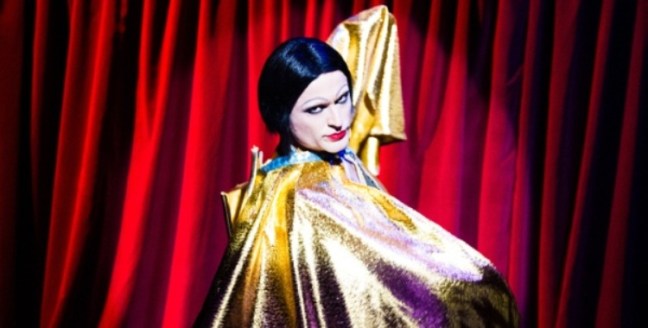
“I really felt that I needed some mechanism to distance it from myself and to make it clear to the audience that as a theatremaker I’m conscious of the complexity in quite a declarative way,” Paldi explains carefully. The show began life as a straightforward autobiographical monologue, but both Paldi and Mann sensed that the material needed a different vehicle. This arrived in the form of drag, an instinctive artistic choice that Paldi says he simply thought “would be really fun”, but which developed into a multi-layered theatrical device. Paldi thus occupies the centre of the show as the larger-than-life Star, a fabulous but bullying cabaret host, supported by a troupe of dancing “Starlets”.

“The nuances were found later as the metaphor became clearer and clearer,” Paldi reflects. “The relationship between Star and her co-performers; how she occupies the stage; how she occupies her co-performers and bullies them and manipulates them against each other; how she treats the audience. The metaphor that started appearing – this is not necessarily what the audience perceives, but it’s what I was working with – is the audience as judges judging the two parties, Star and her Starlets, Israel and Palestine being played by these two bodies in the space. It was a discovery; it wasn’t a decision that was made.”

Discoveries of this kind often emerge from the stylistic decisions imposed on Theatre Ad Infinitum’s creative process. The first thing the company looks for when starting to research a show is a form that will work for the subject matter in question – mime for Translunar Paradise, cabaret for Ballad. This then establishes the limits of the piece, allowing the work of making the performance to take place within those limits. “It’s a constraint, but actually it’s a creative constraint, so that’s the thing that allows you to start working,” says Paldi, echoing the words of co-artistic director Mann.

In the case of Ballad, however, the company was also working with other creative challenges. Chief among these was the dilemma of how to begin exploring such fraught political terrain. “The story that I wanted to talk about and the theme that I wanted to raise in this piece were fairly clear,” Paldi tells me, “it was just how the hell do you do that, how do you speak about it without sounding banal and obvious or very one-sided?”

In resolving this question, the role of work in progress showings and audience feedback in Theatre Ad Infinitum’s process became more vital than ever. Paldi is enthusiastic about the virtues of testing work on audiences during its development, explaining that “it just gives you such a strong image of where you are”. It was these early audiences who pushed Paldi and his creative team to go further with the piece, encouraging them to make the show increasingly provocative. With this in mind, Paldi meticulously researched the viewpoints and arguments from both extremes, daring to make Ballad potentially inflammatory but determined to avoid becoming one-sided.

Of course, no show as provocative as Ballad of the Burning Star could expect to emerge unscathed. The production’s Edinburgh Fringe premiere, while attracting critical acclaim and winning the ensemble an award from The Stage, also faced its fair share of censure. What Paldi was encouraged by in these attacks, however, was the even balance of the anger directed towards the show. “After one show I would be encountered by two different people, sometimes at the same time, and they would tell me ‘that felt really one-sided towards Israel’, or ‘that felt really one-sided towards the Palestinians’, and these conversations would happen almost every day.”

The intensity of these responses vindicates Paldi’s feeling that this is a subject that needs to be talked about – “the whole point was to talk,” he says emphatically. When it comes to his own role in these discussions, however, he is more ambivalent. “I still sometimes find it very hard to …” Paldi trails off, pausing for a moment. “It’s so complicated, so it’s very hard for me to hold a very firm opinion.” He insists that he does not want to be speaking directly to audiences about politics, adding, “I’m not a politician, I’m not very good at it.”

While he is pleased that Battersea Arts Centre and Dialogue will be running discussions alongside the event when it comes to London, Paldi does not necessarily feel that it is his responsibility to offer a space for these conversations to take place. “I don’t know if I see it as my responsibility to provide the place for discussion; it’s more to provoke the discussion,” he explains. It is more important to Paldi that his art speaks for itself: “I’m making a piece and this is what I think.”

As Theatre Ad Infinitum also begin work on their new show – the company are nothing if not multi-taskers – they are still keen to “reinvent ourselves every time”. Light, which will premiere at this year’s Edinburgh Fringe, is different again from Translunar Paradise andBallad of the Burning Star. This new piece, which Paldi describes as “George’s baby”, is inspired by Edward Snowden’s recent revelations about the NSA and by a dream of Mann’s about a “totalitarian, futuristic society”. Drawing on sci-fi influenced aesthetics, it will examine “what happens when technology is being misused by human beings and it falls into the wrong hands” – all without words.

As a commission from the London International Mime Festival, the creative decision to turn once again to mime is appropriate, although the challenge of tackling these complex ideas wordlessly is a formidable one. Paldi explains that the company have been encouraged by the early responses of audiences, who have told them to trust the power of their storytelling, allowing the bulk of the show to develop within the self-imposed “creative constraint”. The question that Theatre Ad Infinitum are now grappling with is the one that continues to guide their work: “how can we say the most interesting and provocative and complex things with this form?”

Photo: Alex Brenner.

Naturalism, Optimism and Donuts

WEB-superior-donuts-rehearsals-019-21

Originally written for Exeunt.

Ned Bennett is telling me a story about the back wall of the Royal Court, a fixture held in reverential affection by a good chunk of the theatre community. During preparations for The Ritual Slaughter of Gorge Mastromas, the ordinarily black wall – which was visible for portions of the show – had to be made to look like exposed brickwork. Instead of stripping the paint back to the bricks beneath it, Bennett explains, the black surface was painted over with brick-effect artwork. Bricks painted to look like bricks.

This small absurdity is oddly apt for both the postmodern commentary of Gorge Mastromas, in which surface is everything, and for the self-mythologizing urges of the Royal Court. Few theatres are quite so invested in their own history. Bennett emerges fresh from this environment, having just finished a year as trainee director with the theatre, in twelve months that spanned the departure of Dominic Cooke, the arrival of Vicky Featherstone, and the whirlwind festival of Open Court. It was nothing if not a baptism of fire.

“It was certainly demystified in no small way,” Bennett admits, agreeing that there is a potentially intimidating aspect to the building’s status within modern British theatre. “It’s funny, though,” he goes on, “you go in being aware of all the history … and it feels like it’s very important to acknowledge the history, then kind of leave it at the door, as it were, and see what’s happening next.”

Despite the demystification, Bennett clearly still holds a fierce affection for the theatre and the projects he worked on during his time there, which ranged from directing a production that toured around schools to being right in the thick of Open Court. “I’d always admired, respected, loved the theatre,” he says, “but what never ceases to amaze me about the building – and this is proper gushy – is how uncynical it is, how uncynical a place to work it is. It is all about trying to create the most interesting, most urgent, most exciting plays, and they’re a very cohesive bunch who all are pulling in the same direction.”

Open Court, the summer festival during which Featherstone handed the keys to the theatre’s writers and the building hosted a staggering range of different events, was clearly a highlight for Bennett. “It was amazing to be going from rehearsing one weekly rep and putting that into tech, and then starting that day on the next weekly rep, and working with a really versatile, exciting rep company of actors. It felt like with Open Court we discovered a lot about what direction the theatre was going to go in from then onwards.”

It was during Open Court that Bennett and I first met, while he was assisting on Anthony Neilson’s Collaboration project. Neilson too was an important feature of Bennett’s time at the Court; as well as being involved with Collaboration, he assisted earlier in the year on Narrative. Neilson’s process, which involves working closely with actors while developing a new play, is one that fascinates both of us. We discuss the openness of his rehearsal room, in which Bennett says “play and curiosity become part of the lifeblood of the room”, and the trust he places in both the actors and the collaborative process.

“What I got from Anthony that I thought was amazing was his perseverance in exploration, rather than immediately wanting to get results then and there,” Bennett tells me. “So if it wasn’t ready, it wasn’t ready; we’d just keep exploring, keep going and keep trying out different things.” This closely tallies with my own experience of Neilson’s rehearsal room, where ideas were gently pushed in new directions and input was welcomed from all directions. “Simply, he creates a non-hierarchical room, and then you get such surprising results.”

Bennett’s year at the Royal Court followed hot on the heels of his explosive revival of Philip Ridley’s Mercury Fur at the Old Red Lion, a show that was 2012’s unexpected hit of the fringe. When I mention that the production with which Bennett made his breakthrough was almost two years ago, he shakes his head in smiling disbelief. He is still a little disbelieving, too, about the show’s success; “we were really, really surprised,” he says of the overnight impact it made. Fuelled by astonishing word of mouth, Mercury Fur quickly sold out at the Old Red Lion, earning itself a transfer to Trafalgar Studios that same summer.

Ridley’s play is set in a dystopian near future, where London is a lawless wasteland and addictive hallucinogenic butterflies are eroding the memories of those still scratching out a living. Bennett’s startling, visceral production for Greenhouse Theatre Company created an electric charge in the tightly packed space of the Old Red Lion, drawing out both the play’s infamous power to shock and the surprising humanity of its characters and their love for one another.

“I was just so struck by the relationship between the two brothers, Elliot and Darren, and this big question of what would you do for those that you love,” Bennett says, getting right to the heart of his interpretation. He describes Mercury Fur as a “modern masterpiece”, explaining that when he was given the script to read by Greenhouse’s Henry Lewis and Joel Samuels it immediately became his favourite play. Even with this faith in the material, however, he was blown away by the response it received. Bennett attributes some of this to the production’s appearance in the wake of the 2011 riots, which lent Ridley’s play a haunting prescience, but he is clear that his version did not set out to make this connection. For Bennett, it was all about the characters.

It is character once again that has attracted Bennett to Tracy Letts’ Superior Donuts, the UK premiere of which he is currently directing at the Southwark Playhouse. It is being presented by the same company behind Mercury Fur, who have newly reinvented themselves as The Trick. Bennett is a “huge fan” of Letts and is excited to get his hands on this script. “I always found that his writing – as with Ridley – has such a visceral complexity to it,” he explains the fascination.

Superior Donuts is set in a donut shop in Chicago, telling the story of the man who runs it and the people who pass through every day. “You’ve got these nine fantastic characters, aged 21 to 72, all endowed with such depth and humanity,” says Bennett. “I found it profoundly moving and hugely optimistic. It just felt like the right play to do, and it couldn’t be more different from Mercury Fur.”

While Bennett describes the play as a “naturalistic piece”, he is interested in ways of pushing that naturalism in his production. “We didn’t just want to build a donut shop,” he explains. “The brilliant Fly Davies has come up with an incredible design that allows us to represent the off-stage world in a non-literal way in the space.” He quickly adds that they are “not doing some big expressionistic production of it”, but it is clear that his production hopes to test what can be done within an ostensibly naturalistic framework.

When I ask how Bennett feels about naturalism as a director, he wrestles a little with the question. Referring to projects such as Narrative, which clearly departed from naturalism, he suggests that his own position is somewhat ambivalent, before adding, “I don’t think there is an either/or”. We end up discussing Secret Theatre, which offers an intriguing marriage of a more naturalistic, character-based British tradition with continental influences that are less interested in realistic representation.

“One of my biggest interests is definitely character,” Bennett says, “but I think – as things like Secret Theatre’s Streetcar showed – you can still create, represent, express amazing characters, but not necessarily be pinned down to some kind of naturalistic context. I sort of feel like I’m just exploring what that means.” For now, he is happy to remain on the fence and keep exploring.

Photo: Ben Broomfield.

A Trio of Tragedies

thebes-2-600x400

Originally written for Exeunt.

In this year’s rep season from The Faction, there are a hell of a lot of corpses. Across the span of the trio of tragedies – Hamlet, Thebes and The Robbers – the body count is staggeringly high. If one were to characterise the company’s third season of work in a few words, dark, violent and bloody immediately jump to mind.

Reductive as this is, there is something about death, both as an abstract idea and a concrete reality, which haunts all three productions. When I spoke to The Faction’s artistic director Mark Leipacher about this new season, he explained that the company did not have any overarching theme or narrative in mind when they put together the programme; their priority was simply to find work that engaged and excited them. Still, the simple placing of these plays alongside one another invites a dialogue between them, a dialogue which is repeatedly preoccupied with mortality.

There is perhaps no more famous theatrical consideration of life and death than Hamlet’s “to be or not to be” soliloquy. Hamlet’s fame and familiarity are often albatrosses to sling around the shoulders of new productions, all of which must fall under the burden of the play’s reputation. The Faction’s interpretation, directed by Leipacher, suffers a little from this predicament. Compared with previous productions of theirs, there is an uncharacteristic timidity to their approach; few moments match the visual boldness of their best work, and there is the sense that each actor is deeply aware of the weight of the words falling from their lips.

That said, there are some intriguing touches to this Hamlet. The characterisation of the procrastinating protagonist himself is perhaps the most striking departure, as Jonny McPherson plays the Dane less as a conflicted hero and more as a whining egotist. Amidst tentative attempts to wrench something new out of the play, this comparatively brave choice stands out, offering novel and occasionally unexpected resonances to Shakespeare’s words. The ever-compelling Derval Mellett, meanwhile, makes a fascinating and nuanced Ophelia, adding vivid colour to a role that can often feel lightly sketched.

The season really hits its stride, however, with Thebes, Gareth Jandrell’s ambitious attempt to slot together the full story of the Oedipus dynasty from the plays of Sophocles and Aeschylus. It stands out as the clear highlight of this year’s programme, offering this most famous of classical sagas in a form that makes it feel thrillingly fresh. What adds the sense of urgency and momentum is primarily the production’s shift of focus; as signalled by the title, it is the city and its beleaguered people who become the heart of the narrative. This city is both Thebes and nowhere, The Faction’s non-specific updating dislocating it from time and place and positioning it instead as a potent metaphor for power, corruption and revolution.

Following the template established by McPherson’s moody Hamlet, The Faction are unafraid to highlight the tragic flaws of their privileged but doomed characters, who are increasingly detached from the seething masses they rule. Lachlan McCall brings arrogant swagger to the ill-fated Oedipus, while his two sons are suitably vile, self-centred and ruthless in their competition for the throne. This is an elite who are either blindly wrapped up in their own problems or coldly fixated on power. Cary Crankson – another performer who impresses across all three productions – epitomises this calculated power-grabbing with his Creon, a supremely slippery politician who soothes with one hand as he snatches with the other.

The pulse of the piece, however, lies firmly with the people. In Rachel Valentine Smith’s production, the Chorus are transformed into a writhing, revolutionary mob, variously whispering, sighing and stamping at the edges of the action. When gathered together in this crowd, the ensemble move fluidly as one, exploiting the physical vocabulary that they have developed over years of working together. This is where the muscularity of previous work returns in force, creating a population to be reckoned with and a sparse but captivating visual aesthetic to match Jandrell’s lyrical, punchy script.

Following the epic scope and revolutionary fire of Thebes, the scrappy, overblown drama ofThe Robbers feels like a significant step down. This is a remounted production for The Faction and forms a key part of their project to stage the complete works of Schiller, but it is far from the playwright’s best, lacking the tense political machinations of Mary Stuart and Fiesco, which were showcased in The Faction’s last two rep seasons. Here, instead, the drama is centred on a father and his two sons, the younger of whom attempts to usurp his older brother. It is all blood and passion, heightened to the extent that it frequently tips over into melodrama.

There is still the muscular approach of The Faction’s preferred aesthetic, alongside some inventive visual devices. Chalk is a key material, used first to compose the letters that seal the fate of cast out older brother Karl and later by Karl’s band of rebels to strikingly tally up the men they kill on their numerous rampages. It is in the scenes between these eponymous robbers that the production is at its strongest, once again playing on the group’s strength as an ensemble to build a convincing sense of camaraderie. At their centre, overshadowing conflicted Karl, is Crankson as the cocksure, rebellious Spiegelberg. Yet even Crankson’s undeniable charisma flags in the final scenes, as the bodies stack up and the overwrought emotion becomes wearing in its relentlessness.

After the slightly more cluttered sets of last year, this season wisely reverts to The Faction’s bare, stripped back minimalism, using the New Diorama’s black box studio and their own bodies as canvas and paint. The bare black wall is particularly well used, whether seemingly being held up by the defending soldiers of Thebes or treated as a giant blackboard in The Robbers. In this largely empty space, the brilliant work of lighting designers Chris Withers (Hamlet and Thebes) and Matthew Graham (The Robbers) is crucial in carving up the scenes, skilfully offering both shape and atmosphere. Light spills in from offstage, casting interesting shadows, or glows dimly from a single, dangling light bulb. In line with the morbid subject matter, gloomy visual landscapes abound.

This is now the third year in a row that I have attended The Faction’s annual rep season, allowing a line to be traced through their work over that time. In many ways this year feels like a return to the company’s essential aims and aesthetics, focusing on the kinds of text and staging that most enthuse and inspire them. There is also, of course, the return to one of their landmark productions with The Robbers, but this fails to match up to the best of what they have created since. It is instead in Thebes, arguably The Faction’s most ambitious work to date, that the company’s aspirations and strengths are found in their purest form: a bare but thrilling staging, an approach to classics that makes them feel like they were written yesterday, and an unshakeable faith in the power of the ensemble.

Photos: Richard Davenport.