Bryony Kimmings: DIY Nativity

DIY-Nativity-05_white_shadow_sml_1-600x600

Originally written for Exeunt.

“For me, Christmas is totally commercial,” Bryony Kimmings happily confesses to me over the phone. Her admission voices the strange, finance sapping grip that the festive season has on us; from dedicated shopping weekends to the cluster of Facebook groups declaring that Christmas begins with the advent of the Coca-Cola advert, little about the season of goodwill slips outside the fairy-lit net of fierce consumerism. In this heightened commercial atmosphere, even Christmas entertainment can become a commodity, sold on the fame – or occasionally the infamy – of its B-list panto star.

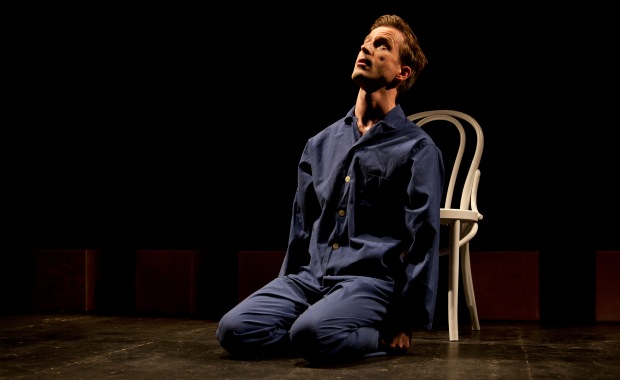
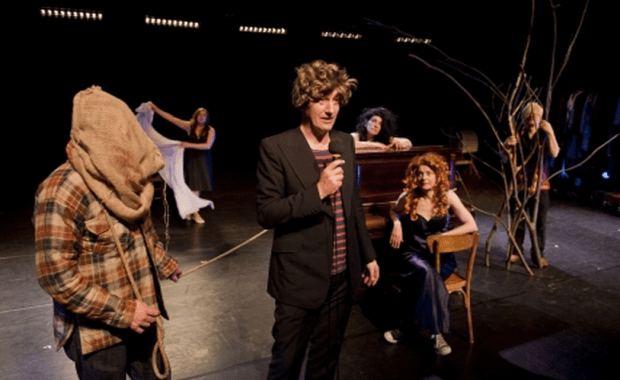
The interactive family show that Kimmings proffers as an alternative is, like the Pritt-sticked Christmas cards about to be received by legions of proud parents, rather more homespun. “The design is all brown paper and ribbon,” says Kimmings; unlike nearly everything else we encounter at this time of year, “it has an element of ‘this doesn’t cost anything’”. As the title DIY Nativity hints, this is a festive gift of the “it’s the thought that counts” variety – homemade, a little messy, heartfelt without being schmaltzy. “This show is very much a celebration,” Kimmings explains simply. “All we really want is for people to have a bloody lovely time with their families or mates and to leave feeling totally joyous.”

When commissioned by The Junction in Cambridge to create the venue’s Christmas show this year, Kimmings was immediately attracted to the idea of reinvention. Much as her clash of live art, cabaret and pop culture borrows from and appropriates various different forms, her intention in using the framework of the traditional school nativity play was to transform it into something new – in this case, a nativity that is not necessarily about religion.

Talking about the origins of DIY Nativity, Kimmings describes the slightly “touchy” reactions she received from some people when suggesting the concept of a show based around the idea of the nativity, a response that convinced her it was “the perfect thing to do”. Although of course religious in essence, Kimmings argues that the form has become increasingly secularised in schools, leading her to think that it could be interesting to create a nativity from the perspective of someone not particularly religious.

Her intention in twisting this form, however, is not to undermine it. “I would never make it in any way offensive,” she is keen to assert. “My work generally isn’t offensive; it might tackle things that are a little bit taboo or a bit edgy, but it’s never deliberately offensive.” Speaking to her, it soon becomes apparent that Kimmings is instead aiming for the opposite, attempting “the impossible task of making Christmas perfect for everybody” and engaging with the inevitable challenge this brings with it. The narrative drive of the show is this desire to “create a version of Christmas that everyone’s comfortable with” and the barriers that this desire finds itself running into.

While Kimmings isn’t one for loftily condemning the commercialism of Christmas in modern society, she does question it, as much in herself as in others. “My own selfish greed is probably going to be exposed and hopefully challenged by making this show,” she laughs, speaking about the ways in which her understanding of the festive season is set up to be tested and subverted by the attitudes of her two collaborators, Stuart Bowden and Sam Halmarack. Through this process, she hopes that – as well as having a good time – audience members might stop to think a little about what Christmas really means to them.

“Children think of Christmas as presents and chocolate and Coca-Cola and TV – probably – and I’m not 100% convinced that’s what it should be about,” Kimmings muses, her tone flipping from light to thoughtful mid-sentence. This train of thought flags up a new direction in her work, which is currently moving through a pop-culture-filtered consideration of what it means to be a child in today’s society, set to culminate in a new show she is making with her niece. The irony of this sudden turn, when held up against the likes of Sex Idiot and 7 Day Drunk has not escaped Kimmings.

“It’s really weird because I totally hate people who work with kids,” she says with characteristic frankness, seeming genuinely startled that her interest has been piqued down this unexpected path. This new direction began when Kimmings was asked by Battersea Arts Centre to contribute a piece to its children’s show The Good Neighbour, initiating a process of making that revealed a surprising level of reserve in the children she encountered. “I imagined kids would be really wild and do whatever they wanted to do,” she says, “but every kid I worked with was so stifled by what they might look like in front of other people.”

This embarrassment, which Kimmings attributes to the ubiquitous goals of fame and perfection, has been attacked with a heavy dose of the ridiculous. In her section of The Good Neighbour, kids were asked to pull silly faces, the more grotesque the better; in DIY Nativity, they are rewarded for discarding their embarrassment and getting stuck in. This level of involvement is an element that has been central to Kimmings’ work for both adults and children, and audience participation is a subject she launches into with obvious passion.

“With me it’s always a case of asking the audience to do something, from just doing my zip up to cutting off their pubes,” she says, naming the controversial example from Sex Idiot. “Obviously cutting off their pubes isn’t going to happen,” she hastily adds with a giggle, “as this show is four plus, but my version of how something will be DIY is that it starts off very easy and very nice, but by the end what we’re asking them to do is something that’s a little more risky or invested. My work is a slow build to something that’s quite a big ask, but that’s done in a very friendly, hand holdy way.”

While Kimmings talks about the importance of “building an affinity” with the audience and gaining their trust, she has little time for shows that label themselves as interactive without a clear artistic purpose for that audience involvement. For Kimmings, audience interaction is integral because “it’s important to hold a mirror and say I’m the same as you; I’m a dirty human being and so are you”. It is through this holding up of the mirror that she believes her work gains its power.

“Theatre isn’t life-changing in the same way as lots of other things,” she goes on, “but it can be, and having a positive experience that isn’t just watching a play, that’s getting up, getting involved and doing something outside of your comfort zone for a reason, is so fucking powerful, but people are really abusing it.” There is a brief flare of anger that quickly dissipates, much as when Kimmings talks about the inhibitions of the children she has worked with and her horror at discovering that her niece aspires to be on The Only Way is Essex. For all the glitter, there’s also some grit at the core of what drives Kimmings to create her own brand of “light art”, as fellow artist Scottee has dubbed it.

Kimmings is refreshingly free of pretensions, however, placing audience experience at the centre of what she does. “It’s not really for artists,” she says of theatre and performance, “it’s for audiences, but people forget that.” With a touch of sparkle and some joyously silly joining in, Kimmings hopes to remind us of that, as well as reminding us that Christmas might be about more than just spending. At its heart, as with all good Christmas shows, DIY Nativity is about the simple pleasure of having fun in the company of others. But, Kimmings is keen to add, “if it also had a moment of ethical reflection I’d be really pleased, because I think that might be the crux of where the mirror is held up.”

Clod Ensemble’s Silver Swan, Tate Modern

silver_swan_hugo_glendinning_1

The vast, yawning space of the Tate Modern’s Turbine Hall, a stunning canvas of grey, is as much of a challenge as it is a beauty. The last time I was in this cavernous room, it was filled with bodies scattering and swarming and rhythmically chanting, a blank surface across which Tino Sehgal’s captivating These Associations gently rippled. During my three separate visits to the piece, the space struck me as being perfect for performance work, gifted as it is with gorgeously haunting acoustics and an awesome (in its literal sense of awe-inducing) backdrop. It’s the most striking stage an artist could wish for.

Yet it is also so very big and so very beautiful that it is almost impossible for its contents to eclipse it, especially when those contents are small human blots on its monolithic landscape. This is the difficulty faced by Clod Ensemble’s Silver Swan, an elliptical fusion of song and movement originally created for a much smaller space. As I opened by acknowledging, it is easy to see why Clod Ensemble have been drawn to the Turbine Hall, if just for the acoustics alone. The rich texture of Paul Clark’s score, inspired by two 17th century songs by John Smith and William Lawes and sung unaccompanied by a group of female singers, ricochets off the walls in exquisite yet unnerving ways, its melodies hypnotic but slightly impenetrable to my untrained ears.

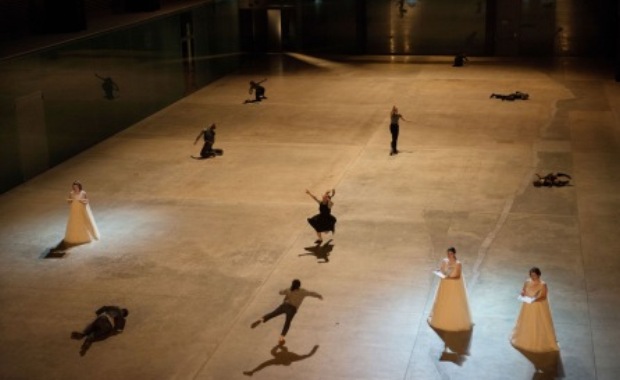
Untrained seems like a helpful word to pick up, as I felt throughout as though I was not quite versed in how to watch or listen to what Clod Ensemble presented us with. Described simply, Silver Swan consists of two short acts. The first of these involves just the unaccompanied singers, who seem to float down into the space garbed all in white, bell-shaped dresses. Invited to advance towards these ethereal, singing figures, the audience moves gradually forwards through the space until we are split into two groups for the second act. This section of the performance, which I viewed from the bridge above, brings the addition of grey-clad dancers into the space. These figures, dwarfed against the vastness of the Turbine Hall, feel their way around the walls and investigate the environment with their bodies, alternately running, stumbling and falling.

The overall result is entrancing yet numbing. Initial thoughts about the hopeful, thwarted efforts of humanity were prompted by the creeping progress of the figures below, crumpled one by one under the huge weight of air in the Turbine Hall, while the singing inevitably conjures the choral hymns of the church, with the hall standing in for a particularly large, echoing and bleak place of worship. Beyond this, however, I found myself a little stumped. Instead, lulled by the enigmatic beauty of the music and the movement and the space itself, I was transformed into an unusually passive viewer, letting the cumulative effect wash over me. It was an experience paradoxically both relaxing and frustrating.

This may well be my failure as a spectator, as I’m happy to acknowledge that neither classical music nor dance represent areas of great knowledge for me. I can’t help wondering, however, if Clod Ensemble’s piece, much as it attempts to engage with both space and audience, isn’t just a little too small for this huge challenge. Transfixed but not transported, I too felt small in the middle of the gaping space around me, a space that Silver Swan enters into mesmerising dialogue with but that it never entirely fills.

Image: Hugo Glendinning

DEFRAG_, Camden People’s Theatre

IMAGE_3282_landscape (2)

I have a confession to make: I hardly ever defragment my laptop hard drive. I know I should, as friends far more conversant in technology than I am repeatedly tell me. But, like that filing system I keep telling myself I’m going to install in my room, it seems like too much hassle, too much time. It’s a fitting metaphor for the endless mental stuff we accumulate, thoughts and facts and ideas all stuffed into dusty corners of our mind and left to languish there, victim to that “maybe tomorrow” attitude that always seems to attach itself to the task of organisation. The thought of sorting everything into neat little packages is appealing, but continually put off.

This is the metaphor that codes its way through DEFRAG_, Tom Lyall’s gently compelling love letter to artificial intelligence and one of a clutch of futuristic visions being presented at the Camden People’s Theatre as part of their Futureshock programme. Half lecture, half something else, Lyall’s solo show is continually surprising in its unapologetically geeky, dryly amusing intelligence. Starting with the appeal of the defrag – the seductive idea that you might be able to realign your thoughts and free up space elsewhere – Lyall’s protagonist is a broken, recovering individual, attempting to reassemble his identity in the same way that a computer retrieves scattered files. Until, that is, he discovers that there might be a computer that could do it all for him.

Both playing on and eschewing the dystopian fear of the computer as ultra-intelligent other, the relationship that DEFRAG_ nurtures with artificial intelligence is an altogether more affectionate one. Lyall speaks to anyone who has ever fallen a little bit in love with a lightning-fast operating system or sexy interface, acknowledging the strange allure of an intelligence governed by reason alone. How appealing to be able to make decisions uninfected by neuroses, to be able to organise thoughts into easily accessible files and folders. There is a sort of fear wrapped up in this too, as acknowledged through the interjecting narrative of a super-computer designed to beat its human competitors in the US gameshow Jeopardy – the fear that the computer might simply be better than we can ever aspire to be. The other can be as seductive as it is threatening.

The structure chosen by Lyall is one that neatly reflects this murky division between human and machine. He delivers the first half standing at a lectern, cultivating a genial mode of delivery that sits somewhere between lecture, confessional and storytelling, as he tells us about the gameshow storming super-computer Watson, his relationship with computers, and his growing mistrust of his own internal hard drive following a brain injury. But just as Lyall has lulled us into the rhythm of his narrative, it slides suddenly into sci-fi territory, a canny move that snags our attention as we find ourselves just as dislocated as Lyall’s imprisoned protagonist, with nothing to rely on but a disembodied electronic voice. The piece can thus seemingly be divided along clean lines into the corporeal and virtual, but it is never quite this simple.

No one trick geek, Lyall is as sensitive to the conventions and contrivances of theatre as he is to the jargon of computing. With the house lights still up, he gently mocks the art of representation by “acting” the drinking of a glass of water and acknowledges his artificial surroundings – “I see you’ve met the set” – while also drawing attention to the relationship between theatre and value. Are we getting what we’ve paid for? This is only loosely knitted to the main weave of what DEFRAG_ is doing, but when interrogated more closely, Lyall’s attention to the blurred line between the fake and the real seems ever more integral in its relationship to the content of the piece. The computer, after all, is just another imitation of human faculties.

While DEFRAG_ might fascinate and tickle the secret sci-fi fan in me, it is ultimately the human story weaved by Lyall that becomes the most engrossing. The fears he delicately touches upon, of losing memories or finding one’s sense of self unravelling, are ones that afflict us all. Storytelling is also cast in a central position within our relationship with artificial intelligence; as Lyall’s unnamed protagonist backs up his life onto a super hard drive, stories are passed from file to file in the same way they once travelled from mouth to mouth, the currency of our humanity deposited into a bank that might well have its own agendas. If our stories and memories can be appropriated, what remains to separate us from our machines?

There are no real answers, but that feels right. Because if there’s one thing that sets humans apart from our machine counterparts, it’s that ambiguous area of grey that renders the defiantly black and white process of the defrag impossible.

Image: Rachel Ferriman

Where is the Audience?

Originally written for Exeunt.

The question that forms the title of this column might sound like a strange one. The audience are out there surely, in the dark, occasionally punctuated by the odd surreptitiously scribbling critic. They are a vital part of the circuit, without which theatre and performance would not be able to fire. They constitute theatre’s purpose, its immediacy, the second half of its violently beating heart.

Yet I wonder if the audience, robbed of light, are failing to be seen. On Monday evening I attended the latest Platform event as part of the Bush Theatre’s RADAR festival of new writing, an event entitled “how is critical discourse keeping pace with contemporary theatre?” Perhaps unsurprisingly, given the terms in which this question was framed, the contributions – from Sean Holmes, Andrew Haydon, Ramin Gray and Maddy Costa – were centred on interrogating the directions in which both critical discourse and contemporary theatre might be heading and how they might or might not be in step with one another. And those contributions were thoughtful and nuanced and exciting and made me want to start new conversations.

In all of these many heady conversations that I and others have been participating in over the last few months, however, there is a nagging absence. It acts as a black hole, the latent subject around which all our discussions revolve and to which they are irresistibly drawn, but that does not quite show itself. Just as they find themselves shrouded in darkness in the auditorium, the audience have remained barely visible in these discussions, a constant yet silent presence whose lack of visibility only became fully clear to me after it was raised in two separate conversations following the RADAR Platform. Where is the audience in this dialogue?

Being a big fan of conversation – as my friends can no doubt exasperatedly attest to – the thought that critics and theatremakers might be starting to talk more to one another can only be a good thing. But while we alternate between knocking heads and sharing ideas, the very people for whose benefit we’re loudly wrangling might be hovering awkwardly over our shoulders, struggling to find a way in.

At another panel talk I recently attended, I sat stranded in the tides of discussion, uncharacteristically tongue-tied and unable to navigate a route into the conversation. That wasn’t the fault of anyone speaking, but I’d hate for my own excited immersion within the current bubble of critical discourse to make others feel that same sense of marooned dislocation. The bubble is delicate and beautiful, but it might also be exclusive and eventually stifling. After all, there’s only so much air to go around.

It strikes me as ironic that the Platform at the Bush, in which the audience were curiously quiet, was followed later that same evening by the inclusive powerhouse of Kieran Hurley’s Beats. An exhilarating mash-up of storytelling and techno music set to the backdrop of the rave culture of the early 1990s, Hurley’s play hinges tantalisingly on the idea that a live gathering of people might be something inherently radical. It’s an act of immediate togetherness that seems ever more subversive in an age of digital connection that has both expanded and fractured human relations. Set against the emailing, the tweeting, the blogging, the simple idea of collecting in one physical location to share a fleetingly live experience becomes something that breaks the norm, interrupting the electronic noise at the same time as it contributes to it.

As I felt while watching Beats, a belief in the power of theatre must also be a belief in the potential of the shared space and the collective experience. At an earlier Platform event as part of RADAR, which responded to the provocation “one idea that could change our theatrical landscape”, Chris Goode offered up the possibility of “making the space for something to happen in”. Since being generously invited into rehearsals by Greyscale earlier this year, I’ve come to agree with Chris that the site of process is often more interesting and exciting than the “finished” (note the scare quotes) work. I’m utterly, giddily seduced by the fragile magic of the rehearsal room. Setting aside my own desires, however, perhaps what we ought to be looking for is a space – either literal or figurative – that can include everyone; a space that might, as Chris suggests, “scuff the distinctions between process and product, and artist and audience”. Isn’t that the space that we (in which I include both critics and makers) should be really interested in creating?

But before we all berate ourselves too much, perhaps the kernel of a solution to this issue of including and engaging the audience was already there, in the speeches and provocations at the Bush and the enthusiasm- and wine-fuelled conversations in the bar afterwards. At one point during her contribution, Maddy Costa highlighted the US site Culturebot, its guiding concept of “critical horizontalism” and its dedication to a response that is “the continuation of a dialogue initiated by the artist”. That dialogue that the artist has initiated is surely a dialogue with the audience of the piece, a dialogue in which the critic has a role as both a participant and an enabling force. Critics’ conversations with theatremakers, whatever form those conversations might take, are not exclusive duologues; for the health of the discussion and of the art form, we need to get everyone talking.

Of all the speeches made on the stage of the Bush Theatre on Monday evening, the one in which the audience figured most heavily was given by Sean Holmes. Based on his experience at the Lyric Hammersmith, he spoke of audiences that were hungry, starved of something that British theatre is not currently providing them with – a ravenous desire that is not reflected in mainstream criticism, but that perhaps in fact those audiences don’t mind about not seeing mirrored there. It’s a hunger that theatres and makers should be striving to feed, and that for the most part I think they are striving to feed. But that shouldn’t let theatre criticism off the hook. How do we turn on the lights, get talking and find the food to satisfy that appetite?

The Coming Storm / Sight is the Sense that Dying People Tend to Lose First

Before I begin (and, incidentally, I hope you’re sitting comfortably) I feel compelled to admit that Friday evening wasn’t the first time I’d seen Forced Entertainment’s latest show The Coming Storm. I first experienced this clowning dissection of the art of narrative some months ago as part of LIFT, and have since read a number of other responses to the show and discussed it with a number of different people. In critical terms, if we’re going to play along with the fallacy of “pureness” and “objectivity”, my reception of this performance was tainted. Yet it feels oddly appropriate, for a piece that plays with the stories we project onto others as much as the ones we hear and tell, that I already brought my own narrative around the show into the room.

The observant among you will also notice that this piece of writing, according to its title, is not just responding to The Coming Storm. I saw it at Battersea Arts Centre alongside Tim Etchells’ new show Sight is the Sense that Dying People Tend to Lose First, a virtuosic symphony of free-association performed by Jim Fletcher. I could have written about these two pieces separately, which might in many ways have made sense, as they do not initially appear to have a great deal in common other than Etchells. But the way in which the pieces were placed in relation to one another, and my experience of them in quick succession, creates a certain response that it feels worth acknowledging. I am, to look at it one way, framing the story.

So, to the beginning. As Terry O’Connor tells us, deadpan into the microphone with the other performers assembled in a line alongside her, “a good story needs a good beginning”. Forced Entertainment’s point of departure is a list, continuing almost to oblivion, of all the elements that make up a successful story: narrative drive, cliffhangers, a love triangle, a death. Immediately, fragments of narrative begin to attach themselves to the performers, who through minuscule gestures take on the role of signifiers. Performers might be implicitly cast as lovers or as enemies. It’s calculated, but pointedly not pointed; the movements of the performers, though suggestive, place the act of projection firmly with the audience. We are the ones who ultimately make the connections.

And this is much how the show continues. Just as it seems Terry’s toneless litany of narrative building blocks might dry up, the microphone is snatched from her, initiating a chain of preposterous, failed or interrupted stories from the rest of the performers. Tales rarely finish – some barely begin. While attempted narratives are breathed into the microphone, the other performers concentrate their energies into chaotic distractions, donning dodgy wigs and masks and underscoring the stories with drumbeats and piano music. Dissonant elements clash and collide. But throughout the pandemonium, the same floating signifiers emerge and dissipate, inviting spectators to make connections that are not there.

Just as each of the individual narratives subverts or fails to fulfil Terry’s initial requirements for a good story, the overall structure of the piece breaks its own lengthily established rules. It meanders, stumbles, defies narrative logic. The cleverness lies in the fact that the show’s very failure (or staging of its own failure, though it doesn’t feel quite that neat) is an affirmation of the need it identifies. If our attention wanders or becomes frustrated, it’s because we’re seeking that narrative to latch onto, a narrative that Forced Entertainment smash apart at the same time as they erase their own creation. The repeated cycle of creation and destruction goes on until the whole collapses in on itself, dropping to its knees, wheezing and exhausted, with a closing note of “melancholy optimism”.

In the midst of this destructive anarchy, the stories themselves can seem irrelevant, random. Their substance is perhaps less important than their form and their (failed) techniques. They borrow from and break convention upon convention, from Hollywood movie (Cathy Naden periodically intervenes in stories to demand which actor would play a particular character) to cabaret confessional, each with an inherent criticism of the flawed ways in which we choose to communicate and share.

Yet their content is not entirely superfluous, at least not to my stubbornly association-drawing mind. There’s something that threads through – or does it? – about aging, about death, about grief and loss. There are also subtle hints at the company’s own history and at the ever-so-lightly hinted idea that (whisper it) they might be getting too old for this. At the evening’s wearied close, the performers seem fed up with what they have created and dissembled, deeply fatigued by their own frenzied effort.

This fatigue extends to the music, which interjects, builds, reaches a crescendo and finally collapses. Introduced as just another distraction, much like the wigs and masks and costumes that are lined up on rails in a nod to the childhood game of dressing up, the music eventually emerges as an integral element that both mirrors and resists the piece’s overall shape. Rhythms are repeated and frustrated; the steady mounting of sound is truncated by a crashing halt. Storms build with the beat of a snare drum and dissolve into monotonous lulls. Even as the chaotic performance limps to a close, Cathy and Claire stand with their backs to the audience tapping out a series of final notes on the piano, notes that are sad yet optimistic.

The “melancholy optimism” with which The Coming Storm concludes seems to bleed into Sight is the Sense – though of course, as already acknowledged, this connection is heavily influenced by seeing the two shows one after the other. Sight is the Sense also feels haunted by the ghost of Gatsby, with whom Jim Fletcher is inevitably associated after the eight-hour theatrical phenomenon of Gatz, and who carries a kind of melancholic weight into the room. The piece itself, however, initially appears to be oddly light and insubstantial. Fletcher stands, scruffy and unassuming, in the bare Council Chamber, reciting a list of statements about the world. And that, in essence, is it.

These statements range from the technical to the banal, the hackneyed to the strangely profound. We’re told that “space is dark emptiness”, “love is a kind of hypnosis”, “laughter is contagious”, “capitalism will probably not last forever”. The associations tumble one after the other, occasionally snagging on their way down. It is time capsule made into text, a collection of proverb, cliche and quotation that feels saturated with the accumulated stuff of modern culture. And just like a time capsule, into which carefully selected objects are dropped, it is necessarily limited. There’s only so much room.

This is deliberately, teasingly slippery theatre. The gathering statements, though simple, are also surprisingly elusive, while neither Fletcher’s oddly mesmerising performance nor the stripped down staging give an audience much to grasp onto. In a sly, knowing move, Fletcher proceeds to tell us that “theatre is mainly pretending” and that “the job of an actor is to simulate thoughts and feelings they do not really have”, remaining all the while blandly expressionless.

This very lack of expression allows Fletcher to become a blank canvas, a generator of words onto whom we project. Meaning is continually displaced, as the lightest wry, world-weary note in Fletcher’s voice is contradicted by the naivety or optimism of his words, which might the next moment become charged with implicit cynicism or sorrow. If this is to be read as a world view, it is a contradictory, undecided one. Which, it might be argued, is the only world view that one can reasonably have in the world as it is.

This confusion and complexity is heightened by the need throughout for objects and concepts to be measured against one another in the attempt to grasp definitions. “Wickedness is the name that people once gave to evil”, or “a mirror is a defective window”. Much like in the frenzied, competitive description of the board game Articulate, lines are hastily drawn between similar or differing ideas, reinforcing Saussure’s assertion that everything in language is based on relations. We are caught in a web of constant references.

But the real beauty of the free-association form that Etchells has appropriated – a sort of distilled stream of consciousness – is that it frees our minds to float between their own associations. My initial use of the word “light” is accurate in a sense, in that the piece brings a certain intoxicating weightlessness to the room. It is in this enabling and unveiling of our own connection-making tendencies that Sight is the Sense finds its affinity with The Coming Storm, freeing our minds to roam while at the same time activating our awareness of these mental processes.

Both pieces also produce a sort of breathlessness – the first weary, the second spellbound. As a pairing, they are unexpectedly complementary in their juxtaposed tone; the crazed energy of The Coming Storm assaults the senses, while Sight is the Sense offers a reviving, hypnotic air of calm. Picking up on my own imprecise, carelessly deployed critical vocabulary, for once the frequently used word “piece” seems entirely apt. Each is a fragment composed of many smaller fragments. Like a story, itself made up of narrative jigsaw pieces, that slots into a wider cultural frame.