A Streetcar Named Desire, Young Vic

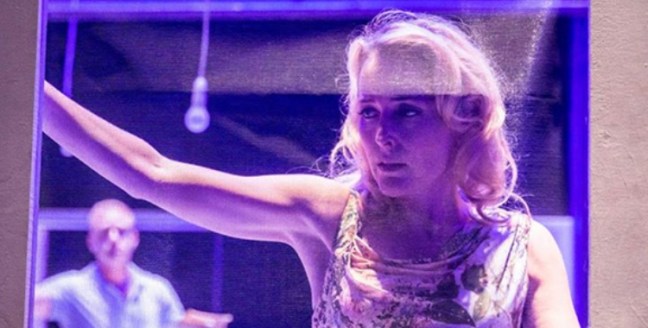
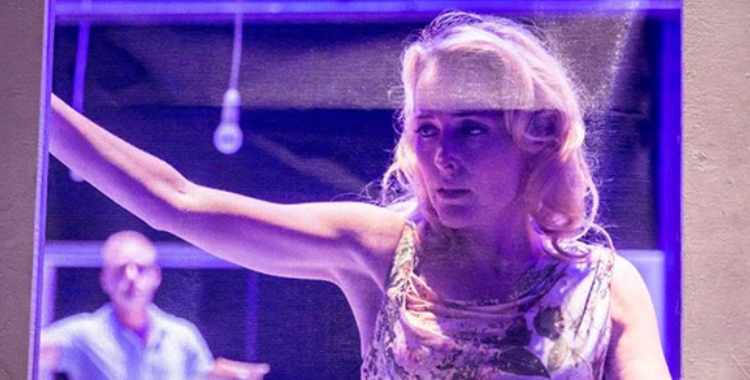
ben-foster-and-gillian-anderson-in-a-streetcar-named-desire-89975

“I don’t want realism. I want magic.”

In Secret Theatre’s version of A Streetcar Named Desire, Blanche’s famous line raised a light, knowing chuckle from the audience. The character might have been referring to her inclination towards fantasy and illusion, but her words could well have been a mantra for the production, which turned Tennessee Williams’ play and all its well-worn visual tropes inside out. Those words, spoken in that context, also posed an implicit question. Why, on the stage, do we settle for realism when we could have magic?

I’m reminded of the frustrated words of Eugene Ionesco: “I personally would like to bring a tortoise onto the stage, turn it into a racehorse, then into a hat, a song, a dragoon and a fountain of water. One can dare anything in the theatre and it is the place where one dares the least”. In theatre, where one thing always stands for another – when the relationship is one of metaphor – why do we still insist that those two things look alike?

Partly liberated by the secrecy bound up in the project (show titles are not released in advance), Secret Theatre’s Streetcar somehow freed the play of all its – and particularly Blanche’s – baggage, presenting us instead with its exposed innards. It understood theatrical representation as metaphor in its most playful sense; chunks of watermelon stood in for poker chips, and Blanche’s endless glasses of liquor became liberal drenchings of water. It was not quite magic, but it certainly wasn’t realism.

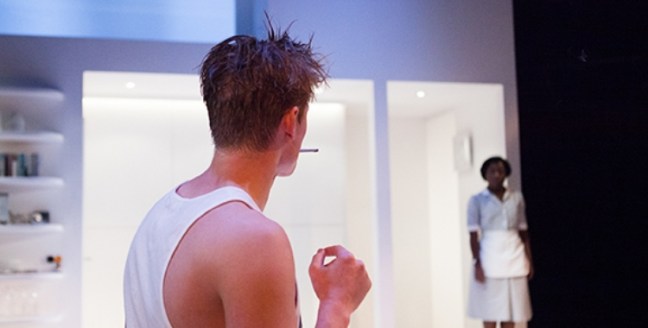
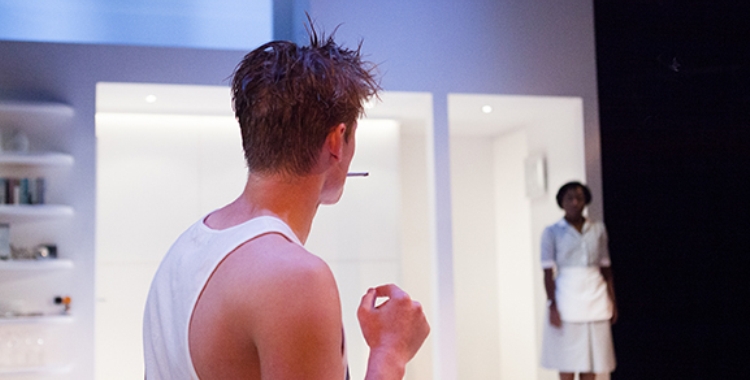
By comparison, Benedict Andrews’ new production feels sort of drab, dull even. First, let’s be clear: Andrews’ take on Streetcar isn’t exactly realism. There’s a stylishly skeletal revolving set, garish washes of coloured light, scene changes underscored with Swans and Chris Isaak. But in between the vivid flashes of colour and music, it’s naturalism by another name. Matt Trueman has coined the perfect term for it: “realishism”.

That “ish” is apt. This Streetcar is interesting-ish, elegant-ish. It puts a slight spin – both literal and figurative – on Williams’ play, but never enough to leave us giddy. Or put it this way: if you were expecting another classic done in the same vein as Andrews’ storming, vodka-fuelled Three Sisters, prepare to be disappointed.

On the main stage of the Young Vic, Stella and Stanley’s cramped, claustrophobic apartment is a metal husk of a building. Magda Willi’s set strips out walls, leaving only the framework of the rooms through which an audience can peer. The characters are at one level exposed and at another trapped. This is the cage that Blanche knocks against, that Stella has no desire to get out of.

Andrews’ production sets this space in almost perpetual motion, turning it clockwise, anti-clockwise and back again on the wide revolve. It’s slightly reminiscent of Ian MacNeil’s smoothly spinning set for A Doll’s House on the same stage, but while that design offered fleeting, cinematic tableaux between scenes, this keeps everyone queasily turning throughout. The sensation is one of constant shifts, but the only direction in which any of it can go is round in dizzy circles.

Like any repetitive cycle, however, this one begins to get boring. In the first half, the pace is swift and the tension tight, coiled like Stanley’s unpredictable temper. But the momentum drops away after the interval as the production follows increasingly familiar tracks. Andrews might half-heartedly update Williams’ play, kitting it out with Ikea furniture and skinny jeans, but Gillian Anderson’s Blanche is just as we expect her: flirtatious, fragile Southern belle, all carefully composed but rapidly cracking mask. Her downfall is competently conveyed, but never quite tragic.

While Anderson fails to break the mould as Blanche, Ben Foster’s war-damaged Stanley is an intriguing take on the role. Rather than picking up the obvious cues from Williams’ descriptions of the character as primitively animalistic, Andrews and Foster seize on Stanley’s military history, suggesting a man broken by conflict. When his first major outburst arrives, it is truly explosive because it seems to come unbidden; this is not a man of naturally violent passions, but one shot through with an anger he is unable to control.

Stanley’s reconciliation with Vanessa Kirby’s Stella, immediately following this scene, is another of Andrews’ successes. Their bodies meet in a rush of passion, their movements adopting a tango-like quality under the hot red glow of Blanche’s Chinese lampshade. The production is studded with little moments like this, small scenelets that elevate the quality of the rest. They are too sparsely positioned, however, to entirely rescue the bland expanses in between.

It’s unclear, meanwhile, just what Andrews’ updating achieves. His Three Sisters wrenched Chekhov’s play out of any specific temporal context, brilliantly locating it on a timeless, abstract plane. The setting for Streetcar, on the other hand, is recognisably modern, but with few concessions to that modernity in Anderson’s performance. What the time shift does highlight, however, is the play’s gender politics. Watching, I’m more aware than ever of the limited borders of Blanche’s horizon. As she says at one point, her role as a woman is to entertain, to be beautiful. And the beer-drenched masculinity of Stanley’s poker games is not much of an alternative, trapping men within a system of rules and expectations that is just as restrictive, if endowed with a bit more power.

These hints at an implicit gender critique, however, dissolve into obvious and borderline offensive imagery. To leave us in no doubt of either Blanche’s troubled mental state or the pressures of femininity heaped onto her, Andrews puts Anderson into a candy pink dress and wonky tiara, hair ruffled and face smeared with make-up. Southern belle transformed into dishevelled Barbie princess. It’s the crashingly unsubtle culmination of a dismayingly uninventive telling of this character’s trajectory, casting little light on its themes of mental health and sexual politics. From a director whose interpretation of Three Sisters was so bursting with invention, it’s a bitter disappointment.

Photo: Johan Persson.
This is How We Die, Ovalhouse

ChrisBB_main_web_image_460_551_95_s

Lights down. Spotlight, table, microphone. Christopher Brett Bailey – skinny form and violent shock of hair – walks on and sits down, mouth poised over the mic. And open.

Words words words so many words no pause even for breath seemingly faster even than the mouth the mouth in Not I and it’s a bit like Beckett the loops the associations the dark humour staring unblinking into the void but also like comic books graphic novels a comic book sketched out in words in imagination dark vivid lines phrases jump out “farting clichés” language is twisting mutating losing meaning “linguistic whitewashing” permeated with advertising with marketing with fucking capitalist bullshit and the rage the raw pulsing rage but we are here together and that’s something right here together and that bulge in my pocket is not a revolver I am not going to attack you.

How the hell is he talking so fast?

On stage, Bailey is part beat poet, part swaggering frontman, words curling from his lips with a punk rock snarl. His text, read from a slowly diminishing, neatly stacked pile of pages in front of him, is as linguistically dense as anything I’ve heard. And yet it has a musical quality. As the words pour out, they are sound as much as they are meaning. Language slithers and somersaults. It’s now a diatribe, now a painfully poetic digression, now a gleeful contortion of the way we make words mean.

It’s also bloody funny.

“This is a coming of age story no longer.”

At some point the twisting, turning narrative has become a comic strip of America, a dusty road stretching far into the distance. And here’s the shrapnel of every road trip movie you’ve ever seen, sharp splinters flying in the form of words. It’s cartoonish, but then dirty and bloody and totally fucking exhilarating. It’s every thrilling moment of violence in every Hollywood movie.

“Your life is not a thriller.”

So this is the bit about death. Is this how we die? In a mess of language and violence and desperate searching for meaning. Is this the end we’re obsessed with? The scrubbing out of a miniscule speck in a miniscule corner of the universe, the final heartbeat that we both anticipate and recoil from.

But we’re accelerating. The words are getting faster again Bailey’s mouth moving faster coiling itself around the words that are like weapons and the world around us is accelerating too the world that condenses time and space and all of human knowledge into a black box that can fit in the palm of your hand and now where are we there’s a crowd we are the crowd we are the gladiatorial mob baying for blood demanding a performance demanding the words

the words

the words

And then the words are gone and Bailey is gone and all we have is the lights the blinding lights.

Language is dead.

Hum of bass from the gloom beyond the lights. Strains of violin. The noise builds, the light brightens. A fuck-off growl of electric guitar breaks through the strings. And then louder and louder, brighter and brighter. Shapes outlined faintly in the darkness – or is that my eyes playing tricks on me?

Now the sensory overload is almost unbearable and the music is moving in me, through me, vibrations rippling out from body to body. The sound is a primal throb and the noise and the lights are blinding and the noise and the room seems to hold its breath and the noise the NOISE.

I’m spat back out into the Ovalhouse foyer, ears ringing and hands slightly shaking. I struggle to remember the last time I emerged from a show feeling so physically shaken, so aware of my own body in the charged space of the theatre.

I think: this is theatre you feel. Theatre you feel in your gut and on your skin. Theatre that leaves you a little breathless. And that’s an experience which is all too rare.

Hotel, or Untangling the Knots

tom-rhys-harries-ralph-and-susan-wokoma-nala-88864

Tuesday lunchtime: I’m sat in the Arcola bar, chatting to Danny Braverman and Nick Philippou about the brilliant sounding Wot? No Fish!! They are talking about making a story of a Jewish family speak beyond its immediate community, about the importance of outsider narratives in a political environment that stokes fear around immigration, about bringing an audience together in their difference.

Wednesday night: I’m perched on the edge of my seat in the Pit theatre at the Barbican, shoulders uncertainly shuddering with laughter. The cause of these tentative giggles is Young Jean Lee’s brilliantly unsettling The Shipmentwhich needles me with constant questioning of my own assumptions. How much is my view of the world tinted by race? Is this bit actually funny, or am I just helplessly falling into a trap? And actually – wait a minute – why am I making the experience of watching this show about me?

Friday evening: Partway through a panel discussion on arts criticism at the ICA, a woman in the audience raises the vital issue of diversity. How can critics – a deplorably white, middle-class breed – respond to work from cultures completely removed from their own? Just as I’m mentally firing that question at myself, Matt Trueman responds brilliantly and honestly with an admission of his own discomfort and uncertainty when having to review such shows (I’m really not doing his answer much justice – it was spot on).

Saturday morning: Playing catch-up, I read Andrew Haydon’s post about diversity (or lack thereof) in theatre. I’m particularly struck by two points. One: “A Soap For Every Race *cannot* be the goal for a diverse UK theatre”. Two: “We need to stop thinking that a ‘black actor’ *means* something *about* ‘Otherness’; if critics could stop reading a woman being cast as a man as some sort of comment on the ‘male’ character’s masculinity/effeminacy… That sort of thing”.

Saturday afternoon: I’m catching up again, seeing Polly Stenham’s new play Hotel at the National Theatre Shed (sorry, temporary theatre). And throughout this play about post-colonialism and Western responsibility, as shock follows shock and I hunch further and further down into my seat, I feel increasingly uncomfortable about its attitudes to race. And then I question my discomfort. And repeat.

Two days later and I’m still processing that discomfort. Race is (rightly) a knotty topic at the best of times, and with the conversations and reflections of the last week replaying in my mind I’m finding it increasingly tricky to untangle. Each time I do pick at the knots, my uneasy awareness of my own privilege halts me.

So perhaps privilege itself is a good place to start. I think it would be fair to say that Polly Stenham’s work to date has, among other things, concerned itself with a particularly privileged corner of British society. Her first three plays dissected white, upper-middle-class dysfunction, focusing on complex and often broken relationships between parents and children. First world problems of the highest order.

And Hotel opens in similar territory. A wealthy white family are holidaying on an unspecified desert island, where the fault lines of their relationships are soon exposed. Vivienne has just resigned from cabinet, made a laughing stock by her husband’s online indiscretions, while their teenage children Ralph and Frankie are messily entangled in the sordid affair (very messily, as it gradually transpires). The air is thick with betrayal and prickly with recriminations. And then – bang. The play that Hotel gave every indication of becoming is suddenly blasted to pieces.

On one level, Stenham and director Maria Aberg have done a very clever thing. The opening scenes of the play are one long teaser, playing on the expectations that Stenham’s previous work sets up, allowing the production to sharply pull the rug out from beneath our feet. What looked like a litany of middle-class moaning (played with claustrophobic precision by Hermione Gulliford, Tom Beard, Tom Rhys Harries and Shannon Tarbet) quickly turns into a tense hostage situation, as chambermaid Nala and her locally hired accomplice hold the family at gunpoint.

But this would-be kidnapper is not after money. Instead, her aim is to force an acceptance of responsibility from Vivienne, who was behind a deal that offered aid to Kenya in exchange for opening up unregulated trade. Free market capitalism under the guise of charity.

The point is a fierce and vital one. Exploitation does not just come in the form of colonial invasion, while globalisation closes the gap between action and consequence at the same time as it distances deed and responsibility. There is even a neat metaphorical resonance with the early domestic drama, as virtual transgression mirrors the way in which we in the West deny our complicity in the structures that oppress elsewhere. Just as Aberg’s production rips through the fabric of Naomi Dawson’s sterile white set – all pristine, synthetic luxury – the blind complacency of audience and characters is torn down the middle.

There are, however, some undeniable problems with this rapid shift. Because it comes out of nowhere, the motives for this sudden violence need a hefty bit of exposition, leaving Susan Wokoma’s Nala awkwardly delivering a lecture with gun in hand. Her accusations seek to leave our complicity in no doubt, but Wokoma’s brief, jarring recognition of the audience feels misjudged – a gesture, rather than a real effort of implication. Then the second narrative lurch is even more preposterous, injecting another shot of violence for little more than the shock it jolts through the audience. Sure, it’s gripping, but I can’t help wondering if this undermines rather than strengthens its point. A thriller is just that: thrilling. Which feels more than a little problematic given Stenham’s subject matter.

And so to those knots. Matt Trueman’s review grapples articulately with the possible racism in the piece, although I wouldn’t go as far in my reservations. My main concern lies in the limited representation of the play’s black characters. Nala plays a central role, but her accomplice is a crudely sketched outline, while the other black characters appear only fleetingly, their sole function being to deliver a further blast of violence. The focus remains firmly on the white, Western family, who squirm under the play’s microscope.

Perhaps it’s unsurprising that a play skewering white privilege should concentrate its attention on white characters. Further, it could be reasoned that Stenham is deliberately putting herself in this picture, attacking a position that she feels able to speak from (and, of course, a position that many of her audiences at the National Theatre will share). It would also be difficult to argue that she has no right to deal with these issues, reducing the debate to the level of a question asked at this year’s National Student Drama Festival by a young audience member who was outraged that none of the performers in a show about homophobia in American high schools had ever themselves been on the receiving end of homophobia in an American high school.

Still, there’s something about Hotel that niggles at me. I think again of The Shipment, a play about African-American identity written by a Korean-American. It sounds potentially misguided, but as I noted in my review, Lee’s own struggle with the show’s ideas (developed, significantly, with the all-black cast) somehow allows an audience to acknowledge society’s inbuilt racial prejudices and our own implication in those. To echo Braverman and Philippou, it brings audiences together in their difference – without ignoring or obliterating that difference. Hotel, on the other hand, is in danger of simply reiterating difference, while its use of its subject matter could be seen as the same kind of stealthy colonialism it attacks.

I should stress that I remain uncertain, and I’ve contorted myself through various spasms of discomfort and anxiety in trying to tackle my uncertainty. But maybe that’s no bad thing. Towards the end of the stand-up routine in The Shipment, the black comedian turns his attention to those white people who constantly tiptoe on eggshells, cautious of offending and quick to apologise. But rather than attacking this attitude, as we are braced for, he approves of it. Because what’s wrong with being careful?

Photo: Kwame Lestrade.

Opus No 7, Barbican

opus2

If you haven’t seen Opus No 7 and you still have an opportunity to, stop reading now.

Go see it.

There’s not really a plot as such to spoil, but the below will unavoidably outline some of the images that gain so much of their power from surprise. So be warned.

Dmitry Krymov has a talent for making the ordinary appear strange, for transforming the familiar into the singular. Limbs explode from cardboard walls, startlingly divorced from the bodies that own them. Splashes of black paint morph into shadowy figures. A blizzard of newspaper scraps conjures debris one moment and confetti the next. The dead hold hands with the living. The inanimate is given life. Image bursts into reality and reality solidifies into image.

Opus No 7, the designer turned director’s latest production, is a dazzling procession of such transformations. So composed is it of images, the performance does not yield willingly to language. As elusive as it is astonishing, its qualities slip from the critical grasp – shape-shifting, like Krymov’s captivating pictures, just as the mind begins to outline them. This is theatre made for feeling, not thinking.

There is a structure of sorts, though this too is elusive. The first half, Genealogy, yawns with loss. In it, a group of figures sift through fragments of history, clutching at names, photographs, items of clothing. Phoenix-like, they move among the ashes of the past. Though abstract, the scenes allude in their haunting imagery to the Holocaust – but strikingly unshackled from the now familiar visual markers that history has attached to it. In its sudden, surprising evocation of loss, there is something inexplicably moving about a performer walking along a pair of tiny red shoes by their laces, or a cardboard arm suddenly reaching up to take that same performer’s hand.

The second half offers us a visual biography of composer Dmitry Shostakovich, who we see first nurtured and then smothered by an oppressive Mother Russia. As a child-like figure at the opening of the act, hugging to Mother Russia’s skirts, the wooden skeleton of a piano is Shostakovich’s climbing frame, his creativity given free and playful rein. But the same power that initially encouraged the composer later ensnares him, pinning a medal on his chest that stabs him through the heart. As Soviet repression and censorship reaches its height, Mother Russia pulls the trigger on her artists and the piano bursts into flame.

opus1

Fittingly, given the subject of the second act, Opus No 7 operates more like music than theatre. It is, for a start, largely wordless. There are echoes and refrains: the chilling tread of an SS officer in the first half becomes the boot of Mother Russia – realised as a huge and often terrifying puppet – in the second. Silence and stillness are juxtaposed with furious flurries of activity, as pitch and tempo both fluctuate. The theatrical crescendo, as rusty pianos invade the stage and crash violently into one another, is powerful as much for the accompaniment of Shostakovich’s “Symphony No 7” as it is for what we see.

And the performance provoked in me the kind of raw, visceral, emotional response that I more readily associate with music – and, interestingly, with visual art – than with theatre. When I walk around a gallery or listen to a piece of music, my reaction (at least my first reaction) is instinctive rather than cerebral. If I really, really love a painting or a sculpture or a song, the feeling it stirs is perhaps best described as an ache; pleasure bruised with just a hint of pain. Opus No 7 leaves behind that same sort of ache.

At one point during the first half, I remember thinking: there’s too much. Not, I should hastily add, in a negative way. At the Barbican, we are seated on the stage of the main theatre, thrillingly close to the action. It is a wide, wide stage. Placed right up close to the performance, it is therefore impossible to take in everything that is happening at one time – the playing space is just too big. The experience of watching, then, is to a degree overwhelming. And I wonder if this is part of its power. Like the aesthetic sublime, it is too much to take in at once, to comprehend as a whole. For that reason, it both awes and captivates.

Watching theatre like this, I’m aware more than ever of the visual poverty of so much of what we see on Britain’s stages. Where, apart from a scattering of bold efforts, is our designer-led theatre? The visual, as Krymov and his team prove, can be just as eloquent as the verbal. Opus No 7 is no less rich for its scarcity of language; ideas, though slippery, still move under its mesmerising surface of unforgettable images. The impact is indescribable, yet indelible.

https://www.youtube.com/watch?v=maOgxgyFljE

Photos: Natalia Cheban.

Not Working But Wandering

DSC01519

“Walking, ideally, is a state of mind in which the mind, the body and the world are aligned, as though they were three characters finally in conversation together, three notes suddenly making a chord. Walking allows us to be in our bodies and in the world without being made busy by them. It leaves us free to think without being wholly lost in our thoughts.”
Rebecca Solnit, Wanderlust

Walking has always been my cure of choice. When feeling beaten down or uninspired, I have a habit of taking my frustrations outside, of treading my anxieties into pavement or path. Even living in London for the past year and a half, where walking for its own sake feels less natural (especially – oh, how I hate that this remains the case – as a woman), wandering has been a refuge.

Slowly reading my way through Rebecca Solnit’s Wanderlust, then, is an amble of delight and recognition. I love the unapologetic subjectivity of its voice; I love its idiosyncratic approach to the narrating of a history; I love its easy traversing of different terrains, moving fluidly through anecdote to literature to politics. And in its very form it finds the harmony of thought that walking allows, its intellectual rambling at once free and yet absolutely grounded in the landscape of the world we live in.

For days now I have been wrestling with how to write about all the things I have not been writing about, the shows that have been accusingly piling up behind me while work is tugging my attention in other directions. Until, devouring another chapter of Wanderlust in the snatched moments before sleep the other night, I thought of turning this too into a wander – a liberating meander rather than a joyless trudge towards my destination.

And how apt that two of the pieces of theatre that have been itching at my mind are about landscapes both literal and metaphorical, places to be walked and thought through. Both were seen at the caravan showcase in Brighton, where I was busy blogging and tweeting for Farnham Maltings, doing my best to act as a window for the outside world. Over the course of three days, I packed in as many shows and discussions as possible, punctuated by frantic tapping at my laptop keyboard.

So when I saw Landscape II, the new Melanie Wilson show that I had been kicking myself for missing ever since its run at BAC last year, I was tired. A small detail, but an important one. Because Landscape II, Wilson’s delicate tapestry of the lives of three women, requires a certain quality of concentration – one that I found myself struggling to give it. Its exquisite layering of story, sound and video offers a sort of sensory overload; as an audience member, you are required to sift through the information even as the narrative runs on. But strangely, at the same time as the mind scrabbles to piece things together, the pace of the show itself feels gorgeously unhurried. Time does funny things.

???????????????????????????????

Reflecting on the piece now, a couple of weeks after seeing it, I find it hard to draw together all its separate strands. What I remember is that it is about three women, separated by time and brutal circumstance, their stories overlapping with one another, the personal and the political bleeding together. Wilson narrates these stories from a desk to the side of the stage, the majority of which is dominated by an off-white, roughly textured wall – much like that of the cottage that is central to the action – which vividly blooms into life thanks to Will Duke’s projected video (perhaps the most stunningly simple use of projection I’ve seen used in a theatre). There is also a beautifully textured sound design, manipulated live on stage by Wilson, lulling and occasionally jolting us in our seats.

Wilson has a very particular quality as a performer, a quality that is not easy to render in words. It is something about her presence in the room – her half smile, the way she holds herself – but it is mostly about her voice. Gentle, hypnotic, almost sustained at one level tone, but peppered with the lightest of inflections. Sometimes, dangerously, soporific. During Landscape II, that mesmerising mode of delivery found me drifting. Not unpleasantly, I might add, and I wonder if that is the very experience the piece invites, though I would like to see it again and focus more intently on its different elements. While drifting, I found myself thinking about Gertrude Stein and her comments on the doubled, dislocated time of theatre, demanding as it constantly does an effort on the part of the spectator. I also thought, aptly, of her “landscape theatre”. Perhaps Wilson’s various landscapes invite a sort of imaginary walking, in which wandering off the path can be just as rewarding as sticking closely to its tracks.

There was a similar quality, I found, to the experience of watching Ours Was the Fen Country. Again, I was tired. Before seeing it, I had heard Dan Canham’s show described as “verbatim dance theatre”, a concept that intrigued me all by itself. What might that look like? As it turns out, this hybrid genre manifests itself as a series of recordings, performed interview material (using the same headphone technique that Alecky Blythe is now well known for), sound and movement. It all stems from Canham’s research in the Fens, a fading landscape that is evoked on stage by its words and images and a careful physicalisation of its atmosphere.

Like the place it explores, Ours Was the Fen Country is strange, haunting, sometimes bleak and sometimes beautiful. As with Landscape II, it is possible to drift in and out, at some times tuning in to the words of the Fen inhabitants, at others to the movements of the performers. I would have loved to have seen more of that movement, which suddenly elevates the piece each time it breaks through. There is one particularly magical moment, early on in the piece, where the leap from spoken to embodied history elicits a collective shiver. Words fall into a rhythm, pattered out by one pair of feet, then more, until all of the performers are moving as one. It is dance, but it is also work and walking and tracing the same steps day after day, animating the landscape as a collective body.

???????????????????????????????

Perhaps one of the reasons I love walking is because it offers one of the few interludes when I feel completely untethered from work. I like the idea, articulated by Solnit, that “walking is an amateur act”. When walking as an act in its own right rather than as a way of propelling myself from A to B, I am aimless in the best of ways; no destination or deadline directs the rise and fall of my feet. Elsewhere, I am either working or feeling guilty about not working, but when I walk I am absorbed by the gentle physical activity, comfortable in my thoughts and my body.

Recently I have been thinking a lot, both personally and academically, about work. I repeat to myself the words “work is not a moral good” (I think I need a sign to put up somewhere in my room) but I still act as though it is. I write these sentences in a paper about artistic labour, knowing as I do that they uncannily describe my own relationship to my work:

“In many ways, cultural work presents an ideal example of immaterial labour, marrying as it does often intangible outputs with precarious working conditions, ever-lengthening hours and the insidious erosion of distinctions between work and life – all of which is endured and even celebrated under the banner of creativity, self-expression and flexibility. Love for one’s work becomes an agent of one’s own exploitation.” 

I do love my work, but I also love the moments around it, the moments that are not work in any real sense but that feed richly into both work and life. The time that I am lucky enough to spend in rehearsal rooms (time that has happily found a bit of space in my life again in the last few weeks) seems to fall into that latter category. There is something about those spaces – at least, the spaces that I have been fortunate enough to be welcomed into – that feels freeing, weightless almost. I’ve almost always experienced an atmosphere of calm of the kind described by Chris Goode, even when the making itself might be at its most frantic. As when walking, I feel that I am in a place somehow apart, yet still closely connected with the world outside. And then, of course, there’s that breathless thrill of witnessing the moments when stuff really happens, when discoveries are made for the very first time and the thinking in the room suddenly shifts.

???????????????????????????????

I wonder if part of the reason why I loved Secret Theatre Show 5 so much was that it takes place in a rehearsal room – more specifically, the rehearsal room at the Lyric Hammersmith, where the Secret Theatre company have been experimenting for the past year. This space could not be more appropriate for the company’s latest show, which feels in many ways like the absolute expression of the collective way of working that the ensemble have been playing with over a process of months. It is a piece which is clearly born from this particular group of people and from the room that they have created together; the room that we now sit in, with them.

Walking in, everything about the framing of the piece immediately appeals to me. The intimate sharing of the space, the inbuilt risk and spontaneity, the visible traces of the company’s process on the very walls of the room. And watching it produces the palpable sensation of sharing a room with a group of people just having a brilliant time together – a sensation which is fiercely infectious. It’s thoughtful and complex and messy, but also joyful and chaotic, full of music, play, dancing. Oh, the dancing. Rarely (if ever) have I grinned and gurned so much during a piece of theatre.

Speaking to Joel Horwood (who acted as dramaturg on this show) afterwards, he told me that the starting provocations for the piece were community, hope and transcendence. Add joy and anarchy to that list and – without giving any more away – that just about captures what the company have produced.

I can’t pretend that Show 5 is perfect. When I see it, still early in the preview run, there are moments that stutter, while I wonder if it needs a slightly more robust dynamic at its heart to drive it along. But its imperfections only make me more fond of it. Not for a minute to dismiss its intelligence, my reaction to Show 5 operated firmly on the level of feeling rather than intellect. It made my heart skip, sing and burst. It made me want to go back again and again and again, both to watch the shifts in the piece and to be swallowed whole by it once more. I just fucking loved it.

There is, as ever, more to write about. I want to pin down why I was so utterly, strangely compelled by A String Section and everything it so implicitly yet so powerfully says about being a woman; to capture the spine-tingling marriage of music and storytelling in The Bullet and the Bass Trombone; to unpack the almost unbearable tension that pervades Ivo van Hove’s astonishing production of A View from the Bridge, which I finally saw on Friday night; to write once again about what a tight, gripping piece of writing Grounded is and how much of a rock star Lucy Ellinson is in it.

But every wander comes to a halt, and I fear I have already rambled (in both senses of the word) too much. So I will bring my (metaphorical) feet full circle and end, as I began, with Solnit:

“Walking shares with making and working that crucial element of engagement of the body and the mind with the world, of knowing the world through the body and the body through the world.”

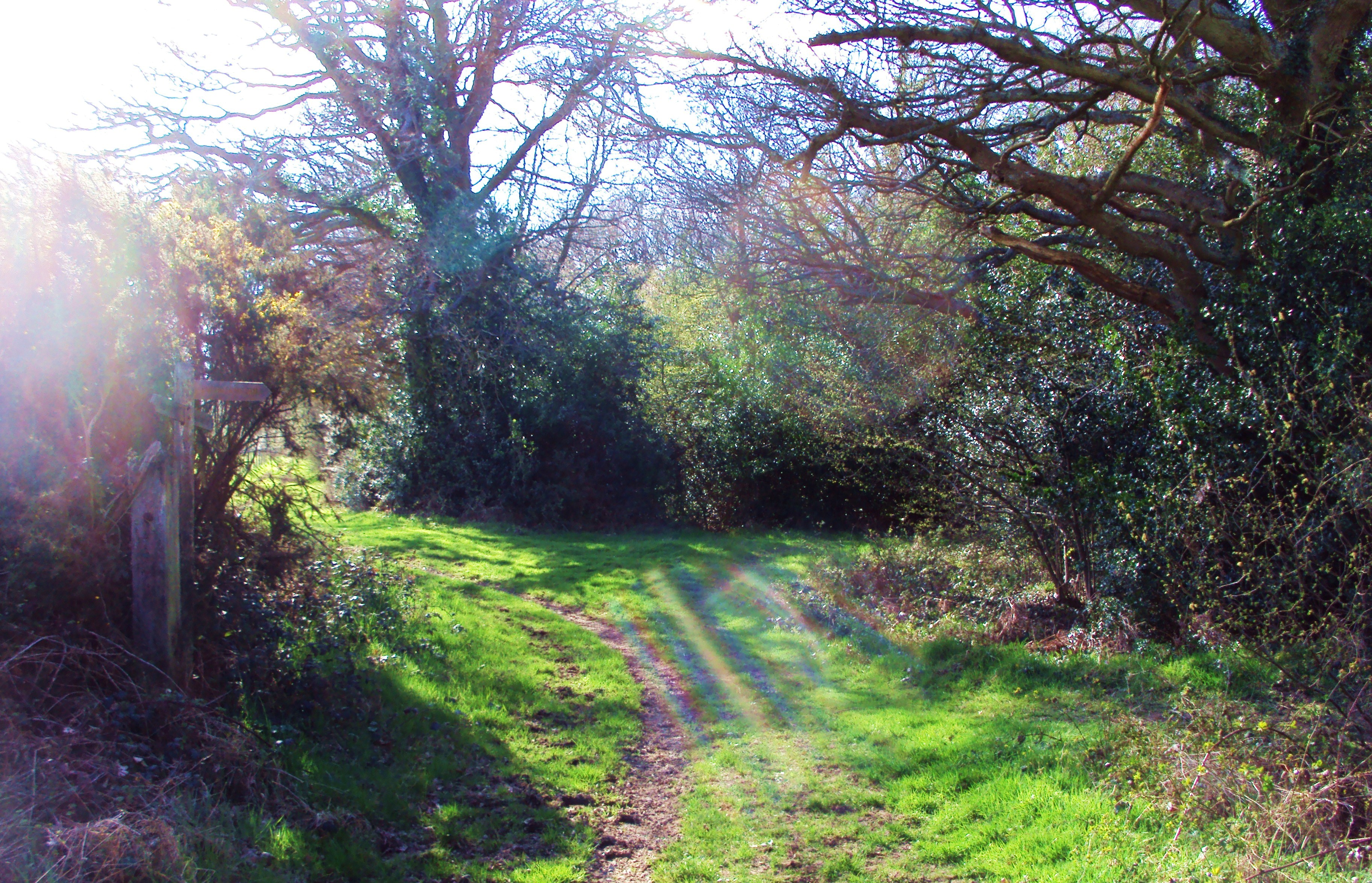
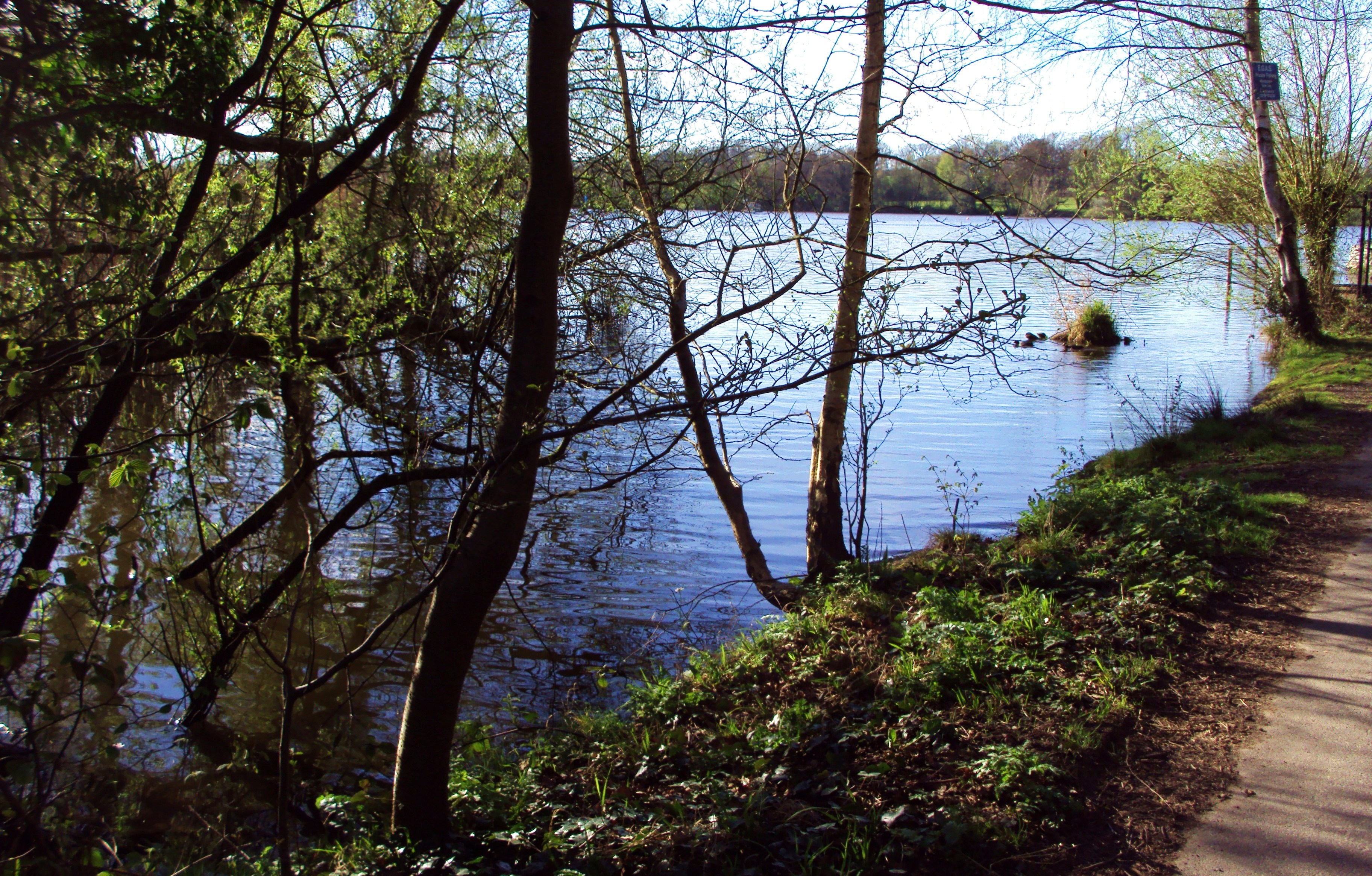
(The photos above were all taken on some of my favourite walks, and I also used a couple of them in my write-up of The Forest and the Field – a meander in prose if ever there was one)