An Innately Optimistic Profession

events1-600x336

Originally written for Exeunt.

At the close of his introduction to the latest book in the Methuen Modern British Playwriting series, Andrew Haydon departs on a distinctly optimistic note. Surveying British theatre at the end of the 2000s, he sees a landscape of possibilities, looking towards a “future where old divisions between ‘New Work’ and ‘New Writing’ had turned into fertile breeding grounds for collaboration” and “where a progressive spirit of inquiry and confident uncertainty had begun to replace condescension and refusal”.

Almost halfway through the decade following that with which the book concerns itself, the barrier between ‘New Writing’ and ‘New Work’ – although productively challenged – has not entirely dissolved, while continued funding cuts pose a threat for that “progressive spirit of inquiry and confident uncertainty”. But what comes through strongly, both in the period discussed by the book and the years since, is an increasing spirit of collaboration, as pointed to by Haydon. Faced with the rise of new forms and shifting understandings of the relationship between theatre and its audiences, a number of contemporary British playwrights have adapted their practice accordingly, embracing new and varied ways of working.

Two prime examples, both discussed in Methuen’s volume, are Simon Stephens and David Greig. As Jacqueline Bolton points out in her excellent chapter on Stephens’ work, his prolific output is “distinguished by a willingness and enthusiasm to work collaboratively”. Perhaps his most striking collaboration is that with German director Sebastian Nübling, which Ramin Gray has suggested is unique, but beyond this he has a sustained interest in opening up his writing. Stephens has spoken on many occasions about how his encounters with other theatre cultures and artists – and, indeed, with critics – have invigorated his practice. Talking to me in a recent interview, he described his plays as “the starting point of a conversation between myself and a director, a director and a cast of actors, director and artistic team, artistic director and a director, and then artistic collaboration and an audience”. The play is not the thing; it’s a point of departure.

Bolton’s chapter goes one step further by linking Stephens’ interest in and commitment to collaboration with the recurrent preoccupations of his writing. While many have noted the bleakness and brutality of the worlds Stephens puts on stage (with the help of his collaborators, of course), Bolton sees instead – or, rather, in addition – a compassion for his subjects and a genuine quest for communication and understanding. This chimes with the spirit of collaboration pursued in Stephens’ work; as Bolton puts it, “To work collaboratively is, after all, to affirm the importance and significance of truth, of respect and of generosity”. This can be supported by Stephens’ own assertion that theatre is “an innately optimistic profession”.

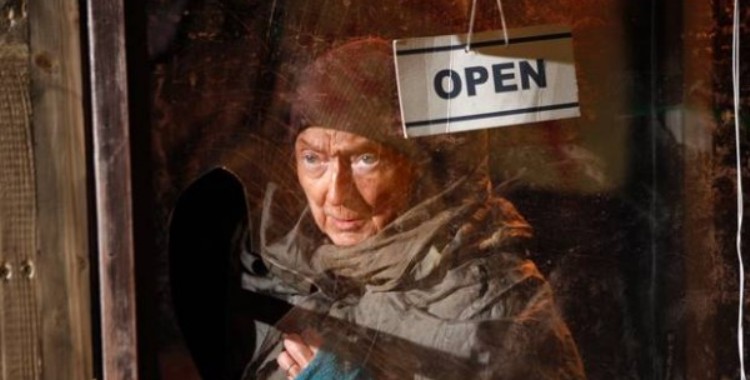
Greig’s work has an equally complex relationship with optimism, as The Events knottily demonstrated last year. He has also worked in a number of different ways, with an output that ranges from shows created through devising processes to the libretto for the musical Charlie and the Chocolate Factory; from plays for children to epic, abstract, internationally focused pieces. In her chapter for the Methuen collection, Nadine Holdsworth describes him as “deeply invested in the possibilities of the collective imagination, pursuing ideas across different media as well as linguistic and stylistic boundaries”. He shares with Stephens an interest in travel as a narrative theme and an openness to different collaborations.

Similarly to Bolton, Holdsworth moves away from a familiar critical narrative about Greig’s work – in this case, his engagement with Scottish national identity – and chooses to focus on the “passionate internationalism” of his plays. Her analysis opens up a consideration of how Greig offers audiences different perspectives on the world, positing brief and delicate moments of communication across seemingly irreconcilable cultures. While this is not her primary concern, her study also reveals Greig’s willingness to experiment with structure and storytelling, clashing together different theatrical styles and techniques, and how through this process the playwright often questions his own authorial status in the creation of his plays.

Some of these ideas, which I have only briefly sketched out above, will be discussed further at two upcoming symposia in Lincoln and Brighton, addressing the work of Greig and Stephens respectively. The University of Lincoln’s David Greig symposium at the end of this month will feature papers examining a wide range of different aspects of Greig’s work, including the role of dissonance, empathy and conflict in his plays, the way in which he deals with questions of place and nationality, his engagement with Scottish identity and the independence debate, and the historical dimension of his work.

At a separate symposium at the University of Sussex in April, meanwhile, scholars will be engaging with Stephens’ plays and in particular his dialogue with Europe. I’m looking forward to making a contribution of my own to this conversation, with a paper exploring how Stephens’ work in Germany has shifted his perspective on British theatremaking processes and the implications this might have for our own theatre culture. As Stephens has suggested, “when we travel abroad we see our home with a clarity that we may never have been offered before”, offering him an intriguingly distanced view of British theatre.

It feels important that events such as these carry on the conversation, provoking the sort of new insights into these playwrights’ work that they both habitually seek. The best we can hope for is, to return to Haydon’s words, “a progressive spirit of inquiry”.

The University of Lincoln’s one day symposium on the work of David Greig is being held on 29th March. Registration is now open here.

 The University of Sussex’s symposium on Simon Stephens’ connection with Europe will take place on 30th April 2014.

Photo:Stephen Cummsikey.

Each of Us, Tristan Bates Theatre

Ben-Moor-Each-of-Us-2-600x400

Originally written for Exeunt.

Why do we tell stories? Perhaps, as the narrator of Ben Moor’s monologue suggests, we simply don’t have a choice. Reaching for ways to explain human connection, Moor invents the “narrative gene”, a newly discovered strand of our DNA that compels us to create. Storytelling, then, is a reflex. A way of making sense of the world that is coded into our very being.

It is this process of making sense and of constructing an identity that sits underneath the meandering narrative of Each of Us. When we first meet Moor’s narrator, he is bruised from a recent marriage breakup – “paralysed from the heart forward”. Talking us through parties and therapy sessions, wit and heartbreak going hand in hand, he slowly navigates the emotional wreckage, mining it for meaning or maybe even treasure. While still deciding what to erase from his own story, a chance encounter leads him careering into an enigmatic group of memory collectors, all of them convinced of the purpose held in the fragments of self that they choose to hold on to.

The strange, familiar yet unfamiliar fictional world that Moor (who also performs the piece) crafts with his words is one in which the everyday rubs shoulders with the absurd. Like so many stories, it borrows magpie fashion, snatching snippets of pop culture and sci-fi. This is a London in which David Lynch directs live sports game footage and car bombs explode in slow motion. And it is all underscored with a faint, uncanny sense of wrongness; something in this world is catastrophically out of place, but no one wants to look directly at it.

The linguistic landscape of this universe is rich, perhaps too rich for performance. On the page, Moor’s writing is dense with detail, each paragraph an avalanche of description. Performed, however, that avalanche hits an audience at a devastating pace, leaving only a few twisted fragments of debris in its wake. Odd words and phrases snag on their way down, but the vast majority is lost, sliding past before it can be taken in. It is only reading it back later that it is possible to luxuriate in the vivid images and razor-sharp quips.

There is, if you can catch it, much to be savoured in Moor’s poetic, intricately detailed text. An aching emptiness is contained in the image of “air spooning”, tracing absence by the gaps that it leaves in a life. Elsewhere, a character is likened to a semi-colon – “rare, occasionally in the wrong place, but when you saw her confidence, you knew more would follow”. The show is also frequently funny, though it can be hard to tell if there is any purpose behind the conspicuously clever jokes. Moor knowingly riffs on the ubiquity of postmodern irony, but what he ends up with feels a little like a pastiche of a pastiche; postmodernism squared. And, like all the best postmodernism, it manages to wriggle out of making many sincere, meaningful statements.

The one unifying idea of Each of Us is this notion of connection, both as something we seek and something we construct. In this sense, theatre is the perfect medium for Moor’s subject matter, as it is a space in which we can be both alone and together at the same time. As directed here by Erica Whyman, however, the piece does not fully convince that it is better off on the stage than the page. It’s entertaining, to be sure, but the tone of gentle stand-up-meets-storytelling rarely engages with its own liveness in a way that might kick it up a gear, instead leaving Moor’s anecdotes ambling around in circles. It is, like the cinematic masterpiece of one of Moor’s periphery characters, “a montage of montages”; each beautiful in its own right, but never fully assembling into a whole.

Photo: Mae Voogd.

put your sweet hand in mine, Battersea Arts Centre

put-your-sweet-hand-in-mine-wings-600x475

Originally written for Exeunt.

There is something both seductive and unsettling about eye contact. That flicker of glances across a busy train carriage; embarrassed yet oddly conspiratorial sidelong looks while standing in a queue; the jolt of meeting a performer’s gaze from the darkened safety of the audience. It is these awkward glimpses of one another, and the awkward bodies that accompany them, that are at the fluttering heart of Andy Field and Ira Brand’s new show. In their fragmentary, dreamlike journey through the landscape of love, the desire to look is always tied up with the impossibility of really seeing one another.

At the end of Nicholas Ridout’s book Passionate Amateurs, there is a sentence that struck me with the quiet sadness of its truth: “The theatre protects us from full communication”. And I wonder if therein lies its appeal. The theatre is a space in which we are forever straining towards those moments of connection and intimacy, safe in the knowledge – loathe as we may be to admit it – that genuine intimacy, the kind of intimacy that leaves us raw and exposed and vulnerable, is always deferred. We can get tantalisingly close to it, but it is ultimately closed off to us. Unlike love, which involves a breathless moment of letting go, in the theatre we can remain teetering on the precipice.

But this isn’t the whole story. Ridout goes on to suggest that this shielding from communication is perhaps why the theatre “is one of those odd places outside the most intimate of personal relations where it is possible to attempt such communication”. put your sweet hand in mine, in its delicate collision of bodies and gazes, feels like one such attempt. Inscribing intimacy in its staging, the piece sits audience members in two rows facing one another, separated by a distance similar to that down the middle of a tube train. We are invited, from the very beginning, to contemplate the face of the individual opposite, in much the same way as commuters snatch occasional looks at one another. But it is as much about our awkward failure to meet eyes, our failure to connect. It is surely not for nothing that Field and Brand’s pair of lovers are seated at different ends of their respective rows, only ever coming face to face when separated by an insurmountable distance.

The strange, startling discomfort of direct eye contact, a possibility that is played with throughout, is enhanced for me by finding myself sat opposite Field, who determinedly locks eyes with me as he delivers his lines. I am reminded of the long, stretched-out moments in Uninvited Guests’ Love Letters Straight From Your Heart in which audience members are instructed to gaze into the eyes of the stranger opposite for the duration of the song “First Time Ever I Saw Your Face”. As then, the performative situation highlights for me the revealing nature of this simple act; despite myself, my eyes occasionally drop, a small, embarrassed smile stealing across my face.

Seated in this uncomfortably close, immediately charged formation, we are treated to fleeting snippets of a love story, or many love stories, depending on how you take it. Looks are exchanged in the anticipatory moments before a show; shy sentences are traded in a Metro carriage in Paris; bodies hold each other close in the dark and cold. I am tempted to say that there is more to put your sweet hand in mine than romantic love – because there is – but its gentle interrogation of everything love might be tangles these different possibilities together. The giddy, pulse-quickening head rush of infatuation, for instance, is evoked by a barrage of sensory information, part of which invites us to imagine a city torn apart by riots, bleeding together revolutionary passion and romantic desire.

For all the uneasiness and the determined stares at floor and ceiling, Field and Brand cradle their audience within the piece, making any discomfort productive rather than distressing. And the show they have crafted is playful as well as reflective, setting us at ease with gentle humour. Even as we laugh, however, it is underscored with a subtle hint of loss. The most affecting of the show’s metaphors – which are also invariably the simplest – are all to do with a sense of slipping away, a diminishing of possibilities. Melting ice is held tenderly in cupped hands, water dripping to the floor with the steady inexorability of tears.

In another of the show’s most dazzling moments, in which it is held unnervingly taut between playfulness and desolation, Foreigner’s “I Want to Know What Love Is” begins to play, greeted by a ripple of soft chuckles from the audience. On one level it’s a joke, one that trades on the groaning familiarity of the power ballad and its inflated packaging of emotion. But at the same time it feels overwhelmingly apt. Those well known lines, as overblown as they are packed with yearning, represent the unresolved, reaching note on which the show inevitably departs. I want to know what love is. I want you to show me.

Superior Donuts, Southwark Playhouse

Superior-Donuts-600x437

Originally written for Exeunt.

Arthur Przybyszewski’s donut shop, a relic of an American dream past its sell-by date, is being taken away from him piece by piece. In this UK premiere of Tracy Letts’ 2008 play, Fly Davis’ deliberately dilapidated design is falling away at the edges, its grubby walls at once sturdily worn and precariously fragile. It’s the sort of place that radiates the permanence of having been around forever and yet might disappear tomorrow, stamped out by the unstoppable advance of Starbucks.

Such is the contemporary America of Superior Donuts. The context of Letts’ drama is rootedly specific, making frequent reference to its surroundings in Chicago and taking the donut shop of the title as a focal point for the lives of those who pass through it, but it equally speaks to a wider sense of modern malaise. Arthur, an ageing hippie nursing the failures of his idealistic youth amid the ruins of his family business, exhibits a paralysis that seems to typify contemporary apathy. There’s a stubbornness to his resistance to change, but also a weary resignation that can be read in every gesture of Mitchell Mullen’s performance. Here is a man who greets life with slumped shoulders.

Into these stale surroundings, where most of the donuts go to a pair of passing cops and an old wino who never pays a penny, enters the requisite young American dreamer. Jonathan Livingstone’s infectiously energetic Franco is a bundle of enthusiasm, ideas and audacious ambitions, both for the “great American novel” that he has penned in dog-eared exercise books and the donut shop that is falling apart around him. The set up, and subsequently much of the action, is typical clash of the generations, old-cynic-meets-young-optimist stuff, as the new employee grapples with his jaded boss in his attempts to ring in the change. Superior Donuts rehearses a familiar and distinctly American narrative, one littered with the wreckage of dreams but faintly illuminated by friendship and hope.

And yet, hard as it is to pin down, there’s something more to it than that. Letts’ play – and indeed Ned Bennett’s production – has a way of sneaking up on its audience. It is delicate, meandering and unapologetically slow, its rhythm capturing the ebb, flow and occasional eddies of everyday life in this fading staple of uptown Chicago. The pace is slowed even further by the occasionally frustrating interjection of Arthur’s introspective monologues about his past, which have more of a literary than a theatrical quality. Just as the itch comes to check your watch, however, you discover that the play has somehow grabbed you – ever so gently, mind – right by the scruff of the neck.

It is possibly down to the characters, who are deftly captured by Bennett and his cast. Mullen and Livingstone in the central pairing are particularly compelling, their relationship endearing without giving in too much to sentimentality, while Sarah Ball’s policewoman packs a world of yearning into a few snatched glances. Each of the individuals who passes through Arthur’s donut shop, however fleetingly, feels convincingly, compassionately sketched.

But perhaps it has more to do with the play’s relationship to hope, a relationship that is more complicated than it might appear at first glance. Bennett has described the piece as “hugely optimistic”, which it is in many ways, but neither the play nor this production are quite that straightforward. Just as Davis’ design has stripped whole panels from the walls, this is a world in retreat, being dismantled bit by bit in the wake of corporate expansion. It’s telling that even the great dreamer enthuses in marketing speak, discussing poetry readings in the same breath as brand identity. There is optimism to be found, not least in Letts’ determined use of the future tense, but even hope is shown to have its limits.

Creative Constraints

Theatre-Ad-Infinitum-Ballad-of-the-Burning-Star--Alex-Brenner-please-credit-_DSC8291

Originally written for Exeunt.

Ballad of the Burning Star, the latest show from chameleonic theatre company Theatre Ad Infinitum, opens with a bomb warning. It’s an explosive statement of intent from a group of theatremakers who were last seen wordlessly exploring love and loss in gentle mime showTranslunar ParadiseBallad, a blistering satirical cabaret that provocatively examines the Israeli-Palestinian conflict, is about as far away as Theatre Ad Infinitum could get from the moving tale of a grieving widower which propelled them to worldwide success. As co-artistic director Nir Paldi says of the company, “it would be very hard to say ‘ah, they do this’”.

Ballad is very much Paldi’s project; as he explains, he and fellow artistic director George Mann take it in turns to lead the company’s shows. The group of Lecoq graduates “want to constantly be doing different things and different styles”, boasting a back catalogue that ranges from reinventions of classical myths to creative explorations of depression and love. Ballad, however, is by far and away their most ambitious production to date. It emerged as a result of Paldi’s need to find a way of talking about his experiences of growing up in Israel and took a number of years to find its current form. The difficulty, as Paldi quickly discovered, was in finding a theatrical metaphor that could contain the many sensitive complexities of the political situation in Israel.

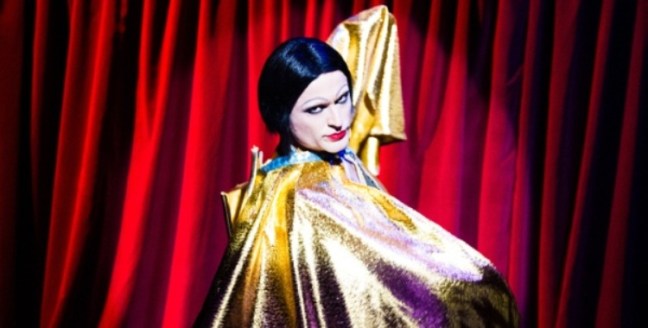
“I really felt that I needed some mechanism to distance it from myself and to make it clear to the audience that as a theatremaker I’m conscious of the complexity in quite a declarative way,” Paldi explains carefully. The show began life as a straightforward autobiographical monologue, but both Paldi and Mann sensed that the material needed a different vehicle. This arrived in the form of drag, an instinctive artistic choice that Paldi says he simply thought “would be really fun”, but which developed into a multi-layered theatrical device. Paldi thus occupies the centre of the show as the larger-than-life Star, a fabulous but bullying cabaret host, supported by a troupe of dancing “Starlets”.

“The nuances were found later as the metaphor became clearer and clearer,” Paldi reflects. “The relationship between Star and her co-performers; how she occupies the stage; how she occupies her co-performers and bullies them and manipulates them against each other; how she treats the audience. The metaphor that started appearing – this is not necessarily what the audience perceives, but it’s what I was working with – is the audience as judges judging the two parties, Star and her Starlets, Israel and Palestine being played by these two bodies in the space. It was a discovery; it wasn’t a decision that was made.”

Discoveries of this kind often emerge from the stylistic decisions imposed on Theatre Ad Infinitum’s creative process. The first thing the company looks for when starting to research a show is a form that will work for the subject matter in question – mime for Translunar Paradise, cabaret for Ballad. This then establishes the limits of the piece, allowing the work of making the performance to take place within those limits. “It’s a constraint, but actually it’s a creative constraint, so that’s the thing that allows you to start working,” says Paldi, echoing the words of co-artistic director Mann.

In the case of Ballad, however, the company was also working with other creative challenges. Chief among these was the dilemma of how to begin exploring such fraught political terrain. “The story that I wanted to talk about and the theme that I wanted to raise in this piece were fairly clear,” Paldi tells me, “it was just how the hell do you do that, how do you speak about it without sounding banal and obvious or very one-sided?”

In resolving this question, the role of work in progress showings and audience feedback in Theatre Ad Infinitum’s process became more vital than ever. Paldi is enthusiastic about the virtues of testing work on audiences during its development, explaining that “it just gives you such a strong image of where you are”. It was these early audiences who pushed Paldi and his creative team to go further with the piece, encouraging them to make the show increasingly provocative. With this in mind, Paldi meticulously researched the viewpoints and arguments from both extremes, daring to make Ballad potentially inflammatory but determined to avoid becoming one-sided.

Of course, no show as provocative as Ballad of the Burning Star could expect to emerge unscathed. The production’s Edinburgh Fringe premiere, while attracting critical acclaim and winning the ensemble an award from The Stage, also faced its fair share of censure. What Paldi was encouraged by in these attacks, however, was the even balance of the anger directed towards the show. “After one show I would be encountered by two different people, sometimes at the same time, and they would tell me ‘that felt really one-sided towards Israel’, or ‘that felt really one-sided towards the Palestinians’, and these conversations would happen almost every day.”

The intensity of these responses vindicates Paldi’s feeling that this is a subject that needs to be talked about – “the whole point was to talk,” he says emphatically. When it comes to his own role in these discussions, however, he is more ambivalent. “I still sometimes find it very hard to …” Paldi trails off, pausing for a moment. “It’s so complicated, so it’s very hard for me to hold a very firm opinion.” He insists that he does not want to be speaking directly to audiences about politics, adding, “I’m not a politician, I’m not very good at it.”

While he is pleased that Battersea Arts Centre and Dialogue will be running discussions alongside the event when it comes to London, Paldi does not necessarily feel that it is his responsibility to offer a space for these conversations to take place. “I don’t know if I see it as my responsibility to provide the place for discussion; it’s more to provoke the discussion,” he explains. It is more important to Paldi that his art speaks for itself: “I’m making a piece and this is what I think.”

As Theatre Ad Infinitum also begin work on their new show – the company are nothing if not multi-taskers – they are still keen to “reinvent ourselves every time”. Light, which will premiere at this year’s Edinburgh Fringe, is different again from Translunar Paradise andBallad of the Burning Star. This new piece, which Paldi describes as “George’s baby”, is inspired by Edward Snowden’s recent revelations about the NSA and by a dream of Mann’s about a “totalitarian, futuristic society”. Drawing on sci-fi influenced aesthetics, it will examine “what happens when technology is being misused by human beings and it falls into the wrong hands” – all without words.

As a commission from the London International Mime Festival, the creative decision to turn once again to mime is appropriate, although the challenge of tackling these complex ideas wordlessly is a formidable one. Paldi explains that the company have been encouraged by the early responses of audiences, who have told them to trust the power of their storytelling, allowing the bulk of the show to develop within the self-imposed “creative constraint”. The question that Theatre Ad Infinitum are now grappling with is the one that continues to guide their work: “how can we say the most interesting and provocative and complex things with this form?”

Photo: Alex Brenner.