Morale is High (Since we gave up Hope), HOME

morale-is-high-image-628x460-600x439

Originally written for Exeunt.

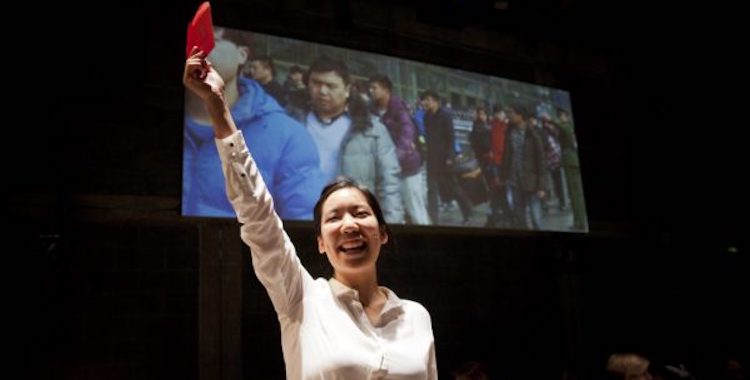
I’ve been struggling with hope recently. So, it would seem, have Powder Keg. Even with my stubborn optimistic streak, 2016 was a tough year in which to remain hopeful about the state of the world – and 2017 might well prove even tougher. This is essentially the starting point for Morale is High (Since we gave up Hope). The title’s a bit misleading – hope hasn’t entirely flown, or at least it didn’t seem that way to me – but it’s certainly a show that’s worrying away at recent global events and how the hell we as (small, flawed, ineffectual) human beings respond to them.

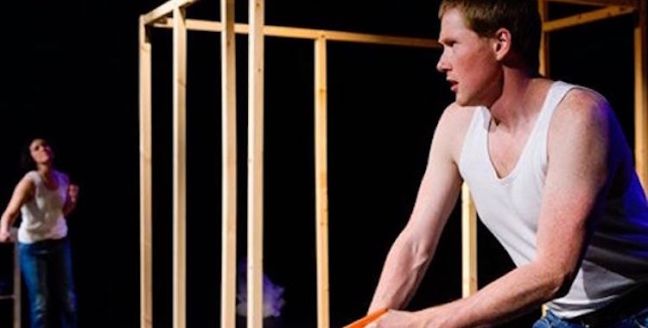
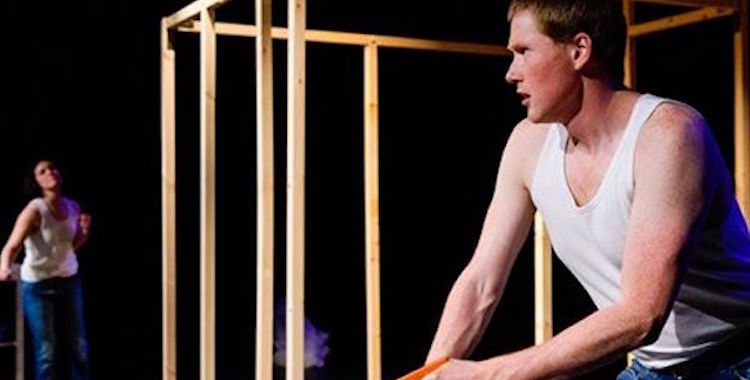
That anxiety is expressed through a fraught back-and-forth between two mates, Ross McCaffrey and Jake Walton. In spite of the subject matter, the pair make an affable double act: Jake’s chirpiness counterpoints Ross’s anger, while Ross challenges Jake’s shrugging attitude to current politics. The catalyst for their fragmented discussion is an unlikely bit of time travel. Ross has made a trip to 2020 and back – he even has the shiny, sequinned Primark jacket of the future to prove it. So what does the world look like at the (probable) time of the next general election?

Morale is High is less about glimpsing possible futures, though, than it is about questioning where we are now. The different snatches of stories that Ross brings us from the future are just as confusing as the present and prompt the same sort of knotty, unanswerable questions. Loose ends gather, flapping, at Ross and Jake’s feet. At odd intervals, meanwhile, the guitars at the back of the stage are snatched up for bursts of song, abruptly cutting off the intertwined narratives. This is theatre in an argument with itself; a scrappy dialogue between anger and apathy and guilt and despair. It’s messy, sure. But it also feels a lot like the inside of my head at the moment. This is an uncertain piece of theatre in uncertain times.

There’s a sense, too, that events in the last few months have overtaken outlandish predictions, leaving Powder Keg grappling – in more ways than one – with current affairs. The show can’t help but buckle a little under the pressure of recent events. I’m reminded of a line from Ali Smith’s recent book Autumn, about people in the wake of the EU referendum checking their phones “to catch up on the usual huge changes there’ve been in the last half hour”. It captures brilliantly the runaway feeling of the news over the last year – a feeling that Morale is High also recreates, even if it’s through the sense that Powder Keg themselves are racing to keep up with everything unfolding around them.

Amidst all the complex, tangled argument, there are odd clunky moments – a joke about the Second Coming, a visual gag with a water bottle – that seem like hangovers from the rehearsal room. On the whole, though, Morale is High is a piece of sophisticated if appropriately provisional thinking. It is suspicious of easy answers and of the action that it seems at times to be advocating. At a time when the UK is visibly divided, Powder Keg are starkly realistic about the things that hold us apart. Even the intoxicating sense of community generated by a protest march has to be manufactured. “You can’t just get rid of the things you don’t like,” Ross sneers at Jake, reminding him of the violence and the tear gas. His words nod, too, to the parts of our own nations and communities that we might prefer to disown or ignore: the racism and intolerance that, following the referendum, can no longer be swept under the carpet.

But Morale is High is no simple expression of nihilism (though the seductive temptation of nihilism is certainly in the mix). In Hope in the Dark – a life raft for many, including me, after Donald Trump’s election – Rebecca Solnit offers a nuanced definition of what she means when she talks about hope:

“It’s important to say what hope is not: it is not the belief that everything was, is, or will be fine. The evidence is all around us of tremendous suffering and tremendous destruction. The hope I’m interested in is about broad perspectives with specific possibilities, ones that invite or demand that we act. It’s also not a sunny everything-is-getting-better narrative, though it may be a counter to the everything-is-getting-worse narrative. You could call it an account of complexities and uncertainties, with openings.”

An account of complexities and uncertainties, with openings. That sounds a lot like Morale is High. Unusually for a time-travelling narrative, Powder Keg’s show asserts that actually the future is unknowable; we are not offered the comfort of visiting and as a result changing our collective tomorrow. Not knowing, though, is itself an opportunity of sorts. The gaps for action and change might be small, but they are there. As Solnit puts it, “hope locates itself in the premises that we don’t know what will happen and that in the spaciousness of uncertainty is room to act”.

And in the end, we’re not alone. As Ross confesses, the simple expression of anger – raw, unsophisticated, screaming at the top of its lungs – is a way of feeling better. But so is seeing someone else on stage being just as angry. Neither of us is the only one struggling with hope, and that, in a strange sort of way, feels hopeful.

World Factory, HOME

world-factory-photo-by-david-sandison-600x400

Originally written for Exeunt.

A few weeks ago, I visited Manchester’s Museum of Science and Industry. Like so many museums, it has a studied, uneasy ambivalence towards the past. This is a place that celebrates the technical ingenuity of the Industrial Revolution while seeking to mark its human costs. The awe and might of huge machines are placed next to black-and-white photographs of the overworked and undernourished humans who operated them.

But this isn’t a narrative that can be bracketed away in the past. As METIS’s show World Factory demonstrates, the human costs of modern consumer culture never went away, they just got pushed further and further out of sight. Or, perhaps, we chose to blind ourselves to them.

Because here’s the thing: we all kind of know about the exploitation and mistreatment and waste that World Factory exposes. We’ve seen documentaries about the textile industry in China or headlines about factories in Bangladesh. Very few of us can claim complete ignorance of how our clothes are produced. Yet, much like climate change (of which fast fashion is a not insignificant cause), it’s something that most of us live our day-to-day lives in a sort of denial about.

World Factory, then, isn’t necessarily telling audiences anything new. What it is doing, though, is placing theatregoers at the heart of a production process that they generally elect to ignore. Rather than presenting us with a drama about Chinese clothing factories, METIS transform the theatre itself into a Chinese clothing factory – or, rather, a series of factories. Split into teams and directed by the four performers in the guise of our “dealers”, we take on the role of factory managers, plotting different paths through the show based on the decisions we make. It’s all fashioned as a game, complete with a stack of Monopoly-style money.

The choices we as players are offered are starkly binarised. Sack half the workers or cut everyone’s pay? Improve conditions for workers and quickly go under, or keep wages low and stay afloat? From within the game, this can feel limiting, but as a dramaturgical strategy it’s inspired. On the one hand, it generates fraught ethical and political discussions, forcing us to speculate on the other possible (but unavailable) options and on the unspecified ramifications of our decisions. On the other hand, it’s a powerful formal illustration of the apparent lack of choices experienced under fast-paced consumer capitalism. We don’t just see the ethical conundrums faced by factory owners; we experience them.

There’s something queasy about the gamifying of experiences that are so very far from a game for so many people – but then again that’s the point. World Factory both encourages audiences to play along, sucking us in with the thrill of making a profit, and intermittently jolts us out of the fantasy and into the real world it’s mimicking. The more we’re absorbed in the game, the more wrenching it is when we’re pulled out of it. The more we play ruthless capitalists, the more bitterly we reflect on our decisions when forced to take pause.

The alternating pace of the game is crucial. As co-director Zoë Svendsen has noted, “ethical practice takes time” – time that both World Factory and consumer capitalism offer little of. The team I’m on makes relatively few choices in the hour allotted for the game (and is repeatedly hurried along with barks of “time is money”) because we keep finding ourselves torn between pursuing our own ethical principles and “playing the game”. Our shoddy compromises make us both bad capitalists and bad employers. Everyone loses – a message that World Factory drives home with force.

One of the quieter, more melancholy moments of the show implicitly mourns the loss of the craftsmanship that used to go into garments that would be worn and loved and repaired. Now, by contrast, fashion is throwaway. I found myself reminded of Richard Sennett’s book The Craftsman, which argues that “the craft of making physical things provides insights into the techniques of experience that can shape our dealings with others”. Craft, for Sennett, offers ethical possibilities, while the opposite seems to be true of the fast, cheap fashion that suppliers like our imaginary factories serve.

Informed by a complex tapestry of research and offering seemingly endless possible permutations, World Factory is itself a piece of master craftsmanship, meticulously constructed. Beyond its function as a performance, the project is a rich and vital resource, complete with an online “Digital Quilt” of references. Unlike some participatory shows, which operate mainly on a surface level and offer empty promises of audience “empowerment” or “emancipation”, you can sense the depth that lies beneath World Factory, which uses the disempowerment of its participants as a provocation to delve further into the tangled threads of global capital.

Towards the end of the show, there’s an unexpected echo of Trump, as one of the performers calls on us to invest in manufacturing closer to home and “make Britain great again”. Whether or not this has been added since the US presidential race, it certainly resonates (however horribly) with the present moment. It also points to the relevance of this piece beyond the global fashion industry that it directly interrogates. The questions raised by globalised clothing production are also questions about the economy, about politics, about the nature of work in the twenty-first century, and about the future of our planet under a system that’s designed to keep devouring resources and producing waste.

“This is where it all began,” performer Lucy Ellinson reminds us – an aside from the main performance, but a significant one. Manchester, the home of the Industrial Revolution and the heart of the textiles industry in the nineteenth century, is an apt destination for World Factory at the end of its tour. This is the city once nicknamed ‘Cottonopolis’. This is the city where Engels wrote The Condition of the Working Class in England. But these are not just static markers in our national history, to be carelessly skim-read in museum displays. Sure, the world has changed, but the inheritance of those mills and factories – and the increasingly brutal form of capitalism that they helped to drive – remain with us. The real question is: do we keep closing our eyes to it?

Photo: David Sandison.

Manpower, The Lowry

man-1

Originally written for Exeunt.

Real men. Real jobs. Taking back control. Watching Manpower two days after the US election, the rhetoric has an especially bitter taste. Two Destination Language’s show has the feel of a piece that started being about masculinity and somewhere along the way came to be about Brexit. Watching it now, it inevitably becomes about Donald Trump too.

As I write this, the radio is on in the other room and a reporter is talking to Trump voters in the States. People keep saying the same thing. Trump will create jobs. Trump will be good for business. Trump will get our men back to work. Trump will Make America Great Again™.

The Brexit vote isn’t the same as the Trump vote, of course, but Manpower is grappling with some of the factors that seem to underlie both. Grappling feels like the right word: Two Destination Language are still in the process of wrestling with these ideas, still working through the consequences of our new political realities. The outcome is unsurprisingly but interestingly flawed.

Alister Lownie is a man. Katherina Radeva is a woman. They’re both here to talk to us, in different ways, about work and masculinity. Katherina speaks in the role of outsider, offering us a lecture on our country and its problems over the last 30 years. First the jobs in industry went. Then more men started working in offices, getting soft hands and soft minds. But the real crisis moment for British masculinity arrived with the advent of DIY and B&Q. The only way to feel like a real man anymore was to do a botch job on the new bathroom. But it’s OK: Brexit is here, to help the men take back control.

As Katherina takes us on this ironic journey through recent history, to a soundtrack of era-appropriate tracks from Dire Straits and Pulp, Alister is working on his own DIY project behind her. While she talks, he builds, first assembling the wooden skeleton of a shed, then constructing a makeshift wall from the logs scattered across the stage. His masculinity is recovered through the act of erecting a border. At odd moments, meanwhile, the action is punctuated by quiet, dimly lit monologues from Alister: seemingly random interruptions that resolve themselves into subtle blows at political rhetoric.

And rhetoric – from politicians, from the tabloid media – is very much the target here. Towards the end of her lecture, Katherina offers us an apology: she might have got a few things wrong, but if she has it’s only because our newspapers can’t make up their minds. It’s hard to know who to believe anymore.

There’s a difficulty, though, in the way Two Destination Language have chosen to skewer the narratives that led to the Brexit vote (and, now, to Trump being elected president). Irony, as a political tool, just doesn’t feel equal to the task anymore. It can mock, sure, and it’s undeniably appealing as a performance tactic, but there’s a kind of emptiness to it. In the place of hollow rhetoric, there’s very little it can offer.

The show itself even seems to recognise this echoing emptiness. One of Alister’s monologues simply consists of a series of statements, all beginning with “the thing is”. Each is a meaningless cliché, the words drained of all value. The thing is, we’re all in this together. The thing is, there’s no such thing as a free lunch. The implicit question, which Two Language Destination are unable to answer, is how to counter a politics that proclaims to “tell it like it is” while saying anything it needs to in order to win. Neither irony nor apparent sincerity seem to be up to the job.

In the very opening speech, as the lights slowly come up, Alister is talking about the importance of investing in good quality sound technology. You can hear the difference, he tells us. At first, it’s unclear where this is going. Why are we being told about hi-fi systems? Then, gradually, the penny drops. You have to do your research, Alister is saying to us. Because that smiling man in the suit, well he’ll just sell you anything. You have to know what you’re listening to. You have to know what choice you’re making. Because more often than not, smiling rhetoric will sell you sounds that end up deafening you.

North Country, The Wild Woods

3283-600x360

Originally written for Exeunt.

We all know how post-apocalyptic narratives work, right? We’ve seen the films, read the books, watched the TV shows. It’s a genre that only seems to get more popular – a reaction, perhaps, to a world that is itself beginning to look pretty damn apocalyptic.

North Country, though, challenges the post-apocalypse that we know and love to dread. There are familiar tropes – disease, riots, stockpiling canned food – but set in a different frame. For a start, the global catastrophe imagined by Tajinder Singh Hayer is in the very, very near future: his fictional plague takes grip on 5th November 2016, the final date of this production’s run. There’s no doubt that we’re meant to feel our uncomfortable proximity to these events.

But the more striking contrast is in whose stories we hear. As was made painfully clear again recently by Tim Burton’s pitiful defence of his casting practices, the genres of sci-fi, fantasy and horror are whiter than white (and if a non-white character does get a look in, they’re usually the baddie). There are lots of reasons why we should want to change this, but Hayer sets out one of the most compelling in the preface to his play: if people of colour are excluded from sci-fi, then they’re excluded from imaginings of the future.

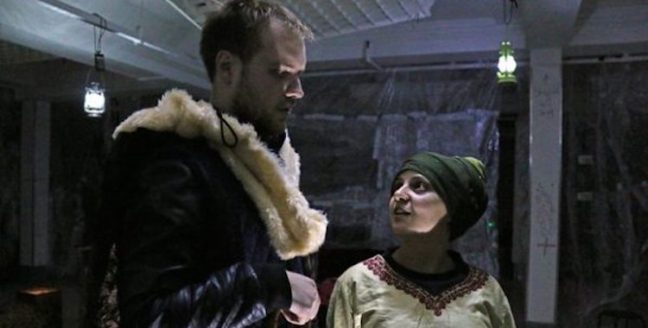
In this imagining of the future, then, British Asian experiences are central to the aftermath of disaster. As worldwide plague rapidly decimates most of the human population, three Bradford teenagers – Harvinder, Nusrat and Alleyne – find different ways to survive. Harvinder falteringly picks up the medicine practised by his parents; Nusrat forges alliances and makes deals; Alleyne capitalises on his father’s farm and the vital resource of food that it provides. Spanning more than forty years, the play follows a fraught and halting process of healing.

Without the separating veil of screen or page, North Country cannily trades on its nearness – both physically and thematically. It’s staged in the shell of an old M&S in Bradford city centre, a venue suggestive not just of the abandoned buildings of a plague-ravaged world but also of the empty spaces created by a financial apocalypse-of-sorts much closer to home. Huddled around the edges of the makeshift auditorium, we’re right up next to the characters in Alex Chisholm’s production, almost as if we too are in one of the survivors’ camps.

Plague aside, in many ways the play feels unsettlingly close to present events. As illness and panic first break out, immigrant communities become a convenient scapegoat (you can almost imagine the Daily Mail headlines). Quickly, Harvinder and Nusrat are at risk not just from disease, but also from their fellow citizens. And in the fractured communities that begin to emerge once infection has subsided, race becomes a clear dividing line, with white farmer Alleyne at the head of one tribe and Nusrat leading another, in uneasy alliance. As with all versions of the apocalypse, North Country is very much a product of its moment.

There’s plenty to chew over, even if the expression of Hayer’s ideas is not always as interesting as those ideas themselves. With so much happening in just an hour and a bit of performance time, clarity and pacing become issues. There are moments when the confusion is apt – like when we’re plunged into the darkness of a world in which fuel and hope are running out. At other times, though, important plot points or character details race by. There’s so much here about the difficult process of forging new identities, but without the time and space to really know these characters.

The form of the play also brings its challenges. While the three protagonists cross paths at crucial moments, much of the narrative is conveyed through intercut monologues, meaning that the majority of the action is told rather than shown. Chisholm does her best to move the actors around the space and keep the performance dynamic, but at times it can feel like a relentless stream of words and information. Post-apocalyptic fiction is a genre that’s all about thrill and peril, but North Country struggles to quicken the pulse.

For all its flaws, though, it feels important that this is being staged, and particularly that it is being staged now. There’s a line that sticks: “someone looking for a face to blame”. It’s not as though racism emerged overnight after the EU referendum result, but it does feel – terrifyingly – like more and more people are actively and violently “looking for a face to blame”. Hayer’s visions of British Asians being sought out and beaten by those feeling robbed of their lives are not a great leap of the imagination.

There is hope, though. Hayer sees the post-apocalyptic genre as mirroring the migrant narrative: it’s all about finding a new way of being, a new identity in a new world, while the past lingers indelibly in the transformed present. And it’s a genre that reveals the resilience and adaptability of human beings and the possibility, in spite of all the horror, for people to find new ways of living alongside one another. Above all, North Country is about what sort of collective identity we want to create – a question that, since the morning of 24th June, seems more pertinent than ever.

Photo: Maria Spadafora.

Don’t Wake the Damp, The Lowry

dontwakethedamp1-killthebeast-photocredit_andrew-ab_

Originally written for Exeunt.

Damp. The soggy nemesis of Generation Rent, slowly creeping up the walls of rundown, overpriced properties. In Kill the Beast’s new show, though, it has an altogether more murderous edge – and a lot more tentacles. Don’t Wake the Damp is a genre spoof for the housing crisis, at once sending up shonky TV sci-fi, high-rise horror and the onward march of gentrification. Here, the loving mixture of homage and piss-take that the company honed in werewolf romp He Had Hairy Hands is joined by a gentle but undeniable political undercurrent.

All of which, on paper, sounds brilliant. In reality, though, it’s a slight disappointment after the perfectly pitched comedy of He Had Hairy Hands. Kill the Beast’s targets in this follow-up all just feel a little… easy. Camp and kitschy space adventure, cheesy theme tunes, dodgily scripted horror – all this stuff has been pastiched countless times. Even the gags about tower block evictions and luxury new apartment complexes are fairly obvious blows, going for the bitter, readily-offered laughs of all the guilty middle-class liberals in the audience.

That said, there’s still plenty to enjoy about Don’t Wake the Damp, which takes the company’s sharply defined aesthetic and adds a generous dousing of neon. The show opens in the spaceship of intergalactic adventurer Captain Charismo and his sidekick BOOBS (yes, BOOBS – it stands for something, apparently, but that’s not really the point). The vintage Doctor Who wobbliness of the set quickly gives away that we’re inside a budget sci-fi TV show: the gloriously silly Crystal Continuum.

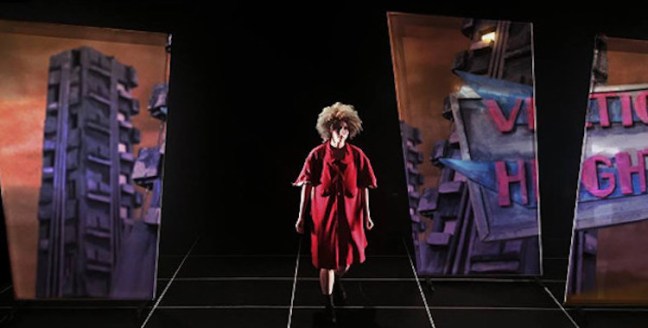
The action snaps forwards. It’s 2035 and former Crystal Continuum star Juniper Berry (aka BOOBS) is bitterly reliving her glory years from the upper reaches of Vertigo Heights, a tower block earmarked for demolition on account of the damp. But as strictly protocol-following council man Terry tries to evacuate the building, June and a couple of stubborn fellow residents (supercilious, teeth-obsessed Devlin and Crystal Continuum super-fan Lexie) insist on staying put. After all, how much harm can a little damp do?

Answer: a lot. The damp of the title, needless to say, threatens much more than a little mould. From this ominous revelation onwards, Kill the Beast pick up the pace, bringing their usual energy to a suitably preposterous plot. Technically, Don’t Wake the Damp is the most ambitious of their shows to date, with the company’s trademark animations projected onto three moving panels and joined by an impressive array of light and sound effects. And as ever, Clem Garritty’s design is accomplished and meticulously realised. You definitely can’t argue with the attention to detail.

Yet, despite all this energy and care, I can’t shake the nagging feeling that there’s something missing. The jokes, though they come thick and fast, are for the most part lightly amusing rather than laugh-out-loud funny, and the response feels muted in comparison with the rowdy enjoyment that greeted He Had Hairy Hands both times I saw it. There’s less verbal dexterity to the humour, perhaps, and less bold originality to the visual gags, while none of the characters can quite match the scene-stealing Whitechapel (who receives an arch nod here, for the company’s fans).

There’s no doubt that Kill the Beast have plenty more to offer, and it should be stressed that few companies at this stage in their development can claim such a clear and compelling identity. From the projections to the painted faces to the wonderfully awful wigs, Kill the Beast have a look that’s all their own and that, impressively, translates across the different genres they affectionately dissect. This time, though, they fall just short of the twisted comedic brilliance of their best.