Port, National Theatre

port1

Originally written for Exeunt.

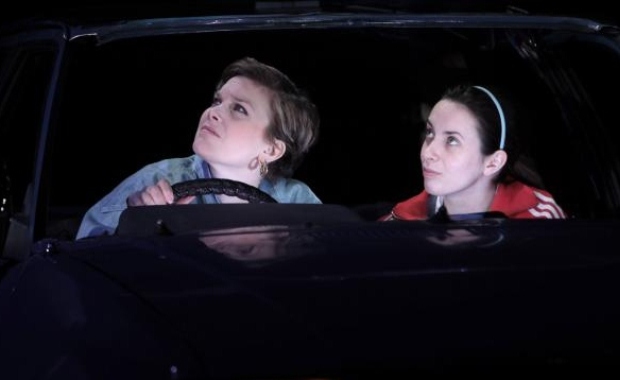
There’s a striking moment, towards the end of this nostalgic, grit-flecked portrait of Stockport, when the concrete-clad surroundings perceptibly shift. Protagonist Rachael, back in her home town after several months away, remembers once gazing up at the clocktower as a soaring skyscraper, a local landmark of immense proportions that in adulthood has dwindled to a mere speck on a vast world. It’s a simple moment, but one that speaks to the shifting space in which we play out our lives, the contours that seem to move and blur as we grow older, the once huge monuments that now feel inconceivably small.

Geography – or more accurately psychogeography – is central to this story of growing up in Stockport, which announces its preoccupation with place in its very title. Rachael, who over the course of the play transforms from a gobbily precocious eleven-year-old to a bruised but optimistic woman of 24, fighting fiercely all the while to get out of the place that has spawned her, is trapped in a town populated with ghosts. First Rachael’s mother and then her grandfather make swift exits from her life, leaving behind traces in the frayed urban fabric. Past exists alongside present in a way that is reflected in the circumstances of this production, a revival of the play’s 2002 premiere at the Royal Exchange Theatre headed by the same creative pairing of Simon Stephens and Marianne Elliott, equally haunted by their own memories of the shared home town that shaped them.

While the naturalistically rendered environment of this nostalgia trip vividly conjures the bus stops, battered cars and hospital waiting rooms of Rachael’s world, the space of the Lyttelton stage is engaged in more than a simple one-way exchange with the piece. Between the play’s collection of snapshot scenes, Lizzie Clachan’s beautifully constructed designs conspicuously dismantle around the perceptive central character as she very deliberately looks on, participating in her own transformation at the same time as the space transforms with her. This is habitat as clothing, old haunts shrugged off like school jumpers; the landscape seismically shifting within the perspective of the protagonist whose eyes we see it through as she struggles with family crises and collapsing relationships. Light, from anaemic fluorescent tubes to a heart-catchingly hopeful sunrise, is more than just illumination – it is frustration and desire.

This eloquent dialogue with the content stretches from the way the production looks into the way it sounds. Just as the concrete pulses with the pop music of a decade that played to the soundtrack of The Stone Roses and Oasis, so the structure of the play as a whole jitters and jumps to an almost musical score. The pace, beginning at a frustratingly slow patter, speeds and slows across the eight distinct scenes, with occasional furious rises in pitch that rip through the rhythm of the drama; repeated themes – home, childhood, fear of death – loop back around in refrains, or perhaps more like tracks that keep returning on shuffle. The whole is sometimes frustrating, sometimes catchy, but with a chorus that climbs insistently into the ear.

Amid all this movement and sound, it’s hardly surprising that Rachael repeatedly refers to the world as “mental”, with the double implication of inconceivable, unjust madness and a psychological dimension to the version of Stockport that we are presented with through her experience. Rachael is a challenge and a gift of a role, a complex, wounded but resolutely optimistic figure, who in the hands of Kate O’Flynn is unceasingly engaging. So captivating is this central presence that the characters around her often feel lightly sketched, faded and drab alongside her vivid outline, barely less ghost-like than the gaping absences in Rachael’s life.

While the grim realities that Port portrays have not evaporated, the nostalgic tint of the production is a reminder that today’s world, more than a decade after Rachael’s closing look at her home town, is in many ways a very different place. There is a heavy sense of this particularly in the play’s build-up to the turn of the millennium, at which Rachael ponders whether this break represents a beginning or an end. Thirteen years later, as this production is inevitably refracted through subsequent events, it’s a question we still seem to be asking. Just as the play’s cyclical structure rewinds the track back to the beginning, we often end up in the same place we started in.
Metamorphosis, Lyric Hammersmith

Metamorphosis

Originally written for Exeunt.

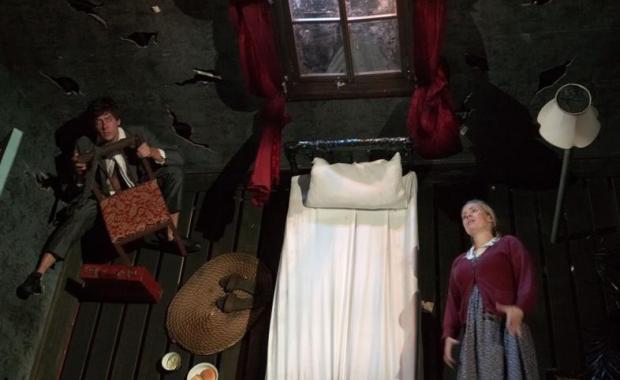
A performer dangles upside down, supported only by the strength of his own body; visual perspectives shift and skew across the split level set, distorting reality; a family home cracks open, metaphorically and literally, at its very centre. There is no question that this production, now six years old and making its fourth visit to the Lyric Hammersmith, remains thrilling in every sense of the word. What is so heart-stopping about the Lyric and Vesturport’s visually virtuosic rendering of Kafka’s nightmarish tale, however, is not the dazzling disbelief that such images be thought to provoke. Instead, the most chilling horror at its core is all too plausible.

Just as the true awe that is inspired by loose-limbed performer Gísli Örn Garðarsson derives from the sheer ease with which he flings himself about the set rather than the gravity-defying spectacle of his acrobatics, the real sting of the piece lies in its incisive diagnosis of the human capacity for evil. In the shell-shocked aftermath of Gregor Samsa’s titular, unexplained metamorphosis, his bewildered family grope around their shattered domestic haven in search of coping mechanisms, slowly surrendering to the most brutal of self-preservation tactics. It is a grim metaphor for society’s fear of the other and its destructive impulse to exterminate perceived threats from within.

Extending this metaphor, Vesturport’s telling of Kafka’s disturbing novella is as much a retrospective dialogue with the tale as it is an interpretation. Armed with the knowledge of twentieth-century European history, parallels with the dehumanising rhetoric of totalitarian regimes readily present themselves; a line such as “work will set us free” uttered today immediately summons the echo of Auschwitz. Most strikingly, David Farr and Garðarsson’s production presents us with a distinctly human Gregor, eschewing any attempt at physical deformity. We know that this character has transformed into a monstrous creature, but all we see before us is a man, making the monstrosity all of our own creation; the audience find themselves complicit in the same horrifying division between human and inhuman that the Samsas finally pursue.

Alongside the production’s thinly veiled allusions to Nazi Germany, money emerges as an equally sinister force. It is less Gregor’s physical state that provokes his family’s disgust than the loss of his income, while the tantalising promise of a wealthy lodger sends the Samsas physically giddy. A human being who is no longer economically useful, this version darkly hints, is no longer considered human. Every creative force at the production’s disposal unites in this act of considered excavation, from Börkur Jónsson’s mind-bending set, physically setting Gregor and his family at opposing, disjointed angles, to the steadily darkening clothing, to Nick Cave and Warren Ellis’ painfully haunting music.

But for all the intellectual and visual inventiveness at play, the piece’s greatest triumphs are also what threaten to soften the devastating punch it seeks. Precise rather than visceral, each movement is so delicately, meticulously calculated – from the contained physical effort of outward domestic perfection to the seductive power that emanates from a wad of bank notes as they are slowly handed over one by one – that the raw intensity of the horror gives way slightly to an unsettling but clinical choreography. As the final, stunning image imprints itself on the stage, however, such objections seem churlish. Mingling beauty with terror, it is in these closing moments that the rotten heart of Kafka’s tale finally bursts from the production’s finely polished chest.

No Quarter, Royal Court Theatre

no-quarter

Originally written for Exeunt.

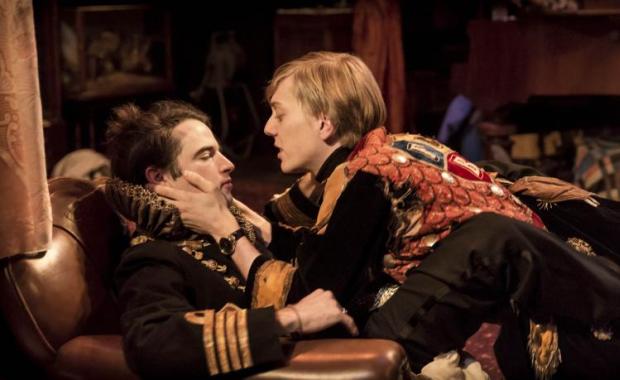
Ever since J.M. Barrie first gave us the boy who never grew up, Peter Pan figures have consistently captured the imagination. Robin, the damaged, boyish figure at the centre of Polly Stenham’s new play, is a direct descendant of this tradition, a self-declared “landed gypsy” whose not so magical but no less mythical Neverland is an old country house populated with faded rugs and creaking suits of armour.

Tracing a recurring theme in Stenham’s work, Robin’s isolated kingdom is a world dominated in turn by the suffocating presence and crippling absence of an intoxicating, unstable parent. His mother, wild, untamed novelist Lily, has brought up her youngest son in rural isolation, schooling him at home and feeding him on a diet of nature and art. Horrified by the glowing smartphones and information onslaught that he finds in London, the musically gifted Robin has returned home, drink and drugs in tow, to a childhood paradise that is being steadily snatched away from him. In this world of teetering privilege, property, land and identity are all inextricably wound up with one another, as the fight for a threatened way of relating to the world becomes inseparable from a desperate battle to hold onto the family home.

For all the domestic tumult and personal pain, however,No Quarter seems also to chant a eulogy for Britain, for a green but fading land of wild stags and lost boys, for a fled and empty mythology. A Jerusalem for the bare-footed, bohemian upper classes, there is a mingled air of both scorn and mourning for a way of living that was never really any more than a pretty story. Like the stuffed animals that clutter Tom Scutt’s meticulously detailed set – a haunting, gloomy shrine to taxidermy – this hermetically sealed rustic utopia is simply a mirage, death dressed up in the feathers of life. Every detail of Jeremy Herrin’s production hints at the same sense of slowly shattering illusion, right down to the dressing-up chest and the repeated use of Eurythmics’ ‘Sweet Dreams’; all an ephemeral reverie, an alluring narrative of a way of life and a nation that is drawing inexorably to its close.

Delicately linked to this atmosphere of illusion, there is also an intriguingly self-reflexive note to a piece of art that is essentially about artists. In the opinion of Robin’s elder brother Oliver, a politician who has fled the chaotically creative nest, caring only about art is just another way of caring about oneself. This immediately invites reflection on the potentially indulgent nature of what we are observing, a comment on the world that faces accusations of being just as futile and self-serving as Robin’s petulant hedonism. At times Stenham seems to conspicuously revel in her language, breaking the spell of the action with long and often beguiling speeches on the state of the world beyond these four walls; Herrin and actor Tom Sturridge give Robin as much bohemian swagger and jagged broken edges as the role can contain, crafting a young Rooster Byron for the crumbling halls of privilege; Scutt’s design, a hoarder’s heaven, is a lesson in excess.

Yet Robin – who for all his self-absorption and glaring faults remains the fiercely beating heart of the piece, particularly as brilliantly realised in the wiry, charismatic figure of Sturridge – strikes a blow against such charges. Making things, he protests, is the opposite of death; a way of revolting against the ugliness of the world. This argument recalls Simon Stephens’ observation that, however bleak the content, making theatre is an essentially optimistic act – an act in which this particular production is ultimately engaged. While the piece never quite seems to settle on either Oliver’s or Robin’s way of looking at the world, the final chord that it strikes is, despite everything, a mutedly hopeful one. Its vision of today might be dark and muddled, but it frames the receding myths of the past with a hint at the possibility of a better future.

Telling Stories: The Year in Theatre

_64849962_endofworld624_thinkstock

Originally written for Exeunt.

As anarchically demonstrated by Forced Entertainment in The Coming Storm, stories are fragile, false and shifting objects. In the hands of the frantically competing performers, these narratives falter, clash and implode, truncated by interruption upon interruption. Yet still we insist on telling them. Any narrative of the year in theatre is condemned to the same failings; it is inevitably partial – both in the sense of being incomplete and in the sense of being subject to an individual bias – and its trends are essentially arbitrary, collapsing in upon themselves. And still, stubbornly, the fashion persists.

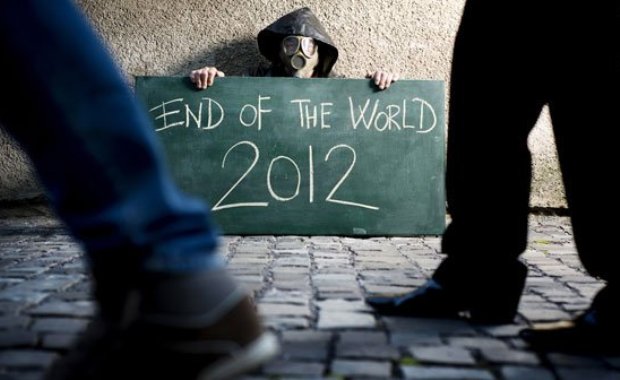
While my own personal look back at the last twelve months is just that – personal – there is a more widely acknowledged feeling that 2012 has found itself situated at a cultural tipping point, though whether the shifts that have been felt this year do rock us over that precipice into whatever might lie below is still to be seen. It is a year in which, driven largely by the Olympic effect, different theatrical cultures from around the globe have converged and collided, in which spectacle has been celebrated and questioned, in which theatremakers have reached for new vocabularies to explore political themes in an extraordinary and often farcical climate. It has felt like a year of small tectonic shifts, but maybe that’s just me.

The central point around which my own theatregoing year has pivoted is the small phenomenon of Three Kingdoms, a production in which global politics, cultural identity and aesthetic virtuosity all violently and thrillingly met. It was here that I first felt the tipping point, as both British theatre and British theatre criticism met with a challenge that could potentially mutate their future form. In this hallucinatory, boundary-crossing tour through a repulsive yet visually dazzling web of human trafficking and capitalist exploitation, understandings of Europe were stretched and pummelled, while audiences became grubbily, voyeuristically complicit with the crimes being depicted. This was watching as implicit consent, spectacle as political.

Spectacle itself, most vividly conjured by the potent emotive force of the Olympic and Paralympic Opening Ceremonies, felt partly reconfigured by the forms it found in the past year. Eschewing the traditional national narrative, Danny Boyle’s inclusive – if not entirely unproblematic – variation on patriotic spectacle offered an appealing vision of a cosmopolitan Britain. Elsewhere, the idea of theatrical extravagance was startlingly realised through language in Gatz’s breathtaking indulgence in prose; the already spectacular space of the Tate Modern’s Turbine Hall morphed from canvas to stage as Tino Sehgal’s mesmeric These Associations took up its fleeting, dynamic residence; and most recently, Shunt delighted and frustrated audiences in equal measure with the offer of a baffling spectacle in which they were passively trapped, providing a fitting if disturbing metaphor for the state of the nation.

At the opposite end of the theatrical scale, retreats to the simple or intimate offered up equally striking visions of the world. Ryan Van Winkle’s Red, Like Our Room Used to Feel, a gentle one-on-one poetry performance,provided a nostalgia-tinted pause at both the Edinburgh Fringe and the Battersea Arts Centre, while a similar interlude from Fergus Evans punctuated my hectic visit to this year’s Pulse Festival. Rewinding to the beginning of the year, one of the unexpected triumphs of the London fringe was Greenhouse Theatre Company’s visceral, emotionally skewering revival of Mercury Fur, administering an electric jolt of theatrical power each night in the tiny space of the Old Red Lion, transformed into a claustrophobic dystopian wasteland.

The small also fared well in Edinburgh, where many of the most memorable shows were two handers or solo offerings. These included an impressive pair of plays from Luke Barnes, the Pro Plus-fuelled Chapel Street and the raw rage of Bottleneck, and Charlotte Josephine’s muscular yet moving Bitch Boxer. Unexpectedly, one of the most powerful episodes of my Fringe experience didn’t take place in a theatre space at all, but in the bar of the Traverse Theatre, where I was almost reduced to tears in the mid-morning by Rosie Wyatt’s unembellished, barely rehearsed reading of Spine, Clara Brennan’s short response for the latest incarnation of Theatre Uncut – an unshowy but quietly extraordinary pairing of script and performer.

While a focus on the individual threatens to elide the multiple arts involved in theatre-making, the virtuosic performance was a recurring feature of my year. Scott Shepherd turned recall into an art with his seemingly effortless memorising of the entirety of The Great Gatsby, while Jim Fletcher followed up his unobtrusive turn as Gatsby with an astonishing performance of Tim Etchells’ free falling monologue Sight is the Sense That Dying People Tend to Lose First. The ever-compelling Lucy Ellinson repeatedly dazzled inTenetOh the HumanityA Thousand Shards of Glass and The Trojan WomenKate Tempest charged the air of the Council Chamber at BAC, conjuring modern day gods and kebab shop heroes; Hattie Morahan tapped out an increasingly frantic dance as Nora in the Young Vic’s new version of A Doll’s House. Eclipsing all of these, however, was the astounding Silvia Gallerano, a performer stripped literally and metaphorically bare inThe Shit, Cristian Ceresoli’s open wound of a monologue.

Performances are not short of recognition in both awards and annual round-ups, but one less celebrated component is design – an element with the potential not just to enable but also to excavate a production. Many have listed Constellations among their favourite plays of the year, but for me Tom Scutt’s beautiful design of clustered balloons – hinting at hope and fragility, floating possibilities and punctured moments – was the piece’s greatest strength. Likewise, Desire Under the Elms falls far short of my 2012 highlights, but I was utterly seduced by Ian MacNeil’s set design and the way it flirted with the coveted yet fragile nature of property, in much the same way that he subtly married the naturalistic and the conceptual in his revolving design for A Doll’s House. Mention too must go to Ene-Liis Semper for her visually stunning work on Three Kingdoms and, of course, those now iconic deer heads.

The space of the political within a theatre context was also, to an extent, redesigned. Storytelling, a form as old as humanity, was injected with not just the invigorating pulse of techno music but also with a vital shot of political impetus in Kieran Hurley’s Beats, a narrative of the 90s rave culture and an ode to the subversive power of the collective. Another surprising rendering of the political came courtesy of Greyscale in Tenet, an exploration of the radical in both mathematics and society that united the unlikely figures of Evariste Galois and Julian Assange. Questions about the ethics of historical narratives were brought into painful collision with current issues around disability and political correctness in Back to Back Theatre’s fearlessly provocative Ganesh versus the Third Reich, while in an inversion of the political sphere and its rhetoric of the public, In the Republic of Happiness brings the present cult of the individual under the satirical microscope.

In attempting to make a list of the productions that stood out for me over the past twelve months, memory upon memory soon came tumbling from the fog. Those neglected above include Monkey Bars’ gently profound exploration of childhood experience; Headlong’s startlingly youthful revamp of Romeo and Juliet; the vodka-drenched anarchy of Benedict Andrews’ take on Chekhov in Three Sisters; the appropriately quiet but tender triptych of Making Noise Quietly at the Donmar Warehouse; the audio and visual inventiveness of Sound&Fury’s Going Dark; irresistibly playful, inclusive fun in The Good Neighbour at BAC; the tender father-son relationship poetically and often hilariously captured in I Heart Peterborough; fallible global narratives in What I Heard About the World; the baffling, divisive but somehow compelling clash of the Wooster Group and the RSC in Troilus and Cressida; the grit and glitter of Shivered, Philip Ridley’s fragmented and typically strange new offering; love, loss and hard drives in Tom Lyall’s Defrag.

It feels appropriate to end on a production from Camden People’s Theatre’s Futureshock season, a programme of work offering theatrical visions of what might be still to come. At this point in the narrative it’s customary to look forward, to offer predictions for the year ahead, but for now I’ll restrict myself to the past and present. After all, it’s always better to be surprised.

Bryony Kimmings: DIY Nativity

DIY-Nativity-05_white_shadow_sml_1-600x600

Originally written for Exeunt.

“For me, Christmas is totally commercial,” Bryony Kimmings happily confesses to me over the phone. Her admission voices the strange, finance sapping grip that the festive season has on us; from dedicated shopping weekends to the cluster of Facebook groups declaring that Christmas begins with the advent of the Coca-Cola advert, little about the season of goodwill slips outside the fairy-lit net of fierce consumerism. In this heightened commercial atmosphere, even Christmas entertainment can become a commodity, sold on the fame – or occasionally the infamy – of its B-list panto star.

The interactive family show that Kimmings proffers as an alternative is, like the Pritt-sticked Christmas cards about to be received by legions of proud parents, rather more homespun. “The design is all brown paper and ribbon,” says Kimmings; unlike nearly everything else we encounter at this time of year, “it has an element of ‘this doesn’t cost anything’”. As the title DIY Nativity hints, this is a festive gift of the “it’s the thought that counts” variety – homemade, a little messy, heartfelt without being schmaltzy. “This show is very much a celebration,” Kimmings explains simply. “All we really want is for people to have a bloody lovely time with their families or mates and to leave feeling totally joyous.”

When commissioned by The Junction in Cambridge to create the venue’s Christmas show this year, Kimmings was immediately attracted to the idea of reinvention. Much as her clash of live art, cabaret and pop culture borrows from and appropriates various different forms, her intention in using the framework of the traditional school nativity play was to transform it into something new – in this case, a nativity that is not necessarily about religion.

Talking about the origins of DIY Nativity, Kimmings describes the slightly “touchy” reactions she received from some people when suggesting the concept of a show based around the idea of the nativity, a response that convinced her it was “the perfect thing to do”. Although of course religious in essence, Kimmings argues that the form has become increasingly secularised in schools, leading her to think that it could be interesting to create a nativity from the perspective of someone not particularly religious.

Her intention in twisting this form, however, is not to undermine it. “I would never make it in any way offensive,” she is keen to assert. “My work generally isn’t offensive; it might tackle things that are a little bit taboo or a bit edgy, but it’s never deliberately offensive.” Speaking to her, it soon becomes apparent that Kimmings is instead aiming for the opposite, attempting “the impossible task of making Christmas perfect for everybody” and engaging with the inevitable challenge this brings with it. The narrative drive of the show is this desire to “create a version of Christmas that everyone’s comfortable with” and the barriers that this desire finds itself running into.

While Kimmings isn’t one for loftily condemning the commercialism of Christmas in modern society, she does question it, as much in herself as in others. “My own selfish greed is probably going to be exposed and hopefully challenged by making this show,” she laughs, speaking about the ways in which her understanding of the festive season is set up to be tested and subverted by the attitudes of her two collaborators, Stuart Bowden and Sam Halmarack. Through this process, she hopes that – as well as having a good time – audience members might stop to think a little about what Christmas really means to them.

“Children think of Christmas as presents and chocolate and Coca-Cola and TV – probably – and I’m not 100% convinced that’s what it should be about,” Kimmings muses, her tone flipping from light to thoughtful mid-sentence. This train of thought flags up a new direction in her work, which is currently moving through a pop-culture-filtered consideration of what it means to be a child in today’s society, set to culminate in a new show she is making with her niece. The irony of this sudden turn, when held up against the likes of Sex Idiot and 7 Day Drunk has not escaped Kimmings.

“It’s really weird because I totally hate people who work with kids,” she says with characteristic frankness, seeming genuinely startled that her interest has been piqued down this unexpected path. This new direction began when Kimmings was asked by Battersea Arts Centre to contribute a piece to its children’s show The Good Neighbour, initiating a process of making that revealed a surprising level of reserve in the children she encountered. “I imagined kids would be really wild and do whatever they wanted to do,” she says, “but every kid I worked with was so stifled by what they might look like in front of other people.”

This embarrassment, which Kimmings attributes to the ubiquitous goals of fame and perfection, has been attacked with a heavy dose of the ridiculous. In her section of The Good Neighbour, kids were asked to pull silly faces, the more grotesque the better; in DIY Nativity, they are rewarded for discarding their embarrassment and getting stuck in. This level of involvement is an element that has been central to Kimmings’ work for both adults and children, and audience participation is a subject she launches into with obvious passion.

“With me it’s always a case of asking the audience to do something, from just doing my zip up to cutting off their pubes,” she says, naming the controversial example from Sex Idiot. “Obviously cutting off their pubes isn’t going to happen,” she hastily adds with a giggle, “as this show is four plus, but my version of how something will be DIY is that it starts off very easy and very nice, but by the end what we’re asking them to do is something that’s a little more risky or invested. My work is a slow build to something that’s quite a big ask, but that’s done in a very friendly, hand holdy way.”

While Kimmings talks about the importance of “building an affinity” with the audience and gaining their trust, she has little time for shows that label themselves as interactive without a clear artistic purpose for that audience involvement. For Kimmings, audience interaction is integral because “it’s important to hold a mirror and say I’m the same as you; I’m a dirty human being and so are you”. It is through this holding up of the mirror that she believes her work gains its power.

“Theatre isn’t life-changing in the same way as lots of other things,” she goes on, “but it can be, and having a positive experience that isn’t just watching a play, that’s getting up, getting involved and doing something outside of your comfort zone for a reason, is so fucking powerful, but people are really abusing it.” There is a brief flare of anger that quickly dissipates, much as when Kimmings talks about the inhibitions of the children she has worked with and her horror at discovering that her niece aspires to be on The Only Way is Essex. For all the glitter, there’s also some grit at the core of what drives Kimmings to create her own brand of “light art”, as fellow artist Scottee has dubbed it.

Kimmings is refreshingly free of pretensions, however, placing audience experience at the centre of what she does. “It’s not really for artists,” she says of theatre and performance, “it’s for audiences, but people forget that.” With a touch of sparkle and some joyously silly joining in, Kimmings hopes to remind us of that, as well as reminding us that Christmas might be about more than just spending. At its heart, as with all good Christmas shows, DIY Nativity is about the simple pleasure of having fun in the company of others. But, Kimmings is keen to add, “if it also had a moment of ethical reflection I’d be really pleased, because I think that might be the crux of where the mirror is held up.”