
Anthony Neilson: “Most theatres won’t fully agree to let me work this way”


700x650-fit_-1

Originally written for Exeunt.

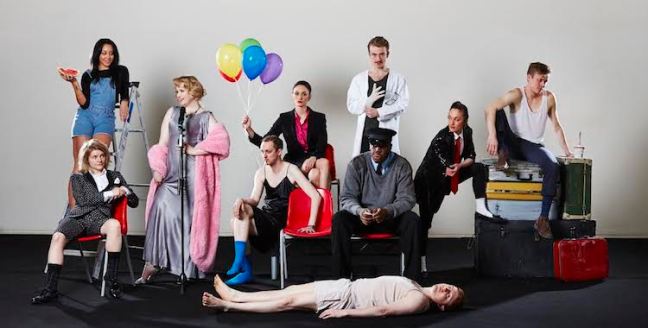
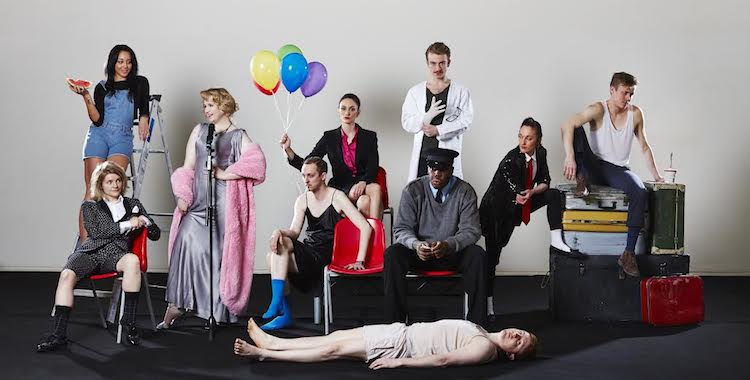
Anthony Neilson is keen on one-word titles. Normal, Penetrator, Stitching, Realism, Relocated, Narrative. And now, his latest play at the Royal Court, Unreachable. It feels apt, given the way of working that Neilson has developed over the years. Typically, the playwright arrives on day one of rehearsals without a finished script – or any script at all – and writes during the process. Those one-word titles, vague but packed with connotations, are perfect for shows whose shape is yet to be decided on.

These plays have fragile beginnings. At the start of making Unreachable, Neilson came into rehearsals with just one solid thing: “the idea of a director obsessively pursuing this light”. Other than that, all he had was a loose idea of what the form of the piece might look like. From those scant ingredients, he and the cast have spent the past few weeks improvising, talking, questioning and – in Neilson’s case – writing.

Neilson’s process is not devising, exactly. Between rehearsals, he goes away and writes independently, often late at night or at the crack of dawn. New scenes and ideas are brought in each day for the actors to perform and explore, before the writing process starts all over again. Improvisation forms a significant part of the rehearsals, but it’s not as straightforward as the actors creating material that Neilson then simply transcribes.

“The actors have a huge impact but more by way of who they are – as performers and people – than in terms of what they create,” Neilson explains. “As many new ideas are created in down-time as when we’re actually improvising. I also allow the actors to pretty much work out their own performances, costumes etc and only intervene if I feel it’s detrimental to the central thrust of the play. This all allows me to approach the material from viewpoints very different to mine.”

I’ve seen this process in action before, during the Royal Court’s Open Court festival three years ago. Over two weeks, Neilson led a series of workshops that encouraged other writers to explore this way of working in partnership with six actors (among them Jonjo O’Neill and Richard Pyros, who have returned for Unreachable). It was largely a process of unlearning, as the playwrights let go of protectiveness and self-censorship in their writing. But it was also fascinating to see how tiny moments in improvisations or conversations in tea breaks metamorphosed into elements of the short plays produced at the end of the fortnight.

In this process, everything’s up for grabs. That’s exhilarating, but also tricky – especially for theatres with rigid production schedules. It’s tough for the rest of the creative and technical team to do their work around a relatively unknown entity, let alone for the marketing department to sell something that’s not yet been made. Plenty of independent theatre-makers work in this way, of course, but it’s a challenge to large organisations with long-established internal structures. Perhaps understandably, not many venues are willing to take the risk.

“Most theatres won’t fully agree to let me work this way,” says Neilson. “They’ll do workshops and even ‘showings’ but few will commit to just scheduling a show. Which is understandable, but difficult for me.” Fortunately, the Royal Court’s artistic director Vicky Featherstone is interested in stretching the definition of what it means to be a “writers’ theatre”, which includes more unusual commissions like Unreachable. “Without a sympathetic patron at the Court, you probably wouldn’t see much of me,” Neilson adds.

For the actors, as well, this process challenges what they’re used to. “It’s hard to shrug off years of orthodoxy,” says Neilson, “and some manage better than others.” For Unreachable, Neilson is working with performers who are mostly new to this way of working, generating some anxieties. During the morning I spend in rehearsals, nervy glances are exchanged and there is, at times, a palpable frustration at the absence of certainties. The performers are eager for answers, while Neilson wants to ask questions.

So where does this process fit? Neilson describes his method as “somewhere in between” conventional playwriting and devising practices. He wants the input of performers and the challenge and unpredictability of making the show as they go, but the idea of playwright as individual artist remains important to him. Neilson believes that theatre “benefits from a strong, singular vision”, and therefore isn’t about to relinquish the mantle of author. “That [vision] can sometimes be achieved in a devising process, if everyone’s very in tune with each other,” he adds. “But I’d imagine there’s always someone at the centre, be it a writer or director or whoever. Also, I do this to express myself. I just like to have other influences in there as well.”

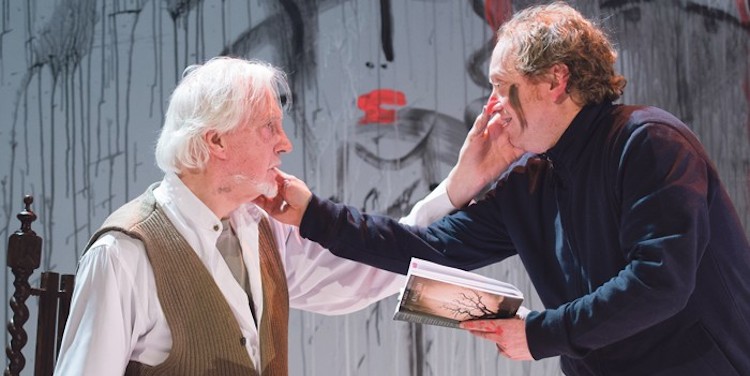
At the root of all great work, Neilson suggests to me during rehearsals, is an obsession: an itch that won’t go away. That’s the root of authorship, as he sees it, and one of the reasons he holds so tightly to the idea of an individual signature. Obsession as an idea also threads through Unreachable (or so it seems when I pop into rehearsals – but then, nothing’s fixed). The protagonist, played by Matt Smith, is on a hunt for the perfect light, while the film he’s shooting is the realisation of an idea sparked many years previously. In scenes between the director and his lead actress, meanwhile, the pair compulsively rehearse emotions that they distance themselves from in everyday life. There’s something in there about voyeurism, perhaps, or the feeling of being an outsider. As ever with Neilson’s rehearsals, it’s hard to tell.

Neilson has frequently called on theatre to be less boring. Writing in the Guardian in 2007, he declared that “boring an audience is the one true sin in theatre”. The antidote to boredom, he’s suggested, is a sense of liveness and theatricality, which much theatre too often neglects. The riskiness and responsiveness of Neilson’s process keeps that liveness in sight – not to mention creating the very real possibility that come opening night the play will be unfinished. It’s seat-of-the-pants stuff, for sure, and that always comes with the potential for failure. Rarely, though, can it be accused of being boring.

Translating Theatre: Trial and Error

jamiesmithphoto-1503_1_orig

Originally written for Exeunt.

On my way into rehearsals for Denise Despeyroux’s play Ternura Negra (Black Tenderness) on Thursday morning, I stop by the polling station. It’s the day of the EU referendum and I put a cross in the ‘Remain’ box. By the time of the play’s rehearsed reading the following afternoon, the UK has voted for Brexit and both the nation and the continent are reeling.

In that context, Translating Theatre’s project of intercultural dialogue feels more important than ever. The project, a collaboration between the University of Kent and producers Firehouse Creative Productions, combines research and practice. It aims to explore and extend what Lawrence Venuti has called a “foreignising” approach to translating plays into English – hopefully sparking discussions about the ethics and politics of translation along the way. Why do we choose to translate so little (only 3.2% of the 2013 British theatre repertoire consisted of translations according to the British Theatre Consortium’s survey)? And how do we decide what to translate and how?

“Foreignisation”, according to Venuti, is a translation strategy that resists the transformation of difference into familiarity in the process of moving a text from one cultural context to another. It’s the opposite of “domestication”, a form of translation that is arguably dominant in British theatre culture. There are still plenty of questions and concerns about Venuti’s theory – how do you balance foreignising strategies with the need for clarity? when does foreignisation nudge into the problematic territory of exoticisation? – but the point of Translating Theatre is to investigate these in practice.

At this stage, it’s about trial and error. “We’re trying to find the rules,” says Margherita Laera, lecturer in Drama and Theatre at the University of Kent and project leader. Despeyroux’s play, originally written in Spanish, is the first of three translations that the project is testing out (the other two are from French and Polish). Touching on ideas of truth, reality and fiction, the play injects a strange dose of the paranormal into a narrative about a theatre director and two actors rehearsing a play about Mary Queen of Scots. There’s at once a familiarity and an unfamiliarity to it.

Sitting in rehearsals, I scribble down a sudden thought in my notebook: “making the process of translation legible in performance”. I add a tentative question mark. What does that even mean, I wonder.

In the rehearsal room, Simon Breden’s translation continues to evolve in collaboration with the research team, director Tara Robinson and the three performers. I’m told that the few days of workshopping the play together have involved as much discussion about the aims of the project as they have practical work. On the day I observe rehearsals, there’s more of this uncertain conversation around the edges of the play. It’s a process that’s exploratory rather than decisive.

Still, discussion in the rehearsal room keeps finding its way back to those elusive “rules”. Robinson and the actors worry, for example, about consistency of approach. Is it OK to use a British idiom here but not there? At one point, the creative team go through a scene of the translated text line by line, agonising over word choice and sentence structure. Change the structure of the thought, someone points out, and you also change the character. That raises the question of what it is precisely that’s being translated – especially in a medium that’s transformed again in performance.

Pursuing the theory of foreignisation in theatre, of course, means finding a foreignising performance language as well as a foreignising verbal language. At this stage, given the end point of rehearsed readings, that language is still some way off, but it’s a useful question to have in the room. At the same time, there’s a necessary balance between exploring the parameters of the project and finding pragmatic performance solutions – a balance that perhaps characterises all translations.

To complicate matters, Ternura Negra is a comedy, and humour can be stubbornly resistant to translation. What makes us laugh is more often than not culturally and linguistically specific; even across cultures that speak the same language, comedy can differ vastly. This is one of the biggest problems that Robinson and her team have to grapple with. Despeyroux’s text plays on Spanish stock characters that mean very little to British audiences. How, then, to get the humour to transfer?

Venuti writes about “produc[ing] humorous effects that both imitate those of the foreign text while maintaining their differences for readerships in the receiving culture”. There’s a tension here: recreating humorous effects – in other words, getting laughs – requires some degree of translation into the receiving culture’s comedic conventions. What Venuti is cautioning against, however, is the use of an equivalent that blots out any and all difference. Laera uses the example of the National Theatre’s One Man, Two Guvnors, which she argues straightforwardly traded the Commedia dell’arte style of Carlo Goldoni’s play for a very British brand of slapstick.

In the rehearsal room, Robinson and the actors play around with the oddness of the three characters, which itself generates a fair few giggles. There’s also occasional comedy in the awkwardness of their way of speaking (at least to our ears) – but is it exploitative if that makes an audience laugh? If these characters are seen to be funny because of their difference, then foreignisation is just a hair’s breadth away from reinforcing national stereotypes.

Reflecting on this process and the theory behind it after the rehearsed reading, some of the most fascinating and revealing insights come from Despeyroux. After hearing the creative team talk at length about the oddness of the characters and their speech, she says that they are meant to be odd. What could be taken as an effect of foreignisation is actually an intention of the original Spanish. Despeyroux also recalls an experience with a BBC Radio producer, who pulled a play of hers because of worries that the translation would still be too “foreign” and therefore “difficult” for British listeners. But foreign and difficult are not synonyms, just as strangeness does not equal foreignness.

This presents another tension. Finding a distinctly “British” solution to every problem presented during the process of translation assumes that audiences cannot receive or process difference (though what “British” even means, particularly given recent events, is a whole other discussion). Yet so-called “foreignising” strategies have their own dangers. It’s easy, as Despeyroux identified, to fall into the trap of thinking that anything odd or challenging is therefore “foreign”. It’s also easy, especially in applying Venuti’s theory to performance, to seize on the superficial external signifiers of other cultures in attempting to communicate difference, thus perpetuating divisive national caricatures. No culture – and no theatre culture, for that matter – is homogenous. Even British theatre, which we risk talking about as a rigid monolithic entity in processes like this, is incredibly complex and diverse.

Ultimately, the first phase of this project has triggered a whole series of further questions. How do we avoid erasing difference without simply othering? Is the term foreignisation useful in fostering intercultural dialogue, or does it unhelpfully reinforce what divides us rather than what we have in common? In attempting to converse and collaborate across different cultures, how do we move beyond reductive, surface ideas of what those cultures represent?

None of these are easy or straightforward to answer. But if theatre really is a place where we think about ourselves, our society and our place in the world, then these are questions that have renewed force in a shaken post-referendum landscape. Celebrating what we have in common, without flattening or ignoring difference, has never felt more urgent.

Photo: Jamie Smith.

“Theatre is always about together”

secret2

Originally written for Exeunt.

“I could watch them do this all day,” director Alexander Zeldin leans over to say to me. In a large, bright rehearsal room at Birmingham Rep, we are sat observing a group of young actors attempt an impossible task. The members of the Foundry actors’ group are walking an imaginary tightrope, concentrating fiercely on feeling the fictional rope beneath their feet and responding to the minute movements of their fellow performers. It’s all about establishing trust and sensitivity, forging an environment from which creativity can spring.

Launched in October 2015, this strand of the Foundry programme was established to offer free training and support for local actors aged between 18 and 30. The project, run by Zeldin, has deliberately targeted performers who have relatively little experience and for whom drama school is not an affordable option. While this is an experiment in collaboration on a small scale, Zeldin – whose ultimate goal is to establish a permanent company of actors – is partly inspired by the principles of ensemble theatre-making.

Ensemble seems to be having its moment. As part of the growing interest in continental European theatre, there is a fascination among many British theatre-makers with ensembles operating across the Channel. This is then reflected in experiments like the Foundry actors’ group and the Secret Theatre project, which brought together a company of actors, writers, directors, designers and dramaturgs to make work collaboratively over two years at the Lyric Hammersmith. Perhaps, though, ’twas ever thus. “It’s always come and gone, and it’s always been an idea which is about to have its moment again,” says academic, director and dramaturg Tom Cornford. “That’s been a repeated pattern.”

The question of what precisely ensemble is, though, is harder to answer. As Peter Brook put it, “We can all instantly feel what it isn’t. No one can say what it is.” In his book Encountering Ensemble, John Britton suggests a number of ways in which it is possible to understand the idea of ensemble: in terms of organisational structure, of a company’s longevity, of training principles, of a sense of common purpose and togetherness.

Historically, Cornford tells me, there are two competing accounts of ensemble theatre. One comes from Stanislavsky, arriving in the UK about a century ago via Harley Granville-Barker, and is centred on the actor. The other, which was introduced into British theatre by Komisarjevsky at around the same time, is more focused on the visionary director or auteur who, in Cornford’s words, “brings everyone together and makes everyone more creative in a way that they weren’t under normal, conventional rehearsal room circumstances”.

It’s easy to see the influence of these two contrasting yet related approaches in twenty-first-century British theatre. Theatre-makers in the UK – and particularly those from younger generations – are often in thrall to directors whose work is acclaimed across Europe and who are typically described as auteurs: Thomas Ostermeier, Ivo van Hove, Katie Mitchell. The spirit of the actor-focused ensemble, meanwhile, can be seen in recent collaborative endeavours such as Secret Theatre or Michael Boyd’s attempt to install an “ensemble way of working” during his time at the helm of the Royal Shakespeare Company.

So what does ensemble mean to Zeldin? Its essence, he suggests, is there in all theatre. “Ensemble means ‘together’ in French,” Zeldin observes. “Theatre is always about together, whether it’s the audience and the performer or the group of people that are making the work or the wider community that the work is connected to in some way.”

Zeldin admits, despite his long-term ambitions, that “ensembleis a very big word for what we have here”. The ensemble, though, is crucial to Zeldin’s approach to theatre-making – in theory, if not quite in practice. His eventual dream is to work with one group of actors for an extended period of years, perhaps even decades. For now, though, ensemble principles structure his work as a director within the constraints of more limited artistic processes, be that in Beyond Caring (on which he worked with a group of actors over an extended period), the Foundry actors’ group or Love, his new show for the National Theatre and Birmingham Rep. At the core of Zeldin’s methodology is a series of questions.

“What do we have to say together?” he asks. “What is the need for us to use theatre to think about our own reality, our own social situation, our own social environment and our own inner life? How can we use the theatre to understand the world we live in better? That’s always the question I’m asking at every moment. What is it specific to the theatre that allows us to think about the world? Because to do theatre is a way of thinking about the world.”

There can, however, be a tendency to mythologise and mysticise the idea of ensemble. Cornford offers the example of Boyd, who claimed that his ensemble at the RSC had a “deep voodoo”. To quote Cornford, “what the hell is that?” Yes, groups of theatre-makers who work with one another over extended periods undoubtedly form deeper connections than those who are together for a limited rehearsal period, but when does that become a genuine ensemble?

Ensemble, I think, is something that happens,” says Cornford. “It’s not a steady state, it’s a process. It’s something which always is happening and is going to at some point run out, because people move on.” Think of some of the most prominent and successful British ensembles – Complicite, say, or Kneehigh – and it quickly becomes clear that these now consist of small core creative teams with changing sets of collaborators. When, then, does an ensemble stop being an ensemble? “It’s a bit like a band, isn’t it?” Cornford suggests. “You have to take a view, don’t you, on whether if a band has now replaced all of their players, are they really still that band?”

Another source for ideas of ensemble, which forms the subject of Cornford’s current research, is the studio, which sits somewhere between drama schools and producing theatres. Cornford elaborates: “It’s not primarily dedicated to training people and giving them a certificate and putting them out in the world, it isn’t primarily dedicated to producing plays, it’s primarily dedicated to producing a company of people who will go on to produce work.” The examples he’s looking at include Michael Chekhov’s work at Dartington, Michel Saint Denis at London Theatre Studio and the Old Vic, the RSC in the mid-1960s, and Joan Littlewood with Theatre Workshop.

One final and much more recent example that Cornford is exploring is Secret Theatre. Launching the project, the Lyric’s artistic director Sean Holmes described it as “an attempt to create a new structure that might lead to a new type of work”, yet he also acknowledged “the example of the European ensemble” as a key inspiration. Deliberately – and here lies the connection with the studio – the ten actors in the company were all young, creating an ethos that was as much about training, development and experimentation as about artistic creation.

The Foundry actors’ group, too, shares more in common with the studio than with European ensembles such as Toneelgroep Amsterdam. Zeldin, though, has an uneasy relationship with the idea of training. “We never suggested at any point that it was a kind of alternative drama school,” he clarifies. “It’s not a drama school, it’s a group which is starting to touch on and question this idea of training and to ask what it means to work together with a group of people who haven’t got very much experience. What is that for them? What is that for the artist leading it?”

What eventually emerges in the Birmingham Rep’s rehearsal room is a delicate yet oddly absorbing environment. During one characteristically simple scene, I find myself completely sucked in and surrounded by the funeral scenario that the performers are unfussily playing out. It’s natural, unaffected, ordinary. Zeldin explains to me that there was no material at the start of this process other than the people in the room; everything they have created has been created together from their own impulses and experiences. “That’s something that for me is really crucial,” he says, “that everything I’m doing is always emerging from who the people are, what they carry.” As one of the participants succinctly puts it, “we take our stories and make them into stories that are not our own”.

The current experiment at Birmingham Rep is also part of a wider question about, in Zeldin’s words, “how the theatre sits inside a community”. Throughout all the work that the theatre does through its Foundry programme, artistic director Roxana Silbert is interested in how the venue connects with local artists and residents. It comes back to that simple idea of ensemble as togetherness. Perhaps, as Zeldin suggests, “the ensemble is always at the heart of everything that theatre is”.

Men & Girls Dance

2000

Originally written for the Guardian.

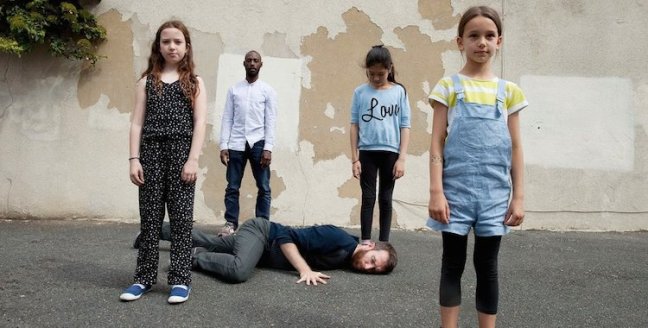
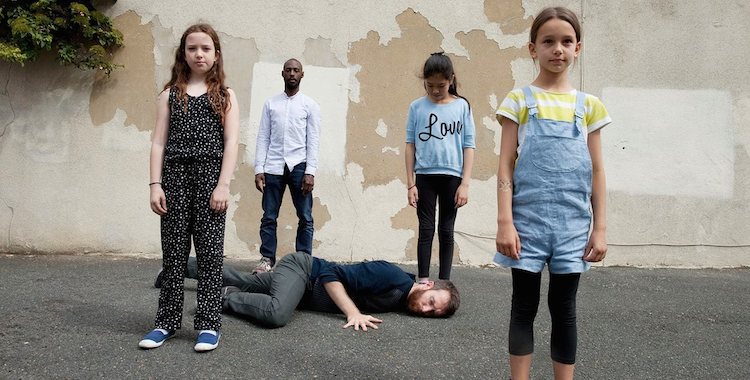
Fevered Sleep’s latest project, Men & Girls Dance, is exactly what its title suggests: adult male performers dancing with young girls. That relationship, though, has been tainted in recent years. Put the words “men” and “girls” in the same sentence and it’s likely to call to mind suspicions of abuse. This is what Fevered Sleep is hoping to challenge.

Men & Girls Dance brings together male professional dancers and girls who dance for fun, recruited through a local call out. The initial impetus was purely aesthetic: artistic director Sam Butler had been to her daughter’s end-of-term ballet show the day before auditioning male dancers for another project and found herself struck by the difference between the two types of performer. “I thought it would be really interesting to make a piece with male contemporary dancers, because they’re big and strong and agile and tall and muscular, and put them next to little girls in pink,” she says.

But during research and development, the company met resistance. “Some of the reactions were quite shocking,” Butler remembers. Questions and concerns (“What does it mean?”, “We don’t like that, it sounds a bit creepy”) were repeatedly raised. “The politics of it became the thing that people had the reaction to, not the aesthetics,” says David Harradine, the company’s other artistic director. So Fevered Sleep set out to tackle those reactions.

The company began with the two groups of dancers and a series of questions: “Is this possible? And is it beautiful? Does it move us?” The answer was, in Butler’s view, “yes, absolutely”. A lot of that is simply to do with the contrast between the two body types. “Incredible things happen when you are choreographing men who are six foot five and girls who are four foot six,” says Harradine. “In terms of the movement potential, it’s really exciting.”

Gaining the trust of parents in each area they visit is crucial to the process and the company has occasionally encountered reluctance. Butler tells me, though, that the outcome of the workshops has dispelled any fears. “The people who have then gone on to see the showings have had their minds changed,” she says. “Everybody has said it is really joyous to be there and witness it.”

Fevered Sleep is known for its work with video installations and digital art, but in Men & Girls Dance everything is stripped back to just the performers – and newspaper. Whether wrapped around the performers or lobbed across the stage, newspaper pages are a constant visual reminder of the relationships between men and girls that we are used to seeing in the media. “It says so much,” says Butler, “we don’t need to say anything else.”

The performance itself, though, is worlds away from the headlines those newspapers invoke. As in many of Fevered Sleep’s shows, play is integral and the spirit is joyful; while two-thirds of the piece is choreographed in advance, the final third is improvised. “A lot of that improvised material is just about the performers being in a space with the audience, looking at each other and being present to each other,” says Harradine. What emerges is a playful and tender celebration of the relationships on stage. And alongside the performances, creating space for conversations is a huge part of the project – there’s an accompanying publication, and discussions before, during and after each residency.

While the title may bring to mind recent headlines, Harradine stresses that the company is not interested in courting controversy to sell tickets. “We’re trying to provoke people to question what society seems to tell us about this relationship. It is provocative and it is political, but there’s nothing controversial about it.”

This year’s residencies mark the culmination of almost three years of development and exploration, but they are not the end of the project. Butler hopes that Men & Girls Dance will travel to festivals or generate pop-up events in the street, leaving “little traces of it here and there so it doesn’t disappear”. They will keep it going, she insists, until it’s no longer needed. “My hope is that at some point we’ll be able to stop doing this piece.”

Photo: Karen Robinson.

Told by an Idiot

my-perfect-mind-165-700x455

Originally written for The Stage.

If there’s one thing that defines Told by an Idiot, it is collaboration. “I still hold with the notion that theatre is the most collaborative of art forms,” says Paul Hunter, the company’s co-founder and artistic director. “I think theatre’s at its best when it properly collaborates, so that’s always the starting point for us: the idea of collaboration.”

Collaboration, though, has meant many different things over the company’s 22-year life. It began with a focus on the actor, moving on to work with poets such as Carol Ann Duffy and Simon Armitage and writers such as Carl Grose. The 2004 production I’m a Fool to Want You enlisted jazz musicians to capture episodes from the life of French writer Boris Vian, while in 2013 it forged an actor collaboration of a different kind with Edward Petherbridge on My Perfect Mind, a show inspired by Petherbridge’s stroke.

Hayley Carmichael, another of Told by an Idiot’s founders, insists that the shows – while different – all share the same philosophy at heart.

“Even if the starting point is brought to the room by one of us, what happens next is that everyone in the room is a collaborator and takes part in the collaborative process, which for us will always make the end result richer.”

Read the rest of the interview.

Photo: Manuel Harlan.