Access all areas

1093

Originally written for the Guardian.

Captioned and signed performances have become common in theatre, with BSL interpreters and LED displays a familiar presence at the side of the stage. But theatres are increasingly making their work accessible for deaf and disabled audiences in a more creative, integrated fashion and are placing issues of access right at the heart of their design.

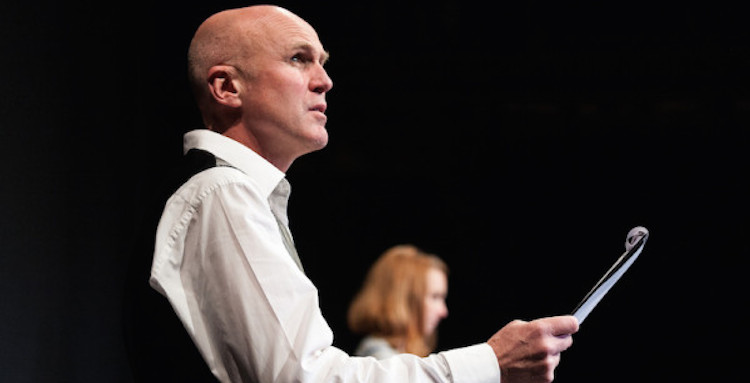
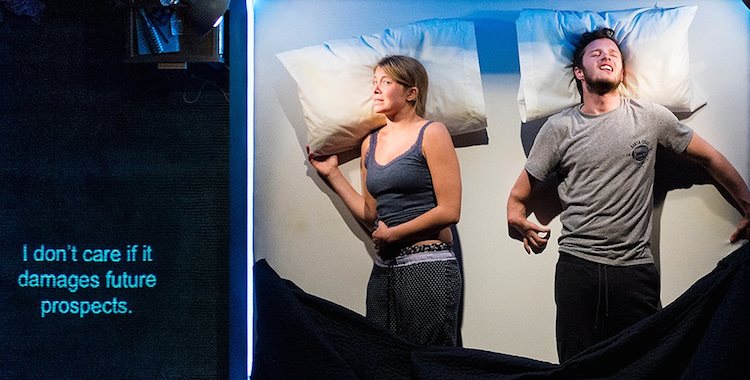
Graeae theatre company’s touring production of Jack Thorne’s play The Solid Life of Sugar Water, which arrives at the National Theatre in London this week, imaginatively incorporates live captioning at all of its performances. Birmingham Rep, meanwhile, is preparing to open a new version of Nikolai Gogol’s The Government Inspector with an integrated cast of deaf, disabled and able-bodied performers. Rather than being hidden away, the latter show’s audio describer and sign language interpreters will be incorporated as characters within the world of the play and have been involved in the production right from the start.

Roxana Silbert, artistic director of Birmingham Rep, is enthusiastic about the ways in which creative access can open up aspects of Gogol’s play. “Sign language is great for The Government Inspector,” she says, “because there are a lot of secrets and lies in the play and a lot of people who are saying things that other people don’t understand. So having that second language enhances what the play is already trying to do.”

The show’s aesthetic has been affected in more subtle ways by the access needs of its performers. “Once you start looking at it from the actors’ point of view and what they need to make the stage work for them, actually what it does is make the stage a really interesting place,” Silbert says. The set for The Government Inspector suggests the lobby of a hotel, with various levels accessed by ramps and a lift as well as stairways and ladders.

Graeae has championed disabled artists and accessibility since it was founded in 1980. Those decades of work are now informing new initiatives aimed at improving access and widening opportunities for disabled artists across the sector. One of these is Ramps on the Moon, a collaborative network of theatres being funded by Arts Council England and supported by Graeae to create three new pieces of touring theatre that put disabled artists and audiences at their heart. The Government Inspector is the first of these.

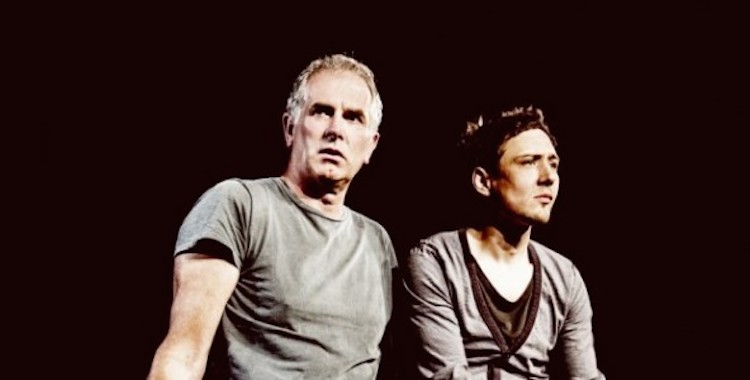
Graeae’s Amit Sharma, the director of The Solid Life of Sugar Water, is also interested in how access can be incorporated in ways that speak to the themes of the piece. Thorne’s play tells the story of a couple attempting to overcome grief and regain intimacy. The whole show is set in the protagonists’ bedroom and takes an incredibly candid approach to relationships, sex and the difficulty of communication.

“Because of the nature of the text and it being very explicit in how it’s describing certain sexual acts, I made the decision very early on of not using British Sign Language,” says Sharma. Instead, captions are projected on to the bed that the two characters share, which the audience see as if from above. “When we were working with the set and the elements of access … we always said there are three characters in the play: there are the actors and there’s the bedroom,” he says, stressing the importance of the design. The prominence of the captioning in this intimate shared space highlights the play’s themes of communication – and lack of it. As Sharma puts it, “to have those words spelt out gives it an extra meaning, an extra layer”.

Within the play, references to the specific disabilities of the performers are incidental rather than integral. “We just went for the actors who felt right for the roles,” says Sharma. After Genevieve Barr and Arthur Hughes had been cast, Thorne made small changes to the script to refer in passing to Barr’s deafness and Hughes’s arm impairment – details that are always secondary within the narrative. “Disability is irrelevant,” Sharma says. “It’s the story that matters.”

The Solid Life of Sugar Water was staged at the Edinburgh festival last summer where it was one of many shows representing a game-changing year for disabled artists at the fringe. It prompted audiences and theatre-makers to think about accessibility in different ways. This kind of work, however, requires support. In addition to the backing of the Arts Council, which has awarded £2.3 million of funding to Ramps on the Moon, Silbert stresses the importance of safeguarding schemes such asAccess to Work. “It is about performers who have specific requirements being able to get the Access to Work support they need,” she says. “That’s where the problem is going to lie, not in theatre funding.”

Photo: Patrick Baldwin
Are We On The Same Page?

3.-Tim-Crouch-and-Amy-Griffiths-in-An-Oak-Tree_credit-Greg-Veit_-600x399

Originally written for Exeunt.

Back in 2009, Andy Field argued in a post on the Guardian Theatre Blog that “all theatre is devised and all theatre is text-based”. Cutting through arguments about “new writing” and “new work”, he reasoned that “to devise is simply to invent”, whether that inventing is done with words or bodies or any combination of the two. Job done, surely?

Yet the disingenuous “text-based versus non-text-based” debate has rumbled on. It flared up yet again at the beginning of this year, when David Edgar was announced as Humanitas Visiting Professor in Drama at the University of Oxford and raised familiar concerns about the threatened position of playwriting and the playwright, met with retorts from the likes of Lyn Gardner and Andrew Haydon. While Edgar persisted in pitting other forms of contemporary theatre practice against playwriting, others agreed with Gardner that what we need now is “a far wider and looser definition around what we mean by new writing”. Alex Chisholm, writing in these pages over three years ago, argued much the same thing.

But it’s not just about changing industry terminology. Current binaries are based in long-seated assumptions about the nature of the theatre text and the privileged place of the solo-authored play within British theatre tradition. Unsettling assumptions – and by extension the structures and processes that have congealed around those assumptions – is no easy task. It is happening, with the publication of books like Duska Radosavljevic’s excellent Theatre-Making: Interplay Between Text and Performance in the 21st Century and shifts in programming and commissioning at theatres such as the Bush and the Royal Court, but there’s still a way to go.

Shifting understandings around text and performance means shifting the possibilities open to theatre-makers. Writing in the immediate aftermath of this year’s Edinburgh Fringe, where categories like “new writing” and “new work” seem more and more irrelevant each year, Matt Trueman suggested that “a new kind of fusion theatre is emerging”. He pointed to young companies like Barrel Organ and Breach Theatre, who seemingly don’t discriminate between new writing, devising and documentary theatre. He concluded that this slamming of one set of techniques into another creates a healthy and experimental theatrical landscape, in which “the possibilities are endless”.

The picture sketched by Trueman is an exhilarating one, but there are still questions to be asked. Often, the supposed binary between “text-based” and “non-text-based” theatre has rested on larger ideological stakes; “non-text-based” work has frequently been seen as alternative, radical, progressive. But to what extent is that still true? Mightn’t real ideological interrogation, as Liz Tomlin suggests in Acts and Apparitions, lie in looking beyond superficialities of form? And in order to rethink the relationship between text and performance, we also need to think again about what it is the theatre text actually does. Is it a blueprint for performance? A set of tools? Is there really a difference between “open” and “closed” texts, and if not then is there anything that the theatre text makes impossible in performance?

These are some of the ideas that I’m hoping we can address at Are We On The Same Page? Approaches to Text and Performance, a one-day symposium at Royal Holloway on 26th September. Bringing together academics, critics and practitioners, the aim is to erode old binaries and open up genuine, searching discussions, rather than re-igniting old antagonisms.

The day will open with a Q&A with Tim Crouch, whose work as a theatre-maker has repeatedly confounded distinctions between “new writing” and “new work” and challenged our collective understandings of theatre’s representational mechanisms. Field, Radosavljevic and Haydon are all among the panellists who will be speaking later in the day, alongside a range of other theatre-makers and academics whose practice and scholarship has in various ways engaged with some of the questions identified above.

What we hope to generate throughout the day is dialogue in place of dichotomies. It’s about time we ended what Chris Goode calls “the phoney ‘writers versus devisors’ war” and started to interrogate some of the bigger, knottier issues that old battle has served to hide.

The challenges of using video in live theatre

golem-old-vic-cr-bernhard-muller-700x455

Originally written for The Stage.

Paul Barritt, animator and co-artistic director of theatre company 1927, is frank about the challenges of using projection onstage. “Ask anyone who’s worked with video in theatre and they will say that it is a nightmare,” he says. It’s perhaps surprising, then, that video has remained such an integral ingredient in 1927’s work ever since its Edinburgh Fringe breakthrough with Between the Devil and the Deep Blue Sea in 2007. As Barritt puts it: “It’s core to the very idea of what we do.”

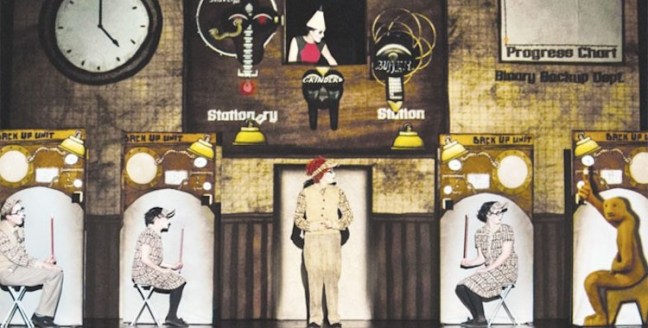
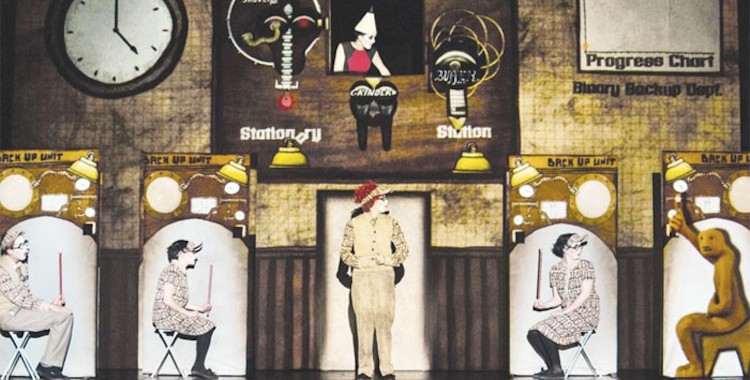
Live performance is put in front of an animated backdrop in 1927’s shows, using projections in novel and surprising ways. The two-dimensional and three-dimensional layer on top of one another form one unique texture. Their debut, Between the Devil and the Deep Blue Sea, drew on silent film techniques to integrate a monochrome film with performers on stage, while hit show The Animals and Children Took to the Streets exploded the same technique into vibrant colour.

The key to 1927’s successful use of projected animations, providing the company’s distinctive style, is collab-oration. “It’s never really just me sitting there making my own animations,” says Barritt. “It’s a very collaborative way of working, and that’s the only way that it really works.”

Barritt offers the example of Golem, which the company is currently taking on tour after its premiere last year at the Young Vic. The show draws on the centuries-old myth of the golem, drawn from Jewish folklore, to create a satire of 21st-century capitalism and technology, with the clay servant of the title fast becoming a must-have, life-ruling accessory. The concept came jointly from Barritt and fellow artistic director Suzanne Andrade, who worked together from the very beginning on both the ideas and aesthetics of the show.

“We knew we wanted to set it in a city and we knew that part of the journey was going to be going from a chaotic, exciting metropolis into this homogenised, Westfield-type city,” Barritt explains. “Aesthetically, we talked about lots of different things.” Inspired by the “hodgepodge” quality of downtown Los Angeles, the city has a collage quality that then flattens out into an “almost pop art aesthetic” as the world of the show becomes increasingly neat and uniform.

The company’s shows are known and celebrated for their almost seamless integration between animation and performances, making an often clunky marriage of live and filmed elements appear effortless. Barritt tells me that this, too, comes from that close collaboration on the overall aesthetic of the show, which extends to performance style.

“Suzanne’s style of direction is very much focused towards bringing out the best in the animation,” he says. “You have to make the actors as large as the animation and they have to behave a bit like the animation behaves, so they have to act in a very gestural way and it has to be slightly heightened because we’re in a big, illustrated, heightened world.”

And it’s not just the performances that have to marry up with the images. Music is also essential to 1927’s shows and helps to hold all the other elements together. “Everything’s timed to the music,” Barritt explains. “It’s when you’ve got this synchronicity of everything, that’s what makes it all work.”

Although the animated worlds that Barritt creates for 1927’s shows would seem to have much in common with film, he warns that “you can’t go too cinema-tographic on it”. He continues: “The film elements that I’m making, I’m doing them in a very theatrical way and they’re actually much more like moveable, animated bits of set than they are film. For example, we’ve never really been able to do close-ups, we’ve never worked out how to do close-ups properly or in a good way. You can’t do it, because your actors are there on stage and it’s all to do with the scale.”

While this means limitations, Barritt sees such constraints as creative rather than frustrating. “You might start off with an idea and it’s this giant thing, this massive idea that you’ve had, but the actual logistics force it into becoming something different and often something better,” he suggests. “Limitations are really good things to work within; it’s much better to have them.”

The process has, however, got easier over the years, both as 1927 has increased in reputation and capacity and as the technology it is working with has improved. After starting out working with DVDs – which Barritt says are now “virtually obsolete” – the company has more recently begun working with a media server that allows Barritt to break the show’s animations down into individual chunks.

“All the animated events are cued,” he says, “so this has made it easier for timing purposes and it has also made it easier to reshape the film. We used to use just one film that played through, so if there was one tiny element in the film that didn’t work, I’d have to go into one massive film and just change one element, and then that can throw a spanner in the works.” He adds that the media server “loosens things up”, allowing more flexibility both in rehearsal and in performance.

New, more sophisticated technology has also eased the often painful process of transferring the company’s shows from venue to venue.

“With the media server it’s much better,” says Barritt, though he admits that there can still be problems. “Every projector is different: it’s really one of the more imprecise technological arts, setting up a projector, because each distance on each angle is always different and that affects how the projection is on the screen.”

Apart from moving to a media server, Barritt insists that technological developments have altered very little about 1927’s ways of working over the past eight years. “The way we’re using [the technology] is quite simplistic, really, in comparison with how some people use it,” he says. “The essential nature of what we’re doing hasn’t changed since we were using DVDs. Our actual process hasn’t really changed according to the technology at all. There are hundreds of things you can do with the technology, but that doesn’t mean you should do them.”

While the technology now allows the likes of motion sensor triggering and live feeds, 1927 hasn’t yet been tempted by such tricks. “People can get seduced by technology a bit and use it just because they can, which is ridiculous”. He says that 1927, on the other hand, would “only use it if we really thought the idea warranted it”.

For now, though, the company is happy to continue within the niche it has carved out for itself. “I think our process is still giving,” says Barritt, “and we’re still finding new ways of doing stuff within it.” The company is unlikely to be doing Shakespeare or kitchen-sink realism any time soon, Barritt adds, but that’s not where its interests lie.

“We’re ploughing our furrow and we’re quite excited about it still,” he says.

Photo: Bernhard Muller.

Why we can’t stop watching violence

a3aa32e2-d7db-4a97-8f8a-b0f24e8ff393-2060x1236

Originally written for the Guardian.

Greg Wohead’s theatre show about the crimes of serial killer Ted Bundy opens innocuously enough. He welcomes his audience, shares some facts and tells a few jokes. Then he gets to the point: “I guess you want to know the juicy stuff.”

The Ted Bundy Project was provoked by Wohead’s experience of stumbling across Bundy’s confession tapes online and finding himself compulsively listening for the “juicy stuff”. “This was the spark of interest,” he says, “feeling at once disgusted and horrified but also really interested and intrigued.”

The same could be said of our own relationship with violence both on and off stage. Today, violence is ubiquitous, beamed worldwide on 24-hour news channels and freely available at the click of a mouse. Society has never been more saturated with images of brutality.

Another new piece of theatre, Image of an Unknown Young Woman, starts with one such instance of violence that goes viral. A woman in a yellow dress is shot by the police and the video footage sparks a popular uprising. Writer Elinor Cook was inspired by events during recent revolutions, but did not specifically set out to address any particular political situation. She explains that she was interested in exploring “how the extinguishing of something bright and beautiful galvanises people”, as well as interrogating “this idea of some violence being, in a sense, titillating”.

Theatre has a complicated relationship with violence. “It goes back to the Greeks, doesn’t it?” suggests Christopher Haydon, who will be directing Image of an Unknown Young Woman at the Gate theatre, London. Greek tragedy kept violent events out of sight, leaving the grisly details to the imagination of the audience. Since then, though, plenty of violence has erupted on stage, from the bloodbath of Titus Andronicus to the shock and gore of the in-yer-face theatre of the 1990s. More recently, Tim Crouch’s in-yer-head show The Author both skewered and questioned the provocative violence of its theatrical forebears at the Royal Court, while directors such as Ellen McDougall have used striking visual metaphors – balloons, water, chalk – to stand in for physical blows.

Nothing, the debut show from the young company Barrel Organ, which is currently on tour, is of the Crouch school. Rather than putting anything shocking on stage, the casual violence that permeates its series of alienated monologues is all described, making the audience complicit in imagining it.

Barrel Organ’s new piece, a work-in-progress entitled Some People Talk About Violence, is upending the concept altogether. “I wanted to write a play about quite insidious, inherent forms of violence that occur within a capitalist system,” says writer Lulu Raczka, who is in the process of collaboratively devising the show with the rest of the company. The violence she refers to is the hidden and often internalised violence of zero-hours contracts and unemployment legislation. “It’s about renaming violence,” says Raczka.

“Theatre permits and enables us to contemplate violence,” argues Lucy Nevitt in her book Theatre & Violence. It’s an arena in which violence can confront us with its reality and provoke us to question the structures that enable it. But its representation also throws up ethical question marks. When does the staging of violence challenge what it shows, and when does it just reiterate it?

“My feeling is that if it’s done in the right way, representation of violence is totally legitimate,” says Haydon. But in his staging of Image of an Unknown Young Woman, torture and abuse will be shown metaphorically rather than literally. This chimes with the non-specificity of Cook’s narrative; rather than “trying to depict a real country in a specific way”, Haydon explains that “it asks you to look at the underlying processes of a revolution” and the ways in which power can “warp reality”.

Wohead, meanwhile, insists that “there’s a blurry line between represented and real”, challenging any clear-cut binary between real and fictional violence. The violence that we see on television, for instance, is “framed in a certain way, it’s filmed by someone”. In researching The Ted Bundy Project, Wohead came across whole online communities built around the sharing of violent images, on the basis that “it’s stuff that is happening in the world and by confronting that we can take steps towards confronting the reality”. But Wohead has his doubts; he’s more interested in prodding at the less savoury motivations behind such voyeurism.

“I think there’s a lot of theatre out there that is pointing a finger at something or someone,” he says. “And sometimes that’s useful, but the way I work … is about pointing the finger back at myself and at all of us. Lots of these structures that we have problems with, we are all complicit in.” Audiences can expect to leave The Ted Bundy Project feeling just as uncomfortable with their own reactions as with the subject matter itself.

For Raczka, the use of violence on stage is complicated. “In order to take it on I think you have to take it on absolutely fully,” she says. “When we’re talking about using violence to shock and to move a plot line along, that’s when I think it becomes very exploitative.” This is the sort of exploitation that Barrel Organ aim to eschew and subvert in Some People Talk About Violence. The company also hopes that the very deliberate use of the word violence in the show’s title will “set up an expectation that can then be dismantled”, allowing a discussion to take place afterwards.

“It’s quite aggressive to actively say that you want someone to leave a theatre and discuss the issues you’ve brought up,” says Raczka, casting the idea of a “violent play” in a new light. “That’s surely what all theatre is about, but this is going at that full pelt.”

Photo: Alex Brenner.

Mother Figures

gods-2-600x300

Originally written for Exeunt.

Selma Dimitrijevic and I first began talking about her play Gods Are Fallen and All Safety Gone almost three years ago. It’s been a long, meandering, stop-and-start conversation, via sitting in on rehearsals, watching performances and dress runs, chatting over coffee in various cafes in various cities. Aptly enough, Gods is also about those conversations that stretch over years: the well-worn family routines that regularly pause, rewind and restart.

The play’s history is even longer. Selma’s delicate depiction of one mother-daughter relationship was originally written as a commission for Oran Mor’s A Play, A Pie and A Pint series back in 2008. Across just four scenes, Gods Are Fallen and All Safety Gone (the title borrowed from John Steinbeck) suggests a lifetime’s worth of love and resentment between thirty-something Annie and her mother, their repeated small talk increasingly charged. It’s a small story, but one that reaches far beyond its two characters.

When it was produced at Oran Mor, Gods got what Selma describes as a “very naturalistic” treatment. Watching it, she felt that something was missing. “It was one of those things when you see a piece of work that you have made and there’s nothing you can say that is wrong with it,” Selma explains, “but the product wasn’t necessarily the kind of thetare that excites me. So I was looking at it and thinking ‘how did I help make this piece of theatre that I wouldn’t be that excited about as a theatregoer?’”

But it was only after encountering a Russian version of the play directed by Viktor Ryzhakov in 2011 that Selma thought of having a stab at it herself. Despite failing to get into the country to see it, Selma later got hold of a recording of the performance and found herself incredibly moved by it. “I saw a video of it and it just made me cry,” she remembers. “It went straight to the heart of what I was trying to do.” Ryzhakov cast two women of the same age as mother and daughter and contained them inside a pen for the length of the play, delivering the dialogue at high speed. Selma saw something in her play that went beyond domestic realism.

But it was only after encountering a Russian version of the play directed by Viktor Ryzhakov in 2011 that Selma thought of having a stab at it herself. Despite failing to get into the country to see it, Selma later got hold of a recording of the performance and found herself incredibly moved by it. “I saw a video of it and it just made me cry,” she remembers. “It went straight to the heart of what I was trying to do.” Ryzhakov cast two women of the same age as mother and daughter and contained them inside a pen for the length of the play, delivering the dialogue at high speed. Selma saw something in her play that went beyond domestic realism.

“Once I saw that, I thought actually I want to do my own attempt,” says Selma, explaining that her intention was to approach it “just as a piece of writing”. She got this opportunity through her company Greyscale, who were offered a spot in the 2012 Almeida Festival. Now, eight years after first writing the play, she tells me that the text of Gods feels oddly distant. “I kind of keep forgetting that I wrote it,” she laughs.

What’s most distinctive about Selma’s version of Gods – at least at first glance – is her decision to cast male actors Sean Campion and Scott Turnbull as mother and daughter. At the time when the Almeida Festival opportunity arose, Selma was working with the pair on Greyscale’s Theatre Brothel and something about their relationship resonated with the relationship in the play. It was, as she puts it, an artistic choice that came from the gut rather than the head.

“I’m a big believer, as a writer, that my subconscious is a better writer than I am,” Selma says by way of explanation. “So when things just come out, they’re usually much better than when I think about it. And the same thing as a director: I bring a lot of things into the rehearsal room that are instinctive. I can’t explain why.”

She’s been reluctant, therefore, to identify any intention behind the cross-gender casting, preferring to keep readings open. And while on the page this casting choice is what grabs attention, in performance it becomes almost irrelevant. Once accepted, the fact that these two female characters are being played by men seems perfectly natural. After all, theatre is always asking us to believe that one thing stands for something else. There’s no attempt by Sean and Scott to ape femininity; these are demonstrably two men, but also two women.

As I put it to Selma during that initial rehearsal period, the production’s non-naturalistic casting somehow frees it from the burden of specificity. Because these two men are clearly not attempting to represent two “real” women, the piece is allowed to speak through and with them, elevating it to something far more wide-reaching than the bare bones of the script might suggest. Discussing the casting now, Selma’s stance is simple and equivocal: “It just feels right, and as long as it feels right and interesting and exciting, and people react to it in an interesting way, we’ll keep doing it.”

Looking back on audience’s reactions to the casting during their latest tour, Selma draws attention to one response in particular. “This really interesting thing happened: there were a couple of men who mentioned that they don’t know if they would come and see it if it was just a show about a mother and daughter, and that they might not have connected with it personally if it was just a real mother and daughter and two actresses on stage. I don’t know how to feel about that.” It points to how, culturally, we still see narratives of female relationships as being aimed primarily at women, whereas narratives of male relationships are read as universal. As Selma puts it, “if it’s one, it’s a minority narrative, and if it’s the other then it’s for everyone”.

Other responses to Selma’s casting choice were more indignant. “A lot of people asked me how did the writer feel about me messing with their play,” she says, “which always makes me laugh.” For Selma, this complaint has a familiar ring, revealing much about the differing attitudes towards writers and directors in British theatre. “It feels a little bit like yes, you can do things to my play, but only if you do them well,” she continues. “Well of course, I wouldn’t be suggesting things otherwise. My intention is to do it well; I can’t promise I will.”

Selma’s other intriguing creative choice in directing Gods was to put a real mother and daughter on stage with Sean and Scott, quietly looking on from the back of the stage. Selma describes the pair as a kind of “amplifier” for the performance: “We’ve never had mother and daughter react in any emotional way if either audience or actors weren’t genuinely vibrating with emotion. But if it it is an emotional show, they make it a bit more emotional, and if it’s a funny one then them laughing on stage makes it even funnier.”

And although Selma insists that she doesn’t make “theatre with an agenda”, she has noticed over the life span of the show that it is also capable of making small changes in the lives of the mothers and daughters who take part. “They get to spend an hour looking at each other, talking to each other afterwards, as two adults, and see each other slightly differently after the show,” says Selma. Having lost her own mother before directing the play – “I’ve completely missed that opportunity” – these small moments of connection are particularly precious.

As much as Selma insists on the importance of instinct and chance in her work, with Greyscale she has been working hard over the last few years to give those instincts as much breathing space as possible. “It’s a combination of us being lucky,” she says of choices like the casting in Gods, “but also being good at creating circumstances in which things like that can happen.”

That means spending time together, sharing creative experiences, seeing other theatre. Selma explains that she, Sean and Scott have seen and talked about several shows together and have participated in a range of different workshops, giving them a shared toolkit and vocabulary. “We’ve filled the last twelve months with things for us to do together that have to do with art but don’t need a result and just allow space to be together and to talk about things,” she says. It is, she adds, “the poor man’s way of trying to do the ensemble thing”.

After three years of working on the play on and off, it’s now “properly like family”. Like the mother and daughter in her play, Selma and her team have a shared history, shared conversations and shared irritations – so much so that she suggests it’s barely acting for Sean and Scott anymore. “They’ve been repeating it for three years, so now when mother or daughter gets annoyed about things happening over and over again, they have it in their core, because they’ve done it so many times – they don’t have to pretend that they’re annoyed.”