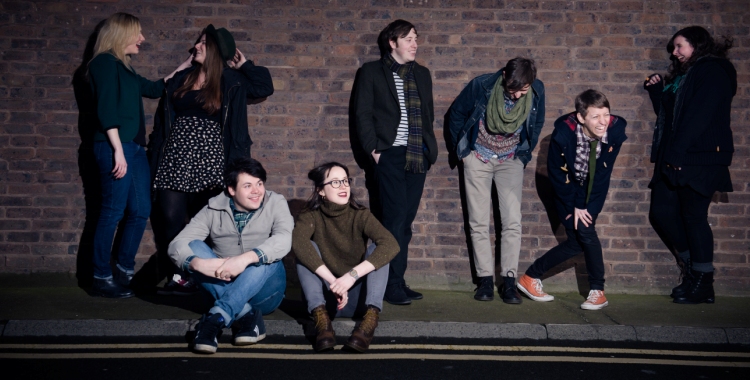
Little Bulb

Credit James Allan_5_Miriam Gould_Shamira Turner_Clare Beresford

Originally written for The Stage.

Novelty has become something of a raison d’être for Little Bulb. Since forming at the University of Kent and making their name with Crocosmia, a sweetly ingenious tale of three orphaned siblings, the theatre company have pursued fresh challenges for each successive production. Be it mounting a gypsy jazz opera from scratch in Orpheus or learning to dance for Squally Showers, they are always seeking new skills.

“Each show should be different,” insists director Alex Scott, “either thematically or stylistically.” Their quest for new challenges has led them down unexpected avenues, hopping from intimate character pieces to physical work to musical epics. Scott suggests that while some companies are happy to hone their expertise in one genre, Little Bulb’s members “tend to be a bit flighty”. As founder member Clare Beresford adds, “why should you shut something down just because you’ve become accidentally known for one thing?”

Discovery is embedded in the company’s way of working. “Normally we start with a name,” explains Scott, “and then part of our process is to work out why the show’s got that name and what the plot is. We like having processes where you will find out as the process is developing what’s happening to the characters.”

If any connecting strand has emerged throughout their work, it is music. But even this, it transpires, was something of an accident. While all the founder members were passionate about music, it was only through working together over time that this became a vital ingredient of their productions. “It’s just grown and grown through something almost irresistible,” says company member Dominic Conway, whose instrument of choice is the guitar. “There was never a grand plan and early on music wasn’t really in our mission statement.”

Crocosmia, which was first created as Scott’s end of year project at university before making waves at the Edinburgh Fringe, used a record player as a central prop in the narrative. From there, the company began incorporating live music into their shows, first in sprawling folk opera Sporadical and then in Operation Greenfield, which explored the awkwardness of adolescence through the story of a Christian folk band.

“Music is very powerful,” says Scott. “It’s a way of accessing emotion and portraying emotion in a way that sometimes naturalism struggles to.” In more recent work, this investigation of music as a theatrical tool has been taken even further. Since 2011, the company has taken their music into new territory by performing as a band under the name Goose Party, while Orpheus demanded them to master a completely new genre: gypsy jazz.

The show was born from a “really open” commission from David Jubb at Battersea Arts Centre. “His brief was ‘we’d like you to create a show on a bigger canvas’ and it literally could have been anything,” Scott recalls. Little Bulb hit on the mythical narrative of Orpheus and Eurydice, which they paired with legendary jazz guitarist Django Reinhardt to craft an intricate show within a show. The company recruited additional members, learned new instruments and upgraded to the imposing space of BAC’s Grand Hall.

The show, which is being revived for a second run this spring, offered an opportunity for the company to stretch their ambition beyond the intimate work that had gained them their reputation. They explain that the support of BAC was essential in this jump from small-scale to mid-scale. “Sometimes you do something that you would never do because somebody else has trust in you,” says Beresford. “If somebody has faith in you taking the risk, there’s something very freeing about that. It adds extra pressure, because you don’t want to let people down, but it also gives you the impetus to do something.”

Little Bulb admit that they have been lucky to have this kind of support throughout their career so far, both from BAC and from their producers Farnham Maltings, who “actively support our sort of contrary genre-shifting”. Perhaps their greatest genre shift to date was the one they embarked upon for last year’s Edinburgh Fringe show Squally Showers, which saw them ditch the instruments and put on their dancing shoes.

“We wanted to do something completely without live music,” says Scott, acknowledging the abrupt departure from the style that had won them a faithful following. “Although we never like to disappoint an audience, we just thought this is a challenge that we need to do for ourselves. We wanted to do something that was accessing a physical language rather than a musical language and see where that would take us.”

The resulting show uses dance, movement and a series of long, wordless montage sequences to tell the madcap story of a television news studio in the 1980s, mixing politics and pirouettes. Scott admits that “some audiences were completely confused by it”, but stands by the show as an important creative exploration for the company. Scott intends to take elements of what they have learned forward into future projects, adding, “I don’t think we’d be intimidated by a dance sequence in a show now”.

What has endured through all of Little Bulb’s shows, albeit in varying ways, is their fascination with character. Scott is interested in placing the company’s carefully drawn characters in a world “where it is naturalistic but also anything else is possible, so you’ve got all that potential for dreams and metaphor and all of those things, but they feel like real people”. Beresford agrees: “I find it really freeing that you can use something so solid but in a structure that’s so free”.

In developing the compelling character dynamics that drive their narratives, it helps that Little Bulb are extraordinarily close-knit as an ensemble. The group all live together while making their work, an arrangement which, as Conway explains, allows the creative process to be as flexible as possible. “Sometimes you really crack an element of the show lying in bed at night having a bit of a chat, or you hit upon a really good idea over breakfast,” he says. “It’s great if you can just turn up at 10, do the work, have a lunch break and come back, but in practice you never know when the good ideas are going to come.”

“We like working as a group of friends,” Scott adds. “Even if you’re just chatting and becoming closer as people, then that shows on stage that the ensemble is very close.” But this practice of spending every minute of the day together does also have its drawbacks. “On the flipside, it’s hard to turn off, which has its own dangers as well,” Beresford warns. “Where does work end and life begin?”

For now, work and life are once again blurring, as the company’s hobby of playing gigs as a band is about to become even more central to their work. Little Bulb are just starting work on their first album, rekindling some of the ambitions that inspired Goose Party. “We’re just doing it for the love of experimentation and to see what comes out of it,” says Conway, while Scott laughs, “it may not reach the higher end of the charts”. If nothing else, it’s a new challenge.

Photo: James Allan. 

Transform 14: This Building is Full of Secrets

Originally written for Exeunt.

???????????????????????????????????????????????????????????????????????????????????????????????????????

A journey through a door marked “no entry”. A road trip that covers hundreds of miles without moving an inch. A game in which there are no winners. A dream. A plunge into darkness. A constellation of stories.

The statement of intent running underneath the West Yorkshire Playhouse’s fourth annual Transform festival, emblazoned on the front of its attention-stealing pink and purple brochure, is “reimagining what theatre can look like and what it can do”. The varied festival programme is true to this intent, incorporating everything from off-site interactive performance to small-scale storytelling; from intimate audio tours to late-night cabaret and live art. Some of the work is finished, some of it is embryonic. Around the edges of the festival, meanwhile, there are installations and conversations, inserting art into surprising places.

As festival producer Amy Letman explained to me last year, each event to date has had its own distinct identity. When I was in this same theatre 12 months ago, a little patch of the outdoors had been brought into the bar, suggesting the permeability of theatre and city. While last year’s festival was very much about Leeds, this year’s focus seems to be much more on Transform as a recognisable entity in itself. There’s an appealing sort of swagger, both in the bold colour scheme – volunteers in loud pink T-shirts are dotted around the Playhouse, making the festival impossible to ignore – and in the programme.

This confidence is perhaps most evident in the Playhouse’s foyer and bar, where the festival has occupied the space and become a throbbing hive of activity, drawing in curious audience members as they spill out of the Quarry Theatre. On Friday night, a band plays until late and the area around the bar is packed with bodies. It might have taken a few years, as a number of those who have been involved since the beginning admit, but Transform feels at home here now.

Play the game.

As anyone who has ever had to claim Jobseeker’s Allowance will know, the Job Centre can feel like something of a farce. It is this strand of absurdity that artist Selina Thompson has seized on, creating a new piece of interactive theatre that is as fierce as it is funny. It Burns It All Clean, commissioned by the West Yorkshire Playhouse specifically for Transform, is a silly, satirical trip through a new kind of job centre, with the grand prize of £56.80 for the players who come out on top.

Speaking about her research, Thompson tells me that what was most striking about the conversations she had with jobseekers was the number of people who talked about “playing the game”. Arriving to it from the outside, the benefits system can seem like a labyrinth of unspoken rules, which Thompson has deliberately reflected in the structure of her show. As players in a surreal, constantly shifting game, it is impossible to gain a solid footing.

While taking part in the show – which is just as entertaining as it is troubling – I was also made painfully aware of my urge to perform. This may not be a surprising reflection for a piece of interactive performance, which has a tendency to make its audiences think about their role within the work, but it also prompted me to consider the damaging ways in which the unemployment system might demand people to perform their worthiness. All too quickly, I found myself eager to please – to play the game.

I am interested to hear that Thompson hopes to develop the work further following its outing at Transform. In its current state, It Burns It All Clean feels like an intriguing starting point more than anything else; a striking initial provocation. Its power lies in the transition between contained, involving silliness and the quiet, reflective space it offers as an epilogue to its climax. This is political anger with a smiling face, slowly peeling off the mask.

It is apt that this is playing at Transform alongside Gym Party, Made in China’s anarchic critique of the competition that drives capitalist societies. The show, which I saw in various stages of development last year, enacts a similar movement to It Burns It All Clean, containing a simmering rage beneath its shiny exterior. It is also, like It Burns It All Clean, about games – and about winning. In a system that makes losers of so many of us, it would seem that we still can’t resist playing.

This building is full of secrets, whispered into cracks in the wall. Around hidden corners, dreams surge against the rocks. This building is the product of your imagination.

Backstage spaces, however tatty, always hold a strange kind of magic. It is this thrilling, intangible charge that Hannah Bruce & Company exploit in their new piece, the second of this year’s Transform commissions. The Claim is essentially an audio guide with a performance element, but with the added appeal of leading audiences out of bounds, behind “no entry” signs and through closed doors. These spaces in the bowels of the West Yorkshire Playhouse are not just hidden away; they are secret, forbidden, kept closed off to prying eyes.

While the illicit frisson of trespassing is tempered by a framework of permission – each audience member is always part of a group, accompanied by an usher – there is still an undeniable excitement that comes hand in hand with being offered access to these secret spaces. The journey, which takes place along different tracks for difference audience groups, is constructed with care. It begins in the auditorium of the Quarry Theatre, a familiar area of the Playhouse, but offers us a view of this eerily empty space from different angles. Peeking in from its thresholds, we catch glimpses of dancers moving through the sea of seats, while the stage behind is viewed in fragments.

Max Jones’ gorgeous, evocative set for current Quarry show Of Mice and Men provides a beautiful and occasionally haunting backdrop for these early sequences, its canopy of lightbulbs dimly glowing above us. It is when the piece guides us further away from the stage, however, that it becomes most compelling. Its revelatory moment arrives when we are guided into a vast, shadowy cavern beneath the theatre; it is the one moment in which a real connection with the building’s past and the housing complex that used to sit on its site is felt.

The Claim suffers a little from the usual challenges of audio works, struggling at times to integrate the instructions that guide us around the building and the enticing calls to our imagination. Distractions impede the fluid movement it seeks, never allowing an audience to get truly lost in memories and musings. There is, as with much interactive theatre, an invitation to engage that is not quite seen through.

That said, the piece manages to render these backstage environments truly magical, at the same time as offering an intriguing sideways look at the world. As we are released into the cool afternoon air, I walk away thinking about everyday spaces and the hidden traces of beauty and memory that might cling to them.

“We invite into the room as much – of everything – as the room can help us to hold.”
Chris Goode

There is an intoxicating sort of calm to Chris Goode’s rehearsal rooms. On stepping over the threshold of the wide, airy third-floor space, I feel that perpetual knot of anxiety somewhere in my chest loosen a little, while the relentless ticking away of the minutes seems to temporarily pause. Melting into a chair on the edges of the action – I prefer to be a quiet, unobtrusive presence in the room – I instantly relax, settling quickly into absorbed observation.

I am here to watch Chris Goode and Company work on Albemarle, a new project about dreams, hopes and utopia. As I will be missing the sharing on Sunday, the company are offering me a snatched glimpse of rehearsals. The experience is enthralling but all too brief. The company are mostly weaving together two separately developed strands, as actors and dancers are united for the first time this week. The group share a series of prepared gestures, which are oddly captivating in themselves, before these are placed within the context of a movement sequence.

For a few minutes, with music playing in the background and later overlaid with a piece of text read aloud by Goode, the performers navigate a grid that has been outlined on the floor in tape. As they move carefully along its lines, they freely deploy the series of gestures, which range from hugging to waving to kneeling. These gestures can be either solitary or communal, but is fascinating to witness the urge to mirror and embrace; as it evolves, the sequence seems to become more and more about encounters between the individual bodies. I am reminded of Tino Sehgal’s These Associations in the Tate Modern’s Turbine Hall, with its swirl of moving bodies and fleeting engagements.

After my peek into the rehearsal room, I have lunch with Goode, during which we talk about the project, the festival and the context of work in progress sharings. The Albemarle sharing has been framed as a “sketchbook”, which is doubly apt. More than the woolly “work in progress” tag, it suggests unfinished fragments, delicate outlines that still need to be filled in. It also hints at the presence of artist Lou Sumray in the room, whose gorgeous line drawings capture the movement and energy of rehearsals far more effectively than any usual method of documentation.

The difficulty with festivals such as Transform, as we discuss, is how to talk about the work that they encompass, as well as drawing meaningful links between the festival line-up and the rest of the theatre’s programme. It has been observed that Transform now feels much more like an integral part of the Playhouse’s life than when it began three years ago, gradually making a home for itself within the programme and feeling more closely associated with the theatre’s identity in the city. It’s all about connections.

I am also short of time for Ring, David Rosenberg and Glen Neath’s unsettling “sound journey” in the pitch black, which I experienced last year at Battersea Arts Centre. I do, however, get to take a second trip to Cape Wrath, Third Angel’s charming and intimate storytelling piece. The show, which takes place in a minibus parked up outside the Playhouse, recalls two journeys: that of Alexander Kelly’s grandfather to Scotland’s most north-westerly point and the retracing of that journey by Kelly over 20 years later. It is gentle, enchanting and absorbingly told by Kelly – everything you want from a story.With a wonderful sort of irony, I run out of time for Abigail Conway’s installation Time Lab, which invites visitors to dismantle a wristwatch and create something new from its remains, reclaiming and recycling the minutes that usually dictate our lives. The closest I get to it is a brief conversation with artist and performer Ira Brand on the way to It Burns It All Clean, during which she describes the desire to spend longer with the piece, to get absorbed in the intricate care of the activity.

Stories are also at the heart of Fast Cuts and Snapshots, the Inua Ellams rehearsed reading that is presented by Fuel on Friday evening. Ellams’ new play takes a barber shop for its static setting, positioning this space as a focal point for the many characters who revolve around it. These loquacious customers discuss everything from politics to football, often reflecting on the situation in their native African states and their experiences of living in the UK. The action is frenetic, cutting swiftly from scene to scene, while the characters’ wide-ranging ruminations occasionally feel contrived. As it settles down, however, the piece becomes quietly compelling, sketching a vivid portrait of this lively social hub.

There are other fragments of the festival that I miss in my hurried two-day visit. I never manage to sit down for a conversation with Sonia Hughes, who is inviting strangers to join her for a cuppa and a chat in the Playhouse’s foyer, though I do fall into conversations with several other festival-goers over the two days. I miss two shows about love – Love Letters Straight from Your Heart and put your sweet hand in mine – and one about death: Unlimited Theatre’s new piece Am I Dead Yet? And it is a bit of a wrench to leave before the Transform Variety Night, hosted by self-described “light artist” Scottee.

Reflecting on the festival a year ago, I noted its “intoxicating, transitory buzz”, wondering how this might extend into something more permanent. That buzz remains, as do odd traces of the festival’s spirit in the Playhouse’s main programme. Vincent Dance Theatre’sMotherland – with one of the boldest and best posters I’ve seen in a long time – is following fast on the heels of Transform, while the theatre’s Furnace strand continues to support artists such as RashDash. As artistic director James Brining puts it, “by getting more artists creating, exploring, experimenting within the building – and that doesn’t necessarily just mean the walls, it’s in the bloodstream of the theatre – we are animating the metabolism of the theatre”.

Photo: Richard Davenport.

Playing the Fool

NTTAH-48-3097586146-O-2-600x399

Originally written for Exeunt.

There is a common misconception about the origin of Told by an Idiot’s name. Most people tend to assume – “quite understandably”, co-artistic director Paul Hunter admits – that it is a quote from Macbeth. Instead, it acts as a gesture towards the company’s perspective. The Idiots aren’t interested in typical heroes; they prefer to look at narratives from the edges, picking up the fools who usually provide the comic relief and dumping them right in the centre of the action.

This skewing of narrative focus says a lot about Told by an Idiot’s approach. The company, who are this year celebrating their 21st anniversary, are committed to their own distinctive brand of theatrical anarchy, one that walks a giddy tightrope between the silly and the serious. Using comedy as a vital tool, they bring clowning to dark or cerebral topics in a way that makes their theatre accessible without sacrificing intelligence.

“I don’t think theatre should be elite,” insists Hunter. “Not to say that you still can’t do difficult, interesting, profound things, but you can do that in such a way that lots of people can engage in it.”

Their current production, Never Try This At Home, is a case in point. The show, which playfully prods at the dark underbelly of 1970s children’s TV, was born out of a provocation from Birmingham Rep’s artistic director Roxana Silbert. Asked to work on a show rooted in the city, Birmingham born and bred Hunter lighted upon a memorable childhood appearance on Tiswas, the chaotic Saturday morning magazine show that was recorded in Birmingham’s ATC/Central television studios. Although Hunter and the company were always interested in exploring the uncomfortable edge of the behaviour exhibited on such shows, real life events soon overtook the piece they were working on.

“When we started two years ago, none of this was in the news at all,” says Hunter, alluding to the Operation Yewtree revelations that now form an unavoidable backdrop for the show. While Hunter insists that this cannot be hidden or ignored, he was keen that the show remained “robustly comic” and operated on its own terms, rather than becoming a vehicle for exploring the scandals unfolding in the news.

“For a show that’s incredibly anarchic, we were very rigorous about how we presented the material,” Hunter explains, adding, “I was very clear that I wanted a completely fictitious world.” Their fabricated Tiswas equivalent is Shushi, a show that was abruptly cancelled in the seventies following an escalating series of catastrophes broadcast live on air. While there are certainly parallels with real behaviour and situations, Hunter stresses that the show’s power lies in its lack of specificity. “As soon as it becomes specific, it becomes too small,” he argues. “Because theatre’s a metaphor, for me it doesn’t hold a lot of water when you become too literal.”

Watching back old footage of Tiswas and its like during the research and development of the show has been an eye-opening experience for the company. “Even stuff that’s seemingly innocent, you go wow, I can’t believe they’re doing that,” says Hunter. This contemporary vantage point is reflected in the staging of the piece, which is framed with a modern day documentary looking back at Shushi’s demise. This structure allows audiences to challenge the habitually misogynistic and racist attitudes they see in the seventies segments, Hunter explains, but also to question the behaviour of the 21st century presenter, whose prejudices are “more insidious and more subtle”.


The bold discomfort of the piece – “there are moments when it’s literally buttock-clenching” – is layered with Told by an Idiot’s characteristic humour and anarchy. The chaos, confusion and custard pies of shows like Tiswas have all been retained, while brave front row audience members are being ominously equipped with plastic macs. “It sort of explodes off the stage,” warns Hunter.

While Never Try This At Home stops just shy of direct audience involvement in the action, Told by an Idiot have always believed in the importance of acknowledging an audience’s presence; “we never ignore them,” Hunter emphasises. This awareness of the live theatrical situation, he believes, is central to the work’s success, and is what it can offer audiences over film and television.

“We want the feeling that we are making it up,” Hunter says simply. This, he recalls, was the primary impetus behind Told by an Idiot’s formation in the early nineties: “Initially it wasn’t about starting a company, it was about doing a show, and it was about doing a show that was ours, that we had made up”. After the success of that first show, On The Verge of Exploding, the company quickly settled on another driving creative principle for their work: not doing the same thing twice.

As if to demonstrate the variety of their output, the other show that Told by an Idiot have coming up this year is a world away from the custard pies and casual sexism of Never Try This At HomeMy Perfect Mind, returning for a second run at the Young Vic in September, intertwines the story of classical actor Edward Petherbridge’s recovery from a stroke with text from King Lear, the title role of which Petherbridge was rehearsing for at the time of the stroke. The show is performed by Petherbridge and Hunter; a Lear and his fool.

It is, in many ways, an improbable pairing. “On paper, the notion of me and Edward Petherbridge as a double act is very unlikely,” Hunter concedes. But Told by an Idiot have a habit of seeking out challenging and surprising collaborations, from working with poet Carol Ann Duffy to being commissioned by the Royal Shakespeare Company. Typically, these partnerships are the result of a gut instinct on the part of the company. “I use the word hunch a lot,” says Hunter. “It’s just a feeling about something.”

While on paper My Perfect Mind’s premise is absurd, in practice Hunter’s hunch pays off. Petherbridge’s theatrical anecdotes and acerbic asides are delicately balanced by Hunter’s zany tomfoolery, just as the tragic poetry of Lear is offset by the clowning that surrounds it. Here, in the marriage between the solemn and the ridiculous, is where Hunter and Told by an Idiot have drawn the creative inspiration that has kept them going for the last 21 years. “That’s what interests me, that you can have those moments of comic ludicrousness right up against some of the most extraordinary writing ever written.”

Steffan Rhodri’s theatrical road trip with piglets as passengers

Steffan-Rhodri-in-Id-Rath-013

Originally written for The Guardian.

On the tiny stage of Notting Hill’s Gate theatre, Steffan Rhodri is joined by a pair of unlikely co-stars. Director Jude Christian’s production of the awkwardly titled I’d Rather Goya Robbed Me of My Sleep Than Some Other Arsehole has added two small, headstrong piglets to Rodrigo García’s surreal monologue.

“I was bemused by this decision at first,” the actor says, “but I’ve sort of learned to love it.” He adds that the pigs, who stand in for the protagonist’s two sons, are “unpredictable”, but the chaos and absurdity of their presence is oddly fitting for the piece. The animals and their unscripted behaviour send out a strong signal to audiences: “It immediately sets that surreal tone, that absurd tone of we are not in naturalistic reality here, this is up to you to interpret what this man is on about.”

García’s play follows a man in the grip of a midlife crisis; he is “railing against the materialism of life, but also searching for some meaning”. As the man questions his own existence, he tells the story of a hedonistic road trip with his sons, which culminates with breaking into the Prado museum, in Madrid, to look at Goya’s Black Paintings. The line between fantasy and reality, however, is constantly blurred.

This character’s experience mirrors, to an extent, Rhodri’s reasons for taking on the role. The actor is best known as Dave Coaches from the television comedy Gavin and Stacey, which quickly became a runaway hit for the BBC. Rhodri says of the show that he was “lucky to be involved, but not defined by it”. He has since taken on a string of roles at the Royal Shakespeare Company and in the West End, as well as making a brief appearance in the penultimate Harry Potter film. This production is an opportunity to break out of that mainstream trajectory and do something “completely off the wall”. It is Rhodri’s window-smashing moment.

He is also firm in his belief that this sort of risk-taking, form-pushing work should be the purpose of fringe theatre, pointing out that a play such as this one would never be produced in the West End. “Quite often these days fringe theatre can be used in a very safe way as a vehicle for smaller, cheaper versions of mainstream theatre,” he says. “I think this is very different.”

As well as contending with the whims of the piglets, Rhodri has the formidable task of carrying García’s anarchic narrative alone each night. Although this is Rhodri’s first solo show, he describes himself as “a sucker for a challenge” and is excited about standing the piece up in front of an audience. “I never imagined myself doing a one-man show,” he confesses. “If I’m going to do one, I’d rather do one that breaks all the rules.”

Rhodri is also relishing the challenge of the “particular openness” that this slippery, ambiguous play allows. He compares it to Beckett and the absurdist tradition, as well as identifying “a sort of dreamlike quality that is reminiscent of Pinter”.

What most excites Rhodri – and, he hopes, the audiences who will come to see it – are the ideas that García is grappling with. “It is about the big questions of life, in a very short, punchy piece. How should life be lived? How should life be experienced? Do we need to make plans and be safe, or do we just need to do things?”

Photo: Tristram Kenton.

Building Innovation

NORTH14 group photo credit Topher McGrillis

Originally written for The Stage.

Theatregoers and theatre-makers alike can breathe a sigh of relief as The Shed, the National Theatre’s temporary riverside venue, is granted a longer life. The 225-seat space could now be open for up to another three years, extending its programme of new and experimental work. Under the National Theatre’s associate director Ben Power, this little red powerhouse has stretched the remit of the theatre’s programming since opening last April, bringing in exciting new artists and different ways of working.

But The Shed is not alone. Across the country, a range of subsidised venues are investing in innovative, experimental programming, developing the next generation of artists from within their walls. From festivals to scratch nights, artist residencies to audience development initiatives, these regional producing houses are dedicated to developing the theatre ecology around them, even in lean times.

For Lorne Campbell, artistic director of Northern Stage in Newcastle, new ways of working with artists are not an accessory to the theatre’s core work – they are essential. “The old systems simply aren’t of use,” he says simply, referring to how funding cuts have altered the landscape. In their place, the venue is looking at strands of work that feed the ecosystem of young artists – such as its NORTH scheme for performing arts graduates – and offer the space for new companies to test their work in front of audiences.

This latter need is filled by the theatre’s Stage Three space, which Campbell is developing into a fringe venue for the city. The work on this stage will not be produced by Northern Stage, but instead the venue will be thrown open to Newcastle’s young artists. “Unless there’s a space for those artists to get their work on and make their mistakes in public, they aren’t going to evolve,” Campbell explains the intention. “Unless those young artists can grow an audience at the same time as they’re beginning to grow themselves as artists, nothing is ever going to change.”

For Emma Bettridge, curator of Bristol Old Vic’s artist development department Ferment, it is equally important to offer artists the opportunity to evolve within the theatre’s programme. She describes Ferment’s work as “an ongoing conversation with artists”, emphasising its flexibility in response to artists’ needs. “It’s become about working with artists that we’re really excited about and facilitating them in whatever way is suitable for them,” she explains.

One development in which Bettridge has been instrumental since joining the Old Vic is the backing of more work to full production. It is essential, she stresses, to get the work seen and give it a longer life, as well as connecting it to larger audiences. This is partly achieved through the two Ferment fortnights of work-in-progress showings each year, but Ferment also now supports between six and eight productions a year.

Elsewhere, festivals have become an important outlet for experimental and often unfinished work. Two such examples are Transform in Leeds, produced by the West Yorkshire Playhouse, and the New Wolsey Theatre’s Pulse Festival in Ipswich. Both festivals feature a mixture of finished productions and works-in-progress, placing the work of young artists alongside more established companies.

Rob Salmon, associate director at the New Wolsey, explains that the theatre has honed the Pulse Festival over the years in order to be able to simultaneously support bold programming and retain an audience. The festival now supports a mixture of high profile work and embryonic scratches, combining these different levels of experimentation in a way that manages the risk for theatregoers. Similarly, this year’s Transform Festival includes full-scale commissions, visiting shows from mid-career artists and showings of work in development.

What both Salmon and West Yorkshire Playhouse’s associate producer Amy Letman are adamant about, however, is the need to extend this kind of work beyond the isolated pocket of a short festival. Salmon has recently started up Pulse Presents, a strand of work that keeps the festival’s spirit alive throughout the year. The aim behind it, he says, was to “keep that work ongoing rather than it being something that crashed into the programme at one point in the year and then disappeared”.

Letman agrees: “I think the key thing is people know that there’s an ongoing commitment and desire for this work, and that it’s not something that flashes up and that we do once, but that it’s an ongoing part of our programme. The fact that the work is coming back helps to develop the audience.”

For all of these theatres, they understand this commitment to pushing their programming and supporting new artists as absolutely key to their artistic purpose. Asked how this work fits into his vision for Northern Stage, Campbell responds, “it is the vision”. Meanwhile Peter Rowe, artistic director of the New Wolsey, describes it as the theatre’s “particular mission” to help companies make the leap from small-scale to mid-scale work.

These sentiments are echoed by James Brining, artistic director of the West Yorkshire Playhouse, who tentatively suggests that theatres like his have a leadership role in their regions. “The problem with leadership roles in the past with big organisations is that they set an agenda which is about how you should do it, and that isn’t what I mean by leadership role. What I mean by leadership role in a city, in an area like this, is that our leadership role is about facilitation, it’s about collaboration.”

In times of stretched funding, that notion of collaboration could become increasingly crucial. Importantly, in all of these examples it is the theatres’ status as larger, regularly funded organisations that allows them to take the necessary risks in showing and developing new work. About the necessity of subsidy, Bettridge is unequivocal: “We fill a gap for risk-taking. We always need to have a subsidised pot of money that can we can invest in the ideas stage.”

Photo: Topher McGrillis.