US Beef, Pleasance Dome

26912_article

Originally written for Fest Magazine.

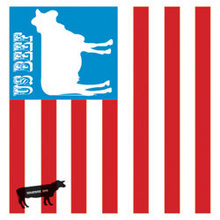
Ever wondered how your burger got from cow to cardboard container? It’s certainly not the first time the ethically dubious practices of fast food corporations have been on the agenda, but Missing String Theatre Company manages to broach such issues with fresh laughter in this satirical take on America’s fiercely consumerist obsession with cheap meat.

Central character Buck, our narrator of sorts, starts at the bottom of the fat-oiled corporate ladder as a door to door meat salesman for the oddly unsavoury sounding Meatbox, a corporate monster promising a pseudo-democratic vision of meat for the masses. Through his personal story of grubby corporate climbing, Missing String deploys its satirical barbs using a wacky blend of comedy, drama and country music. From soulless marketing speak to the hypocrisy of the supposedly ethical consumer, little emerges unscathed.

This is also a satire in which the consumer, and therefore the audience, is deeply implicated. As one fast food outlet employee accusatorily tells us, we are “the cog that turns this machine,” the demand that drives the increasingly unethical supply.

This dirty complicity, however, is not taken as far as it could be. By making only half-hearted attempts at addressing spectators, Missing String neglects an opportunity to make the audience squirm and, as a result of that discomfort, think. It might make you pause before tearing off that next chunk of meat, but this is unlikely to create many vegetarians.

The Hand-Me-Down People, C nova

26897_article

Originally written for Fest Magazine.

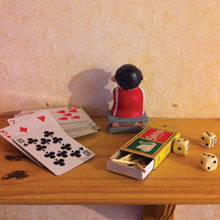
There’s something suspiciously familiar about New Theatre’s tale of growing old and awaiting the inevitable. On a dusty shelf in a children’s playroom, a collection of discarded figurines immerse themselves in memories and stories, gloomily waiting for the day when they will either be rescued or thrown away. Already there’s a whiff of Toy Story about it.

This new piece by Adam H Wells essentially covers much of the same ground. His forlorn toy characters feast on nostalgia, a delicacy that the piece seems to protest is no longer tasted. The children who once adored them are now fixated on video games, leaving the abandoned toys to bicker among themselves and contemplate the end.

There is something quietly mournful about the replacing of the old with the shiny, computerised new, but Wells’ writing lacks the nuance to unpack any new insight. Instead, cliché is given a few amusing facelifts and metaphorical resonances are glaringly signposted. Committed performances from the cast pick up some of the script’s slack, but their efforts are not enough to produce more than a few weak laughs.

While there are a couple of potentially powerful truths in the toys’ purgatorial state, it is hard to shake the feeling that we have been here before. As one weary character recognises, “you can’t play the same tunes all the time; they get old.” It’s an observation this piece might have done well to heed.

The Darkroom, C nova

26899_article

Originally written for Fest Magazine.

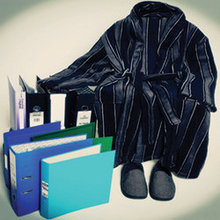
To pass on your memories is to achieve immortality. This, at least, is the fascinating premise of this new piece by Ellen Carr and Witness Theatre, an interrogation of the way we remember. Asking questions about the memories we leave behind us and how they add up to a life, we are presented with a shed, scraps of paper, a pair of slippers, a photograph: clues to be assembled.

But these various different jigsaw pieces don’t quite slot together. There is, at the work’s core, an intriguing idea to be pulled apart around the way that memories work and how they survive us, but this potential is never quite grasped by the production. Instead, the company’s creative curiosity has led it down too many different avenues, playing with a range of aesthetics that are interesting in isolation but fail to fully mesh.

There are some striking moments that emerge from the experimentation. Tightly choreographed movement conveys the jolting monotony of remembered routine, while the fragmentary nature of memory is hinted at through snippets of film projected inventively onto a range of surfaces: a box, a tablecloth, a folder. The execution, however, is uneven.

At one point, Carr’s script delves into psychology, describing the vast unexplored terrain that still exists in the human mind. Is this a gap or a possibility? Carr has certainly seized on a captivating possibility, but it feels like a regrettably wasted one.

I Heart Hamas: And Other Things I’m Afraid to Tell You, The Point Hotel

26879_article

Originally written for Fest Magazine.

There is something about nationality that makes us distinctly uncomfortable. American Palestinian Jennifer Jajeh has noticed this discomfort more than most, having spent her life trying to set people at ease about a national identity that many refuse to even recognise. One baffling question keeps recurring: “what are you?”

This intimate solo show is an attempt by Jajeh to define just what and who she is, a definition refracted through where she is from. Charting her heritage and returning to her family’s hometown, she is searching for a place in which she makes sense, a search that takes her right to the core of the conflict that characterises how people see her.

Jajeh, a naturally warm and candid performer, communicates this search through sketches, projections and direct address, engaging with humour to make her points. The result is at times messy, and relies a little too heavily on a recurring visual gimmick created by Jajeh to fill the gaps in her scenes, but it is impossible not to become wrapped up in this pursuit of selfhood.

While Jajeh’s experiences in Palestine have made her a deeply political individual, the very personal piece she has crafted is as much about identity and origins as it is about the specific afflictions faced by her nation. Like the piece, her sense of identity is fractured by her dual national identity and the repeated assaults on her roots. In the right conditions, Jajeh is arguing, anybody can snap.

Mirror on the world

26399_wide

Originally written for Fest Magazine.

At London’s Southwark Playhouse, a man stands alone on the stage. In a nod to austerity, there is no other actor to take on the second role in this two-hander; instead, the play recruits its audience to read words projected onto a screen. It is a simple move, but one that speaks of collaborative protest in the face of injustice.

This was just one scene of many from last year’s Theatre Uncut. Harnessing the widespread anger sparked by the government’s Spending Review, this nationwide project hit back at slashes to public spending with a series of short plays that were made freely available for anyone to perform, from professional theatre companies to local am-dram societies, inciting over 800 participants to take action. The spirit was one of united protest, something that has been repeatedly felt in global politics over the last 12 months. It is this spirit that now brings Theatre Uncut back to the front line.

“This year we spoke a lot about whether or not it needed to happen,” says co-artistic director Emma Callander, who has taken the reins from founder Hannah Price for the 2012 season. During these discussions, the creative team found that the appetite for this political brand of collaborative theatre, so evident last year, is far from sated. “We felt that it did need to happen, because there were lots of issues which people still needed to debate and potentially take action on.”

The subjects tackled in this year’s plays read like a catalogue of discontent: the Eurozone crisis, mass civil unrest, the Occupy movement, the sorry state of global capitalism. From its initial platform as a theatrical movement speaking out against the coalition government’s spending cuts, Theatre Uncut has widened into a forum for political debate on myriad issues from around the world.

“It was important for us to put the UK’s situation into an international frame,” Callander explains. Drawing on a politically and economically tumultuous year for much of the globe, the plays from writers including Neil LaBute, Mohammad Al Attar and Lena Kitsopoulou place the UK’s unique problems within the context of a world screaming for change. Callander hopes the global perspectives will create “an exchange of ideas and issues that we need to face from country to country through a theatrical form.”

Going global has, however, had its difficulties. While audiences of the 2011 plays were “quite savvy” about the political and social issues being dissected, conveying national problems to an international audience presents a much greater challenge, but one that Callander describes as “wonderful.”

Such challenges are partly the reason for presenting a selection of the 2012 plays at the Traverse this summer, which will provide a brief glimpse of the work ahead of the full run in the autumn. Reversing last year’s performance schedule, the Fringe is something of a test run for the new pieces, as well as a springboard to reach out to potential collaborators. As Callander points out, there are few better places than Edinburgh to reach an international audience.

In addition to the previews, each Monday morning programme will include quick-fire pieces from emerging writers Stef Smith and Kieran Hurley, hurriedly written in response to whatever is hitting the headlines that week. Sweeping aside the suggestion that the form might have inherent limitations, Callander is infectiously enthusiastic about the possibilities of rapid response theatre. “It’s an immediate, live debate about something that’s happening right there and then.”

Callander sees this form of theatre as a catalyst for discussion, a “totally different beast” to work developed over a longer period. “I don’t even see time as a limitation,” she insists. “The whole point of this kind of theatre is that it’s rough, it’s vital.” To nurture such discussions, Theatre Uncut will be holding post-show talks after each performance, asking that audiences share their thoughts about the plays and engage in debate with the theatremakers.

Despite its origins and the very political nature of the material it explores, Callander is uncomfortable with Theatre Uncut being pigeonholed as political theatre. “All theatre,” she argues, “is in some way political, because everything is political.” But what she does recognise is drama’s ability to effect change, on individuals as much as policy-makers. “It’s where I go to learn how to live better,” she says of the theatre. “It’s the way that I best understand the world, so I hope that I can facilitate that for other people.”

Above all, she stresses, Theatre Uncut hopes to “encourage debate and galvanise action”. And can we expect this debate to continue? Callander’s answer is firm and concise. “As long as we feel the need is there, we’ll present it.”