Rachel Chavkin: Riding the Elephant

??????????????????????????????????????????????????????????????????????????????????????????????????????????????????????????????????????????????????????????

Originally written for Exeunt.

For a theatremaker whose work has a distinctly American flavour, Rachel Chavkin has a surprisingly close relationship with British theatre. The artistic director of The TEAM, a company who have made a name for themselves interrogating modern American identity, was last over here with Mission Drift, which had its first London run at The Shed last summer after premiering on the Edinburgh Fringe in 2011. When we speak, she is in Newcastle for rehearsals of her new stage version of Catch 22 at Northern Stage; other ongoing projects include a collaboration with Chris Thorpe and a new TEAM show being made in partnership with the National Theatre of Scotland.

“It’s the culture of theatre here,” Chavkin explains the continuing appeal. In contrast to American theatres, which rarely have in-house bars or restaurants, she is drawn to the community that gathers around theatres in this country, where people meet to socialise and extend the conversations started on the stage. “The idea that the theatre is a building of culture and life has had a huge influence on my work with The TEAM and my sense of what I want theatre to be doing in the world.”

For her latest project, however, Chavkin is making work for British audiences without the company of The TEAM. The idea of adapting Catch 22 for Lorne Campbell’s first main stage season as artistic director of Northern Stage was first suggested in early conversations about the programme, as it emerged that Chavkin had long nurtured an interest in Joseph Heller’s novel. When they discovered that Heller himself had already written a stage adaptation of the book, Chavkin was the obvious choice for director.

She describes the novel, which follows the nightmarish experiences of Captain John Yossarian during the Second World War, as an “extraordinary piece of philosophy and absurdism”. The novel offers a formidable challenge in its presenting of events out of sequence, mirroring the rule of its title in its circular, repetitive structure. It is the book’s more philosophical strands that Chavkin hopes her production can draw out, conveying the “feeling of existential despair” that the narrative builds to.

“The sense of purgatory, of Yossarian caught in this kind of purgatorial loop, that’s the driving idea behind this production and behind the staging,” Chavkin explains. While Heller’s script brings with it certain limitations, she tells me that “the back story and wealth of worlds that Heller presents in the novel has a profound impact on how we’re able to understand the play”. The novel is informing how she presents the “space around the text” and has influenced an aesthetic which contrasts an atmosphere of celebration and fun with the unremitting devastation of conflict. “War is great, other than the war part.”

The advantage of the novel is that, despite not being able to directly consult the writer about the production, there are pages upon pages of additional material available at Chavkin’s fingertips. In this sense, she suggests, “you sort of do have the writer with you”. Chavkin explains that as a freelance director she is more accustomed to working with writers on new plays, a practice that has increasingly fed into the way she creates work with The TEAM.

“When The TEAM was first beginning to create, and for many years of our company’s life, we would always try to fix problems by rewriting them,” Chavkin recalls. “We always turned to writing first and foremost if something didn’t make sense to us. And actually now I have become much more protective of each individual writer’s contribution within The TEAM. Because as a freelance director I have to protect a new writer or a new play all the time, from both myself and the actors, who just may not understand it yet. Sometimes it means that there should be a rewrite, but very often it means there’s some different logic at work in a play and you just have to work a little bit harder to understand that.”

While Chavkin’s different creative processes have points of convergence, she also discusses contrasts between her work as a freelance director and her projects with The TEAM. Whereas The TEAM’s process tends to be “very gnarly and pretty horizontal”, there is a much clearer hierarchy in place when Chavkin is directing elsewhere, though she stresses that she is still “deeply interested in what the acting company and designers might bring to a show”.

Chavkin is working in a slightly different way again on Confirmation, her current project with Chris Thorpe. It is being written by Thorpe, but as director Chavkin has been deeply involved in the research and development of the show. The piece, which is going up to the Edinburgh Fringe this summer, investigates confirmation bias – the unconscious bias that leads us to interpret the world around us in ways that support our existing beliefs. Chavkin describes it as “a very aggressive force in our lives” and discusses how eye-opening their research has been.

“The image that a lot of the research uses is the rider and the elephant,” she says, explaining that the rider represents the conscious, rational brain, while the elephant is our unconscious. “The elephant is a much, much larger force than the rider, and the idea is that the rider can to a certain degree guide which way the elephant wants to go, but actually in most cases our rational brain exists to try to explain and justify to ourselves why the elephant is doing what it’s doing. The most surprising thing is the degree to which we are governed by our unconscious.”

It is going to be a busy Edinburgh Fringe for Chavkin this year, who is also presenting a workshop performance with The TEAM and the National Theatre of Scotland. The new collaboration between the two companies indirectly approaches the question of Scottish independence, exploring the national mythologies of both Scotland and the USA. Using the Scottish Enlightenment as its starting point, it traces the journey that the ideas emerging out of that era have made over the years, right up to the present day.

“The idea is that America was this place where all the ideas coming out of the Scottish Enlightenment actually got, like a petri dish, to act upon,” says Chavkin. “350 years later, I think America is finding itself in a somewhat bankrupt place with this radical misunderstanding of what Adam Smith wrote as our national religion, in terms of this incredibly unfettered capitalism.”

Talk of unfettered capitalism recalls Mission Drift, which took an epic, breakneck ride through 400 years of American history, from the earliest settlers to the twinkling spires of Las Vegas. There is undeniably a certain continuity that can be traced in The TEAM’s thinking, from the research into disaster capitalism that informed Architecting through to this latest project. “I think that’s a common theme in all our work,” Chavkin admits. “Something that comes up as an idea in one piece ends up developing and shifting and morphing into the germs of what inspire the next piece.”

Chavkin makes it clear that the new show, tentatively titled Scottish Enlightenment Project, is not explicitly dealing with the Scottish independence referendum and will not appear in its finished form until after the vote, which is a very deliberate decision. But again, as with so much of her work, it asks the questions that sit right at the heart of national identity. “Who do we want to be? What kind of democracy do we want to be? What are our values?”

Mark Heap: Mr Zany Buttons Up

Mark-Heap-011

Originally written for The Guardian.

Mark Heap is wryly recalling an online comment describing his bizarre turn in Channel 4’s Green Wing. It ran: “Mark Heap doing his usual mad thing, but slightly fatter.” “Which I thought was brilliant,” he says, “but it’s kind of true.”

Heap has become television’s go-to oddball, best known for the roles of otherworldly conceptual artist Brian in Spaced and Green Wing’s outlandish and obsessive Dr Alan Statham. More recently, he’s been stealing scenes in Friday Night Dinner as an over-friendly neighbour. Now he is returning to the stage after a 20-year hiatus. Next week he takes over from Matthew Macfadyen as PG Wodehouse‘s famously unflappable butler in the Jeeves and Wooster comedy Perfect Nonsense, alongside Peep Show star Robert Webb (replacing Stephen Mangan) as his foolhardy employer.

When we speak at the Duke of York’s theatre in the West End, at the end of a long day of rehearsals, Heap confesses that throughout his years of TV work, he was rarely tempted by theatre roles. Jeeves, however, was a part he could not turn down. “It came along and I found it difficult, nigh-on impossible, to say no to.”

It was the appeal of PG Wodehouse’s fiction that clinched it. “It’s just a joy to read,” Heap says simply. “They make such a mountain out of nothing – there’s high farce over a teapot or an ashtray.” Heap also revels in Wodehouse’s distinctive, elaborate use of language. “On the one hand you’re saying a thousand words with two words, like ‘indeed sir’, or you’re saying one word using 30 – it’s brilliant. There’s so much implied.”

Heap was particularly impressed by the way Robert and David Goodale’s stage adaptation manages to retain the memorable prose of Bertie Wooster’s narration. The action is framed within a play put on by the protagonist – with only his aunt’s servant Seppings, and Jeeves, to assist him. Cue chaos, confusion and quick changes. “There are two levels,” says Heap. “The Wodehouse meat and the froth of watching people struggling to double up and play with all the theatrical conventions.”

Does Wodehouse’s distant world of buttoned-up butlers and fearsome aunts have anything to say to us today? Heap suggests that it is precisely because Wodehouse’s characters are so of their time that they continue to tickle audiences, tapping into a very British brand of nostalgia. Unlike Shakespeare, whose works have been relocated to every era and setting imaginable, Wodehouse’s stories demand to remain firmly in the early 20th century; any attempt to update them, Heap argues, “would be hopeless”.

In person, Heap is unexpectedly straightforward – unassuming, almost – revealing only the occasional glimmer of the strangeness that animates his TV performances. Although he insists his succession of quirky roles was a “total accident”, he admits that “arsing about and being silly” have always appealed to him as a performer. The Green Wing cast had two months together before getting in front of a camera – “you develop little tics”. As for Brian: “he was meant to be quite flamboyant and I found myself, just because I was in the mood that day, thinking: what if he was really uncertain and a bit tortured. It built from there.”

The business can narrow you down, Heap says. “You start off going, ‘I can play anything’, and slowly you get whittled down.” But he shrugs at the happy coincidence of his career: “I’ve always just fuddled along. I do my job and it’s all I’m any good at to be honest.”

A year into university, he ran away from his studies – not with the circus, but with Fools Theatre, a touring company producing Pinter plays and “avant-garde, mime dance-movement things”. From there, he joined his brother Carl’s Medieval Players company, performing all around the world until he and fellow actor Mark Saban splintered off to form a street theatre duo, The Two Marks, which eventually led to television work.

Is it intimidating to return to theatre in a role with as rich a history as Jeeves? Heap concedes that the prospect is “bloody daunting”, but adds: “like any character, you have to bring your own thing to it”. He is still discovering his idiosyncratic take on the character, explaining that his approach tends to be “instinctive” rather than psychological. In a show that takes a sledgehammer to the fourth wall, some elements will remain uncertain until put in front of an audience – the “missing ingredient”.

“I’m hoping, if I live to the first performance and don’t die of exhaustion, that I’ll suddenly realise the joy of theatre – that immediate response and feedback,” Heap says. The show, with its breakneck visual gags and more costume changes than a Lady Gaga gig, is an unforgiving reintroduction to the stage. At the very least, Heap jokes, the punishing pace will keep him fit. “They will say Mark is doing his usual mad thing, but looking a lot thinner.”

Photo: Graham Turner.

Victoria Melody

Victoria-Melody-Major-Tom-008

Originally written for The Guardian.

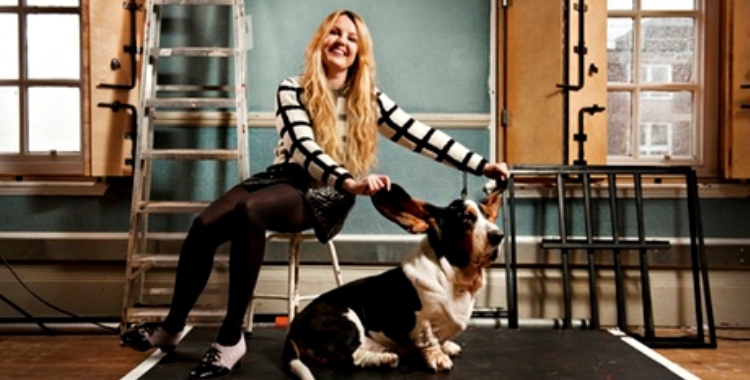
Major Tom, the long-eared, irresistibly endearing basset hound lying in the corner of the room, lets out a low disapproving howl. Awwww, is someone not happy? Is someone not getting enough attention? Oh well, I did come here to talk to Major’s owner, the performance artist Victoria Melody. But Major is clearly keen to get in on the action. He is, after all, a born performer. He even has a show named after him.

Using live performance and film footage, Major Tom follows the attempts of both dog and owner to prove their beauty: Major in championship dog shows, Melody in national beauty pageants. The piece is an attempt to show “the beauty world from a woman’s eyes and a dog’s eyes”. And its conclusion is that the two are “not that dissimilar”. Major was told by judges that his ribcage was too big, while Melody was advised to lose weight.

It might seem like an odd premise for a theatre piece, but Melody’s performance work has always been rooted in real – and often idiosyncratic – people and situations, her primary interest being “the funny things we do as humans”. Trained as a fine artist, she crossed over into theatre with Northern Soul, a one-woman show recounting her adventures in pigeon fancying and northern soul dancing. What is it that makes her embed herself among such clusters of idiosyncrasy, throwing herself headlong into their worlds and then shining a light on them? “Curiosity,” she says. “Which is quite a nice word for being nosy.”

Major Tom, which opens in London next month, is a bit of a departure for Melody, though, thanks to the element of competition. Whereas in the past she was a participant, with everyone on the same side, both the dog shows and the beauty pageants pitted her (and Major) against the individuals whose world she was exploring. The show was initially going to be just about all the dog contests Major was entered in – including the one where he wins biggest ears in a show in south-east England – until Melody started to feel a growing sense of guilt. If she was going to force him to compete, and subject him to a judging panel, shouldn’t she put herself through a similar experience? So, somewhat reluctantly, she entered Mrs UK and found that her discomfort didn’t last long. She won Mrs Brighton with relative ease in 2012, before moving on to the bigger challenge of Mrs UK. “Soon I just wanted to win everything,” she says.

And so did everyone else. Melody often found the dog shows surprisingly hostile: following a string of losses, one judge told her she’d be better off investing in a new dog. By contrast, she was pleasantly surprised by the warmth shown by her fellow beauty contestants, contradicting stereotypes. “There was no bitchiness, no backstabbing, no dresses going missing – none of that.”

Major Tom performs alongside her in the show and, apparently, isn’t very good at doing what he’s supposed to do. This means he often steals the limelight from Victoria at precisely the wrong moment. “His comic timing is genius,” she says. “He always ruins my stories.”

Melody likes to embed herself as fully as possible in the worlds she investigates, developing real and meaningful relationships along the way. Humour is a vital tool. “I’m able to make the work that I do because I’m quite funny and down to earth,” she says. “I think I endear myself to people. I put them at their ease: they believe I won’t exploit them.”

Although Melody and Major were there to be judged, she is determined not to pass judgment herself. She describes Major Tom as being about “the beauty myth and the oppressive function of that”. But she is quick to qualify this, saying: “My shows are only about direct experience. I’m talking about these worlds from the inner sanctum, seen through my eyes.” In the show, although she is frequently – and hilariously – critical of herself, she does not directly criticise those around her. “I don’t tell people what to think. I leave it to the audience to form their own opinions, because audiences are clever and can decide for themselves. They don’t need to be fed something on a plate.”

Melody’s shows often leave the audience wondering about the extent to which they are authentic. Although she insists that the stories she tells in Major Tom are all “absolutely true”, she does also seem to welcome the ambiguity that surrounds the show, the blurring of art and reality.

The process is demanding and frequently takes over her life. But when it does so, Melody sees it as a good sign: it suggests that she’s on the path to something promising. “When it gets to the stage of me not knowing if I’m doing this for my research or for my life, that’s when I know a project’s progressing. One of the interesting things, for me, is that intersection between art and real life.”

She reaches for a comparison and plumps for Fountain, the famous conceptual work by Marcel Duchamp that challenged how we define art. “I see Major Tom as my urinal,” she says.

Photo: Linda Nylind.

Naturalism, Optimism and Donuts

WEB-superior-donuts-rehearsals-019-21

Originally written for Exeunt.

Ned Bennett is telling me a story about the back wall of the Royal Court, a fixture held in reverential affection by a good chunk of the theatre community. During preparations for The Ritual Slaughter of Gorge Mastromas, the ordinarily black wall – which was visible for portions of the show – had to be made to look like exposed brickwork. Instead of stripping the paint back to the bricks beneath it, Bennett explains, the black surface was painted over with brick-effect artwork. Bricks painted to look like bricks.

This small absurdity is oddly apt for both the postmodern commentary of Gorge Mastromas, in which surface is everything, and for the self-mythologizing urges of the Royal Court. Few theatres are quite so invested in their own history. Bennett emerges fresh from this environment, having just finished a year as trainee director with the theatre, in twelve months that spanned the departure of Dominic Cooke, the arrival of Vicky Featherstone, and the whirlwind festival of Open Court. It was nothing if not a baptism of fire.

“It was certainly demystified in no small way,” Bennett admits, agreeing that there is a potentially intimidating aspect to the building’s status within modern British theatre. “It’s funny, though,” he goes on, “you go in being aware of all the history … and it feels like it’s very important to acknowledge the history, then kind of leave it at the door, as it were, and see what’s happening next.”

Despite the demystification, Bennett clearly still holds a fierce affection for the theatre and the projects he worked on during his time there, which ranged from directing a production that toured around schools to being right in the thick of Open Court. “I’d always admired, respected, loved the theatre,” he says, “but what never ceases to amaze me about the building – and this is proper gushy – is how uncynical it is, how uncynical a place to work it is. It is all about trying to create the most interesting, most urgent, most exciting plays, and they’re a very cohesive bunch who all are pulling in the same direction.”

Open Court, the summer festival during which Featherstone handed the keys to the theatre’s writers and the building hosted a staggering range of different events, was clearly a highlight for Bennett. “It was amazing to be going from rehearsing one weekly rep and putting that into tech, and then starting that day on the next weekly rep, and working with a really versatile, exciting rep company of actors. It felt like with Open Court we discovered a lot about what direction the theatre was going to go in from then onwards.”

It was during Open Court that Bennett and I first met, while he was assisting on Anthony Neilson’s Collaboration project. Neilson too was an important feature of Bennett’s time at the Court; as well as being involved with Collaboration, he assisted earlier in the year on Narrative. Neilson’s process, which involves working closely with actors while developing a new play, is one that fascinates both of us. We discuss the openness of his rehearsal room, in which Bennett says “play and curiosity become part of the lifeblood of the room”, and the trust he places in both the actors and the collaborative process.

“What I got from Anthony that I thought was amazing was his perseverance in exploration, rather than immediately wanting to get results then and there,” Bennett tells me. “So if it wasn’t ready, it wasn’t ready; we’d just keep exploring, keep going and keep trying out different things.” This closely tallies with my own experience of Neilson’s rehearsal room, where ideas were gently pushed in new directions and input was welcomed from all directions. “Simply, he creates a non-hierarchical room, and then you get such surprising results.”

Bennett’s year at the Royal Court followed hot on the heels of his explosive revival of Philip Ridley’s Mercury Fur at the Old Red Lion, a show that was 2012’s unexpected hit of the fringe. When I mention that the production with which Bennett made his breakthrough was almost two years ago, he shakes his head in smiling disbelief. He is still a little disbelieving, too, about the show’s success; “we were really, really surprised,” he says of the overnight impact it made. Fuelled by astonishing word of mouth, Mercury Fur quickly sold out at the Old Red Lion, earning itself a transfer to Trafalgar Studios that same summer.

Ridley’s play is set in a dystopian near future, where London is a lawless wasteland and addictive hallucinogenic butterflies are eroding the memories of those still scratching out a living. Bennett’s startling, visceral production for Greenhouse Theatre Company created an electric charge in the tightly packed space of the Old Red Lion, drawing out both the play’s infamous power to shock and the surprising humanity of its characters and their love for one another.

“I was just so struck by the relationship between the two brothers, Elliot and Darren, and this big question of what would you do for those that you love,” Bennett says, getting right to the heart of his interpretation. He describes Mercury Fur as a “modern masterpiece”, explaining that when he was given the script to read by Greenhouse’s Henry Lewis and Joel Samuels it immediately became his favourite play. Even with this faith in the material, however, he was blown away by the response it received. Bennett attributes some of this to the production’s appearance in the wake of the 2011 riots, which lent Ridley’s play a haunting prescience, but he is clear that his version did not set out to make this connection. For Bennett, it was all about the characters.

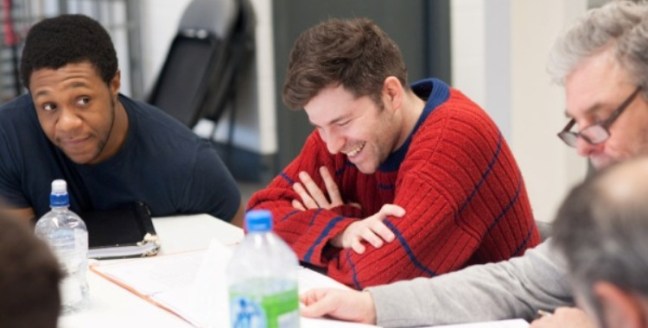
It is character once again that has attracted Bennett to Tracy Letts’ Superior Donuts, the UK premiere of which he is currently directing at the Southwark Playhouse. It is being presented by the same company behind Mercury Fur, who have newly reinvented themselves as The Trick. Bennett is a “huge fan” of Letts and is excited to get his hands on this script. “I always found that his writing – as with Ridley – has such a visceral complexity to it,” he explains the fascination.

Superior Donuts is set in a donut shop in Chicago, telling the story of the man who runs it and the people who pass through every day. “You’ve got these nine fantastic characters, aged 21 to 72, all endowed with such depth and humanity,” says Bennett. “I found it profoundly moving and hugely optimistic. It just felt like the right play to do, and it couldn’t be more different from Mercury Fur.”

While Bennett describes the play as a “naturalistic piece”, he is interested in ways of pushing that naturalism in his production. “We didn’t just want to build a donut shop,” he explains. “The brilliant Fly Davies has come up with an incredible design that allows us to represent the off-stage world in a non-literal way in the space.” He quickly adds that they are “not doing some big expressionistic production of it”, but it is clear that his production hopes to test what can be done within an ostensibly naturalistic framework.

When I ask how Bennett feels about naturalism as a director, he wrestles a little with the question. Referring to projects such as Narrative, which clearly departed from naturalism, he suggests that his own position is somewhat ambivalent, before adding, “I don’t think there is an either/or”. We end up discussing Secret Theatre, which offers an intriguing marriage of a more naturalistic, character-based British tradition with continental influences that are less interested in realistic representation.

“One of my biggest interests is definitely character,” Bennett says, “but I think – as things like Secret Theatre’s Streetcar showed – you can still create, represent, express amazing characters, but not necessarily be pinned down to some kind of naturalistic context. I sort of feel like I’m just exploring what that means.” For now, he is happy to remain on the fence and keep exploring.

Photo: Ben Broomfield.

Rosie Wyatt

BLINK_3_Rosie Wyatt as Sophie_Photo Sheila Burnet (2)

Originally written for The Stage.

Rosie Wyatt loves to look audience members right in the eye. In Bunny, a solo show about a teenage girl increasingly out of her depth, she offered an intense portrait of adolescent swagger and anxiety, breathlessly delivering Jack Thorne’s narrative directly to the audience. In the absence of connection and intimacy available to her character in Blink, she instead gazed outwards, finding points of contact with spectators; even delivering a script-in-hand reading, her stare can penetrate right through a play.

“It’s just about being really honest and genuinely telling a story,” Wyatt explains when we speak, quickly adding, “not acting talking to the audience, but actually talking to the audience. That sounds like something really simple but it is very different.” With care, she discusses the unique demands of direct audience address, in which “the audience are your other character”.

“If you act a traditional scene with dialogue, you’re always looking at how you’re affecting that other person and what you want to do to that other person in the scene. When you’re talking right out to the audience it’s the same thing: it’s what do I want to do to the audience, what am I trying to tell the audience?”

This way of relating to an audience was initially developed while performing in Bunny, Wyatt’s first job out of drama school. Thorne’s blistering monlogue went to the Edinburgh Fringe in 2010 – where it won a Fringe First – travelled down to London for a run at Soho Theatre, and eventually ended up in New York as part of the Brits Off Broadway season. “It couldn’t have been a better start for me really,” says Wyatt, describing herself as “incredibly lucky”. “You can’t ask for more from a first job: for it to be able to give you your debut, your London debut and then your New York debut.”

But it must have been intimidating to take on a one-woman show straight out of drama school? “Yes, petrifying,” Wyatt says with a laugh. “It was an amazing experience because I got this showcase that was just me, but it was also incredibly exposing and scary.”

This showcase certainly opened doors; “it got me in front of people and got me to meet a lot of people,” Wyatt says. The play’s success quickly led to her second job in the Paines Plough tour of Love, Love, Love, and she says that even her casting in this year’s national and international tour of One Man, Two Guvnors can be traced back to that first job. Other gigs to follow the acclaim of Bunny have included roles in Mogadishu, Blink and most recently Virgin – all new plays.

Despite this impressive track record with new writing, Wyatt reveals that her passion for acting has much more traditional roots. “I sort of fell in love with the theatre because of Shakespeare,” she tells me, recalling the regular trips she used to make to RSC productions while she was a sixth form student in Stratford-Upon-Avon. “I hadn’t really known about the world of new writing until I stepped into it doing Bunny,” Wyatt admits. Now, however, she describes working on new plays and originating roles as “the biggest joy” of what she does, adding, “I feel very happily placed in the world of new writing”.

The other notable feature of Wyatt’s career to date is the amount of touring work she has taken on. As well as the tour of One Man, Two Guvnors, which visited destinations such as Australia, New Zealand and Hong Kong, Wyatt has taken to the road with Bunny, Love, Love, Love and Mogadishu. “I don’t think it gets any easier,” she says of the touring lifestyle, “but I think what you do is learn your way of doing it that keeps you sane.”

What she relishes, however, is the opportunity to constantly perform in front of new audiences. “Every play I’ve done, you find that you get different responses in each city,” Wyatt says. “That’s so interesting and that’s something that I feel like I’ve been really lucky to get to do.” While these regional and cultural differences can sometimes be challenging – particularly when elements of the humour in One Man, Two Guvnors got lost in translation – Wyatt explains that “you just learn to always bring to it the same energy and always give that best version of the performance that you would want to give”.

Wyatt will soon have the opportunity to travel again as she returns to Blink, which is going out to India before opening for a second time at the Soho Theatre in December. Phil Porter’s off-kilter romance, which Wyatt first performed in at the Edinburgh Fringe last year, tells the story of an unusual relationship between two shy outsiders – not the most obvious export. Wyatt confesses that she’s got “no idea how they’re going to engage with our little love story”, but she is excited to return to the play.

“I think actually the experience of re-rehearsing something having had some distance and some time away from it is really quite valuable,” she reflects. “Returning to a script you already know but with fresh eyes is really useful and makes for an interesting production. In a script as good as the one Phil has written, there’s always more to be found and more to get to know about these two characters.”

Photo: Sheila Burnet