The Wolf from the Door, Royal Court

700x650.fit_2-600x399

Originally written for Exeunt.

Middle England is revolting. Flower arrangers are building bombs, the Morris dancers have their axes at the ready and the village choir are armed with AK47s. In Rory Mullarkey’s new play, violent overthrow is instigated not on city streets but in provincial church halls. Unlike the urban unrest that Alecky Blythe has attempted to capture over at the Almeida, the Royal Court is staging an altogether more parochial brand of revolution.

On the surface, this vision of OAPs raiding Buckingham Palace and pub quizzers razing the City of London to the ground is deliciously absurd. The idea that cosy rural villages are brimming with hidden discontent is not necessarily new, but there’s still plenty of comic mileage in revealing the violent predilections of hobbyists preparing for armed insurrection. Beneath that very English humour of incongruity, however, is a much trickier play.

At the close of Men in the Cities, Chris Goode poses the implicit, troubling question of whether now is the time for violence. Whether it’s even a question is debateable, but certainly the possibility of violence is powerfully present in the final sequence. Or, in Goode’s words, “fuck ‘em”. Mullarkey’s play imagines that violence into reality, but in ways that vividly, surreally animate its complications. Must a two finger salute to the state be accompanied by machine gun fire?

Lady Catherine, the steely aristocrat spearheading the revolution dreamed up by Mullarkey, certainly thinks so. “This is the only way to start again,” she insists, briskly preparing to smash apart her own privilege. The ever-extraordinary Anna Chancellor inhabits the role as only she can, somehow blending cool, wry disdain with an incendiary – yet always dignified – passion for radical change.

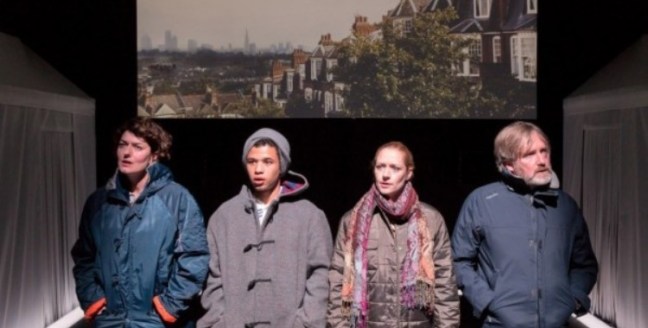
The play follows Catherine and Leo, her rootless young protégé, as they spark the uprising from coffee mornings, supermarkets and roadside cafes, sending out a flare to community groups across the country. Lady Catherine advocates “the beautiful violence which brings change”, but with seemingly little thought as to what that change might actually be. Equality is the one certainty; everything else is a bit woolly.

This vagueness about the new order is just one of the many facets of Mullarkey’s revolutionary vision that make it far more interesting and problematic than it initially appears. This is no straightforward rebellion. Aside from the absurdity of a-capella groups and historical re-enactors tearing down the halls of government, there is something complicatedly ironic about a society brought down from the top. For all the distrust of hierarchy, it is still the toffs who lead the way.

The leader who is to be installed when these revolutionary elites honourably allow themselves to be liquidated, meanwhile, is an intriguingly blank slate. Leo, a naive yet mysterious figure as played by Calvin Demba, has no job, no home, no family. And like the elusive Messiah figure at the heart of Mike Bartlett’s 13, whose only belief is belief, he is remarkably empty of opinions. This unlikely, semi-Biblical saviour, paired with the surprising source of the play’s revolutionary fervour, seems almost to skewer the whole possibility of violent overthrow.

To complicate matters further, ambivalence around revolutionary violence is built right into the theatrical framework of James Macdonald’s production. Not so much as a drop of blood is spilled on stage all evening, as visceral brutality is replaced with the cool, distanced reading of stage directions (“he chops his head off”; “she shoots her in the head”). In a theatre with such a history of represented violence, it’s a curious choice, and one that immediately raises a question mark over the use of force. It also begs questions of the whole practice of representation on stage, not quite taking a torch to theatrical convention but certainly tearing away at some of its illusions.

Tom Pye’s design is similarly multi-layered and self-aware. There’s a feeling of the community hall about the green plastic chairs and fold-up tables that stand in for all of the play’s locations, flanked by village fete-style white marquees in place of wings. It all beautifully sends up the bunting festooned “Keep Calm and Carry On” aesthetic, without ever being too smug about it. I’m less convinced, however, by the large screen at the back of the stage, onto which is projected scene numbers and images to indicate the setting at any given time. It adds to both the strangeness and constructedness of the drama, but to uncertain effect.

Uncertainty is a lingering sensation throughout The Wolf from the Door. Take the relationship between Catherine and Leo. At one level, their dynamic embeds a crucial question about the efficacy of individual care and action versus the greater ambitions of ideological and systemic change. Or, to put it another way, what use is revolution without compassion? But this central pairing is also trying to do something else, culminating in a lacklustre and surprisingly sentimental couple of closing scenes which frustratingly undercut much of what has gone before.

For all its wonkiness, however, there’s something compelling and oddly galvanising about this peculiar allegorical drama. It also features some truly stunning scenes, the standout among these being a one-sided exchange between a mini-cab driver and passengers Catherine and Leo, which is a blackly comic combination of the mundane and Beckettian. From the bleak patter of the writing to the precise rhythms of Pearce Quigley’s delivery, it is exquisitely excruciating. And perhaps it’s here, in presenting the indignity of this everyday despair, that the play’s real politics reside.

Photo: Stephen Cummiskey.
Oh, I Can’t Be Bothered, Soho Theatre

“I would like to talk to the capitalists about money, but they only wanted to tell love stories” René Pollesch

rash_dash_large_new

For as long as I’ve been an adult, I’ve been pretty independent. Less in a loud, Destiny’s Child, “throw your hands up” way, more in a quiet, fairly content, getting on with it way. Most of the time, I think I’m OK with the idea of being alone. Yet still there’s this voice socially hardwired into the back of my brain somewhere that periodically shouts “OH HOLY FUCK IF I DON’T SETTLE DOWN SOON I’M GOING TO DIE ALONE SURROUNDED BY CATS”. And no matter how coolly indifferent I think I am to it, I can never completely silence it.

There’s a scene in Alice Birch’s brilliant Revolt. She said. Revolt again. which articulates all of my ambivalence about marriage in ways that I hadn’t even articulated to myself before seeing it. In it, a woman responds to her boyfriend’s marriage proposal with meticulous logic, picking apart the ideology knitted around this institution thread by thread. What her boyfriend has actually just said that he wants, she concludes, is to turn her into “a thing to be traded”.*

I’m thinking about both of these things as I’m watching Oh, I Can’t Be Bothered, RashDash’s latest show. About that culturally embedded demand to MATE NOW WHILE YOU STILL CAN and about the idea that marriage, this state we’re all taught to aspire to, is essentially about ownership. I’m not particularly comfortable with either idea. No, more than that: as a feminist, I feel I should probably reject both – the voice and the institution.

But it’s not quite as easy as that, as RashDash recognise. Oh, I Can’t Be Bothered is about those conflicting desires to be independent and to be secure; about what we really ask of one another in modern relationships; about whether we should be asking something different, something more. It’s about different kinds of love and how our culture values them. It’s about the idea of “The One” and it’s about every love song you ever heard on the radio.

Bea and Dee are best friends. They love each other. They used to live together, but now Bea has left to live with her boyfriend. Dee misses her. Dee wants her back. Why can’t they just stay together forever?

Representations of female friendship are nothing new, but RashDash dramatically shift the ground on which this one stands. Bea and Dee are no pale imitation of Carrie Bradshaw and her mates in Sex and the City, dissecting relationships over brunch while sporting the latest pair of Manolo Blahniks. RashDash even dare to suggest (*gasp*) that female happiness might rest on more than footwear and fornication. Why do romantic pairings have to be the relationships that define our lives?

There’s something at once bracing, optimistic and sadly resigned about the central suggestion that the two women bind their lives together – not as lovers, but as partners nonetheless. The whole in sickness and in health thing, as Dee puts it. Right from the start, however, it’s clear that this experiment is unlikely to succeed. The hopeful gesture of a new way of relating to one another is balanced by the social and cultural pressures that make it unthinkable. That voice that screams “GET MARRIED OR DIE ALONE”.

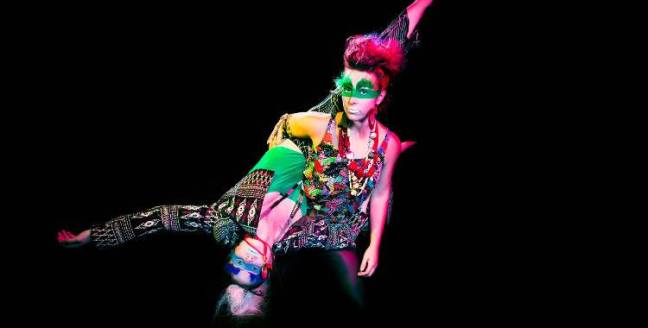
RashDash tell this story with a blend of blunt dialogue and striking physicality. In one moment, performers Abbi Greenland and Helen Goalen are rubbing their heads against one another, nuzzling like animals. In the next, they are rolling and jumping, flinging one another around the space. The struggles of their friendship and the pressures of the surrounding world are played out physically, the challenges and disagreements unmistakable in their bodily collisions.

And although the speech exchanged between the two women is sharp and often funny, the most powerful moments play out in the visual and the abstract. In one hilarious yet heartbreaking scene, Greenland yells song lyrics into a microphone (“You’re still the one I run to, the one that I belong to”; “If you’re not the one then why does my hand fit yours this way?”) while Goalen runs blindly and fitfully around the stage, covered in a plastic sheet that is wedding veil, suffocation device and shroud all at once. It’s hard to imagine a more powerful visual metaphor for the stifling demands of romantic love, as shouted out from every love song, every romcom, every thoughtlessly saccharine Valentine’s Day card.

Andy Field and Ira Brand’s put your sweet hand in mind – which I fell giddily head over heels for – was originally born from the desire to make a show about love “in which no one falls in love”. In the end the piece that they made, while it was also about other loves, didn’t quite fit that initial bill. Somehow, somewhere along the line, romantic love crept in. It’s hard to keep out.

In Oh, I Can’t Be Bothered, Dee and Bea make a similar discovery. Turning one’s back on the promise of romantic love and the fiction of “The One” is no small feat. Given that it seeps into every last corner of our culture, it’s unsurprising that we find it so hard to get away from. As Field once put it, “love turns everything into a love story”.

But voicing the desire for a way of living that is not solely constructed around a romantic partner feels important, both in the context of feminism and in the simple sense of how we relate to one another. If we can uncouple our sense of identity and wellbeing from an inward-looking dependence on one other human being, perhaps we can begin to look outwards to each other, our communities, the world we live in. We can take joy in other kinds of love, kinds of love that aren’t bound up in a lucrative commercial package.

At the moment, however, it remains difficult to imagine. If Dee and Bea fail, and if put your sweet hand in mine fails, then the real failure lies with the society that plants that nagging voice in our heads.

*Incidentally, Alice Birch is currently working with RashDash on two new projects, which is very good news indeed.

Edinburgh 2014

6063489676_ac7fbb4508_b (2)

To save inundating this site with new posts, I’ve collected below links to all of the many pieces of writing I’ve produced over the last month at the Edinburgh Fringe. Happy reading!

Fest:

Radical Stories (feature)
The Initiate
The World Mouse Plague
Unfaithful
Notoriously Yours
My Uncle’s Shoes
My Luxurious 50 Square Feet Life
Dear Mister Kaiser
Prelude to a Number
Red Riding Hood
Great Artists Steal
Guess Who: Meinzeye or Cold Corner?
Somebody I Used to Know
Mush and Me
The God Box: A Daughter’s Story
Conflict in Court
Land of Smiles
Symphony
Domestic Labour: A Study in Love
The Future for Beginners
The Eradication of Schizophrenia in Western Lapland
Jamaica Farewell
#MyWay
Early Doors
The Time of Our Lies: The Life and Times of Howard Zinn
The Ruby Dolls: Fabulous Creatures
Janis Joplin: Full Tilt
On the Upside Down of the World
Crazy Glue
Watching You (feature)

Exeunt:

True Brits
Every Brilliant Thing
Sister
Guinea Pigs on Trial
The Hive
Are You Lonesome Tonight?
Mmm Hmmm/Hug
Show Off
Return to the Voice
I Promise You Sex and Violence
Forest Fringe: You Must Sing (group article)
A Series of Increasingly Impossible Acts (group review)
More Fringe Things (group article)
Men in the Cities (group review)
Fringe Things (group article)

WhatsOnStage:

Edinburgh Fringe highlights
Beats North
Pioneer
Lungs
merry christmas, Ms Meadows
Wingman
Standby for Tape Back-Up
Kim Noble: You’re Not Alone
Our Teacher’s a Troll
No Guts, No Heart, No Glory
Blind Hamlet
Edinburgh Fringe Diary #3
Lippy
Hiraeth
Sirens
Silk Road
Freak
Dead to Me
Edinburgh Fringe Diary #2
Broke
He Had Hairy Hands
Spine
Chewing the Fat
Britannia Waves the Rules
Play Dough
Edinburgh Fringe Diary #1
The Fair Intellectual Club
Confirmation

Blog:

SmallWar
Light

Photo: Laura Suarez.

Light, Pleasance Dome

Theatre-Ad-Infinitum-Light-c-Alex-Brenner-please-credit-_DSC4592-dimmer-dresses

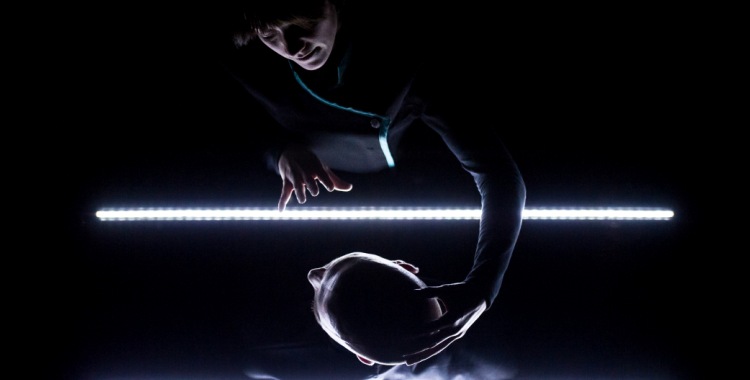
If the Thought Police are an uncertain, shadowy presence in Nineteen Eighty Four, somewhere between self-regulating myth and chilling reality, then in Theatre ad Infinitum’s new show they are a constant presence. Light imagines a world in which, thanks to new technology, not just our actions but the workings of our minds are under surveillance. In light of Edward Snowden’s revelations about the extent to which we are routinely monitored, it doesn’t seem miles from plausibility.

Given what we have learned about surveillance, there is no doubting the necessity of discussing its dangers – especially considering the astonishing lack of outcry about the current situation. Theatre ad Infinitum do so through the means of sci-fi and dystopia, genres which often have more to say about the present than the future. This particular future is a grim one, where fears of terrorism have been harnessed as a means of robbing citizens of their basic right to privacy. And there is something chillingly uncanny about the rhetoric with which these imaginary politicians put a positive spin on the ability to see into the minds of others.

Light is over reliant, however, on the metaphor that gives the show its title. Light is used by GCHQ as a codeword for meta-data, but it also has the advantage of creating some rather striking images on stage. Theatre ad Infinitum take this connection and run with it – so far that it almost pulls the show off its intended course.

The company’s central visual device is the use of LED torches, which only illuminate limited segments of the stage at any one time, leaving everything else in the dark. This allows for several startling, nightmarish moments, as well as some slick manipulation of our perceptions. But it is also limiting to the scope of the piece. Where in Translunar Paradise and Ballad of the Burning Star the formal constraints imposed by Theatre ad Infinitum were what made the shows focused and distinct, here it begins to feel like an unwieldy albatross flung across the company’s shoulders.

The story, of a citizen who eventually attempts to break the state’s control over the mind and defy his own tyrannical father in the process, is vital to the show. But thanks to the formal limitation, its telling is not always clear. The action is wordless save a few short projected sentences, underscored instead with an impressive – and often impressively thumping – soundtrack. It is often more cinematic than theatrical and it is not helped by the restrictive space and limited sightlines found in the Pleasance Dome.

One of Theatre ad Infinitum’s greatest strengths as a company is their ability to reinvent themselves with each new production. Light is another audacious transformation, but one that sadly falls short of the high standards set in previous years.

Photo: Alex Brenner.

SmallWaR, Traverse Theatre

SmallWar-brochure-_2995274b

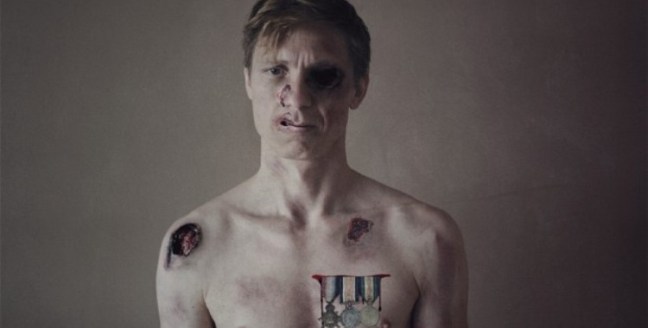
BigMouth, the powerhouse show that Valentijn Dhaenens premiered at the 2012 Fringe, was all about oratorical sway. Now SmallWaR offers a bleak snapshot of what those speeches really mean for ordinary men and women. Joining the rash of World War I centenary productions, the show discusses both the First World War and conflict in general through the voices of those who experienced it firsthand.

Inspired by a collection of war testimony and owing a heavy debt to the likes of Johnny Got His Gun, SmallWaR offers up various fragments of conflict and its aftermath. These are expressed by Dhaenens in the guise of a nurse, sitting or standing at the front of the Traverse’s wide stage, and by the shadowy soldier figures (all recorded copies of Dhaenens) who appear as projections on the screen that slices across the playing space.

In this ghostly hospital ward, voices rise and fall; reflections, letters home, quiet howls of despair. These scraps of found text are knitted together by the nurse, commenting calmly on the horror she witnesses around her, and by the thoughts and dreams of a man who has lost all means of movement and communication, barely remaining alive in his hospital bed – a medical “miracle”.

As a companion piece to BigMouth, immediately linked by the same unsettling rendition of “Nature Boy”, SmallWaR makes a chilling follow-up. Here lies the result of all that rhetoric: broken bodies and tortured minds. And all that talk of democracy and honour and glory means nothing when staring death in the face. As Dhaenens dully intones, “nobody dies for something”.

Yet this all feels surprisingly distant. There is certainly rage in SmallWaR’s sentiment, but not in its cool execution. Dhaenens’ sleek, controlled delivery is pitch perfect as a series of persuasive leaders in BigMouth or a slippery politician in Ontroerend Goed’s Fight Night, but here it jars with the intent of his words. There are moments of quiet, haunting impact, but Dhaenens never reaches across the gulf between stage and audience to infect us with the fury that radiates from his text.

“If I had a mouth, I would scream,” a disembodied voice tells us through the speakers. Dhaenens has the means to speak, but his is a resigned sigh rather than a yell of anger.