Punch & Judy, Pleasance Courtyard

26902_article

Originally written for Fest Magazine.

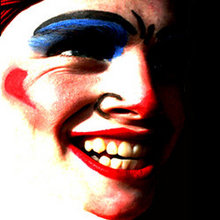
In the midst of a festival where puppetry is back in vogue, Tea Break Theatre is pushing against the tide. This ramshackle rendition of the traditional seaside favourite trades puppets for actors, with three performers taking on the roles of Punch, his put-upon wife and the wide cast of supporting players.

All the usual suspects are present, from the sausage-guzzling crocodile to the incompetent constable, rolled out in a constant, chaotic merry-go-round of costume changes. Making little attempt to break away from the show’s groaningly recognisable conventions, Punch encounters these characters one by one in an anarchic succession of scenes, piling up the bodies as he goes but achieving little else along the way. Even the sitting duck of the banker gets off with the lightest of satires.

If, by swapping puppets for humans, Tea Break Theatre has aimed to give this sprawling farce any real life contemporary resonance, it is almost impossible to detect. The early scenes are so packed with below-par slapstick and strained humour that when events do take a turn for the darker, any sense of menace is unearned. Only in the dying moments, as desperation cracks his pasted on smile, does the image of Punch gain anything approaching potency.

“If you be happy,” Punch says to the audience as the show opens, “me be happy too.” By these standards, Punch’s smile is not about to return any time soon.

The Pride, Underbelly

26906_article

Originally written for Fest Magazine.

Three, as they say, is a crowd. This observation is certainly true for married couple Bruce and Linda, whose over-friendly next door neighbour James gradually wedges his way between them. So far, so familiar. The only difference being that Bruce, Linda and James are lions.

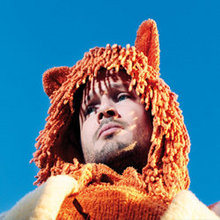
This funny little oddity from Australian company Perth Theatre is a surprising comedic treat. It only takes the performers to emerge in their fur-adorned onesies to conjure a grin, and from thereon in the quirky comedy carries the piece through. Initially arriving as an extra hand for Bruce’s home renovations, James shows an increasing interest in his neighbour’s life, leaving the alpha male scrapping for his pride in every sense of the word. It is—a lot like the increasingly desperate Bruce—a bit rough around the edges, but its charm begs forgiveness for its faults.

The offbeat humour also reveals small, quietly poignant truths. As newlywed infatuation melts into dull routine, something as simple as the transition from energetic high fives to resigned handshakes speaks powerfully of the fading shine of marriage. The seeming obsession with the feature wall jointly assembled by Bruce and James, meanwhile, is a hilarious but acutely observed comment on our impulse to acquire and improve, and a warning against DIY if there ever was one.

There is little particularly new or memorable being said here, and the running time could easily be tightened without much loss. But even if its only lasting image is of a grown man moonwalking in a lion onesie, it’s an image worth the flaws.

US Beef, Pleasance Dome

26912_article

Originally written for Fest Magazine.

Ever wondered how your burger got from cow to cardboard container? It’s certainly not the first time the ethically dubious practices of fast food corporations have been on the agenda, but Missing String Theatre Company manages to broach such issues with fresh laughter in this satirical take on America’s fiercely consumerist obsession with cheap meat.

Central character Buck, our narrator of sorts, starts at the bottom of the fat-oiled corporate ladder as a door to door meat salesman for the oddly unsavoury sounding Meatbox, a corporate monster promising a pseudo-democratic vision of meat for the masses. Through his personal story of grubby corporate climbing, Missing String deploys its satirical barbs using a wacky blend of comedy, drama and country music. From soulless marketing speak to the hypocrisy of the supposedly ethical consumer, little emerges unscathed.

This is also a satire in which the consumer, and therefore the audience, is deeply implicated. As one fast food outlet employee accusatorily tells us, we are “the cog that turns this machine,” the demand that drives the increasingly unethical supply.

This dirty complicity, however, is not taken as far as it could be. By making only half-hearted attempts at addressing spectators, Missing String neglects an opportunity to make the audience squirm and, as a result of that discomfort, think. It might make you pause before tearing off that next chunk of meat, but this is unlikely to create many vegetarians.

It’s Not You, It’s Me

Originally written for Exeunt.

Six days, countless cups of tea and two free mojitos into my first fringe, it might be a tad early to start making any valuable observations about the small phenomenon that gobbles up Edinburgh for a few weeks every summer. One thing that is difficult to ignore, however, is the small army of reviewers who colonise the place, stamping our presence with ratings and pull-quotes as fast as they can be frantically stapled onto flyers. An exploded version of the national theatre ecosystem, the fringe is a beast that is fed and bloated by the star system.

So it feels strange to be sitting in a room, in Edinburgh, questioning what this is all in aid of. I’m at St Stephen’s, the theatrical haven crafted by Northern Stage within the stonework of the old church, participating in something of an experiment. This is the first excursion of Dialogue, Maddy Costa and Jake Orr’s project to cultivate and curate discussions between critics and theatremakers. Making a change from the endless tapping at my laptop keyboard, I’m here not to write but to talk.

The loose theme of the morning is the things that we, as critics or as theatremakers, don’t tell one another. While the discussions open in a fairly free-form structure, with individuals posing questions about preparation, objectivity and expertise, this later moves into a series of provocations. In a striking display of honesty, Maddy and Unfolding Theatre’s artistic director Annie Rigby each write down and then read aloud the statements that they don’t talk about, statements that I’m forced to hastily read before running off early to get to a show, but that stick to me like barbs.

Despite emerging from the artist’s perspective, many of Annie’s points strike potently at my own concerns about how I approach and write about theatre. They speak not of anger or antagonism, but of an aching disappointment that we don’t do this better.

“How long do you spend writing a review? How soon after a show do you write it? Are you happy with this?”

“Can we make some space to talk about what you got right and wrong? Like, if you could rewrite one review, what would it be?”

“I’m giving your review 3 stars. Don’t be disheartened. 3 stars is a good review.”

“I know you’ve got a word limit, but now we’re together it would be great to talk about that sentence you wrote.”

But the statement that lodged itself most firmly in my mind was Maddy’s: “it’s not you, it’s me”. Much as it made me laugh, this also seemed to me like a bold and stark unveiling of a widely accepted lie within criticism, an extension of the fallacy of objectivity that I found myself speaking about earlier in the morning. Because sometimes, amongst all the other unacknowledged baggage that finds its way into the auditorium, a critic just isn’t in the right frame of mind to productively respond to a certain piece of theatre.

In Edinburgh this, as with everything else, is heightened. Schedules are tighter, word limits are shorter, synapses are more impaired. With perhaps as little as an hour to wrench out a review and slap on a star-rating, carefully considered analysis begins to lose its foothold. More and more superfluous stuff finds its way into the performance space: fatigue, an awareness of where to rush off to next, a creeping dread of the mounting backlog. It’s not a popular admission to make, despite the evidence of the voluminous bags under our eyes, but sometimes we’re just tired. It’s not the fault of the work, it’s a simple fact.

One of the few certainties that I do have at this early interlude in my fringe experience is a hopeless, head-over-heels, bad-poetry-writing love for the intense, bubble-like intimacy of Edinburgh at this time of the year. I love bumping into people I know, having the conversations about theatre that we usually put off, stumbling into real-life, in-depth discussions with people who I usually only engage with in bite-sized snippets of electronic communication. All of this I adore. It is only the writing, or rather my own writing and its occasional rushed inadequacy, that I am in danger of falling a little out of love with.

So there we are. It’s not you, it’s me. But I’m not ready to give up on this particular relationship just yet. Perhaps we can take a break, or maybe we can still be friends. Perhaps, as I felt in that room at St Stephen’s smashing down barriers and facing difficult truths, we can even start over.
The Hand-Me-Down People, C nova

26897_article

Originally written for Fest Magazine.

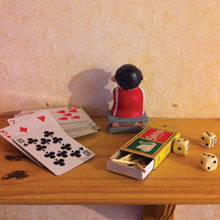
There’s something suspiciously familiar about New Theatre’s tale of growing old and awaiting the inevitable. On a dusty shelf in a children’s playroom, a collection of discarded figurines immerse themselves in memories and stories, gloomily waiting for the day when they will either be rescued or thrown away. Already there’s a whiff of Toy Story about it.

This new piece by Adam H Wells essentially covers much of the same ground. His forlorn toy characters feast on nostalgia, a delicacy that the piece seems to protest is no longer tasted. The children who once adored them are now fixated on video games, leaving the abandoned toys to bicker among themselves and contemplate the end.

There is something quietly mournful about the replacing of the old with the shiny, computerised new, but Wells’ writing lacks the nuance to unpack any new insight. Instead, cliché is given a few amusing facelifts and metaphorical resonances are glaringly signposted. Committed performances from the cast pick up some of the script’s slack, but their efforts are not enough to produce more than a few weak laughs.

While there are a couple of potentially powerful truths in the toys’ purgatorial state, it is hard to shake the feeling that we have been here before. As one weary character recognises, “you can’t play the same tunes all the time; they get old.” It’s an observation this piece might have done well to heed.