Tim Crouch

Adler&Gibb_reh_photoRichardHubertSmith-2252

Originally written for The Stage.

There is something satisfyingly cyclical about Tim Crouch’s work. The theatre-maker’s first play, My Arm, explored ideas about representation and realism through the unlikely story of a boy who raises his arm above his head and refuses to take it down. Throughout the course of the play, this pointless act becomes a source of global fascination, captivating the contemporary art scene.

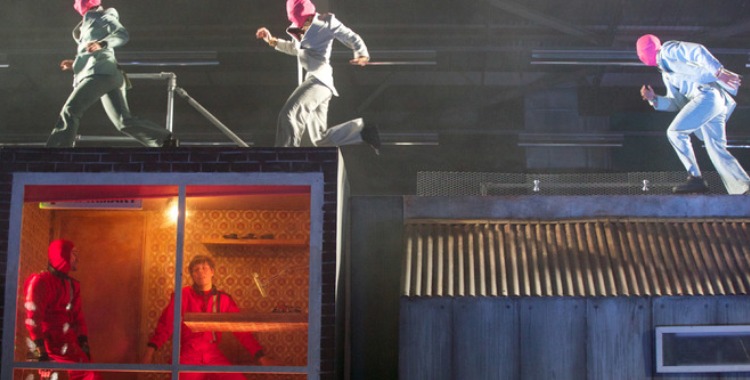
Now Crouch’s new play for the Royal Court, Adler & Gibb, uses a narrative about Hollywood movie-making to return to similar preoccupations. In it, an actress preparing to play a famed conceptual artist goes to terrifying lengths to achieve authenticity in her portrayal, asking implicit questions about art, acting and appropriation. It is, Crouch suggests, “a very much bigger and more complex version of My Arm”.

Reflecting on the shows he has made over the last ten years, Crouch describes My Arm as the “mothership” of everything that followed. The play emerged as a result of the frustrations that Crouch had felt over several years as a jobbing actor – frustrations both with the mechanisms of the industry and with what he saw as accepted theatrical form. Writing My Arm in his late 30s was, he recalls, a “last ditch attempt” to rekindle his passion for performance.

After graduating from Bristol University, Crouch began his career as a member of a devising cooperative in the city, which was the start of what he describes as “the most extraordinarily intense and wonderful and fulfilling time”. Struggling to find other work in his late 20s, however, Crouch pursued formal training at Central School of Speech and Drama. It was, he feels, a decision that the industry forced him into.

“You would go for auditions or interviews with the traditional sector and everything you had done, no matter how brilliantly creative it was, didn’t seem to have any currency in those interviews,” he remembers. “I would say that’s still the same now. There is a very marked career path and certain jobs or certain venues or certain directors have more points than other jobs and venues and directors, and so it feels like the deal is you get as many points as you can by working in this place or that place.”

As well as resisting this rigid and competitive culture, My Arm kicked back against the dominant form of psychological realism that had informed Crouch’s training. The play is written as a first person monologue, narrating events from the perspective of the character who fatefully decides to thrust his arm into the air. When Crouch performed the piece, however, his arms remained firmly at his sides, immediately challenging straightforward representation.

“I was interested in a different kind of reality,” Crouch explains. The show was also “a provocation to an audience to get involved more”. At the outset, audience members were asked to contribute personal items to the staging of the play, making explicit the necessity of their presence “to complete the experience”.

But while plays like My Arm might act as vehicles for sometimes complex ideas about theatre and the world, Crouch insists that they are absolutely rooted in story. “If I wanted to just ask questions about theatre and representation, I would become an academic,” he says. “I want to make theatre and I think theatre’s strength is narrative, a shared narrative, the passing of narrative. And so all of the pieces that I’ve made have been first and foremost about the story.”

Crouch describes his second show An Oak Tree, for instance, as “a little dance between form and narrative”, but one in which the narrative itself was vital. This show’s central formal device was the use of a different actor every night to perform the two-hander opposite Crouch without any prior knowledge of the play. Unmoored from their usual reference points, this second performer would flounder in the same way that the character, a man whose daughter has been killed in a car accident, is undone by his grief.

“I would want there to be a dialogue between form and content,” Crouch elaborates, pausing to note with a laugh that he sounds like a professor. “But in a very fleshy, pragmatic way, that’s what it is,” he goes on. “There are formal devices in all my plays that are only there because they deepen the telling of the story.”

In ENGLAND, the transplanting of theatre into a gallery space acted as a metaphor for the heart transplant that is central to the play’s narrative, while The Author engaged with its site in an altogether more controversial way. Commissioned for the Upstairs space at the Royal Court, the play was entirely contained within its audience. Performers sat amongst theatregoers in two banks of seating facing one another, and the events they described took place in audience members’ minds rather than on the stage.

“In The Author we are the audience as well, so their temperature is our temperature,” says Crouch of performing the piece. It was a show that pushed audiences into uncomfortable territory, alluding to the Royal Court’s history of shock and violence during the “in-yer-face” period of the 1990s and questioning the ethics of representation. Its disturbing subject matter and exposing focus on the audience provoked a startling range of reactions.

“At times in that show the audience took us to a really difficult place,” Crouch admits. “I had a physical threat in that show; people swearing, shouting, walking out.” This splitting of opinion, however, was encouraging to Crouch – “I’m excited when people either hate it or love it” – and reaffirmed his interest in active engagement with an audience.

“The audience is absolutely fundamental to my thinking,” he says. “They provoke and they incubate the form – they hatch the form”. Crouch is also keen to stress that “immaculate attention” was paid to the audience’s experience during the making of The Author; it was never about provoking for provocation’s sake. “But what you can never do as a theatre-maker is second guess what an audience is bringing to the theatre,” he adds. “By and large I try to keep things open, so it’s all interpretable.”

So central were the audience to The Author that people even began to mistake the title of the show. “A lot of people go ‘I saw your play The Audience’, and I go OK, right,” Crouch laughs. “I really like it when people forget or confuse what it was called, because it could easily be called The Audience. I suppose one of the suggestions in that play is that the audience is the author.”

Although The Author went on to tour elsewhere, it was always set at the Royal Court, intimately responding to the site of its commission and creating a fascinating “slippage between the location and the theatre”, as Crouch puts it. Adler & Gibb, which brings Crouch back to the Court, is less specifically grounded in the theatre’s history and location. While it is “absolutely written for a theatre”, the show speaks to ideas that are common to all theatre spaces: performance, representation, the blurring of truth and fiction.

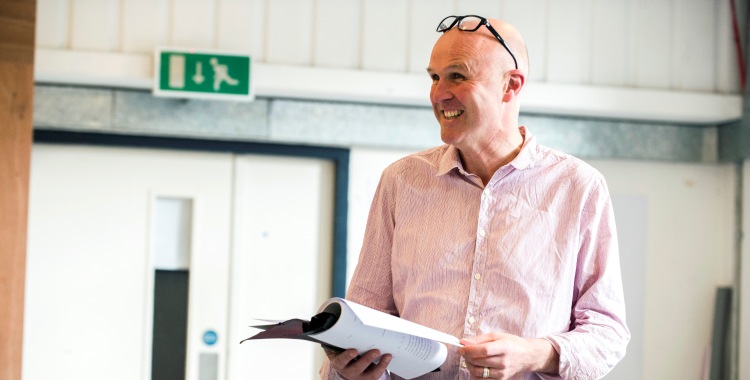
When I speak to Crouch at the Royal Court, he is nearing the end of the first week of rehearsals. During the morning I spend with them, the cast are playfully exploring the relationships between their characters and with the audience, prodding at realist conventions while grappling with the challenges that Crouch’s script presents. One of these challenges is the onstage presence of two eight-year-old children, who are not characters in the play but remain present throughout.

“I’m excited about their formlessness,” Crouch tries to explain the thinking behind this surprising choice. He adds, in resistance to the instrumentalising of art as a form of education, that “art should be about unknowing something rather than knowing something”. Unlike their adult counterparts, Crouch argues that children are happy with “unknowing” and do not need realistic representation as a spur to their imaginations; “a child doesn’t need to exert anything to transform something into something else”.

It is in Adler & Gibb that Crouch’s recurring interrogation of realism reaches its zenith. At the same time as questioning realist representation in theatre, the new play is deeply interested in the medium of film, which Crouch describes as “the high tide mark of realism”. Recalling Hollywood actors’ lauded transformations into real people – think Meryl Streep’s Margaret Thatcher or Jamie Foxx’s Ray Charles – Adler & Gibb examines the “strange exertions towards reality” that cinema encourages and celebrates.

“It’s a political idea for me,” says Crouch, “in terms of that idea of acquisition; acquiring reality, trying to buy or own reality. And realism to some degree being an attempt to fix something and to own something, which I have a question about.”

Crouch also has a question about the idea of individual genius that this tendency enshrines. Although it happens on a bigger scale in Hollywood – as depicted in Adler & Gibb – Crouch sees it infecting the theatre industry as well, pointing to the recent example of Birdland at the Royal Court and the central attraction of leading actor Andrew Scott.

“It’s an amazing performance by Andrew Scott – what the fuck does that mean? To make a piece of work where we come away and go ‘that’s an amazing performance’ is kind of ignoring the fact that it’s only an amazing performance if it’s serving the piece of work that it’s in. The piece of work is the thing that we should be there for, because that’s the art form.”

Crouch goes on to suggest that “it’s like having a beautiful diamond on a rather dull canvas, and you just go ‘that’s an amazing diamond’, when actually the artist wants you to think about the whole canvas.” Instead, he says, individual theatre-makers “shouldn’t be thought of as geniuses, because it gets in the way of what the work is trying to do”.

For this reason, Crouch is keen to emphasise the close collaboration that has characterised his career as a theatre-maker. “I wouldn’t want anyone to come in going ‘I’m going to see a Tim Crouch show’,” he says. Although his name most frequently gets attached to the work, he is adamant that his shows are the product of collaborative processes, shaped by the input of the rest of the creative team.

“I’m lucky in that I have two very close allies and collaborators and sounding boards in Karl James and Andy Smith and that we have been talking about the work for a long time now,” Crouch tells me, referring to his co-directors. As an actor himself, with bitter experience of all the frustrations that can involve, he also takes care to welcome the thoughts of performers.

“Why would you ignore the presence of the people in their room and their intelligences?” Crouch asks, incredulous at creative processes that do not encourage collaboration in the rehearsal room. “I’m trying to some small degree to challenge some of the practices that I have problems with, or I had problems with when I was an actor,” he adds, returning once again to the impetus of his work. For Crouch, it is vital to stretch the conventions of the industry, encouraging ways of working that nurture creativity.

“It’s about doing the best thing for the work, and the best thing for the work is to create an open space and to allow contributions to the open space,” he says. “Why would that be such a radical idea?”

Photo: Richard H Smith
This is How We Die, Ovalhouse

ChrisBB_main_web_image_460_551_95_s

Lights down. Spotlight, table, microphone. Christopher Brett Bailey – skinny form and violent shock of hair – walks on and sits down, mouth poised over the mic. And open.

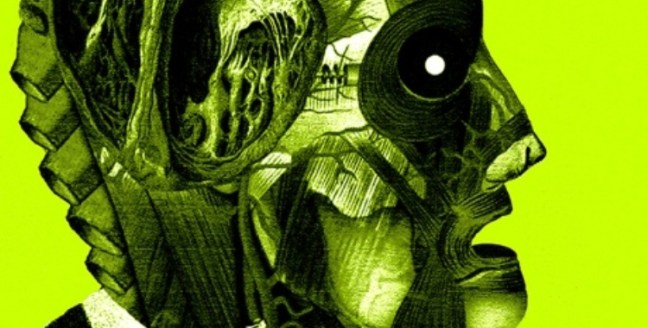
Words words words so many words no pause even for breath seemingly faster even than the mouth the mouth in Not I and it’s a bit like Beckett the loops the associations the dark humour staring unblinking into the void but also like comic books graphic novels a comic book sketched out in words in imagination dark vivid lines phrases jump out “farting clichés” language is twisting mutating losing meaning “linguistic whitewashing” permeated with advertising with marketing with fucking capitalist bullshit and the rage the raw pulsing rage but we are here together and that’s something right here together and that bulge in my pocket is not a revolver I am not going to attack you.

How the hell is he talking so fast?

On stage, Bailey is part beat poet, part swaggering frontman, words curling from his lips with a punk rock snarl. His text, read from a slowly diminishing, neatly stacked pile of pages in front of him, is as linguistically dense as anything I’ve heard. And yet it has a musical quality. As the words pour out, they are sound as much as they are meaning. Language slithers and somersaults. It’s now a diatribe, now a painfully poetic digression, now a gleeful contortion of the way we make words mean.

It’s also bloody funny.

“This is a coming of age story no longer.”

At some point the twisting, turning narrative has become a comic strip of America, a dusty road stretching far into the distance. And here’s the shrapnel of every road trip movie you’ve ever seen, sharp splinters flying in the form of words. It’s cartoonish, but then dirty and bloody and totally fucking exhilarating. It’s every thrilling moment of violence in every Hollywood movie.

“Your life is not a thriller.”

So this is the bit about death. Is this how we die? In a mess of language and violence and desperate searching for meaning. Is this the end we’re obsessed with? The scrubbing out of a miniscule speck in a miniscule corner of the universe, the final heartbeat that we both anticipate and recoil from.

But we’re accelerating. The words are getting faster again Bailey’s mouth moving faster coiling itself around the words that are like weapons and the world around us is accelerating too the world that condenses time and space and all of human knowledge into a black box that can fit in the palm of your hand and now where are we there’s a crowd we are the crowd we are the gladiatorial mob baying for blood demanding a performance demanding the words

the words

the words

And then the words are gone and Bailey is gone and all we have is the lights the blinding lights.

Language is dead.

Hum of bass from the gloom beyond the lights. Strains of violin. The noise builds, the light brightens. A fuck-off growl of electric guitar breaks through the strings. And then louder and louder, brighter and brighter. Shapes outlined faintly in the darkness – or is that my eyes playing tricks on me?

Now the sensory overload is almost unbearable and the music is moving in me, through me, vibrations rippling out from body to body. The sound is a primal throb and the noise and the lights are blinding and the noise and the room seems to hold its breath and the noise the NOISE.

I’m spat back out into the Ovalhouse foyer, ears ringing and hands slightly shaking. I struggle to remember the last time I emerged from a show feeling so physically shaken, so aware of my own body in the charged space of the theatre.

I think: this is theatre you feel. Theatre you feel in your gut and on your skin. Theatre that leaves you a little breathless. And that’s an experience which is all too rare.

Hotel, or Untangling the Knots

tom-rhys-harries-ralph-and-susan-wokoma-nala-88864

Tuesday lunchtime: I’m sat in the Arcola bar, chatting to Danny Braverman and Nick Philippou about the brilliant sounding Wot? No Fish!! They are talking about making a story of a Jewish family speak beyond its immediate community, about the importance of outsider narratives in a political environment that stokes fear around immigration, about bringing an audience together in their difference.

Wednesday night: I’m perched on the edge of my seat in the Pit theatre at the Barbican, shoulders uncertainly shuddering with laughter. The cause of these tentative giggles is Young Jean Lee’s brilliantly unsettling The Shipmentwhich needles me with constant questioning of my own assumptions. How much is my view of the world tinted by race? Is this bit actually funny, or am I just helplessly falling into a trap? And actually – wait a minute – why am I making the experience of watching this show about me?

Friday evening: Partway through a panel discussion on arts criticism at the ICA, a woman in the audience raises the vital issue of diversity. How can critics – a deplorably white, middle-class breed – respond to work from cultures completely removed from their own? Just as I’m mentally firing that question at myself, Matt Trueman responds brilliantly and honestly with an admission of his own discomfort and uncertainty when having to review such shows (I’m really not doing his answer much justice – it was spot on).

Saturday morning: Playing catch-up, I read Andrew Haydon’s post about diversity (or lack thereof) in theatre. I’m particularly struck by two points. One: “A Soap For Every Race *cannot* be the goal for a diverse UK theatre”. Two: “We need to stop thinking that a ‘black actor’ *means* something *about* ‘Otherness’; if critics could stop reading a woman being cast as a man as some sort of comment on the ‘male’ character’s masculinity/effeminacy… That sort of thing”.

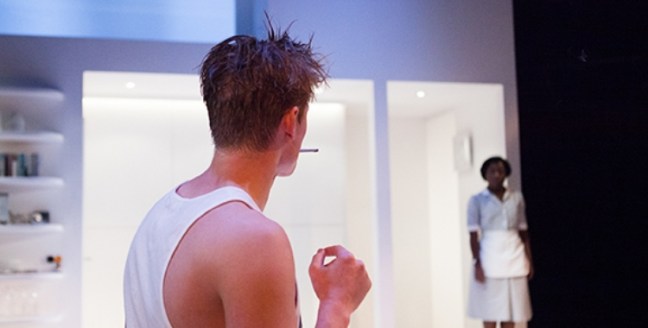
Saturday afternoon: I’m catching up again, seeing Polly Stenham’s new play Hotel at the National Theatre Shed (sorry, temporary theatre). And throughout this play about post-colonialism and Western responsibility, as shock follows shock and I hunch further and further down into my seat, I feel increasingly uncomfortable about its attitudes to race. And then I question my discomfort. And repeat.

Two days later and I’m still processing that discomfort. Race is (rightly) a knotty topic at the best of times, and with the conversations and reflections of the last week replaying in my mind I’m finding it increasingly tricky to untangle. Each time I do pick at the knots, my uneasy awareness of my own privilege halts me.

So perhaps privilege itself is a good place to start. I think it would be fair to say that Polly Stenham’s work to date has, among other things, concerned itself with a particularly privileged corner of British society. Her first three plays dissected white, upper-middle-class dysfunction, focusing on complex and often broken relationships between parents and children. First world problems of the highest order.

And Hotel opens in similar territory. A wealthy white family are holidaying on an unspecified desert island, where the fault lines of their relationships are soon exposed. Vivienne has just resigned from cabinet, made a laughing stock by her husband’s online indiscretions, while their teenage children Ralph and Frankie are messily entangled in the sordid affair (very messily, as it gradually transpires). The air is thick with betrayal and prickly with recriminations. And then – bang. The play that Hotel gave every indication of becoming is suddenly blasted to pieces.

On one level, Stenham and director Maria Aberg have done a very clever thing. The opening scenes of the play are one long teaser, playing on the expectations that Stenham’s previous work sets up, allowing the production to sharply pull the rug out from beneath our feet. What looked like a litany of middle-class moaning (played with claustrophobic precision by Hermione Gulliford, Tom Beard, Tom Rhys Harries and Shannon Tarbet) quickly turns into a tense hostage situation, as chambermaid Nala and her locally hired accomplice hold the family at gunpoint.

But this would-be kidnapper is not after money. Instead, her aim is to force an acceptance of responsibility from Vivienne, who was behind a deal that offered aid to Kenya in exchange for opening up unregulated trade. Free market capitalism under the guise of charity.

The point is a fierce and vital one. Exploitation does not just come in the form of colonial invasion, while globalisation closes the gap between action and consequence at the same time as it distances deed and responsibility. There is even a neat metaphorical resonance with the early domestic drama, as virtual transgression mirrors the way in which we in the West deny our complicity in the structures that oppress elsewhere. Just as Aberg’s production rips through the fabric of Naomi Dawson’s sterile white set – all pristine, synthetic luxury – the blind complacency of audience and characters is torn down the middle.

There are, however, some undeniable problems with this rapid shift. Because it comes out of nowhere, the motives for this sudden violence need a hefty bit of exposition, leaving Susan Wokoma’s Nala awkwardly delivering a lecture with gun in hand. Her accusations seek to leave our complicity in no doubt, but Wokoma’s brief, jarring recognition of the audience feels misjudged – a gesture, rather than a real effort of implication. Then the second narrative lurch is even more preposterous, injecting another shot of violence for little more than the shock it jolts through the audience. Sure, it’s gripping, but I can’t help wondering if this undermines rather than strengthens its point. A thriller is just that: thrilling. Which feels more than a little problematic given Stenham’s subject matter.

And so to those knots. Matt Trueman’s review grapples articulately with the possible racism in the piece, although I wouldn’t go as far in my reservations. My main concern lies in the limited representation of the play’s black characters. Nala plays a central role, but her accomplice is a crudely sketched outline, while the other black characters appear only fleetingly, their sole function being to deliver a further blast of violence. The focus remains firmly on the white, Western family, who squirm under the play’s microscope.

Perhaps it’s unsurprising that a play skewering white privilege should concentrate its attention on white characters. Further, it could be reasoned that Stenham is deliberately putting herself in this picture, attacking a position that she feels able to speak from (and, of course, a position that many of her audiences at the National Theatre will share). It would also be difficult to argue that she has no right to deal with these issues, reducing the debate to the level of a question asked at this year’s National Student Drama Festival by a young audience member who was outraged that none of the performers in a show about homophobia in American high schools had ever themselves been on the receiving end of homophobia in an American high school.

Still, there’s something about Hotel that niggles at me. I think again of The Shipment, a play about African-American identity written by a Korean-American. It sounds potentially misguided, but as I noted in my review, Lee’s own struggle with the show’s ideas (developed, significantly, with the all-black cast) somehow allows an audience to acknowledge society’s inbuilt racial prejudices and our own implication in those. To echo Braverman and Philippou, it brings audiences together in their difference – without ignoring or obliterating that difference. Hotel, on the other hand, is in danger of simply reiterating difference, while its use of its subject matter could be seen as the same kind of stealthy colonialism it attacks.

I should stress that I remain uncertain, and I’ve contorted myself through various spasms of discomfort and anxiety in trying to tackle my uncertainty. But maybe that’s no bad thing. Towards the end of the stand-up routine in The Shipment, the black comedian turns his attention to those white people who constantly tiptoe on eggshells, cautious of offending and quick to apologise. But rather than attacking this attitude, as we are braced for, he approves of it. Because what’s wrong with being careful?

Photo: Kwame Lestrade.

Arts and Older Audiences

???????????????????????????????

Originally written for The Stage.

When attempting to improve engagement with theatre, focus often falls on the young. It is of course vital for the survival and reinvigoration of the art form that new generations come into our theatres, both as artists and audiences, and are inspired to keep coming back. But what are theatres doing at the other end of the scale?

Over the last few years, the problems raised by an ageing population have been firmly on the political agenda, raising questions about how this growing group of older people can be catered for in society. In a report commissioned for Parliament in 2010, it was found that over 10 million people in the UK were over 65 years old, a figure that was expected to have nearly doubled by the middle of the century.

This age shift is reflected in cultural attendance. According to the latest statistical release from the Department for Culture, Media and Sport, there has been a significant increase in arts engagement among adults aged 65 and over since 2005/06, but adults aged 75 and over still have lower engagement rates than other age groups – arguably due to barriers that limit their access.

In recognition of this demographic movement, the Arts Council has now begun implementing strategic measures to boost engagement among older people, in line with its promise of “great art for everyone”. Last year, it launched a £1 million grant jointly funded with the Baring Foundation, intended to widen access to the arts for older people in residential care.

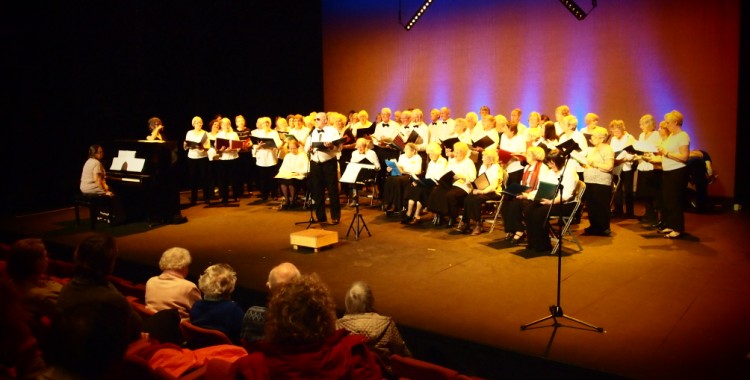
One of the successful recipients of funds from this initiative was The Courtyard Centre for the Arts in Hereford, which in recent years has been firmly committed to working with older people and those with dementia. Penny Allen, the Arts and Older People project manager at The Courtyard, explains that their programme involves a mixture of long and short term projects, ranging from a poetry project for people with dementia to a regular over 60s choir. The arts centre is also committed to becoming a “dementia friendly” venue and is the first organisation of its type to join the Dementia Action Alliance.

“Art has the power to reach people who may no longer be able to communicate as they once did,” says Allen. “By making arts accessible to all older people, be it in our venue, or in community venues or even residential settings, we are helping improve the quality of people’s lives and that is a powerful, wonderful thing.”

Inspired by the work being done at the Courtyard, Farnham Maltings in Surrey is taking similar steps to make its building welcoming for people with dementia, as well as offering events such as relaxed cinema screenings and tea dances aimed at older audiences. Director Gavin Stride insists that “if we are serious about audience development then we need to respond to the changing shape of our communities”. He hopes that in time “it will be an everyday occurrence to have elders and those with dementia accessing and contributing to our building and programme”.

Annabel Turpin, chief executive of ARC in Stockton, similarly sees the venue’s work with older people as part of its aim to connect with the whole community. “That’s the key thing,” Turpin stresses, “we want to connect people.” ARC’s Silver programme now regularly welcomes around 160 older people, who get involved with everything from ukulele lessons to iPad workshops. Crucially, the programme has been shaped in response to what its participants want.

The Albany in South London has equally built its Meet Me at the Albany programme around the older people it hopes to reach, as well as in collaboration with its resident artists, such as participatory arts company Entelechy. Activities in the programme range from poetry to circus skills, interspersed with board games and refreshments. Artistic director Gavin Barlow hopes that the work they are doing can pose “a real challenge to the way we think of things like social care for the elderly”, as well as creating a long-term programme that involves true artistic risk.

Both ARC and The Albany are involved in a new collaboration with Entelechy and Freedom Studios in Bradford, culminating in a joint touring show. Home Sweet Home, written by Emma Adams, draws on the experiences of over 200 older people from Bradford, London and Stockton, and explores the transition that many experience from home to care home. It demonstrates just one way in which this participatory work intersects creatively with the work of professional artists.

As well as connecting artists and participants, many of those working with older people emphasise the importance of intergenerational engagement. West Yorkshire Playhouse’s Heydays programme, which has been running for 24 years, is currently the largest regularly run project of its kind. Community development officer Nicky Taylor says that the work they do with older people “feeds back into the fabric of Playhouse, ensuring it’s a diverse, multi-generational creative space where people feel valued”.

Intergenerational work has also been an integral component of the work done by London Bubble Theatre Company, based in South London. Elders are often central to the process of gathering and shaping material for London Bubble’s intergenerational shows, working closely with participants of all ages. More recently, the Creative Homes project has taken London Bubble’s workshops to those who might not otherwise be able to attend, running groups in local sheltered housing schemes.

Creative Homes, like many of these projects, is still at a relatively early stage in its development. What it does, however, is pave the way for others. Taylor at the West Yorkshire Playhouse has the message that “you can make real and significant change in your venues with only a few small steps”. Barlow, meanwhile, claims that Meet Me at the Albany has demonstrated “massive potential” for work of this kind.

For all of these projects, the aim is ultimately about opening out the arts to the whole community – young and old. As London Bubble’s creative director Jonathan Petherbridge puts it, “Our aim is to open up the joys of theatre making to all-comers. We want to weave it into the every day – a creative action, like whistling and doodling.”

Photo: West Yorkshire Playhouse.

The Roof: Free-running Meets Gaming

image

Originally written for The Guardian.

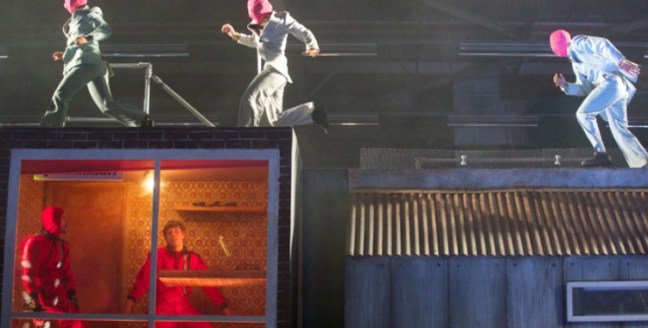
In an age of screens, avatars and online anonymity, David Rosenberg and Frauke Requardt’s latest collaboration performs an intriguing reversal. The Roof, which is part of the London international festival of theatre, explodes the video game out of the screen and into the open air. In a car park opposite the National Theatre, audiences are invited to look on as a three-dimensional hero runs, jumps and fights his way through level after level. Virtual meets real.

Surprisingly, neither Rosenberg nor Requardt are big gamers. The concept of gaming as a structural and visual reference point emerged from the idea of an audience inhabiting a single character at the same time as being able to observe that character’s actions from an external perspective – the relationship between gamer and avatar, essentially. The resulting show is, according to Rosenberg, “a bit of an out-of-body experience”, in which audiences invest in an avatar whose movements they have no control over.

This unsettling dual experience is created through the use of headphones and binaural technology, harnessing immersive sound to transport audiences to the heart of the action. But while each audience member is offered an individualised, isolated experience through the soundtrack being pumped into their ears, Rosenberg and Requardt insist that it is vital to observe the piece as a group. “We want to create an environment where the audience feel that they’re part of a mob and there is something gladiatorial about the perspective that they have on the action,” says Rosenberg. As a group, spectators can watch, but not intervene.

“We never set out to create an interactive experience where an audience can determine an outcome,” Rosenberg explains. He compares the helpless experience of both inhabiting and watching a character to how we live our lives “through a collection of mainly random events and attempt to attach our own agency onto those events”. As Rosenberg and Requardt discuss, the clear parallels between gaming and life – progression, growth, levels – invite an audience to draw such connections.

“We were interested in taking the structure from gaming because the structure holds the audience through the show,” Requardt adds, suggesting that the “predictability” of this structure helps to give shape to a piece which relies more on movement than on words. Layered over this simple logic, Requardt’s choreography has been able to access a more abstract language, exploring “existential things about what it’s like to be alive”.

Despite this abstraction, Rosenberg and Requardt are also interested in some of the concerns particular to gaming – violence chief among them. The Roof may not explicitly address this issue, but Requardt believes that “there’s a question about violence which is raised, just because it’s a live performance and it’s not a game”.

The implications of this might have as much to say about the culture from which those games arise as the games themselves. After all, as Rosenberg reflects, “there aren’t many video games where you get rewarded for altruism or empathy”.

Photo: Paul Hampartsoumian.