Theatrical Matchmakers

OVNV_LAB1

Originally written for The Stage.

If there’s one thing Old Vic New Voices can’t be faulted for, it’s ambition. Last year, the Old Vic Theatre’s talent, education and community arm took a season of five plays to the Edinburgh Fringe, showcased a handful of brand new pieces from the US, supported several new productions in London, created a series of short films and mounted its ever-popular 24 Hour Plays – not to mention its extensive work with schools and local communities. At the heart of all these projects, it soon becomes clear from conversation with director Steve Winter, is an impulse to bring people together and link up emerging talent.

“We’re theatrical matchmakers,” is how Winter puts it. “That’s what we’ve always been and that’s what we want to continue to be.” This statement of intent comes as Old Vic New Voices implements a major overhaul of its Talent strand, reassessing the support it offers to emerging artists. Driven by a shift from project-by-project support to initiatives that will nurture talent over longer periods, the new opportunities being introduced this year include start-up funds to get fledgling projects off the ground and a dedicated venue for projects supported by the organisation.

Alongside hooking up like-minded artists and venues, Old Vic New Voices will now be connecting emerging artists and companies with the space to develop their work, offering free slots in a rehearsal space it has dubbed the ‘LAB’. The aim is as experimental as the name suggests; Winter describes it as “a place to fail and a place to succeed and a place to try things out”. Most strikingly, the emphasis is on process rather than product, with artists under no pressure to present a performance at the end of their time in the space.

“That’s one thing we’re absolutely clear about; it shouldn’t be a performance space,” says Winter. “If there’s one thing London doesn’t need, it’s more theatres.” Instead of being driven by the end goal of a full performance, Winter hopes that the LAB will be used “to develop and make work, to allow people to get together and talk, for writers to go somewhere to write quietly, for people to hold meetings, to invite people to watch a piece of work that might need funding – anything that propels creativity forward”.

The initiative has emerged from discussion with artists themselves, who highlighted space as one of the most important resources they could be offered. “I think there comes a point with any application or any job you’re doing where space becomes absolutely key,” Winter explains. “It’s an underrated, simple idea to give space away for free, because it’s so expensive in London – it’s expensive for the Old Vic, it’s expensive for the National, it’s expensive for everybody. And so it stops and stagnates many projects that I think would go on to be successful.” To fight this stagnation, Old Vic New Voices is offering companies and individuals the opportunity to book up to five weeks in the LAB across the year, asking only that applicants tell them what the space will be used for.

The response to this offer has been hugely varied. Winter tells me that more than 40 projects used the space in the first three months, including everything from devised theatre companies to poets to comedy performers. This represents something of a departure for Old Vic New Voices, whose focus in the past has been firmly on traditional theatre artists, primarily supporting writers, directors, actors and producers. While he’s keen to emphasise that this is not a complete break, Winter is enthusiastic about the possibilities of these new influences, saying “it’s been nice to get a different energy in the room”.

The only problem with this initiative, as Winter freely admits, is how to assess its impact. “I think for us this year the measure of success will be how much work gets off the ground and to what end,” he says, at the same time acknowledging that this evaluation might not satisfy everyone. He also suggests, however, that evaluation across the industry is beginning to shift, with definitions of success no longer as clear-cut as they once were.

“For a lot of people, their barometer of success is that they’ve got a rehearsed reading together, and they’ve had people see their work and they have felt creatively satisfied. I think the way that people are getting work out there is very different, and it’s about that too. If you get 20 new Twitter followers or you have an online phenomenon, then that’s a barometer of success; if you do a piece of work in a fringe venue that has less people than you might have on your Twitter account, is that less successful or more successful?”

Ultimately, the answers to Winter’s questions are down to the artists; amidst all the changes taking place at Old Vic New Voices, the determination to listen to the needs of those they help is key. “We just want to bring them together and facilitate creativity,” Winter says simply. “In principle that sounds rather empty and worthy; in practical terms it’s massively important.” While the future of Old Vic New Voices might be far from certain – Winter would love to install the LAB as a permanent space, but at the moment it is only secured for a year – the organisation is adamant that its direction will be steered by the artists it supports. “Rather than us leading and expecting them to follow, we’re being led by them.”


Edinburgh 2013

9047152094_eef76e8424_c

You may have noticed that the website has gone a little quiet over the last few weeks. That’s because I’ve been up in Edinburgh for the Fringe Festival, reviewing several shows a day for Exeunt and Fest Magazine. Rather than reposting dozens of reviews on here, I’ve set up links below for anyone interested in what I’ve been seeing and writing about this month.

Edinburgh reviews for Fest Magazine.

Edinburgh reviews for Exeunt:

Dark Vanilla Jungle
If Room Enough
Captain Amazing
Stuart: A Life Backwards
Grounded
Death and Gardening
The Fanny Hill Project
Hamlet
Anoesis
On the One Hand
Banksy: The Room in the Elephant
Ballad of the Burning Star
I’m With the Band
The Poet Speaks
Squally Showers
Cape Wrath
The Bloody Great Border Ballad Project
Fight Night
Dumbstruck
We, Object
Specie
Don Quijote
The Various Lives of Infinite Nullity
The Smallest Light
The Future Show
Freeze!
The Beginning
Whatever Gets You Through the Night
Forest Fringe
There Has Possibly Been An Incident

Photo: Andrew Reid Wildman.

Lack of female role models? Make one up

CB_KitchenSmile

Originally written for The Guardian.

At the last count, there are currently more than 40,000 Disney Princessproducts on the market. It has been estimated that pre-teens now spend seven hours a day staring at a smartphone, computer or TV, and witness many thousands of violent acts online each year.

These are just a few of the startling facts performance artist Bryony Kimmings uncovered during research for her latest project. Part social experiment, part educational project, part theatre show, Credible Likeable Superstar Role Model – now showing at the Edinburgh fringe – is a response to Kimmings’ mounting anger at the commodification of childhood and the pop industry’s objectification of women and young girls. In her attempt to push back, she has recruited an unlikely ally: her niece, Taylor, now 10.

“I was a bit shocked at what was available to her,” Kimmings explains during a break from rehearsals. As the two talked, it became clear that the female role models on offer in the media were worryingly limited, and that they all seemed to offer the same bland version of success. Kimmings names flesh-baring pop stars such as Rihanna and Katy Perry, who perpetuate a similar idea of femininity. As she points out, young people can get “a really limited view of what women are”. So the pair decided to take matters into their own hands – and invent an alternative.

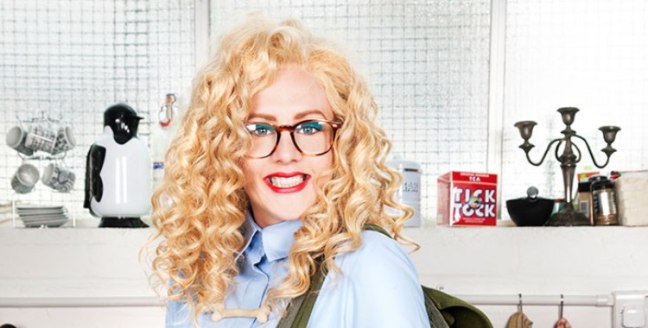
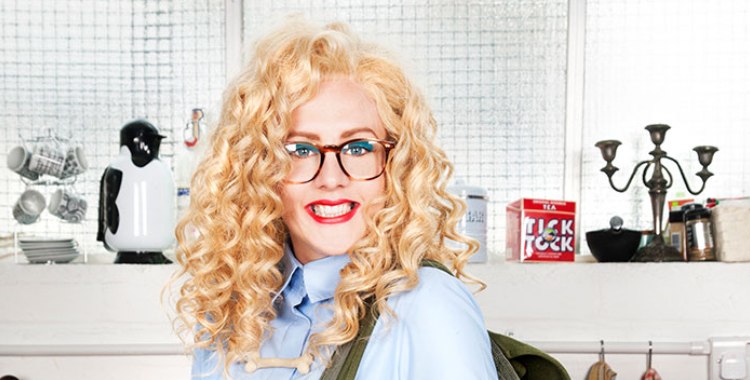
Dreamed up by Taylor and brought to life by her aunt, Kimmings’ new alter ego is a pop star created with a child, for children. Catherine Bennett – CB to her fans – is a dinosaur-loving, bike-riding, tuna pasta-eating hero who squeezes in a pop career around working in a museum as a palaeontologist. As Taylor explains, it was important to make CB “very different” to the female celebrities children usually see. Where most stars straighten their hair, CB wears hers defiantly curly. While other singers opt to bare their flesh, CB’s skirts are kept firmly below the knee.

But, like all pop stars, Catherine Bennett wants to be famous. Kimmings repeatedly refers to the project as “the fame experiment”, approaching it with all the hope and mischief of a kid with a chemistry set. To help Bennett hit the big time, Kimmings has assembled a true pop-star entourage: real-life makeup artists who have worked with Girls Aloud, i-D magazine stylists and a PR company. The team have offered their expertise to turn Catherine Bennett into a viable superstar, giving her the best possible shot at fame. “I just copied what they did with real pop stars,” Kimmings says, noting the enthusiasm and generosity she has met from those in the industry – many of whom feel just as disillusioned about how the system works.

Catherine Bennett’s successes so far include recording two music videos, closing the Children’s Media Conference in Sheffield in July and appearing as part of Yoko Ono’s Meltdown festival at the Southbank Centre in London. For her to be considered truly famous, however, Taylor has decided she needs to achieve a series of “fame aims”, including reaching a million hits on YouTube and making three celebrity friends. But the ultimate target, Kimmings adds, is to spawn a copycat.

While it might be said that the project’s fixation on fame runs the risk of reinforcing dominant definitions of success, it is important to Kimmings and Taylor that their creation makes her mark. If CB’s influence can be seen elsewhere, says Kimmings, the duo will know that they have “changed a bigger thing”.

The theatre show, which debuted as a work-in-progress at the Almeida festival in London ahead of its run in Edinburgh, is rejecting the “show and tell” format of Kimmings’ previous fringe successes, Sex Idiot and 7 Day Drunk, which dwelt, respectively, on Kimmings’ acquisition of an STI and her problematic relationship with booze. Instead, Kimmings is adopting a more “abstract” and “fantasy-based” approach, taking inspiration from the aesthetic of shows such as Game of Thrones to tell a coming-of-age narrative with a twist. “There’s quite a lot of symbolism,” Kimmings says, “but hopefully not in a cheesy way, hopefully in a cool way.” In the show, she and her niece appear together on stage to explore the darker side of growing up, from inappropriate dance routines to internet violence. The version I see is still being developed, but you can expect fake armour and a healthy amount of leaping around.

After Edinburgh, the show will tour until the end of 2014, while the mission to meet the fame aims continues. By the time Kimmings says goodbye to Bennett, she would like “just the tiniest of shifts in the brains of loads of children, or just a couple more cool representations of feminist women in the media”.

Kimmings is realistic about what she and Taylor are up against, but she remains resolutely optimistic. “I’ve got this blind hope that it’s going to happen,” she smiles, making it clear that this latest show is not about to let audiences off the hook. As Taylor adds cheerfully: “It’s a bit like being kicked in the stomach.”

Hunt & Darton Cafe

hunt-and-darton-cafe-0242-photo-christa-holka-sml-1-lst118427

Originally written for The List.

Go looking for a snack in Edinburgh city centre during August and you might just stumble upon some unexpected art. For a second year, live art duo Jenny Hunt and Holly Darton are offering festival-goers food for the stomach and the eyes at the Hunt & Darton Café, their unique pop-up installation on St Mary’s Street.

The idea behind it, Darton explains, was that ‘a passerby might just come in wanting a simple cup of tea and a cake and before they knew it they were involved in the installation’. The café first opened in Cambridge in April 2012 as part of the Cultural Olympiad, and has since visited Edinburgh and East London. The pop-up venue will be back at the Fringe this year, offering the addition of a bar in the evenings and an expanded programme of performances.

‘It became much more political than we realised,’ says Hunt, describing how the café unexpectedly transformed into an alternative, artist-led venue on the Fringe. In 2012, the pair was amazed by the huge response from artists looking for somewhere new to present their work. This year, that demand has been satisfied with a varied evening line-up, which Hunt and Darton hope that they are ‘framing slightly differently by it belonging to the café’.

As well as ‘shamelessly’ programming themselves, the pair have invited shows such as Chris Dobrowolski’s performance lecture All Roads Lead to Rome and Richard DeDomenici’s Popaganda, a piece that’s ‘very much about the now and popular culture’. But the art is by no means confined to the performances.

‘We say that every element of the café is art,’ Darton explains. ‘There are never any paintings on the wall or anything, because we don’t want people to be like – that’s the art!’ So the waiter serving you might be a performer, while everything down to the salt and pepper shakers has been carefully designed. Even the menu is something of a statement.

‘We thought quite long and hard about how creative we wanted the menu to be,’ Hunt admits, explaining that they eventually settled on an aesthetic that reflects their personalities. ‘We’re both born in the 80s and a lot of it references our childhoods,’ says Hunt, while Darton chips in to describe it as ‘comical, performative and kitsch’. Popular dishes include Battenberg cake, bowls of Coco Pops and their signature roast dinner sandwich.

Hunt and Darton describe Edinburgh as ‘a bit more in-your-face’ than the other cities their pop-up café has visited, and they already have plans to make it even more animated this year. As well as the popular return of ‘Christmas Day’ on 25 August, there are other days themed with tongue very much in cheek, including Austerity Day and Health and Safety Day. As Hunt warns, however, visitors have to be prepared to get involved: ‘We really like allowing our customers to perform as much as we perform.’

Kate Tempest

Kate-Tempest-02-Katherine-Leedale

Originally written for Exeunt.

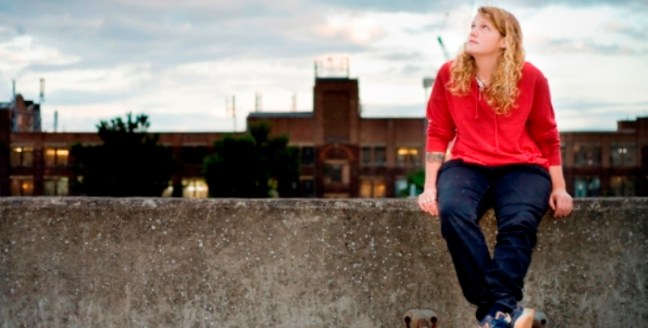
When Kate Tempest takes to the stage to perform Brand New Ancients, audiences are offered a transformation. As she smiles a few words of welcome, the poet and performer is charmingly awkward, shy even. But from the moment she launches herself headfirst into her narrative, she is suddenly electric. Tempest is a shape-shifter; a small, unassuming figure in jeans and T-shirt, capable of making the air crackle. Ordinary and extraordinary all at once – just like the characters whose stories she so compassionately tells.

Brand New Ancients is all about looking at people differently. Shifting the focus of mythical narratives from unreachable gods in the sky to the ordinary individuals we walk past every day, Tempest asks her audience to see “real heroes in really normal people”. Her gods are at the bar and in the betting shop, smoking a fag in the street or eating a kebab after a night out. Fighting the false idols of manufactured fame and fleeting celebrity, Tempest argues that everyone is worth our attention.

“This thing about noticing people …” Tempest trails off during our phone conversation, pausing in search of the right words. “You walk around among people all the time without really noticing that they’re other human beings. It blows my head off every time I go anywhere; just looking at people, taking a minute to slow down a bit.”

In keeping with this focus on people, Tempest explains that it was the characters in Brand New Ancients who came to her first, with the form of the piece following as she wrote it. “I’m quite used to thinking about what it is now as a finished piece, but right back at the beginning I don’t think I quite had a handle on knowing what I wanted it to be,” she says. “I just had all these loose narrative threads about these characters.”

These threads eventually became the interweaved stories of two families, whose tale Tempest tells through a fusion of storytelling, poetry and rap. She explains that the finished piece was unlike anything she had done before and is in some ways her most ambitious show to date, featuring the longest sustained narrative and mixing a wide range of artistic influences. In a masterstroke, Tempest’s captivating performance is also accompanied by a soaring live score composed by Nell Catchpole, allowing wordless pauses for “your brain to recover from that onslaught and let the music do the talking”.

Given all these different, overlapping elements to her work, it is almost impossible to pin Tempest down to one genre. While the poetry world has recognised Brand New Ancients with the Ted Hughes Award, the inclusion of the show in the Traverse Theatre’s programme during the Edinburgh Fringe – where it is appearing as part of the British Council Showcase – would also seem to cement Tempest’s association with theatre. It was only last year that Tempest wrote her first play, Wasted, at the same time as continuing to make work by herself and with her band Sound of Rum. Speaking about her experimentation with different art forms, Tempest explains, “I’m now starting to have an idea and be able to choose whether that idea is a story or a play or a rap or a novel.”

The thought of not having a stab at new genres when the opportunity arises seems to be one that has not occurred to Tempest. And when it comes to the risk of failure, her attitude is remarkably relaxed. “Until you’ve got something really wrong you can’t get anything really right,” she reasons. “You’re not quite engaging with the decisions you make unless you’ve made a really bad one.” There’s also a steely streak of determination to Tempest’s character and a formidable work ethic beneath her laid-back persona. She’s particularly emphatic about the need to be constantly moving out of her comfort zone: “Push yourself, do something that’s hard work, do something you’re petrified of.”

It’s certainly a mantra that Tempest has lived by in recent years. As well as continuing to write for theatre, she tells me that she has just finished the first draft of a novel, at the same time as making a new record. And her latest project, from which she is taking a break when we chat, is a musical. Even Tempest sounds a little surprised about that one. “It’s very different,” she says, quickly adding, “and hopefully not shit. That’s all we can ask of any of it – please don’t let this be the thing that’s shit.”

For all the variety in her work, however, Tempest is dismissive of the idea that she might be innovating or crossing boundaries. “It is what it is because it’s what I’ve been doing,” she says simply. “I’ve read novels all my life and I’ve listened to rap music all my life and I love being told stories and I love the people in the place that I’m from, so it’s just very natural; of course it happens like this.”

At the heart of it all is an overwhelming love for stories. Tempest talks with enthusiasm about discovering her characters, about the stories that she and her family and friends are always telling one another, and about her recent trip to a writers’ festival in Sydney, where she met fellow writer and “the most amazing storyteller” Daniel Morden. “There’s just something that I react to, which is the narrator,” she attempts to explain her belief in the power of storytelling. “It’s comforting and it’s like the ultimate form of trust; trusting somebody that they’re not going to lie to you.”

“Here’s a story that Daniel Morden told me, right,” Tempest suddenly bursts out excitedly, abandoning the point she is halfway through making. She recalls a simple but beautifully told narrative about a visit that Truth pays to a town where no one will listen to him. After a few days, Tempest continues, a stranger arrives dressed in extravagant clothes and the townspeople all gather round him to hear what he has to say. When Truth asks the stranger what his secret is, he replies that he is clothed in stories, because “the naked truth is too much for people to bear”.

Falling into her distinctive rhythm, Tempest concludes: “So from that time to this, Truth has gone around dressed in the clothes of stories, and it’s easier for people to hear about themselves.” It feels like a fitting philosophy for the invention, enthusiasm and compassion of Tempest’s work. In the end, it’s all just stories.

Photo: Katherine Leedale.