No Quarter, Royal Court Theatre

no-quarter

Originally written for Exeunt.

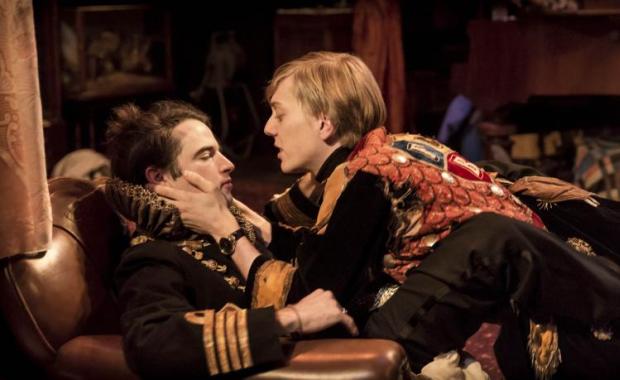
Ever since J.M. Barrie first gave us the boy who never grew up, Peter Pan figures have consistently captured the imagination. Robin, the damaged, boyish figure at the centre of Polly Stenham’s new play, is a direct descendant of this tradition, a self-declared “landed gypsy” whose not so magical but no less mythical Neverland is an old country house populated with faded rugs and creaking suits of armour.

Tracing a recurring theme in Stenham’s work, Robin’s isolated kingdom is a world dominated in turn by the suffocating presence and crippling absence of an intoxicating, unstable parent. His mother, wild, untamed novelist Lily, has brought up her youngest son in rural isolation, schooling him at home and feeding him on a diet of nature and art. Horrified by the glowing smartphones and information onslaught that he finds in London, the musically gifted Robin has returned home, drink and drugs in tow, to a childhood paradise that is being steadily snatched away from him. In this world of teetering privilege, property, land and identity are all inextricably wound up with one another, as the fight for a threatened way of relating to the world becomes inseparable from a desperate battle to hold onto the family home.

For all the domestic tumult and personal pain, however,No Quarter seems also to chant a eulogy for Britain, for a green but fading land of wild stags and lost boys, for a fled and empty mythology. A Jerusalem for the bare-footed, bohemian upper classes, there is a mingled air of both scorn and mourning for a way of living that was never really any more than a pretty story. Like the stuffed animals that clutter Tom Scutt’s meticulously detailed set – a haunting, gloomy shrine to taxidermy – this hermetically sealed rustic utopia is simply a mirage, death dressed up in the feathers of life. Every detail of Jeremy Herrin’s production hints at the same sense of slowly shattering illusion, right down to the dressing-up chest and the repeated use of Eurythmics’ ‘Sweet Dreams’; all an ephemeral reverie, an alluring narrative of a way of life and a nation that is drawing inexorably to its close.

Delicately linked to this atmosphere of illusion, there is also an intriguingly self-reflexive note to a piece of art that is essentially about artists. In the opinion of Robin’s elder brother Oliver, a politician who has fled the chaotically creative nest, caring only about art is just another way of caring about oneself. This immediately invites reflection on the potentially indulgent nature of what we are observing, a comment on the world that faces accusations of being just as futile and self-serving as Robin’s petulant hedonism. At times Stenham seems to conspicuously revel in her language, breaking the spell of the action with long and often beguiling speeches on the state of the world beyond these four walls; Herrin and actor Tom Sturridge give Robin as much bohemian swagger and jagged broken edges as the role can contain, crafting a young Rooster Byron for the crumbling halls of privilege; Scutt’s design, a hoarder’s heaven, is a lesson in excess.

Yet Robin – who for all his self-absorption and glaring faults remains the fiercely beating heart of the piece, particularly as brilliantly realised in the wiry, charismatic figure of Sturridge – strikes a blow against such charges. Making things, he protests, is the opposite of death; a way of revolting against the ugliness of the world. This argument recalls Simon Stephens’ observation that, however bleak the content, making theatre is an essentially optimistic act – an act in which this particular production is ultimately engaged. While the piece never quite seems to settle on either Oliver’s or Robin’s way of looking at the world, the final chord that it strikes is, despite everything, a mutedly hopeful one. Its vision of today might be dark and muddled, but it frames the receding myths of the past with a hint at the possibility of a better future.

Downloading Drama

Untitled

Originally written for Prompt Magazine.

“In the spirit of trying to capture something, you’re trying not to affect or change it.” These words from Digital Theatre’s co-founder Robert Delamere are something of a manifesto for the company, which has been attempting to faithfully capture the theatrical experience on film since 2009. Through its online library of downloadable recordings, Digital Theatre offers audiences the opportunity to engage with productions without needing to be in the same room – or even the same country – as the performers on stage. The initial aim, as Delamere and founding partner Tom Shaw tell me, was to capture live performance in the best way possible.

“It had been done before, but usually very poorly,” Delamere says, his frustration palpable. Shaw agrees, observing that video recordings of theatre often insert a damaging distance between viewer and performance, with all the action taking place “over there” and being filmed by just one or two cameras. The solution that Delamere and Shaw applied to this problem was to bring film language into the theatre, using multiple cameras and shots to create a recording that they claim is “a very true representation of the performance”.

These questions of proximity, quality and fidelity to the live experience are ones that have dogged recent developments of videoing techniques in British theatre. Inspired by the success of the Metropolitan Opera’s use of live-streaming, which it first launched in 2006, over the last few years the recording of performances has become more than just a matter of archival documentation. Increasingly, theatres and companies are viewing video as a vehicle for reaching and expanding audiences. How to grow these audiences without compromising the quality of the content, however, has proved to be a persistent issue.

“You’re trying to capture the connection between audience and performer,” Delamere explains, identifying the central difficulty that video recording faces. “There is something very tangible and alive about that.” Alongside Digital Theatre’s application of film language, a process of discussion and collaboration with the creative teams involved in the productions they are filming has been key to the way they have approached this difficulty. “I think if you address something by working with the intentions of the performers and the whole creative team, you can’t exactly replicate it, but you can get quite close to the spirit of it,” Shaw suggests.

I receive a similar response from George Bruell, Head of Commercial Development at Glyndebourne. The Festival has been among the most forward looking performing arts organisations in this area, having first streamed its operas live to cinema audiences back in 2007. In 2013 it will be streaming the entire Festival for the first time, making this content available both in cinemas and online through the Guardian website. For Glyndebourne, quality is everything.

“It’s very easy, even if you’ve got the best quality material on stage, to not do justice to it unless you’ve got the best people filming it and it’s done in a collaborative way with the creative team,” says Bruell, placing a heavy emphasis on artistic collaboration. Decisions about which operas to film will be made months in advance, he tells me, and the teams filming the performances will be involved throughout the rehearsal process. While Bruell identifies audience growth as a major impetus behind Glyndebourne’s decision to stream its operas, he asserts that this is “secondary to the quality of the experience”.

Assessing whether the audience growth that is at the heart of these projects has actually been achieved forms a large part of their ongoing development. While the audience research currently available is limited, the numbers seem to suggest that an audience is there and that it is expanding. Digital Theatre, for instance, records between 50,000 and 60,000 visitors to its website each month, while Glyndebourne’s 2012 season was viewed online by over 100,000 people through the Guardian website. Another significant player in this field is National Theatre Live, which at the beginning of its fourth season of live cinema streamings boasted a global audience of one million who had seen its broadcasts.

Other than total viewing figures, the audience insight that these companies have managed to gain is largely anecdotal, but the early signs are encouraging. Delamere and Shaw are insistent that there is an “amazing appetite” for the content that Digital Theatre is providing, speaking of the many emails they have received from users of the site. Glyndebourne, meanwhile, has found that audiences are just as keen as the Festival organisers to authentically replicate the live experience. Bruell recalls one particularly memorable photograph sent in by an audience member showing a table set for two with champagne and candles in front of a laptop playing the live opera broadcast. “Whoever sent in that picture had, in their own little way, been trying to recapture some of the magic they’d be getting at Glyndebourne.”

Part of the “magic” that Bruell talks about also comes down to the choice of material to live stream or make available to download. As he explains, “a lot of thought goes into the make-up of the Festival; our artistic colleagues are thinking about the balance and mix, so that people coming to Glyndebourne can have a choice between different periods of history or different styles of production”. This process of selection is no different for online or cinema audiences, and for the 2013 Festival a large part of the artistic consideration has involved selecting the range of operas with these audiences in mind as much as those physically attending at Glyndebourne.

Similarly, the choice of productions to film and make available formed a major part of the early decision making behind Digital Theatre. “We were very keen to ensure that what we were doing was a mirror of the living theatre,” says Delamere, “that it wasn’t just the most commercial piece of work out there or what was coming from the biggest producing houses.” In line with this aim, their selection of recordings range from the acclaimed West End production of All My Sons to Clare Bayley’s The Container, a claustrophobic performance for an audience of just 28 inside a shipping container. “We’ve talked to a lot of producing houses all across the UK trying to find the right kind of content,” Delamere continues, describing it as “a very egalitarian principle”.

Throughout this decision making process, Digital Theatre’s relationships with theatres and companies have been key to its strategy. Shaw emphasises that “from the very beginning it was going to be built in conjunction with theatres and in conjunction with the industry”. This is reflected in the company’s initial range of partners, which included the Royal Shakespeare Company, the Royal Court and the English Touring Theatre. “It’s about trust really,” Shaw continues, “it’s about them letting us into their space. It’s very much a collaboration.”

Digital Theatre is now working to extend these relationships, as it provides a platform for quality content from theatres such as Shakespeare’s Globe through its new Collections catalogue and begins to seek out more collaborative working models. “We have started to go into co-producing partnerships where there is some sort of investment from the producing house,” Delamere explains, suggesting that such an approach creates “a potentially more interesting deal and a more engaged experience” for theatres.

For now, these developments primarily offer theatres an opportunity in terms of audience reach rather than in terms of profitability. National Theatre Live, for example, is just beginning to turn a profit on some of its broadcasts after substantial internal investment alongside funding and sponsorship from sources such as the Arts Council, NESTA and Aviva. Where the potential to make a profit from these ventures might lie, however, is in the growth of live as well as online audiences. Far from the cannibalisation of live theatre that was feared might come as a consequence of digital video streaming, both Digital Theatre and Glyndebourne point to evidence that the availability of this material online and in cinemas is in fact attracting new audiences to experience the productions first-hand.

Digital Theatre has come to realise that, rather than thinking of video recording as a substitution for or threat to theatre and live performance, it might occupy a different category entirely. “One of the things we asked was ‘what is this?’” says Shaw, speaking about the audience research they have conducted at recent screenings of their recordings. “Is it film or is it theatre? The majority of people said it’s neither, it’s something in between.”

Although this new category may widen access and attract new audiences, none of the emerging players in this field are suggesting that the opportunities afforded by digital are about to supplant traditional theatregoing. As Bruell is keen to emphasise, whatever the developments enabled in this area by advances in technology, it is never going to be a true substitute for the live experience. “It will always play second string to the experience of the auditorium.”
Jack Thorne

Jack Thorne 1 - high res

Originally written for The Stage.

One of the first things to emerge from conversation with Jack Thorne is his compulsion to multitask. “If I’m not working on at least two scripts at once then I stop sleeping,” the playwright and screenwriter tells me, his voice charged with a jittery energy that makes this easy to believe. The circumstances of our interview are testament to this need to always have more than one project on the go: Thorne is speaking to me over the phone from the set of his latest film in Majorca, while he prepares for the start of rehearsals for his new play.

“If I’m working on just one thing I’m not a good writer,” he says by way of explanation. “When I run into problems, the scene that won’t end or the element of the story that won’t make sense, I’ll just spend a week walking around my house. To be able to swap onto another project and go ‘I know how this works’ saves me every time.”

Multitasking has also informed Thorne’s diverse writing career, which spans from television dramas such as This is England and The Fades, both of which won him BAFTAs, to a recent adaptation of Friedrich Dürrenmatt’s The Physicists for the Donmar Warehouse. “There was no deliberate plan,” Thorne admits of his career path, “it all just sort of tumbled out.”

It is almost impossible to discuss Thorne’s career trajectory without mention of the small phenomenon of Skins, for which he was one of first writers to be recruited by creators Bryan Elsley and Jamie Brittain. While Thorne is immensely grateful for this experience, describing Elsley as “generous and brilliant”, the show’s popularity inevitably meant that it became attached to his professional identity. “There was a while when it was just Jack Thorne, open brackets, Skins, close brackets,” he laughs.

Thorne has since been able to break away from this exclusive association, partly through screenwriting departures, such as his segue into the supernatural genre with BBC Three series The Fades, and partly through his work for the stage. Although one of his earliest writing experiences was the Royal Court Young Writers’ Programme, Thorne continues to find theatre the toughest of the mediums he writes in: “I find that if I’ve been writing a lot for telly or film and then I try to write for the stage I really can’t do it, I can’t remember how it works.”

This difficulty was intensified during the writing of his latest play, Mydidae, a commission by new writing company DryWrite that issued Thorne with a peculiarly specific demand. “They just said we want to do a one act play in a bathroom, what have you got?” The result, premiering at the Soho Theatre in December, morphed into a full-length two hander that Thorne found “somehow liberating” to write. As he speaks about the challenge of adapting Dürrenmatt – “the extraordinary thing is that the more you unpick him the less you realise you can unpick him” – and admires Alan Ayckbourn’s tactic of setting himself rules before writing, Thorne creates the impression of a writer who thrives under creative constraints.

This makes his latest project with DryWrite a perfect fit. As a writer acquainted with film and television, which offer the constant possibility of cutting away to sustain narrative dynamism, the charge to confine a whole play to any one room is a challenge for Thorne, but the bathroom is a particularly tricky space due to its inherent echoes of loneliness. “It’s a place you go to on your own,” Thorne says, “you don’t really share it”. To negotiate this difficulty, he has filled the space with just two people, a couple in the throes of a nightmarish day whose relationship “builds to a pitch”.

Alongside the specificity of the setting, Mydidae has also offered Thorne the opportunity to write for a particular performer, DryWrite’s co-artistic director Phoebe Waller-Bridge. Describing that process, Thorne speaks of Waller-Bridge’s “rhythm”, a word that repeatedly peppers his understanding of writing for theatre. “She’s not quite Christopher Walken, with that level of distinctive rhythm, but there’s a sort of joy to how she talks and trying to capture that rhythm was a great thing.”

This habit of speaking about theatre like a musical score suggests a certain sensitivity to the idiosyncrasies of playwriting, a sensitivity perhaps informed by the contrast with his writing for the screen. This sensitivity is contradicted, however, by a confessed inability to think about an audience’s reaction while writing. Recalling an interview with screenwriter Melissa Mathison, Thorne mentions her working relationship with Steven Spielberg, who would constantly be asking her about the experience of the audience. “That’s why he’s such a genius,” says Thorne with almost boyish admiration. “I don’t have that ability, I don’t think about an audience reaction. Instead it’s what I’m thinking, what I can see, what that feels like.”

It’s a quiet undermining of his way of working that is typical of Thorne’s tone throughout our discussion. Despite his clutch of writing awards and his current foray into film with an adaptation of Nick Hornby’s novel A Long Way Down, the writer often comes across as tentative, grateful for but slightly baffled by his own success. Ultimately, Thorne suggests, his fierce work ethic is simply a way of restoring self-esteem.

“Some writers are blessed with real confidence in what they do and how they do it. I don’t really have that, so I need to be able to restore my confidence at regular intervals – almost daily,” he says. As well as fighting insomnia, “having two projects on the go at once is a way of doing that.”

Telling Stories: The Year in Theatre

_64849962_endofworld624_thinkstock

Originally written for Exeunt.

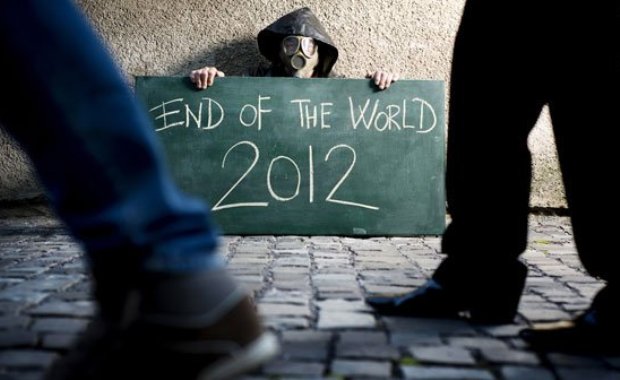
As anarchically demonstrated by Forced Entertainment in The Coming Storm, stories are fragile, false and shifting objects. In the hands of the frantically competing performers, these narratives falter, clash and implode, truncated by interruption upon interruption. Yet still we insist on telling them. Any narrative of the year in theatre is condemned to the same failings; it is inevitably partial – both in the sense of being incomplete and in the sense of being subject to an individual bias – and its trends are essentially arbitrary, collapsing in upon themselves. And still, stubbornly, the fashion persists.

While my own personal look back at the last twelve months is just that – personal – there is a more widely acknowledged feeling that 2012 has found itself situated at a cultural tipping point, though whether the shifts that have been felt this year do rock us over that precipice into whatever might lie below is still to be seen. It is a year in which, driven largely by the Olympic effect, different theatrical cultures from around the globe have converged and collided, in which spectacle has been celebrated and questioned, in which theatremakers have reached for new vocabularies to explore political themes in an extraordinary and often farcical climate. It has felt like a year of small tectonic shifts, but maybe that’s just me.

The central point around which my own theatregoing year has pivoted is the small phenomenon of Three Kingdoms, a production in which global politics, cultural identity and aesthetic virtuosity all violently and thrillingly met. It was here that I first felt the tipping point, as both British theatre and British theatre criticism met with a challenge that could potentially mutate their future form. In this hallucinatory, boundary-crossing tour through a repulsive yet visually dazzling web of human trafficking and capitalist exploitation, understandings of Europe were stretched and pummelled, while audiences became grubbily, voyeuristically complicit with the crimes being depicted. This was watching as implicit consent, spectacle as political.

Spectacle itself, most vividly conjured by the potent emotive force of the Olympic and Paralympic Opening Ceremonies, felt partly reconfigured by the forms it found in the past year. Eschewing the traditional national narrative, Danny Boyle’s inclusive – if not entirely unproblematic – variation on patriotic spectacle offered an appealing vision of a cosmopolitan Britain. Elsewhere, the idea of theatrical extravagance was startlingly realised through language in Gatz’s breathtaking indulgence in prose; the already spectacular space of the Tate Modern’s Turbine Hall morphed from canvas to stage as Tino Sehgal’s mesmeric These Associations took up its fleeting, dynamic residence; and most recently, Shunt delighted and frustrated audiences in equal measure with the offer of a baffling spectacle in which they were passively trapped, providing a fitting if disturbing metaphor for the state of the nation.

At the opposite end of the theatrical scale, retreats to the simple or intimate offered up equally striking visions of the world. Ryan Van Winkle’s Red, Like Our Room Used to Feel, a gentle one-on-one poetry performance,provided a nostalgia-tinted pause at both the Edinburgh Fringe and the Battersea Arts Centre, while a similar interlude from Fergus Evans punctuated my hectic visit to this year’s Pulse Festival. Rewinding to the beginning of the year, one of the unexpected triumphs of the London fringe was Greenhouse Theatre Company’s visceral, emotionally skewering revival of Mercury Fur, administering an electric jolt of theatrical power each night in the tiny space of the Old Red Lion, transformed into a claustrophobic dystopian wasteland.

The small also fared well in Edinburgh, where many of the most memorable shows were two handers or solo offerings. These included an impressive pair of plays from Luke Barnes, the Pro Plus-fuelled Chapel Street and the raw rage of Bottleneck, and Charlotte Josephine’s muscular yet moving Bitch Boxer. Unexpectedly, one of the most powerful episodes of my Fringe experience didn’t take place in a theatre space at all, but in the bar of the Traverse Theatre, where I was almost reduced to tears in the mid-morning by Rosie Wyatt’s unembellished, barely rehearsed reading of Spine, Clara Brennan’s short response for the latest incarnation of Theatre Uncut – an unshowy but quietly extraordinary pairing of script and performer.

While a focus on the individual threatens to elide the multiple arts involved in theatre-making, the virtuosic performance was a recurring feature of my year. Scott Shepherd turned recall into an art with his seemingly effortless memorising of the entirety of The Great Gatsby, while Jim Fletcher followed up his unobtrusive turn as Gatsby with an astonishing performance of Tim Etchells’ free falling monologue Sight is the Sense That Dying People Tend to Lose First. The ever-compelling Lucy Ellinson repeatedly dazzled inTenetOh the HumanityA Thousand Shards of Glass and The Trojan WomenKate Tempest charged the air of the Council Chamber at BAC, conjuring modern day gods and kebab shop heroes; Hattie Morahan tapped out an increasingly frantic dance as Nora in the Young Vic’s new version of A Doll’s House. Eclipsing all of these, however, was the astounding Silvia Gallerano, a performer stripped literally and metaphorically bare inThe Shit, Cristian Ceresoli’s open wound of a monologue.

Performances are not short of recognition in both awards and annual round-ups, but one less celebrated component is design – an element with the potential not just to enable but also to excavate a production. Many have listed Constellations among their favourite plays of the year, but for me Tom Scutt’s beautiful design of clustered balloons – hinting at hope and fragility, floating possibilities and punctured moments – was the piece’s greatest strength. Likewise, Desire Under the Elms falls far short of my 2012 highlights, but I was utterly seduced by Ian MacNeil’s set design and the way it flirted with the coveted yet fragile nature of property, in much the same way that he subtly married the naturalistic and the conceptual in his revolving design for A Doll’s House. Mention too must go to Ene-Liis Semper for her visually stunning work on Three Kingdoms and, of course, those now iconic deer heads.

The space of the political within a theatre context was also, to an extent, redesigned. Storytelling, a form as old as humanity, was injected with not just the invigorating pulse of techno music but also with a vital shot of political impetus in Kieran Hurley’s Beats, a narrative of the 90s rave culture and an ode to the subversive power of the collective. Another surprising rendering of the political came courtesy of Greyscale in Tenet, an exploration of the radical in both mathematics and society that united the unlikely figures of Evariste Galois and Julian Assange. Questions about the ethics of historical narratives were brought into painful collision with current issues around disability and political correctness in Back to Back Theatre’s fearlessly provocative Ganesh versus the Third Reich, while in an inversion of the political sphere and its rhetoric of the public, In the Republic of Happiness brings the present cult of the individual under the satirical microscope.

In attempting to make a list of the productions that stood out for me over the past twelve months, memory upon memory soon came tumbling from the fog. Those neglected above include Monkey Bars’ gently profound exploration of childhood experience; Headlong’s startlingly youthful revamp of Romeo and Juliet; the vodka-drenched anarchy of Benedict Andrews’ take on Chekhov in Three Sisters; the appropriately quiet but tender triptych of Making Noise Quietly at the Donmar Warehouse; the audio and visual inventiveness of Sound&Fury’s Going Dark; irresistibly playful, inclusive fun in The Good Neighbour at BAC; the tender father-son relationship poetically and often hilariously captured in I Heart Peterborough; fallible global narratives in What I Heard About the World; the baffling, divisive but somehow compelling clash of the Wooster Group and the RSC in Troilus and Cressida; the grit and glitter of Shivered, Philip Ridley’s fragmented and typically strange new offering; love, loss and hard drives in Tom Lyall’s Defrag.

It feels appropriate to end on a production from Camden People’s Theatre’s Futureshock season, a programme of work offering theatrical visions of what might be still to come. At this point in the narrative it’s customary to look forward, to offer predictions for the year ahead, but for now I’ll restrict myself to the past and present. After all, it’s always better to be surprised.

Hancock’s Half Hour – The Lost Episodes, White Bear Theatre

??????????

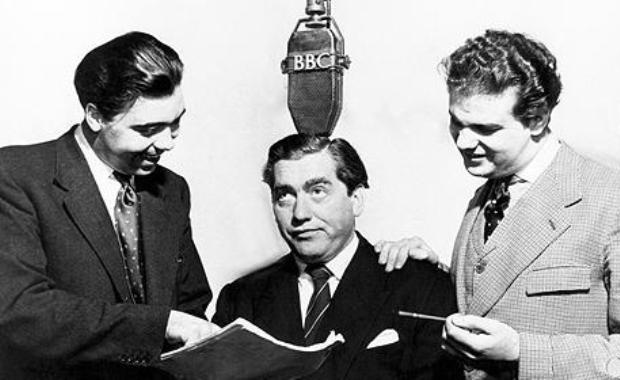
Robert Wilson spoke of his ideal theatre as a marriage of the silent film and the radio play – an odd artistic aspiration, perhaps, but one that appealingly harnesses the scope of imagination necessary in experiencing each of those mediums. There is something equally odd and yet fascinating about the staging of a radio play, where the imaginary scenes conjured by the interplay of voices and sound effects are collided with the overt artifice of the recording studio. It is this strange collision that audiences are offered in the first of two staged episodes of Hancock’s Half Hour, providing a dusty but quaintly endearing trip back in time.

Reviving two of Ray Galton and Alan Simpson’s scripts from the 1950s and 60s comedy, Hambledon Productions contrast one of the early radio episodes with a later episode written for television, both of which were thought to be lost until the original scripts were retrieved from Galton’s cellar. The pair of standalone, unrelated plot lines are pure, predictable early sitcom; the unlucky protagonist first unsuccessfully attempts to take a fortnight’s holiday in Brighton in the depths of winter, then is thwarted in his aim to hire a housekeeper. It is gentle, dimly familiar and inevitably of its time, conjuring an age of comedy that now seems as grainy as the pictures it was first broadcast in.

With this qualification, however, and whether or not the slightly creaking comedy is to everyone’s taste, the piece undeniably succeeds in its own aims. John Hewer uncannily captures the comedy persona of Tony Hancock, down to every last grimace and sigh, while the production around him might as well be a time capsule. Having taken the leading role in the West End production of Round the Horne Revisited, director Jonathan Rigby has previous experience with this museum-like process of re-assembling, creating a meticulous portrait of a now extinct style of comedy. While it neglects to interrogate its material, if simply regarded as faithful yet cheeky homage the production is difficult to fault.

Although the television episode – complete with grinning asides and carefully observed set – elicits more laughs from the audience, it is the radio recording that most successfully entertains the museum-specimen fascination of this rewinding of time. Clutching scripts and standing at mics, the cast exchange little looks and playfully half act out the scenes, flirting with the layers of imagination and theatricality at play. This never moves beyond flirtation into a full excavation of the form, however, content for the most part to re-enact rather than question. Like Christmas television repeats played to the belly-laughing delight of slightly inebriated grandparents, Hancock’s Half Hour is nostalgia several times distilled; smile-kindling and comforting, but departing with the faintest trace of disappointment.