The Judas Kiss, Richmond Theatre

In representation, and thus in representational theatre, there’s always a danger of not living up to the original. It’s a danger that is explicitly noted by playwright David Hare in the programme for The Judas Kiss, his play about two pivotal moments in the life of Oscar Wilde. Answering a question about the daunting task of putting words in the mouth of a man as famous for his witticisms as his literature, Hare refutes the notion of “imitation”, comparing theatre to painting and quoting Picasso’s response to a complaint that his portraits were not lifelike enough: “Oh yes, and how many people do you know who are made of pigment, exist in one plane and can be hung on a wall?”

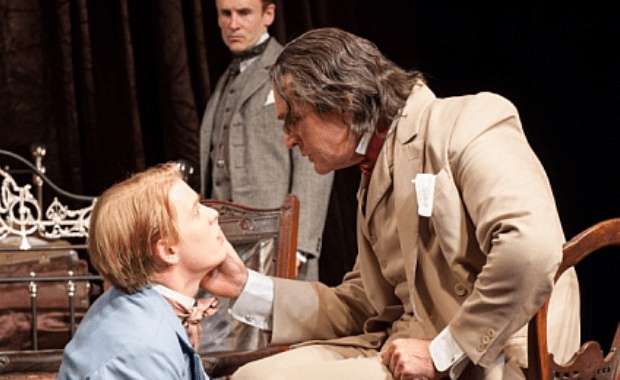
The approach taken by Hare and by this production in particular, however, is no Picasso. All the facial features are firmly in place, if a little manipulated in the case of Rupert Everett’s Wilde, creating a flat, underwhelming symmetry. The production’s portrayal of Wilde is all too literal, seemingly taking more time over his physical nuances than his emotional ones. Everett is rendered almost unrecognisable, obscured beneath a long mop of hair, liberally applied make-up and padded out clothing. But rather than uncannily evoking Wilde, this astute yet oddly clumsy attention to detail lends a cartoonish dimension to a role that, for all Hare’s protests, looks a lot like impersonation. Besides the risk of a disappointing replica, one of the other problematic idiosyncrasies of representation is that the closer the representation approaches to the real, the more glaring the gulf between the two.

The two biographical turning points on which Hare has chosen to focus are the lead-up to Wilde’s arrest for “indecency”, when he refused to take the opportunity to flee the country, and his time in Naples with Lord Alfred “Bosie” Douglas after his release from prison. Wisely avoiding any attempt at a comprehensive overview of Wilde’s life, these are precisely selected moments, moments seemingly characterised by stasis and apathy – qualities frequently attributed to Wilde by his friends and reflected in Everett’s almost constant anchoring to a chair – but in fact involving deeply revealing decisions on Wilde’s part. Ultimately, his failure to leave the country is framed not as an act of lethargy, but as an act of love and a stubborn refusal to bow to the hypocritical morality of the English aristocracy.

Class and nationality emerge as looming themes, each marking Wilde as an outsider just as much as his homosexuality. While Wilde is imprisoned, his brattish lover Bosie emerges largely unscathed thanks to the shield of his family and position, which will eventually, pragmatically outweigh his relationship with the writer. Perhaps picking up on these ideas of class and privilege, Dale Ferguson’s set, particularly in the first half at the Cadogan hotel, reeks of a dark, slightly ominous opulence. The stage, itself a suggestively funereal black, is swathed in reams of deep purple velvet. The effect is of luxurious claustrophobia, an almost oppressive vision of grandeur that seems to be reaching for a status that eludes it.

As the scene shifts to Naples, the dominant feature of the design is once again constituted by fabric, though this time it is white sheets that drape the relatively bare space. This backdrop, married with the many opportunities for male nudity, has the effect of evoking an almost Classical atmosphere, picking up on the script’s brief allusion to Ancient Greece. In this contrasting simplicity there is also something of the play’s Biblical reference point, with Wilde cast as the persecuted and finally betrayed Christ figure. This is in itself an intriguing upturning of our usual image of the writer, bringing dry wit and cynicism into direct conflict with generosity and a debilitating, almost adolescent love for Bosie, but the poignancy of this departure from biographical cliche struggles to achieve affect.

The affair between Wilde and Bosie, while sitting at the heart of the entire play, never feels fully excavated. Freddie Fox is an adept thrower of tantrums, pacing the stage with all the passionate petulance of a spoilt toddler, but aside from a hideous sense of entitlement we learn very little about this character who so captivated Wilde. The production’s few genuinely moving moments are prompted by the sacrifices Wilde makes out of love, but it is difficult to understand what caused him to fall so hard in the first place.

Alongside the seeming desire of Neil Armfield’s production to present us with an “authentic” (note the inverted commas) portrait of Wilde, the main problem that the piece encounters is a tension between the desire to tell two equally fascinating stories: the complex personal relationship between Bosie and Wilde and the many ramifications – for Victorian morality, for the literary landscape, for the gay community – of Wilde’s trial and imprisonment. Torn between both, the canny decision to limit this depiction to two specific chapters of Wilde’s life is rendered slightly futile by an attempt at breadth that fails to delve sufficiently into any of the competing concerns.

Small Acts

Originally written for Exeunt.

If global warming persists at its current rate and sea levels continue to rise, half of London might be underwater. There are maps available online outlining the potential damage; just type in your postcode and watch your neighbourhood disappear beneath the deluge.

This is just one of the grim facts alluded to throughout Platform’s operatic audio tourAnd While London Burns, created in 2006 in response to climate change and the complex, ubiquitous oil network that dominates the world’s financial markets. Earlier this week I belatedly traced this tour through the heart of the City, its skyscrapers appropriately garbed in an ominous cloak of fog that was distantly pierced by the Shard, that oddly apocalyptic splinter of steel and glass. Gazing up at buildings that had inexorably sprouted in the six years since the tour’s creation, it was hard to imagine a halt to the onward march of disaster that flooded through my earphones.

But the aim of And While London Burns is not despair. Its end point, or at least the end point that I’m told it would have reached if the audio file hadn’t hit a glitch as I stood awkwardly fiddling with my phone in the drizzle outside Lloyds, is one of action, of hope. Intersecting bleak facts with a deeply human impetus for change, the piece is delicately crafted for maximum emotional impact, making the reality of climate change powerfully felt without ever entirely eradicating an optimistic chink of light. We can still do something.

This immediately brought to mind the contrast with Ten Billion, a piece of theatre that I did not personally see but that was the subject of much conversation around the time it was showing at the Royal Court earlier this year. In essence a lecture given by scientist Stephen Emmott and placed on stage by Katie Mitchell, it was by all accounts an unflinching breakdown of how humanity, as a species, is fucked. In this vision of a future ravaged by environmental catastrophe and over-population, there is nothing to be done.

Although I’m not in any position to make judgements on the respective science behind these two pieces, they do throw up an interesting theatrical tension. Both pieces are, presumably, setting out with the intention of changing our outlook on the world in some way; And While London Burns is explicit about this aim, while it’s difficult to even read about the subject matter of Ten Billion without taking a rather blacker view of the future. The problem and source of tension, however, is the effect of this intended shift in outlook. Stepping out into Sloane Square or between the glass-fronted structures of the City, what do audiences take with them?

In the second of Chris Goode & Company’s Thompson’s Live podcasts, Artsadmin’s Judith Knight mused on just this problem. Is it better, she wondered, for theatre like Ten Billion to leave its audience with hope, however false, than to depart with incapacitating doom? The problem with being told you can do nothing is that it gives you licence to do just that. As Andrew Haydon put it in his review, there’s something “powerful and seductive” – even liberating – about the sheer nihilism of it all. No need to worry about changing our behaviour if it won’t make any difference.

And While London Burns might look our catastrophic future just as squarely in the face, but it also offers the possibility of action. Not only does it retain the promise of a small shred of hope, the very form of this piece of theatre makes it imperative for us to act in order for the piece to work. We are actors, in both the performative and real world senses of the word, made to navigate our way around the busy streets. In principle this necessity of small actions offers us belief in the fact that action on a larger scale is achievable, though in practice the difficulties of winding between human traffic and keeping in step with the audio instructions can be just as much of a obstruction to the piece as the physical obstacles that have sprung up since it was made.

While considering these questions of hope and action, another unlikely comparison presented itself. I was temporarily transported back to Battersea Arts Centre, where I spent Saturday afternoon gleefully exploring the building’s many nooks and crannies as part of interactive children’s show The Good Neighbour, a celebration of imagination, silliness and the capacity of humans to work together. An altogether different proposition, then, to either Ten Billion or And While London Burns.

Yet within the fun and games there is something distilled in this otherwise joyously silly piece of theatre that many more serious shows might take note of. In framing its frolics as an adventure, The Good Neighbour returns to its young participants, already so restricted in so many areas of life, the idea that the possibility of instigating action might lie within their power. Through the underestimated medium of play, it holds up an optimistic vision of human nature in which change is attainable as well as desirable. Unlike the distracting confusion of negotiating the suit-clogged alleyways of the City, a level of performativity that may be active but is more often than not frustrating, the gameplay here produces a sense of triumph and exhilaration.

Whether this exhilaration could be transposed onto a form of activist theatre is another question, and whether this would ultimately make a difference is an even bigger question. The extent to which theatre can inspire genuine political and social change is a well-traversed and still inconclusive debate. But if performance is to provoke action, surely the possibility of agency within the space in which it sets out its arguments is the first building block in the bridge to action beyond that space. To act, we must first believe that we are capable of action.

The Good Neighbour, Battersea Arts Centre

In a dim room draped with sheets, water steadily drips into dozens of half-filled jam jars, illuminated as if from within. This is the momentorium, where memories bleed from the architecture. It’s in this oddly magical space that the stuff of lives accumulates, a constant trickle of joy and excitement that the room’s keeper collects and orders with gentle fervour.

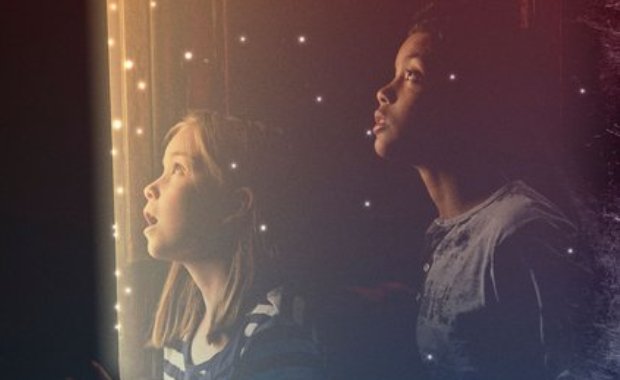
It’s a pause of gasp-inducing beauty, an enchanting lull in the gloriously silly pandemonium of the Battersea Arts Centre’s new children’s show. This one room among many, created by Kirsty Harris and Matthew Blake, is an exquisite reminder that art created for young eyes can be just as captivating and contemplative as its adult counterpart. Leading its participants through the labyrinthine corridors and hidden spaces of BAC, itself already a gorgeous if slightly crumbling-round-the-edges building,  the Young Adventurers strand of The Good Neighbour offers a peek into historical and fictional worlds, a journey that takes us into a series of carefully crafted scenarios.

The purpose of this romp around the building, an adventure aimed at children aged between 6 and 12 but one that should be prescribed for big kids of all ages (especially those with a streak of cynicism), is to retrieve the story of George Neighbour, a real inhabitant of Battersea at the beginning of the 20th century. Carved off into small groups, audience members are all handed this quest, to be undertaken with the rest of our team and with the help of a guide.

Each of the rooms contains clues, but they are also miniature theatrical scenarios in their own right. Sheila Ghelani’s piece asks us to participate in the simple, tender activity of wrapping a gift to give to a stranger, while the quivering branches of Ruth Paton’s tree seem to breathe with us as we lie on the floor and float on collective dreams. In Coney’s meeting room, the grey, grown-up solemnity of the agenda and the in-tray clashes with jokes told through stifled giggles. Asked what happiness feels like, I’m startled by the imagination and eloquence of the kids in the room, while I mentally fumble for hackneyed phrases.

What the piece is really best at is giving its young audience members the permission to be silly and creative and goofy without having to feel embarrassed. This is exemplified by Bryony Kimmings’ offering, a story about an exploding room that is really just a vehicle to free us of our inhibiting self-consciousness. Urged on by Kimmings’ flame-singed, glitter-decked figure, participants stage their own explosion, grotesquely contorting faces, limbs and voices in an eruption of silliness. The words “laughter is the best medicine”, written inside a butterfly-lined cabinet, are a fitting subtitle for the piece.

Messages of teamwork, inclusion and mutual support – quite literally being a good neighbour – are lightly threaded through the afternoon, but at its core it is a celebration of imagination, creativity and the sheer exhilaration of being silly. It’s a love letter to the undervalued power of play, both play as performance and play as game-playing, activities that are of course intrinsically linked. It is also something of a love letter to the beautiful space of BAC itself, a space as drenched in human history as the momentorium. In its myriad corridors, tattooed with the footsteps of the small and the not-so-small, past, present and future all meet in moments of laughter and community.

The Good Neighbour is at Battersea Arts Centre until 4th November. There are also two other journeys, one for under 5s and one for bigger explorers.

And in case you need proof that the kids enjoyed it as much as I did …

Elegy, Theatre503

elegy

Originally written for Time Out.

Doing good is a habit. So is doing evil. This is the lesson of the Iraqi schoolroom, where the unnamed narrator of Douglas Rintoul’s monologue for Transport Theatre witnesses a schoolmate being taught out of the habit of left-handedness. In this world, anything but conformity to the norm must be stamped out.

Based on recent real-life accounts of homophobic violence in Iraq, ‘Elegy’ attempts to return a voice to these others through the power of storytelling, acknowledging as it does the unreliability of narrative. The storyteller, a gay man in a nation where ‘liberation’ has only increased prejudice, delivers his tale in the third person. His narrative does not assume to speak for anyone in particular, and yet he speaks for everyone.

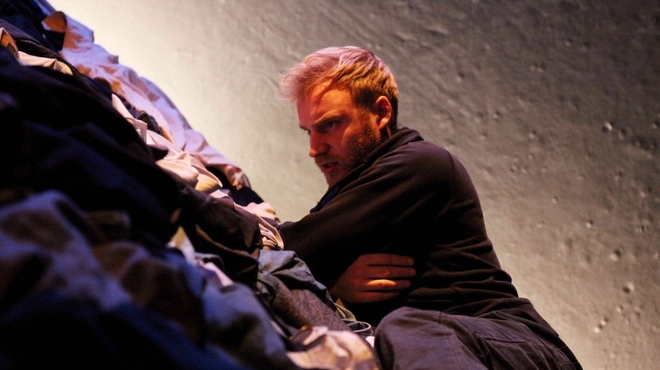
A knowingly incomplete tale of persecution and exile, ‘Elegy’ has been pieced together using various sources drawn from post-liberation Iraq. This patchwork process is reflected in the form, as Sam Phillips’ anguished speaker flits between memories that flicker like the fluorescent strip light hovering above him. The mound of discarded clothing in Hayley Grindle’s set has an archaeological quality, suggesting remnants of other refugees or victims of brutal murders, left behind or taken from them.

As an exposure of the horrors of homophobic killing and the dislocation of forced migration, ‘Elegy’ can only ever capture a limited snapshot. But it is a vivid one. The piece departs, aptly, still trapped in a refugee limbo – between nations, between memories, between fact and fiction.

Beautiful Burnout, Artsdepot

Originally written for Exeunt.

Three minutes. No more, no less. That’s the precise length of a round in professional boxing, a unit of time into which matches, training and Bryony Lavery’s punchy scenes are divided. It’s just enough time to dodge, feint and land the knockout blow. Shifting constantly from foot to foot, Lavery’s play explores the individual impact of a sport dominated by the swinging of the fist and the flash of the camera, an inherently performative spectacle that she reveals to be as much about control and discipline as it is about unbridled aggression.

This study of boxing takes as it object a small gym in Glasgow, where five would-be fighters, each with their own reasons to hit out, see the sport as a way out of the city and circumstances of their birth. Backed by a flickering bank of screens, these hungry, sparring youngsters are continually haunted by the future spectre of fame, their face on a television and their fists clenched around wads of cash. Laura Hopkins’ design places the performers on a raised platform that immediately recalls the boxing ring and that simultaneously holds them up for inspection, lifting them from the ground but not quite raising them up to the bright lights.

For a sport that bears striking if unlikely resemblances to dance – the uniting and separation of bodies, the swift lightness on the feet – Frantic Assembly’s treatment is a fitting and energetic one. Though sometimes lacking in verbal eloquence, through the language of movement the finely tuned bodies of the characters speak, a physical form of communication that is as central to the piece as the words of Lavery’s script. It is by way of this speech that these individuals come to define themselves; as the observing mother of one of the young boxers remarks, “it’s like there’s a smile in their bodies”. This physical language also carries into the use of Underworld’s music, a pulsing soundtrack that echoes both pounding heartbeat and the pounding ofpunches.

Rapid and pounding too is Lavery’s structure of short scenes and monologues, shifting restlessly from one to the next. While this approach keeps the audience on their toes as much as the tireless performers, the swift onwards movement can prevent the punches from being felt before the bell rings in the next round. The blows land, but they don’t always bruise. Any shortfall in the depth of the scenes, however, is compensated for with the sheer force of the performance, more than conjuring the sweat and determination of the ring.

Beneath this thrilling, muscular production there is a barely visible glint of rage at the injustice of a society in which one’s fists might be the only passport out of a dead end life – a rage smothered, like that of the protagonists, in precision and control. Despite the controversy that surrounds professional boxing, Beautiful Burnout embraces both its danger and its ecstasy, acknowledging how fighting can be an escape and a salvation as much as it has the power to destruct. Boxing is a dangerous sport, but so is life.