Shunt’s The Architects

architects-600x393

Originally written for Exeunt.

Shunt have always nurtured an unusual and striking relationship with space. From the theatre company’s initial base in Bethnal Green Arches to their residency in the vaults under London Bridge Station, the site of performance has been integral to their work.

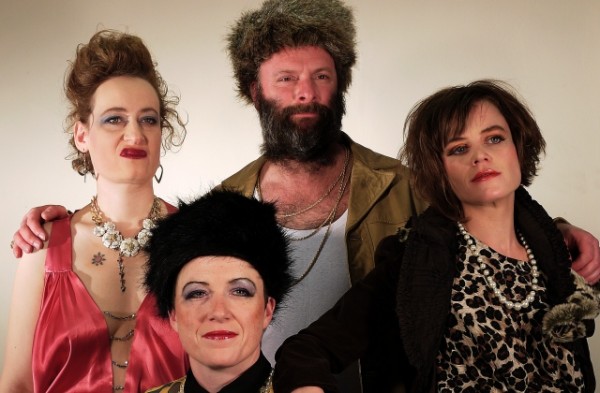
There is something deeply appropriate, then, about the title of Shunt’s new piece. The Architects, a disorientating riff on the Minotaur myth, is the first of their shows to be staged in a space that is not their own, but its name immediately conjures the role that the company have previously taken in constructing the environments in which audiences experience their work. Shunt embrace theatre as event, building entire worlds into which spectators are “immersed” – a term that has since become a fashionable and problematic tag for the kind of work that the company have always been interested in producing.

Central to these precisely assembled fictional worlds is the element of surprise, which makes writing about Shunt’s work a delicate activity. Perched at the edge of their rehearsal room in Marylebone, I feel a slight illicit thrill at peeking inside a process cloaked with secrecy, an outsider flicking through the embryonic blueprints. Later, speaking to company member David Rosenberg during the rehearsal lunch break, it is made clear that the less I reveal about the show the better. The journey that audiences are guided on by Shunt hinges on the unexpected and on knowing as little as possible prior to the event.

“We’re always looking for ways in our work to bring people very much into the moment of where they are in a performance,” says Rosenberg, reaching for adequate words to describe this element of the work. Shunt want audiences fully inside their pieces, fighting the conditioned impulse to be constantly drawing cerebral connections between the performance and the world outside, and encouraging audience members to feel “something that isn’t part of the suspension of disbelief”.

This displacement of the usual relationship between audience and performance relies heavily on moments of surprise and disorientation, moments that shift the atmosphere of the piece and create something from the resulting discomfort. “Points of surprise are points where you begin to imagine that you know the architecture of the space or understand the logic of the space and then that logic changes,” Rosenberg explains. “In that brief period when you’re trying to adjust, that’s a very exciting state to be experiencing a show in.”

For all the care taken over the audience experience, however, there is an intriguing tension in Shunt’s work between a level of freedom not normally enjoyed by audiences and the very orchestrated nature of the experiences they craft. Shattering the usual rhetoric that surrounds this type of work, Rosenberg freely admits that “the audience don’t actually have a lot of choice in our shows”, going on to describe audience members as being “imprisoned” in the worlds that the company create. At the same time, however, he is intent on giving audiences as little instruction as possible, insisting during rehearsals that the performers should not be telling the audience what to do, but instead the shape of the piece should guide their behaviour and interaction. In this way, paradoxically, the more controlled the environment, the freer the audience feel.

This tension between agency and entrapment is likely to also be key to The Architects. Writing about Shunt’s new piece without dropping several clunking spoilers is a problematic task, so my conversation with Rosenberg – at least outside the rehearsal room – remains largely in the realm of the vague. As loudly announced by the bull emblazoned on their marketing material, the show’s basis in the Minotaur myth, a myth that Rosenberg tells me they have been interested in exploring for several years, is no secret. Unsurprisingly, it was the room for interpretation that appealed to the company. “We were interested in taking as a starting point a very short and well known story,” says Rosenberg. “Whatever account you read is barely more than a page, so there are a limited number of elements within it; we could extrapolate a lot from something very simple.”

I wonder whether the unique nature of the myth as a mode of storytelling and its role in the formation and communication of cultures and ideas is significant to Shunt’s appropriation of this form. As acknowledged by Rosenberg, this inspirational springboard marks a departure from the historical starting points of most of the company’s previous work and is thus being utilised and interpreted in a different way. “The fact that this is a myth brings in interesting ideas about the creation of myths and how they can continue to be useful in contemporary narratives.”

Rosenberg’s mention of the contemporary brings us onto the real world resonance that Shunt’s work attempts to achieve even within its sealed-off theatrical worlds. Despite engaging with historical or fictional narratives, the company’s shows are typically informed by the social and political climate of both their conception and their subsequent development throughout performance. Money, performed in the aftermath of the Lehman Brothers collapse, refracted the financial crisis of that specific moment through a tale of past financial failure; the inspiration of the gunpowder plot was married with the anxieties of a post-9/11 world in Dance Bear Dance.

“There is an idea for a show and then there is the current climate in which that show is being made,” Rosenberg makes the distinction. “There are events unfolding throughout the whole time we’ll be making a show, so we try to be a bit permeable to those events.” As for the current significance of the Minotaur and the labyrinth, Rosenberg is more elusive, but it is clear that the piece is heavily coloured by the present moment, with the company hinting at metaphorical links between the audience’s experience and the wider political and economic landscape.

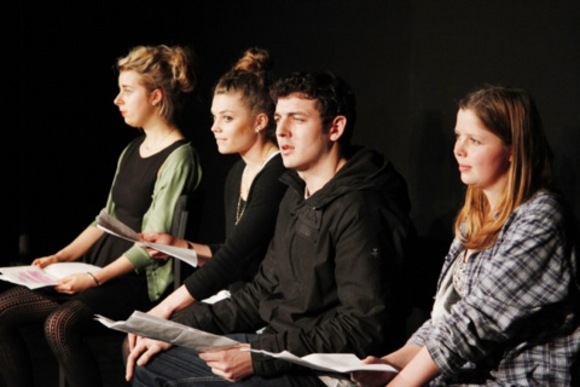
Equipped with only partial information, the glimpse I witness of the rehearsal room is often as disorientating as the finished experience is engineered to be, but one thing I do get a clear sense of is Shunt’s collective method of working. One performer leads an improvisation, to be replaced the next moment by someone else; any hierarchy that might briefly emerge is fluid and ever-shifting. Likewise, while individuals inevitably take on different roles within the company, everything is conceived and credited collectively. As Rosenberg puts it, “when we make the work we aren’t fulfilling the vision of one person. We are all the authors of that work.”

This notion of collective authorship steers the conversation into ideas of legacy. With no sole author, how can a textual trace of the work remain? This question of documentation is one that intrigues Rosenberg, but one that he admits the company have not been particularly good at addressing. Despite the existence of a Shunt archive, the collective are unsure how these documents might translate into a record of the shows they create.

“It’s very difficult to document an audience experience, and that’s the point of the work,” Rosenberg pins down the central problem. “What lingers around afterwards is a mess of different images and snippets of things.” Precisely because of their idiosyncratic melding of history, fiction and the present moment, together with the particular combination of artists who make their work possible, Shunt’s shows exist very much in the moment of their performance. As such, any form of documentation must recognise this.

“The archive could become something that exists in its own right,” Rosenberg muses, “something that isn’t just about a record.”  This too, perhaps, could become a new space, an area carved out by Shunt to offer their audiences yet another way of experiencing their work. As Rosenberg speaks about the possibility of touring next year, a departure from previous ways of working that once again shifts the company’s relationship with the space of performance, Shunt leave the impression that they are still far from finished with manipulating the architecture of theatre.

Photo: Susanne Dietz

Collaboration in kind: arts and business partnerships beyond the cheque

Originally written for The Guardian Culture Professionals Network.

In the post-cuts cultural landscape, collaboration has become the new touchstone. Working together is widely regarded as the way for arts organisations to survive in this environment, but what if that involves looking beyond the creative industries? As the ground beneath us shifts, a surprising word is creeping into the vocabulary of emerging artists: entrepreneurial.

This terminology is particularly associated with the work of Theatre Delicatessen, that over the last four years has established a system of what it calls “transactions” – in-kind exchanges of space, resources and services that have allowed them to put on their work and have this year secured them a residency in the old BBC offices in Marylebone. One step removed from traditional philanthropy, this creative thinking is about the engineering of mutually beneficial partnerships, and it’s an approach that is beginning to be more widely adopted.

“It’s not just about writing a cheque,” stresses James Yarker, artistic director of Birmingham-based theatre company Stan’s Cafe, which has a reduced rent agreement on their current space in an unoccupied portion of the AE Harris metal works factory in the city’s jewellery quarter. What the theatre company offers the manufacturer in return is sponsorship, access to their work and a renewed place within the community, not to mention a mutual network of support. As Yarker puts it, the artists are now “part of the company’s life”.

For those proponents of this model, their enthusiasm verges on the evangelical. “It’s absolutely written into our DNA that it has to work both ways,” says Ali Robertson, director of the Tobacco Factory Theatre in Bristol. The theatre, which has been housed in this factory since 1998, secured a 25-year rent-free lease on part of its space in 2009, cementing a long-running relationship with the building and its landlord (and saviour from demolition) George Ferguson.

Despite the financial element to transactions such as these, the real strength of this approach lies in exchanges that are not based purely on money. While Robertson admits that straightforward philanthropy plays a sizable part in the funding of most arts organisations, including his own, he firmly believes that “the healthiest relationships are often based on something a bit deeper than that”.

The foundations of these relationships can be hard to pin down. Artists often benefit landlords through reducing their business rates by occupying empty space, but exchanges can be based on anything from reviving a local area and bringing in footfall, to running workshops for aspiring thespians in the workforce.

At the centre of these collaborations there is typically a sense of community and a simple but unquantifiable commitment to helping one another out on a day-to-day basis. “If you’re writing a cheque for someone, the transaction is quite cold,” observes Yarker. “Relationships and collaborations are much softer and much easier in many ways.”

Steven Atkinson, artistic director of High Tide, agrees. Before the theatre company found their current home in the offices of Lansons Communications in Clerkenwell, they spent a year rent-free in another office building, but the arrangement was not sustainable in the long term because they had nothing to offer in return. Now they have a collaborative agreement whereby they are offered space and infrastructure in exchange for the training and entertainment they provide for the Lansons staff. It’s a system that Atkinson says “always ticks all of the necessary boxes” for both parties.

With the recession leaving acres of empty office space in its wake, Atkinson believes there is the opportunity for more such partnerships. “A lot of companies could offer desk space to not-for-profit organisations and not really feel any drop in their own capacity,” he claims, urging artists to explore these possibilities.

In this spirit, theatre company tangled feet has taken over a floor of office space in central London through a deal brokered by the charity Healthy Planet, opening an arts co-operative along similar lines to the one now operating in Theatre Delicatessen’s Marylebone home. In the retail sector, meanwhile, the Empty Shops Network helps artists to temporarily take over deserted high street units to stage performances, installations and community projects.

What these examples rely on, however, is the negotiating skill of third party organisations – help which many artists are not aware of or lack access to. Atkinson speculates whether a government agency might plug the gap, bringing about more relationships with the business sector in response to the dearth of public funding. But for now at least the onus lies with the arts. So how can artists start up these conversations with potential collaborators?

“It’s about having a non-scary front,” laughs Atkinson, though the point he makes is a serious one. One point of agreement between those who have succeeded in this entrepreneurial vein is that it is vital to be flexible and to present a friendly face to those who might be in a position to help but who might also be intimidated by the arts.

Yarker, meanwhile, simply advises artists to do what they do best. “If artists are talking about their work, they’re naturally enthusiastic and inspiring,” he says. “That’s very seductive.”

Of course, beneficial as these partnerships may be, they are not the answer to all of the challenges currently faced by artists. “It works to a point,” warns Jessica Brewster, co-artistic director of Theatre Delicatessen. Collaborative agreements with businesses can provide space, resources and a safety net of support, but they do not ultimately pay artists’ wages. “You have to be aware that it’s a model that only works so far,” says Brewster. “It’s not a model that will necessarily give you a living.”

And what about the possible ethical implications? There is crossover here with the concerns frequently raised about corporate sponsorship of the arts and how this might compromise the art being made. The artists I speak to, however, are adamant that these relationships – if made with companies sympathetic to the work – needn’t interfere with artistic intentions.

“If you can do it without compromising the art that you’re trying to make, who wouldn’t want to save money in order to spend that money on the art?” says Atkinson, and he has a point. Although they might not be a substitute for funding, approached with the right attitude these in-kind “transactions” can go a long way towards making up the shortfall, as well as developing entire communities as a valuable side-effect. In Atkinson’s words, “it’s something of a no-brainer”.

Photo: Tobacco Factory

Mirror on the world

26399_wide

Originally written for Fest Magazine.

At London’s Southwark Playhouse, a man stands alone on the stage. In a nod to austerity, there is no other actor to take on the second role in this two-hander; instead, the play recruits its audience to read words projected onto a screen. It is a simple move, but one that speaks of collaborative protest in the face of injustice.

This was just one scene of many from last year’s Theatre Uncut. Harnessing the widespread anger sparked by the government’s Spending Review, this nationwide project hit back at slashes to public spending with a series of short plays that were made freely available for anyone to perform, from professional theatre companies to local am-dram societies, inciting over 800 participants to take action. The spirit was one of united protest, something that has been repeatedly felt in global politics over the last 12 months. It is this spirit that now brings Theatre Uncut back to the front line.

“This year we spoke a lot about whether or not it needed to happen,” says co-artistic director Emma Callander, who has taken the reins from founder Hannah Price for the 2012 season. During these discussions, the creative team found that the appetite for this political brand of collaborative theatre, so evident last year, is far from sated. “We felt that it did need to happen, because there were lots of issues which people still needed to debate and potentially take action on.”

The subjects tackled in this year’s plays read like a catalogue of discontent: the Eurozone crisis, mass civil unrest, the Occupy movement, the sorry state of global capitalism. From its initial platform as a theatrical movement speaking out against the coalition government’s spending cuts, Theatre Uncut has widened into a forum for political debate on myriad issues from around the world.

“It was important for us to put the UK’s situation into an international frame,” Callander explains. Drawing on a politically and economically tumultuous year for much of the globe, the plays from writers including Neil LaBute, Mohammad Al Attar and Lena Kitsopoulou place the UK’s unique problems within the context of a world screaming for change. Callander hopes the global perspectives will create “an exchange of ideas and issues that we need to face from country to country through a theatrical form.”

Going global has, however, had its difficulties. While audiences of the 2011 plays were “quite savvy” about the political and social issues being dissected, conveying national problems to an international audience presents a much greater challenge, but one that Callander describes as “wonderful.”

Such challenges are partly the reason for presenting a selection of the 2012 plays at the Traverse this summer, which will provide a brief glimpse of the work ahead of the full run in the autumn. Reversing last year’s performance schedule, the Fringe is something of a test run for the new pieces, as well as a springboard to reach out to potential collaborators. As Callander points out, there are few better places than Edinburgh to reach an international audience.

In addition to the previews, each Monday morning programme will include quick-fire pieces from emerging writers Stef Smith and Kieran Hurley, hurriedly written in response to whatever is hitting the headlines that week. Sweeping aside the suggestion that the form might have inherent limitations, Callander is infectiously enthusiastic about the possibilities of rapid response theatre. “It’s an immediate, live debate about something that’s happening right there and then.”

Callander sees this form of theatre as a catalyst for discussion, a “totally different beast” to work developed over a longer period. “I don’t even see time as a limitation,” she insists. “The whole point of this kind of theatre is that it’s rough, it’s vital.” To nurture such discussions, Theatre Uncut will be holding post-show talks after each performance, asking that audiences share their thoughts about the plays and engage in debate with the theatremakers.

Despite its origins and the very political nature of the material it explores, Callander is uncomfortable with Theatre Uncut being pigeonholed as political theatre. “All theatre,” she argues, “is in some way political, because everything is political.” But what she does recognise is drama’s ability to effect change, on individuals as much as policy-makers. “It’s where I go to learn how to live better,” she says of the theatre. “It’s the way that I best understand the world, so I hope that I can facilitate that for other people.”

Above all, she stresses, Theatre Uncut hopes to “encourage debate and galvanise action”. And can we expect this debate to continue? Callander’s answer is firm and concise. “As long as we feel the need is there, we’ll present it.”

Subsidy, Patronage & Sponsorship

Originally written for Exeunt.

“It’s been completely miserable.” Such was playwright David Edgar’s wry assessment of the Victoria & Albert Museum’s three day conference on the state of funding for theatre and performance, examining everything from Arts Council subsidy to the ubiquitous rise of crowd-funding. It is not, on the face of it, a rosy picture. Even in the so-called “golden years” of state subsidy during the New Labour era, substantial investment did not yield new audiences – a predicament that is unlikely to improve now that budgets are being brutally slashed – while the alternatives of sponsorship and philanthropy are attended by a whole plethora of ethical concerns.

There is, however, cause for discussion, and perhaps even a faint glimmer of optimism. To borrow a hackneyed proverb, necessity is the mother of invention; if nothing else, the current crisis is proving to be a stimulating catalyst for new and creative ways of thinking. WhatSubsidy, Patronage & Sponsorship has made clear, at least across the sessions on the day I attended, is a need for new, non-monetary ways of thinking about the value of theatre, a need to ask the awkward questions, a need to engage with and question the inter-linked nature of Arts Council policy and artistic trends, and a need to break through the false binaries that hamper theatre in this country.

Many discussions inevitably revolved around money, or more often than not lack of it. Yet there was also an undercurrent of resistance, a tug away from the imposition of economic measures on an art form that is essentially ephemeral and as such proves more robust against the efforts of commodification than, for instance, the visual arts. As one attendee pointed out during the concluding plenary, the theatre community needs to refocus its efforts on engaging people to value theatre, and not just attempting to persuade governments of its price tag.

Shifting away from the present gloom, the 1970s provided a compelling historical hook on which to hang the difficulties faced at this current juncture. This was a decade which similarly experienced financial crisis, mass unemployment and a Royal Jubilee, but one in which theatrical culture was characterised by a burgeoning alternative movement made up of the likes of Inter-Action, whose founder and former director were among the day’s speakers.

As well as playing with performative experiments in living, this generation of artists questioned the ways in which theatre is assigned value, from the eschewing of box office culture by the Almost Free Theatre to theatremakers’ reminiscences of planning tours around signing on for the dole, delicately captured in Susan Croft’s Unfinished Histories project. One thing that these artists spoke about strikingly in Croft’s recordings was their passionate work ethic – a work ethic outside of and not recognised by the dominant structures of capitalism.

This prompted unspoken questions about the valuing of artists today, a tender and topical subject. Bitter disputes continue to circle the widespread use of unpaid performers by projects such as You Me Bum Bum Train, disputes that often raise valid and urgent questions, but that in their admirable mission to defend the right of artists to be paid often ignore the equal right of artists to refuse payment. If the only artistic endeavours we allow are those that reimburse their participants, not only are we eliminating certain passionate but penniless pockets of innovation; we also rob artists of the option to reject monetary exchanges and pursue a definition of art that sits firmly outside of the capitalist figuring of labour.

This idea of being outside, of being alternative, is one that continued to resurface throughout the conference. But while creeping around the edges of otherwise underexplored issues and ideas represents one of theatre’s great strengths, there was also a warning against accepting marginality. Robert Hewison’s data-chewing key note speech aired some bleak if perhaps unsurprising figures, revealing that more than 60% of the adult population in this country does not engage at all with theatre and performance. While audience sizes should not necessarily be the driving motivation of artists – creativity needs, as Peter Brook would argue, a few empty seats – Hewison’s point was that the theatre community must confront the uncomfortable questions that will be asked of it if it is to formulate answers.

One proposed answer, as already touched upon, is to engage directly with that 60%. Hewison’s interrogation of survey evidence also revealed that while the typical theatregoer profile ticks many of the expected boxes – well educated, white, middle-class – it is in fact an elusive concept of identity that drives engagement with theatre and performance more than any demographic factor. For people who regularly attend the theatre, that theatre both speaks to them and says something about them. Such a component of identity cannot be easily engendered by marketing campaigns or ticket price initiatives; it was argued that instead social interaction could be the key to producing this engagement.

London Bubble Theatre Company’s Jonathan Petherbridge put it nicely when he analogised the theatre as a restaurant. For all that the chefs might proclaim the deliciousness of their food, it will always seem not to be to some people’s taste, but once you invite people to cook, their engagement rockets. This engagement need not necessarily be with the entire creative process, but it was put forward by several different voices at the conference that theatre as an art form needs to be more sociable and to reach out to new audiences, whether this involves working directly with local communities or simply taking the work where it can be seen.

The conference also trudged back over well covered ground in the very British division between “new writing” and “new work” that continues to dominate current conversations and was in this context seen as a division that is holding back progress – a “poisonous binary”, as David Edgar emphatically put it. There was even an attempt during the final open discussion to move away from these familiar debates, with the playwrights on the panel themselves expressing exasperation with this seemingly evergreen topic.

This binary, however, is one that has been perpetuated by an odd, mutually influencing relationship between Arts Council policy and the dominant creative output of this country’s theatre, as explained by Edgar in referring to the split that occurred between text and performance based work during the new writing heyday of the 1990s. Now we have too many writers and a skewed perception of authorship, neither of which is a small problem and both of which contribute to the wider problems faced by theatre today.

So what, if anything, can we conclude? It was generally agreed that subsidy is still important, but playwright David Eldridge hit the heart of the issue succinctly when he said that “artists need to be willing to bite the hand that feeds them in a heartbeat” – whether that be the hand of the Arts Council, private philanthropy or corporate sponsorship.

There was also a feeling that to move forward we have to smash down barriers; barriers between text-based and performance-based work, between the falsely oppositional concepts of the avant-garde and the popular, between artists and audiences. And whatever we might need to smash to get there, we need to find ways to make sure that those artists are still there, occupying the liminal spaces, feeling at the edges of society, finding room in which to play.


Northernmost Stage

st-stephens1-600x329

Originally written for Exeunt.

There is professional fervour for the Edinburgh Fringe, as an international platform on which to present new work, and then there is pure, unfettered love for the festival in all its chaos. Erica Whyman, the artistic director at the helm of Northern Stage’s ambitious Fringe programme at St Stephen’s this year, falls firmly into the latter camp.

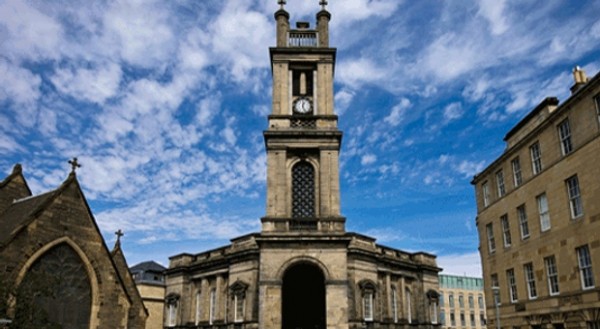
“I just love the energy of it,” she tells me over a snatched lunchtime phone call. Unsurprisingly, Whyman – who has also just been announced as the Royal Shakespeare Company’s first deputy artistic director – is a very busy woman at the moment. Northern Stage’s pilot project at St Stephen’s is due to take sixteen separate productions up to Edinburgh, where the venue is providing accommodation for all performers involved, not to mention converting the atmospheric church into a performance space. It is a massive undertaking.

“If you’re going to arrive in Edinburgh, you need to arrive with a bit of a bang,” says Whyman by way of explanation. Her initial intention was to test this collaborative model with just three productions, but the project rapidly snowballed into a full season of work over the month of the festival. The idea was born out of Whyman’s love for Edinburgh, an existing relationship with St Stephen’s, and the feeling that artists in the North needed an affordable platform to present their work to Edinburgh’s international audience.

There was also a funding incentive. “In 2011, when we were applying for Arts Council funding for Northern Stage, I was conscious that it was important to try and demonstrate a growing relationship across the region,” Whyman explains. “It struck us that we could kill two birds with one stone. We thought that there was a lot of interesting contemporary work coming out of the North and that if we bundled that together into one venue we could have a really striking programme.”

The various pieces compiled by Whyman for the festival appear, at least at first glance, to have little in common other than geographical location. They range from RashDash’s bold cabaret transformation of Cinderella to the gentle, biscuit-fuelled audience participation of Faye Draper’s Tea is an Evening Meal. Asked about the programming, which she characterises as one of the easiest components of the whole process, Whyman admits that she did not grasp at any unifying thread or theme.

“It wasn’t terribly …” Whyman trails off, chewing over her words, before continuing: “I was going to say conscious, but that’s not quite true. We didn’t set out to find a particular kind of work.” One characteristic that the productions do share, however, is a direct relationship with their audiences, which Whyman explains was intentional. She hopes that these choices will have the power to surprise theatregoers and to subvert any clichés that exist about Northern theatre, breaking away from the stereotype of gritty kitchen-sink realism to embrace more contemporary, internationally minded work. Instead of being concerned exclusively with the region they originate from, many of the works, like Third Angel’s What I Heard About the World, exhibit “an outward-looking curiosity”.

If the programming has been relatively straightforward, the logistical challenges of transporting sixteen productions to the Fringe are proving more demanding. Northern Stage has booked a total of 59 bedrooms for its artists across the festival and is creating two performance spaces and a café within the environs of St Stephen’s – and that’s without even factoring in the coordination of marketing and press, the organisation and training of volunteers, the feat of teching sixteen separate shows. As Whyman laughs grimly, “there are a lot of spreadsheets”.

This nightmare of organisation responds, however, to what Whyman feels is a deep need within the region. Ultimately, this is a venture driven by artists. “We did a lot of listening and asking artists what made Edinburgh valuable for them,” Whyman tells me. The response was overwhelming in its enthusiasm for the artistic opportunities offered by the festival, but the associated costs, particularly of accommodation, emerged as a major barrier, even for more established companies. To lower this barrier, Northern Stage is taking on many of those costs through a collective, collaborative approach. In Whyman’s words, “this model has just shifted the balance”, spreading the load to make the festival more affordable.

Is this an approach that other venues and artists might adopt in order to take work to Edinburgh? Whyman’s answer is careful. “It’s up to every project and every region to work out what’s best for their artists,” she says, acknowledging that this is not a realistic or desirable model for everyone. She goes on to explain that “there’s a kind of logic” to the project that Northern Stage has mounted: “In the case of the North, we happen to be a venue that already presents, develops and co-produces a great deal on a small scale, which isn’t true of everybody.” Conversations sparked by the St Stephen’s season have, however, revealed an interest in other parts of the UK, raising the possibility that we may see more regional or venue-based programming at Edinburgh in future years.

Such conversations tap into a growing obsession with collaboration, a preoccupation born from the difficulties imposed by recent and forthcoming cuts to Arts Council funding. Not only is Northern Stage participating in its own collaborative activity by bringing together artists from across the North at St Stephen’s; the theatre will also be harnessing these discussions during the festival at Stronger Together, a day of debate and provocations about collaboration in the arts. Following last year’s symposium at Northern Stage’s Newcastle home, Edinburgh would appear to be the perfect forum in which to throw these discussions even wider.

This year’s conversation, I am told, will differ from 2011 in more than just location. “Unlike last year, when we were all still reeling from the funding decisions, good or bad, this year it feels like there’s a need to talk differently about collaboration and to make sure that we are in charge of it in this sector,” says Whyman. Collaboration has become such a ubiquitous buzz word in the arts that it is vital for platforms such as this to take a step back and interrogate it. “We’re posing the question that day: can collaboration change the game, and if so what game do we want it to change?”

The day will feature speakers such as David Jubb, Vicky Featherstone, Chris Thorpe and Lucy Ellinson, as well as a case study from Globe to Globe organiser Tom Bird, offering an international lens on what collaboration can mean on a large scale. The format partly borrows from the Open Space Technology that has become synonymous with Devoted & Disgruntled, allowing attendees to put forward topics for discussion and weave freely in and out of different conversations.

Whyman explains that the day is less about the collaboration that Northern Stage has forged and more about how all artists can collaborate better – as well as when they should avoid collaboration altogether. One intriguing contribution is to come from Andy Field, who will discuss the experiences of Forest Fringe since losing their Edinburgh venue, exploring “the idea that you might move the conversation forward more effectively by resisting and by not necessarily doing what people expect you to do”. It is a provocative challenge to the popular feeling that collaboration is always positive.

Doing the unexpected and confronting new challenges brings us back to Northern Stage’s own ambitious model of collaboration. Only through execution will it be made clear whether such a model can work, but this is undoubtedly a bold move from Northern Stage and one that could mark a shift in the way in which artists approach Edinburgh in future years. Vitally, Whyman’s approach to collaboration is one that is not only asking “how can we do it better?” but also “how can we resist if necessary?”