Tim Crouch

Adler&Gibb_reh_photoRichardHubertSmith-2252

Originally written for The Stage.

There is something satisfyingly cyclical about Tim Crouch’s work. The theatre-maker’s first play, My Arm, explored ideas about representation and realism through the unlikely story of a boy who raises his arm above his head and refuses to take it down. Throughout the course of the play, this pointless act becomes a source of global fascination, captivating the contemporary art scene.

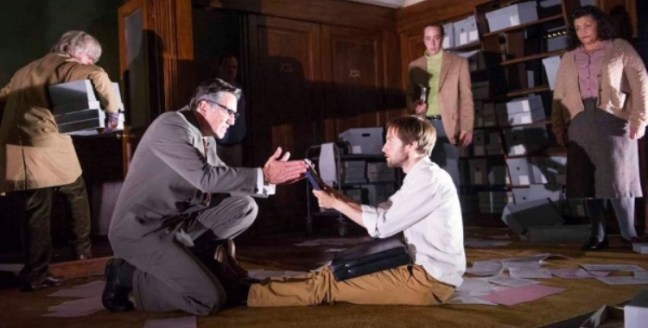
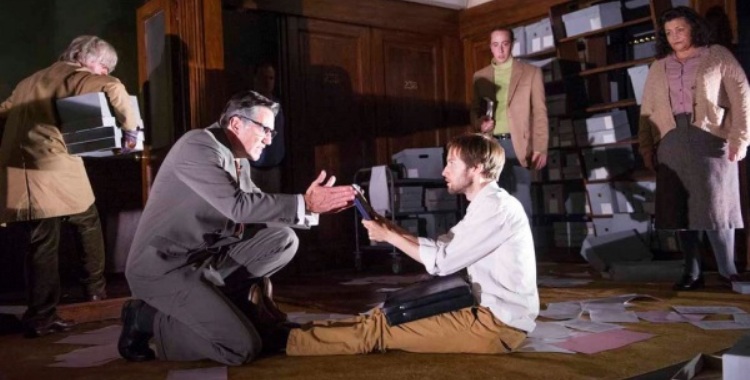
Now Crouch’s new play for the Royal Court, Adler & Gibb, uses a narrative about Hollywood movie-making to return to similar preoccupations. In it, an actress preparing to play a famed conceptual artist goes to terrifying lengths to achieve authenticity in her portrayal, asking implicit questions about art, acting and appropriation. It is, Crouch suggests, “a very much bigger and more complex version of My Arm”.

Reflecting on the shows he has made over the last ten years, Crouch describes My Arm as the “mothership” of everything that followed. The play emerged as a result of the frustrations that Crouch had felt over several years as a jobbing actor – frustrations both with the mechanisms of the industry and with what he saw as accepted theatrical form. Writing My Arm in his late 30s was, he recalls, a “last ditch attempt” to rekindle his passion for performance.

After graduating from Bristol University, Crouch began his career as a member of a devising cooperative in the city, which was the start of what he describes as “the most extraordinarily intense and wonderful and fulfilling time”. Struggling to find other work in his late 20s, however, Crouch pursued formal training at Central School of Speech and Drama. It was, he feels, a decision that the industry forced him into.

“You would go for auditions or interviews with the traditional sector and everything you had done, no matter how brilliantly creative it was, didn’t seem to have any currency in those interviews,” he remembers. “I would say that’s still the same now. There is a very marked career path and certain jobs or certain venues or certain directors have more points than other jobs and venues and directors, and so it feels like the deal is you get as many points as you can by working in this place or that place.”

As well as resisting this rigid and competitive culture, My Arm kicked back against the dominant form of psychological realism that had informed Crouch’s training. The play is written as a first person monologue, narrating events from the perspective of the character who fatefully decides to thrust his arm into the air. When Crouch performed the piece, however, his arms remained firmly at his sides, immediately challenging straightforward representation.

“I was interested in a different kind of reality,” Crouch explains. The show was also “a provocation to an audience to get involved more”. At the outset, audience members were asked to contribute personal items to the staging of the play, making explicit the necessity of their presence “to complete the experience”.

But while plays like My Arm might act as vehicles for sometimes complex ideas about theatre and the world, Crouch insists that they are absolutely rooted in story. “If I wanted to just ask questions about theatre and representation, I would become an academic,” he says. “I want to make theatre and I think theatre’s strength is narrative, a shared narrative, the passing of narrative. And so all of the pieces that I’ve made have been first and foremost about the story.”

Crouch describes his second show An Oak Tree, for instance, as “a little dance between form and narrative”, but one in which the narrative itself was vital. This show’s central formal device was the use of a different actor every night to perform the two-hander opposite Crouch without any prior knowledge of the play. Unmoored from their usual reference points, this second performer would flounder in the same way that the character, a man whose daughter has been killed in a car accident, is undone by his grief.

“I would want there to be a dialogue between form and content,” Crouch elaborates, pausing to note with a laugh that he sounds like a professor. “But in a very fleshy, pragmatic way, that’s what it is,” he goes on. “There are formal devices in all my plays that are only there because they deepen the telling of the story.”

In ENGLAND, the transplanting of theatre into a gallery space acted as a metaphor for the heart transplant that is central to the play’s narrative, while The Author engaged with its site in an altogether more controversial way. Commissioned for the Upstairs space at the Royal Court, the play was entirely contained within its audience. Performers sat amongst theatregoers in two banks of seating facing one another, and the events they described took place in audience members’ minds rather than on the stage.

“In The Author we are the audience as well, so their temperature is our temperature,” says Crouch of performing the piece. It was a show that pushed audiences into uncomfortable territory, alluding to the Royal Court’s history of shock and violence during the “in-yer-face” period of the 1990s and questioning the ethics of representation. Its disturbing subject matter and exposing focus on the audience provoked a startling range of reactions.

“At times in that show the audience took us to a really difficult place,” Crouch admits. “I had a physical threat in that show; people swearing, shouting, walking out.” This splitting of opinion, however, was encouraging to Crouch – “I’m excited when people either hate it or love it” – and reaffirmed his interest in active engagement with an audience.

“The audience is absolutely fundamental to my thinking,” he says. “They provoke and they incubate the form – they hatch the form”. Crouch is also keen to stress that “immaculate attention” was paid to the audience’s experience during the making of The Author; it was never about provoking for provocation’s sake. “But what you can never do as a theatre-maker is second guess what an audience is bringing to the theatre,” he adds. “By and large I try to keep things open, so it’s all interpretable.”

So central were the audience to The Author that people even began to mistake the title of the show. “A lot of people go ‘I saw your play The Audience’, and I go OK, right,” Crouch laughs. “I really like it when people forget or confuse what it was called, because it could easily be called The Audience. I suppose one of the suggestions in that play is that the audience is the author.”

Although The Author went on to tour elsewhere, it was always set at the Royal Court, intimately responding to the site of its commission and creating a fascinating “slippage between the location and the theatre”, as Crouch puts it. Adler & Gibb, which brings Crouch back to the Court, is less specifically grounded in the theatre’s history and location. While it is “absolutely written for a theatre”, the show speaks to ideas that are common to all theatre spaces: performance, representation, the blurring of truth and fiction.

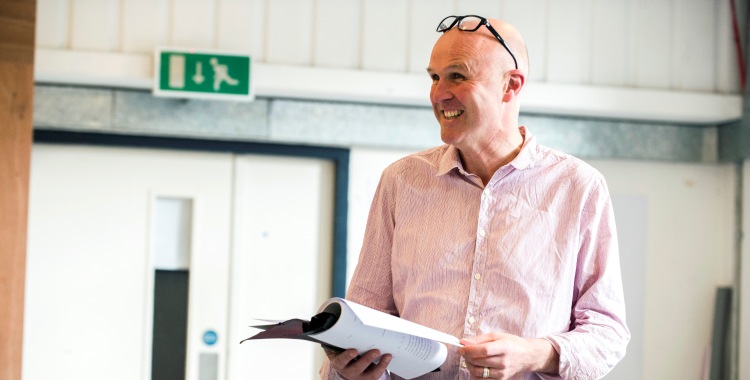
When I speak to Crouch at the Royal Court, he is nearing the end of the first week of rehearsals. During the morning I spend with them, the cast are playfully exploring the relationships between their characters and with the audience, prodding at realist conventions while grappling with the challenges that Crouch’s script presents. One of these challenges is the onstage presence of two eight-year-old children, who are not characters in the play but remain present throughout.

“I’m excited about their formlessness,” Crouch tries to explain the thinking behind this surprising choice. He adds, in resistance to the instrumentalising of art as a form of education, that “art should be about unknowing something rather than knowing something”. Unlike their adult counterparts, Crouch argues that children are happy with “unknowing” and do not need realistic representation as a spur to their imaginations; “a child doesn’t need to exert anything to transform something into something else”.

It is in Adler & Gibb that Crouch’s recurring interrogation of realism reaches its zenith. At the same time as questioning realist representation in theatre, the new play is deeply interested in the medium of film, which Crouch describes as “the high tide mark of realism”. Recalling Hollywood actors’ lauded transformations into real people – think Meryl Streep’s Margaret Thatcher or Jamie Foxx’s Ray Charles – Adler & Gibb examines the “strange exertions towards reality” that cinema encourages and celebrates.

“It’s a political idea for me,” says Crouch, “in terms of that idea of acquisition; acquiring reality, trying to buy or own reality. And realism to some degree being an attempt to fix something and to own something, which I have a question about.”

Crouch also has a question about the idea of individual genius that this tendency enshrines. Although it happens on a bigger scale in Hollywood – as depicted in Adler & Gibb – Crouch sees it infecting the theatre industry as well, pointing to the recent example of Birdland at the Royal Court and the central attraction of leading actor Andrew Scott.

“It’s an amazing performance by Andrew Scott – what the fuck does that mean? To make a piece of work where we come away and go ‘that’s an amazing performance’ is kind of ignoring the fact that it’s only an amazing performance if it’s serving the piece of work that it’s in. The piece of work is the thing that we should be there for, because that’s the art form.”

Crouch goes on to suggest that “it’s like having a beautiful diamond on a rather dull canvas, and you just go ‘that’s an amazing diamond’, when actually the artist wants you to think about the whole canvas.” Instead, he says, individual theatre-makers “shouldn’t be thought of as geniuses, because it gets in the way of what the work is trying to do”.

For this reason, Crouch is keen to emphasise the close collaboration that has characterised his career as a theatre-maker. “I wouldn’t want anyone to come in going ‘I’m going to see a Tim Crouch show’,” he says. Although his name most frequently gets attached to the work, he is adamant that his shows are the product of collaborative processes, shaped by the input of the rest of the creative team.

“I’m lucky in that I have two very close allies and collaborators and sounding boards in Karl James and Andy Smith and that we have been talking about the work for a long time now,” Crouch tells me, referring to his co-directors. As an actor himself, with bitter experience of all the frustrations that can involve, he also takes care to welcome the thoughts of performers.

“Why would you ignore the presence of the people in their room and their intelligences?” Crouch asks, incredulous at creative processes that do not encourage collaboration in the rehearsal room. “I’m trying to some small degree to challenge some of the practices that I have problems with, or I had problems with when I was an actor,” he adds, returning once again to the impetus of his work. For Crouch, it is vital to stretch the conventions of the industry, encouraging ways of working that nurture creativity.

“It’s about doing the best thing for the work, and the best thing for the work is to create an open space and to allow contributions to the open space,” he says. “Why would that be such a radical idea?”

Photo: Richard H Smith

Nick Payne

WJK_2888 (2)

Originally written for The Stage.

“I don’t really see this,” says Nick Payne, tapping the sturdy wooden table we are sitting at. “My brain just tells me that that’s what it is to steady me, because otherwise I’d freak out if I was really able to take in all the information around me.”

With a slight grin, the writer is explaining the research behind his new play Incognito, a cerebral interrogation of the mind’s inner workings. If it sounds like meaty material, it’s little surprise. Payne’s debut play If There Is I Haven’t Found It Yet, which won him the George Devine Award in 2009, collided domestic drama and climate science, while subsequent work has tackled bereavement, quantum physics and contemporary gender politics.

“I suppose it tends to start with something I read about,” Payne reflects. Thoughtful, unassuming and frequently apologetic, the playwright is quietly frustrated by his struggle to remember the genesis of specific projects. He admits that ideas emerge “mostly by chance” rather than through any desire to address a particular topic. “With Constellations, it was a conscious decision to try and find a form that was non-naturalistic,” he recalls as an example, adding that he “stumbled on that whole thing about the multiverse”.

Constellations, which imagined one relationship playing out in countless variations across multiple universes, was the play that convincingly cemented Payne’s career as a playwright. The show quickly transferred from the Royal Court to the West End and won Payne the Evening Standard Award for Best Play in 2012, as well as attracting an Olivier nomination. This followed a steady stream of new plays, including Wanderlust at the Royal Court and One Day When We Were Young for Paines Plough, but Constellations raised him to a new level.

“Only for the last year and a half has it started to feel like a career rather than something I’m doing with the hope that one day …” Payne trails off, as if afraid of tempting fate by acknowledging his recent success. For a number of years after moving to London from university, Payne subsidised his writing with shifts at the National Theatre bookshop and as a theatre usher, eventually committing to playwriting full-time in 2010 after his breakthrough with If There Is I Haven’t Found It Yet.

Central to Payne’s development as a writer during this time was his participation in the Royal Court’s Young Writers’ Programme. “The Writers’ Programme made you feel a bit like you could be a writer,” he says, “because you’d go to a theatre every week and you’d see all the shows.” It was also while at the Royal Court that the first seed of an idea for Constellations was planted, Payne remembers, by a talk about physics given by former literary manager Ruth Little.

Incognito, which recently opened at the Hightide Festival ahead of a run at the Bush Theatre, continues some of the ideas about free will that emerged during the process of writing Constellations, returning Payne to his recurring preoccupation with science. Borrowing from the latest developments in neuroscience, the play questions the extent to which we are really in control of our own identities, exploring the complex and delicate mechanisms of the brain. Like much of the playwright’s work, it has involved extensive research.

“It’s not research in an academic way,” Payne is quick to add, admitting that the science in Constellations was flawed – and scientists had no problem telling him so. Instead, it is about knowing his characters and their motivations; his priority is to “make sure it’s dramatic above anything else”. For this reason, perhaps, Payne prefers talking to people over reading books: “I enjoy meeting people who do those jobs, and having my naive illusions of what they do and how exciting it must be shattered.”

As is often the case with Payne’s writing, it was the research behind Incognito that has moulded the shape of the play. “I thought there’s a form here that can hopefully feel like a brain solving everything for us,” he explains. The play begins as a confusing, fast-moving assault of information, switching rapidly between three different narratives situated at different points in time, before the various pieces of the puzzle gradually slot into place. “The idea that the brain is a sort of storytelling machine that keeps us going by building a narrative is partly what the play does.”

Although he first broke through with astutely observed naturalism, Payne is increasingly interested in experimenting with dramatic form. Incognito cleverly meshes form and content; Constellations, with its swift, snapshot scenes and complete absence of naturalistic staging, was born from a desire to temporarily ditch social realism and create “something that you couldn’t do in any other medium”. Recent project Blurred Lines, meanwhile, cast Payne in the role of collaborative creator, working closely with director Carrie Cracknell and a devising company of actors.

“That form thing, the question of how and why are you going to give your play a particular shape or structure or architecture, was not something we addressed until right at the very end,” Payne explains the process, admitting that this uncertainty made him “twitchy”. Blurred Lines was created over the space of two week-long workshops at the National Theatre Studio and four weeks of rehearsals directly prior to the show’s run in The Shed. It was a tight development period: at the beginning of week two of rehearsals, the team decided to scrap most of what they had produced so far, going on to devise almost the whole show in just three weeks.

Payne is eager to challenge himself in this way, insisting that he’s interested in “working in as many different ways as there are”. It would be a waste, he suggests, not to use the creative resources on hand in the rehearsal room. “There’s always a point in rehearsals where the performers start to know the play much better than you do. I think at that point you’re mad if you’re not listening to them going ‘I’ve got an idea’, or ‘can we try this’, or ‘I’m really stuck on this’.”

As a result, the playwright is less and less protective of his own work and is very open to making changes – even major ones – during the rehearsal process. Refreshingly, he is not particularly concerned with the idea of rigid fidelity to his vision. “That thing of serve the writing, I find a bit …” Payne pauses, making a face. “I don’t really get it.”

Payne’s most recent challenge has been a foray into television, but he quickly found himself pining for the thrill of the rehearsal room. “The development process was pretty similar, and I enjoyed that, but then you’re much less involved,” he explains. For him, the rehearsal process is the “fun bit of the job”, when all the most illuminating questions are asked about the play. And this, he suggests, is just as vital for him as the process of gathering the research or sitting at his desk writing.

“A film is made three times: it’s written and then shot and then edited. I sort of think it’s true of a play too. I enjoy being around for all of that.”

Photo: Bill Knight.

Ben Miles

Ben-Miles-Thomas-Cromwell-002

Originally written for The Guardian.

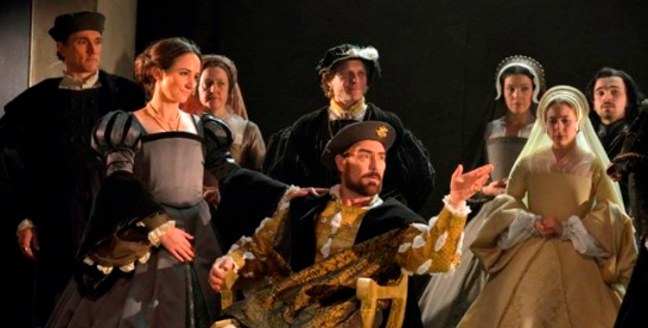
When Hilary Mantel first introduces us to Thomas Cromwell, the wily social climber at the centre of her award-winning historical novels, he’s face down in a pool of his own blood. It’s possible to view the entire narrative that follows in Wolf Hall and Bring up the Bodies as Cromwell’s defiant rise, as he scrapes himself off the floor and ascends to the zenith of 16th-century politics.

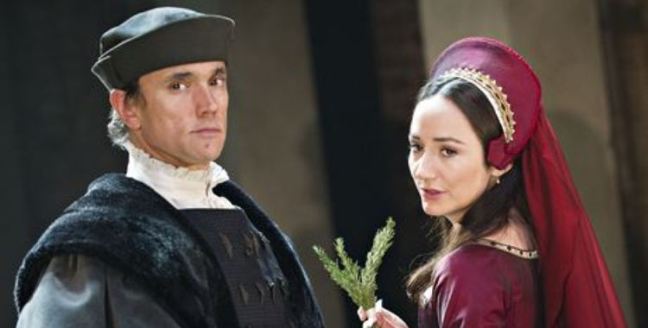
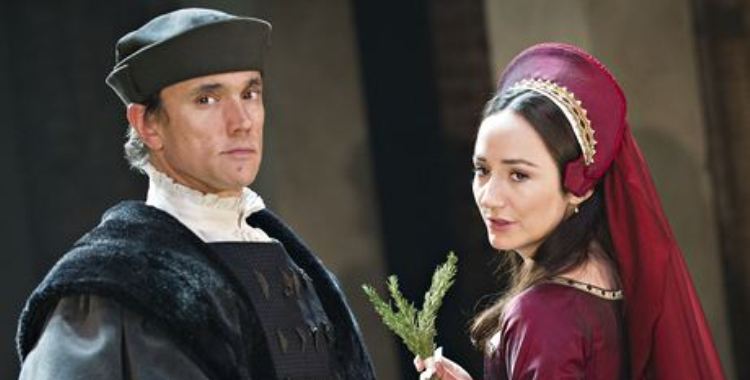
“These plays are about how this man gets up on his feet having been on his knees and how far he goes,” says Ben Miles – the actor shrugging on Cromwell’s robes – of the Royal Shakespeare Company’s pair of stage adaptations, now transferred to London’s West End. Cromwell – “the original working-class hero, the original self-made man” according to Miles – is the scheming heart of the two stories, determinedly throwing off his humble origins and charming himself all the way to Henry VIII’s side. He’s a compelling figure, but one with a hard, ruthless streak.

“Morally, it’s very ambiguous,” says Miles, identifying this ambiguity as one of the attractions for him as an actor. “People are intrigued, they’re drawn in by this charismatic figure who drags himself up, but the means by which he does that are often dubious. There are lots of themes in these stories, but one of them is this idea of vengeance or retribution – how far do you carry that? When you’re finally in a position of power, what do you do with that power? Do you use it to settle old scores, or do you use it for the common good? Or do you do both? I think that’s what Cromwell finds himself doing. It’s an endlessly fascinating study of human character.”


Also fascinating is the wider Tudor context, and the fierce debates that still surround figures such as Cromwell, Henry VIII and Anne Boleyn. “I think these plays and these books have really held a light up to that period,” says Miles, who confesses to having been a huge fan of Mantel’s novels even before the RSC project arose. “Hilary’s rewritten the book as far as opinion about Thomas Cromwell is concerned,” he adds, describing the experience of bringing this reimagined character to life as “a great thrill”.

While Mike Poulton’s stage versions of Wolf Hall and Bring Up the Bodiesare necessarily “streamlined”, stripping out a number of peripheral characters and subplots, Miles insists they remain faithful to the vivid character portraits in the books. “What the plays keep, I think, are the main arteries of the story,” he says. And, like Mantel’s novels, the plays succeed in marrying historical narratives with a very modern set of concerns and sensibilities.

“Politics, nationhood, religious fervour, extremism, European political machinations, the threat of war, how to get on in the world, the trials and tribulations of the self-made man – all these things, they’re things that concern us now and will always concern us,” he says. “It’s these things that make the plays contemporary, as well as period.”
Photo: Tristram Kenton.

Embrace the Problem: Duncan Macmillan

1984

Originally written for Exeunt.

Duncan Macmillan is remembering a piece of advice from Edward Bond that has stayed with him. “He said this brilliant thing,” the writer and director recalls, “which is that there’s a tendency in some directors to solve the problem. You identify the formal problem or the staging problem or something, and then solve it somehow. And he says good dramatists instinctively know that the problem is all you’ve got, that you should never solve the problem.”

This insight – don’t solve the problem – was something of a starting point for Macmillan and co-adapter Robert Icke’s acclaimed stage version of 1984 for Headlong. George Orwell’s culturally ubiquitous novel is a tangle of contradictions, none of which the pair wanted to unravel. “It seems absurd and a real shame to iron out all the creases,” says Macmillan. “I think there’s something really exciting about going, ‘what do these creases do for the novel, and how do we find a theatrical form in which to communicate those logic bumps?’”

The answer to that question was found in a structure that could simultaneously hold all possible readings of Orwell’s novel – an exemplary instance of doublethink. “There’s a lot in the book that quite deliberately complicates the narrative, and we didn’t want to solve that by undermining it and just opting for one particular reading of it,” Macmillan explains. Every possible interpretation is allowed for.

Central to their complex, cerebral version of the novel is the oft-neglected Appendix, which no previous adaptation has attempted to tackle. Macmillan is adamant about the importance of this seemingly dry, academic postscript, which Orwell himself insisted was integral to the tale. “It’s like telling a really long, convoluted joke and then missing out the punchline and feeling like you understand the joke even though you’ve not heard the punchline yet,” he argues.

What Macmillan and Icke found frustrating about previous adaptations – and what they have studiously avoided – was the tendency to hone the novel down to the narrative of protagonist Winston Smith’s experience, stripping away its philosophical and political content. “There’s a tendency to over-simplify,” Macmillan suggests, going on to insist that “if you present a literal universe on stage, it’s not accurate to the book”.

Instead of opting for a literal narrative, Macmillan and Icke have held onto the subjectivity of the novel, which offers readers intimate access to Winston’s unreliable mind. In doing so, their main reference points have been cinematic – “film can do subjectivity in a way that theatre sometimes struggles with,” Macmillan suggests. He names the likes of Eternal Sunshine of the Spotless MindMulholland Drive (“it’s a deliberate puzzle”) and The Shining.
These pop cultural influences are also apt for one of their target audiences. Macmillan relates how both he and Icke remember a moment in their teenage years when their minds were opened to the possibility that theatre might be just as exciting as films and computer games; one of their ambitions in creating this adaptation was to offer the same revelatory experience to a new generation of youngsters. “We really wanted to blow those kids’ minds.”

As 1984 moves to the West End to embark on its third run, Macmillan’s enthusiasm for the show is remarkably undimmed. He doubts that he and Icke will ever be truly finished with the piece; despite reading the book dozens of times, they keep returning to pore over each last line, making tweaks to their adaptation as they go. Macmillan offers a neat Orwellian analogy: “Each edition of the Newspeak dictionary is smaller and smaller, because they’re eliminating words from it, and we’ve sort of been doing a similar thing.”

Throughout the process, Macmillan and Icke have worked in tandem, equally doling out the duties of writing and directing. “Quite early on we realised that the usual boundary line between being a playwright and being a director just wasn’t helpful and that we’d automatically started parking tanks on each other’s lawns,” says Macmillan. Reflecting on his metaphor, he is quick to add, with a laugh, “that makes it sound more oppositional and more aggressive than it actually was”. In fact, the partnership has been amicable and creatively fruitful, directing both theatremakers towards bolder, sharper ideas. “It’s been a huge amount of work,” Macmillan admits, “but two heads – in this case – have been better than one, and it hasn’t been a messy, grey compromise. We’ve always pushed each other to make the idea better.”

Another great collaborator of Macmillan’s is director Katie Mitchell, with whom he is currently working on a new project for the Saltzburg Festival. Macmillan finds Mitchell “really trusting and empowering”, praising the passion of her involvement with every element of a production. “She has such artistic integrity as a theatremaker,” he says, “and political integrity as well. I found that really, really galvanising.”

Thanks to working with Mitchell, Macmillan is now much more confident about making work with political intent, something that he suggests “we can find very hard to do in Britain”. The pair’s latest show, The Forbidden Zone, has an explicitly feminist agenda, setting out to “reposition our understanding of certain women and women’s roles in the First World War”. The project has involved extensive research, highlighting for Macmillan just how difficult it is to unearth female perspectives in a history written by men. “One of the things we wanted to do was rehabilitate the writing from that period, this fascinating writing done by so many women, and also these really extraordinary female figures who haven’t been given the right kind of attention,” Macmillan says.

He and Mitchell also recently worked together on the German premiere of Macmillan’s playLungs, or Atmen, which continues to play in rep at the Schaubuhne in Berlin. Despite the script’s strict instructions that the play should be staged with no set and no lighting or sound changes, Mitchell has placed the two performers in her production on bicycles, powering the lights throughout the show. This simple, eco-friendly concept acts as a constant visual reminder of the high environmental stakes that provide the backdrop for Macmillan’s two-hander, in which a couple agonise at length over whether or not to have a child.

“She’d understood the gesture of what I was trying to communicate and I think she added something really interesting to it,” Macmillan reflects on Mitchell’s directorial interventions. “In Katie’s production you really get a sense of the time pressure and the physical pressure, and you also get a sense of the environmental pressure because the carbon neutrality of that production is so visible and audible at all times.”

Macmillan has worked in yet another way on Every Brilliant Thing, a project with Paines Plough and Pentabus which goes on tour in its latest incarnation next month. The piece began as a story written by Macmillan, in which a child starts a list of everything that is wonderful in the world as a way of coping with their mother’s suicide attempt. As in the story, the list soon took on a life of its own, welcoming contributions from the public and transforming into an installation created by Paul Burgess and Simon Daw. Now, the story and the installation have been incorporated into a show, performed by Jonny Donahoe of Jonny and the Baptists and involving members of the audience each night.

“That began as sort of a necessity of the time pressure and the formal constraints we set ourselves, and has now become an inherent part of the project,” Macmillan explains the audience involvement. “There’s something about seeing real people responding live in the moment rather than actors pretending to be other people that feels very true to the project. It cuts out all the pretending of it and it just becomes very honest and open and responsive.”

Although Macmillan is looking forward to getting back behind his desk and focusing on his own work again, he anticipates that the various collaborations he has been involved with in recent years will continue to have an effect on the way he writes. “I guess I’m bored with certain approaches to making theatre and I’m really looking for people who inspire me and are prepared to work with a writer in different ways,” he says. “I’m not as interested as I once was in just sitting in an office and sending a play away.”

Keep it moving: Jeremy Herrin

Wolf-Hall-14-2013-541x361

Originally written for The Guardian.

“It’s about using the power of the words,” says the director Jeremy Herrin. He is reflecting on the Royal Shakespeare Company’s stage adaptations of Wolf Hall and Bring Up the Bodies, the meaty Hilary Mantel novels that have achieved the double feat of topping bestseller lists and winning literary prizes. At more than 1,000 pages combined, the books pose a formidable challenge to adapters.

“You’re very conscious that there’s an enormous amount of material and a limited amount of stage time,” says Herrin, summing up the dilemma. Working closely with the playwright Mike Poulton (“it’s got to be collaborative”), Herrin resolved to create a driving momentum at the centre of the drama, moving the action along swiftly enough to keep audiences engrossed throughout the two three-hour productions: “I don’t like to keep an audience waiting.”

Discussing the adaptations, Herrin repeatedly mentions the importance of “moving forwards”, stressing the dynamism of his approach. Mantel’s novels, which trace the turbulent politics of Henry VIII’s reign through the behind-the-scenes figure of Thomas Cromwell, are dense with court politics. The stage versions navigate this by hopping rapidly from location to location with minimal fuss. In telling this fictionalised historical narrative, Herrin was keen to avoid some of the more familiar tropes that have congealed around representations of Tudor England, devising, instead, a stage language that “could hint subtly at modernity”.

“You can find out a lot about who we are now by looking through the prism of history,” Herrin suggests, arguing that it is this “sense of where our nation was defined” that continues to inspire our fascination with the Tudor era. “It’s one of those stories that every generation can look at again and find different meaning in,” he says. “There’s also a sort of horror about the tyranny underneath those facades that we’re really keen to revisit and to analyse.”

Central to the stage productions is the characterisation of Cromwell, with which Herrin is particularly pleased. “Ben Miles was always the right man for the job,” he says. “It’s a gargantuan feat, in terms of pure stamina and precision. He does six hours of the most sublime, subtle, very clear, very specific acting.”

After a successful initial run, the move from Stratford-upon-Avon to London’s West End, where the double bill opens next month, presents another challenge for Herrin. Of the change of stage, he says: “We’ll have to find the right performance language to fit in that room.” It’s “a chance to have another go at it and tell the same story under different circumstances”.

At the same time as preparing for the London transfer, Herrin has been settling into his new job as artistic director of touring theatre company Headlong. For the man once dubbed “Britain’s busiest director”, the added workload should not be a problem, but filling predecessor Rupert Goold‘s shoes is no mean feat. Herrin shrugs off the pressure, simply saying, “I’m really grateful to Rupert for doing his job so brilliantly”.

Herrin is now in the midst of his first season in charge, with an updated version of Frank Wedekind’s Spring Awakening out on tour and a new co-production with the Royal Court coming up this summer. For Herrin, the priority is to “keep doing what we do really well” and – as with all his work – to continue making the theatre that inspires him.

“I’m interested in theatre that’s exciting and exhilarating, and that goes into territory that will create debate and will be firmly about what’s going on in the world.”

Photo: Keith Pattison.