Touring theatre: a risky business for audiences too?

Two-dice-displaying-on-a--008

Originally written for the Guardian Culture Professionals Network.

Risk is a word that regularly gets aired in arguments about the arts. We talk a lot about risky work, about venues and companies taking risks, about the current economic environment making many organisations risk averse – but it’s rare that this vocabulary is used in discussions aboutaudiences. At a time of punishing austerity and squeezed budgets, what do theatremakers ask audiences to risk when persuading them to buy tickets to their shows?

This question is particularly pertinent for touring companies, many of whom are struggling to reach and engage with audiences through the current touring model. As lots of these theatremakers recognise, touring is challenging, not least because of the limited time spent in each of the areas they visit. Without the time and resources to build a deeper engagement with local audiences, touring companies demand even more risk on the part of the audience than their building-based counterparts.

However, as a number of new initiatives funded by Arts Council England’s strategic touring programme are exploring, there might be ways for these companies to reduce the risk involved for their audiences without having to become artistically conservative.

One method is that of the tried and tested. “The things that are doing well anecdotally are things which have known writers and known faces,” explains Caroline Dyott, associate producer at English Touring Theatre (ETT), who also notes that audiences are “booking later so that they can take less of a risk on something”.

Picking up on this trend, what ETT hopes to do through its National Touring Group is to offer audiences large-scale, ambitious work that has already been successful elsewhere. Instead of offering famous names, it is saying to audiences: “Look at all these quotes and star reviews; this is taking away this element of risk for you.”

There is also room for improvement in the ways in which theatremakers connect and communicate with their audiences. This can be as simple as ensuring that the work is being taken to the right people. Ed Collier, a producer at China Plate, says that “touring and making for us are always completely intertwined … right from the start of the making process we’re already thinking about the audience and how we’ll reach them, through whatever dissemination or touring model that might be.”

As well as targeting appropriate audiences, another way of breaking down the sense of risk is to adjust the way in which work is discussed and marketed. “There are some pretty simple things we can do, like looking at the language we use,” suggests Gavin Stride, director ofFarnham Maltings and a key figure behind touring consortium House. “What [companies] might think makes their show sound esoteric and clever in their world isn’t necessarily the same language that needs to be used to get a show to an audience.”

Reducing perceived risk for audiences can be as simple as building familiarity through return visits. “Most of the venues that we talked to said that returning companies do better,” notes Hanna Streeter, an assistant producer with touring company Paines Plough. “It’s about building that relationship up with the audience and returning, which is what we’re trying to do.”

Taking this one step further, Fuel’s New Theatre in Your Neighbourhood project is reaching out to form deeper connections with each of the areas it visits. The idea is to establish a relationship with the producers, allowing audiences to take risks on new work because they trust that Fuel will give them a good night at the theatre.

As co-director Louise Blackwell explains: “When we return to each of these places, we hope that people there will have made a connection and will maybe have been to see one of the shows and say, ‘that’s by Fuel, I don’t know this new artist that they’re bringing, but I’m going to go because it’s a Fuel produced event’.”

The approaches differ, but it is all about building a sustainable audience base for future work. “It’s got to be about audiences,” says Collier, “so it’s got to be about finding ways of making theatre more popular.” Streeter stresses that Paines Plough’s work is essentially about “trying to develop audiences’ taste for new work”, while Dyott agrees that ETT’s key aim is to create an audience that will outlive the length of this project.

As Fuel is keen to emphasise, the fruits of this labour could offer benefits for the whole theatre ecology. Speaking about the company’s aim to grow a wide community of audiences who trust and return to the Fuel brand, Blackwell adds: “We hope that by having a deeper engagement with the people that live in these places that will be possible, not only for what we produce, but for the wider theatre landscape.”

Collaboration in kind: arts and business partnerships beyond the cheque

Originally written for The Guardian Culture Professionals Network.

In the post-cuts cultural landscape, collaboration has become the new touchstone. Working together is widely regarded as the way for arts organisations to survive in this environment, but what if that involves looking beyond the creative industries? As the ground beneath us shifts, a surprising word is creeping into the vocabulary of emerging artists: entrepreneurial.

This terminology is particularly associated with the work of Theatre Delicatessen, that over the last four years has established a system of what it calls “transactions” – in-kind exchanges of space, resources and services that have allowed them to put on their work and have this year secured them a residency in the old BBC offices in Marylebone. One step removed from traditional philanthropy, this creative thinking is about the engineering of mutually beneficial partnerships, and it’s an approach that is beginning to be more widely adopted.

“It’s not just about writing a cheque,” stresses James Yarker, artistic director of Birmingham-based theatre company Stan’s Cafe, which has a reduced rent agreement on their current space in an unoccupied portion of the AE Harris metal works factory in the city’s jewellery quarter. What the theatre company offers the manufacturer in return is sponsorship, access to their work and a renewed place within the community, not to mention a mutual network of support. As Yarker puts it, the artists are now “part of the company’s life”.

For those proponents of this model, their enthusiasm verges on the evangelical. “It’s absolutely written into our DNA that it has to work both ways,” says Ali Robertson, director of the Tobacco Factory Theatre in Bristol. The theatre, which has been housed in this factory since 1998, secured a 25-year rent-free lease on part of its space in 2009, cementing a long-running relationship with the building and its landlord (and saviour from demolition) George Ferguson.

Despite the financial element to transactions such as these, the real strength of this approach lies in exchanges that are not based purely on money. While Robertson admits that straightforward philanthropy plays a sizable part in the funding of most arts organisations, including his own, he firmly believes that “the healthiest relationships are often based on something a bit deeper than that”.

The foundations of these relationships can be hard to pin down. Artists often benefit landlords through reducing their business rates by occupying empty space, but exchanges can be based on anything from reviving a local area and bringing in footfall, to running workshops for aspiring thespians in the workforce.

At the centre of these collaborations there is typically a sense of community and a simple but unquantifiable commitment to helping one another out on a day-to-day basis. “If you’re writing a cheque for someone, the transaction is quite cold,” observes Yarker. “Relationships and collaborations are much softer and much easier in many ways.”

Steven Atkinson, artistic director of High Tide, agrees. Before the theatre company found their current home in the offices of Lansons Communications in Clerkenwell, they spent a year rent-free in another office building, but the arrangement was not sustainable in the long term because they had nothing to offer in return. Now they have a collaborative agreement whereby they are offered space and infrastructure in exchange for the training and entertainment they provide for the Lansons staff. It’s a system that Atkinson says “always ticks all of the necessary boxes” for both parties.

With the recession leaving acres of empty office space in its wake, Atkinson believes there is the opportunity for more such partnerships. “A lot of companies could offer desk space to not-for-profit organisations and not really feel any drop in their own capacity,” he claims, urging artists to explore these possibilities.

In this spirit, theatre company tangled feet has taken over a floor of office space in central London through a deal brokered by the charity Healthy Planet, opening an arts co-operative along similar lines to the one now operating in Theatre Delicatessen’s Marylebone home. In the retail sector, meanwhile, the Empty Shops Network helps artists to temporarily take over deserted high street units to stage performances, installations and community projects.

What these examples rely on, however, is the negotiating skill of third party organisations – help which many artists are not aware of or lack access to. Atkinson speculates whether a government agency might plug the gap, bringing about more relationships with the business sector in response to the dearth of public funding. But for now at least the onus lies with the arts. So how can artists start up these conversations with potential collaborators?

“It’s about having a non-scary front,” laughs Atkinson, though the point he makes is a serious one. One point of agreement between those who have succeeded in this entrepreneurial vein is that it is vital to be flexible and to present a friendly face to those who might be in a position to help but who might also be intimidated by the arts.

Yarker, meanwhile, simply advises artists to do what they do best. “If artists are talking about their work, they’re naturally enthusiastic and inspiring,” he says. “That’s very seductive.”

Of course, beneficial as these partnerships may be, they are not the answer to all of the challenges currently faced by artists. “It works to a point,” warns Jessica Brewster, co-artistic director of Theatre Delicatessen. Collaborative agreements with businesses can provide space, resources and a safety net of support, but they do not ultimately pay artists’ wages. “You have to be aware that it’s a model that only works so far,” says Brewster. “It’s not a model that will necessarily give you a living.”

And what about the possible ethical implications? There is crossover here with the concerns frequently raised about corporate sponsorship of the arts and how this might compromise the art being made. The artists I speak to, however, are adamant that these relationships – if made with companies sympathetic to the work – needn’t interfere with artistic intentions.

“If you can do it without compromising the art that you’re trying to make, who wouldn’t want to save money in order to spend that money on the art?” says Atkinson, and he has a point. Although they might not be a substitute for funding, approached with the right attitude these in-kind “transactions” can go a long way towards making up the shortfall, as well as developing entire communities as a valuable side-effect. In Atkinson’s words, “it’s something of a no-brainer”.

Photo: Tobacco Factory

How could technology change theatre criticism for good?

Originally written for The Guardian.

Discussions about the future of theatre criticism seem to be evergreen. It is a debate that continues to impassion bloggers, and one that arose again at the latest instalment of Devoted and Disgruntled back in February, in a session challenging the barrier traditionally erected between theatremakers and critics. One linked but relatively neglected aspect of the conversation, however, is how criticism might fully explore and exploit the growing possibilities allowed by digital developments.

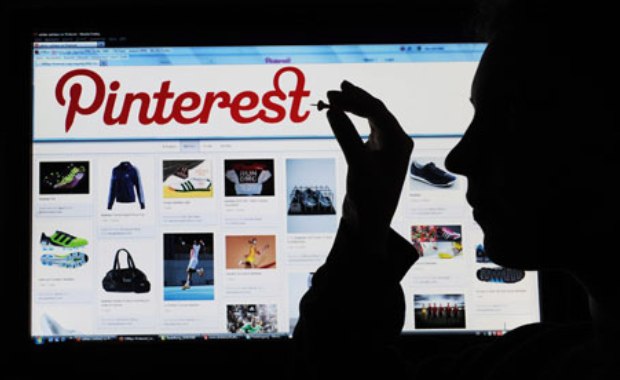
When it comes to digital, I think we’re all still fumbling around in the dark. In the world of theatre comment, this has manifested itself in recurring, sometimes ugly debates between mainstream critics and the blogging community. But what if the technology at our disposal offers more than occasion for conflict? While words alone can create a rich tapestry of critical response, imagine how much richer this might be with the addition of images, video, audio, geotagging, experimental forms such as Pinterest – the list goes on. Despite having such options at their fingertips, the majority of those writing theatre criticism for the web remain trapped in the conventional print review format: a block of text that often tries to avoid spoilers. Myriad possibilities are there, but it seems we’re slow to adopt them.

This is not to dismiss all theatre writers as luddites. Some bloggers and critics are embracing the possibilities of digital criticism and experiments are beginning to take shape. Twitter, for instance, has opened up instant discussion, allowing theatregoers to share their thoughts from the moment they step out of the auditorium. Luke Murphy has taken the trend to another level by aggregating such reviews on one feed – an intriguing idea, but one arguably limited by the tweet’s inherent brevity.

Matt Trueman, meanwhile, played with structure in his clickable review of Constellations earlier in the year, an experiment that had its flaws but asked fascinating questions about how the form of theatre criticism might reflect the form of the theatre being critiqued. A rich and ever-increasing variety of digital formats offer the opportunity to go even further. Might we begin to see purely visual responses to theatre through platforms such as Pinterest, or more video responses along the lines of blogger Eve Nicol’s refreshingly enthusiastic YouTube reviews?

Beyond experimenting with form, and returning to the discussions initiated at Devoted and Disgruntled, the digital space even has the potential to set out a whole new model for how critics might engage with the theatre they write about. Theatre writers Jake Orr and Maddy Costa are beginning to do just this through the creation of Dialogue, an online playground where theatre makers, writers and spectators can open up new conversations. Thanks to the flexibility allowed by online criticism, where page space is not an issue and responses can go further than words, the role of the critic could in future go beyond reviewing to play a greater part in the space between theatre, creator and audience.

The possibilities raised by digital technology pose more questions than they answer, but these are questions that beg to be thrown open for wider debate. How might digital experimentation impact upon mainstream criticism? How can we play with form and structure to create the theatre criticism of the future? And, crucially, what implications does digital innovation have for the evolving role of the critic?

Photo: Julian Stratenschulte/EPA

The woman’s part: is single-sex casting sexist?

Originally written for The Guardian.

At a performance before Christmas of Propeller’s Henry V – not the funniest of Shakespeare’s works – theatregoers, including myself, were in stitches. The source of our mirth was the scene in which the French princess Katherine and her maidservant attempt to polish their English – a good old-fashioned language gag. But the riotous laughter owed less, I suspect, to the script than to the fact that Katherine had a five o’clock shadow.

Men on stage in dresses, it would seem, hold an eternal fascination. The pantomime dame has become as quintessentially festive as mince pies and tinsel, cross-dressing comedians can raise a belly laugh without even opening their mouths, and all-male casting exercises continue to tickle, intrigue and divide audiences.

Propeller’s decision to be an all-boys’ club has, of course, good historical precedent. Shakespeare wrote with male actors in mind, a fact that becomes relevant to the playful gender games initiated when women disguise themselves as men.

There is, of course, one major drawback to putting men in corsets, even in Shakespeare. As pointed out by Jo Caird in a blog for What’s On Stage, all-male casting filches some of the few great roles written for women. Citing the “chronic under-representation of women on the British stage”, she considers Propeller’s casting policy to be unjustifiable, an argument that carries a lot of clout.

It is difficult to imagine, however, similar objections being raised against exclusively female casts. All-female casting has become almost as common a practice as its male counterpart and is often credited with producing illuminating re-examinations of gender. Just think of Theatre Delicatessen’s exploration of the ways women contort themselves into prescribed roles in their all-female interpretation of A Doll’s House, or the Globe’s experiment a few years back in balancing its all-male productions with The Taming of the Shrew and Richard III performed by casts consisting solely of women.

But if all-female productions can be hailed as delving deep into the tangled gender politics of classic texts, surely the same can be argued of any cross-dressing production. Whether conceived as radical re-interpretation or mere giggle-inducing gimmick, I can’t help but feel that any production that makes a decision so extreme is inherently playing with gender, even if that’s not the primary purpose.

If nothing else, this technique is oddly alienating. In Propeller’s bloody take on Richard III, director Edward Hall and his cast made few concessions to femininity, with not a wig in sight and female attire that was cursory at best. The production’s hulking men in skirts consequently provoked an almost Brechtian jolt, roughly picking up the audience and putting them back down at one remove from the scenes on stage.

By making the familiar unfamiliar and levelling gender differences, single-sex casting can make us look afresh at plays that have become an accepted part of our cultural fabric. This allows audiences to reassess not only the gender relations in these classics, but also the ways in which men and women still treat one another in today’s society.

With Mark Rylance preparing once again to don his petticoats as Olivia in the Globe’s production of Twelfth Night, the theatrical gender-bending shows no sign of waning. It might not always be entirely fair, but single-sex casting remains one of the most effective ways of opening up the gender politics debate in classic plays. Perhaps it’s necessary to be exclusive in order to call for a more inclusive society?

Photo: Manuel Harlan