Long-distance relationships

???????????????????????

Originally written for The Stage.

Look at the programme of any regional receiving house and the line-up is typically scattered with popular musicals, famous faces and hits touring out of or into the West End. But beyond these crowd-drawing headliners, touring is often difficult for other areas of the UK theatre industry.

For those artists and companies working slightly below the radar, without big names or familiar shows to pull in audiences, touring is becoming an increasingly challenging and expensive activity. As everyone feels the squeeze on their funding, touring companies get hit twice, as struggling venues can no longer afford to pay guarantees and instead shift the risk onto those bringing in the work. It is difficult to build a relationship with audiences where engagement is often shallow and fleeting, while theatregoers with shrinking budgets are leaving it later and later to book tickets.

As I discovered in the process of researching a report for theatre producer Fuel, challenges faced by the non-commercial touring sector are manifold, but one particular area of difficulty is around the notion of collaboration – or lack thereof. Many touring companies express frustration about the reluctance of venues to cooperate on marketing strategies and share information about local audiences, with the level of collaboration varying wildly from theatre to theatre. At the ITC’s conference in February of this year, meanwhile, the difficulty of accessing audience data was identified as one of the key barriers for UK touring.

“We don’t always have access to audience data from all the venues,” explains Hanna Streeter, an assistant producer with Paines Plough, “so it makes it difficult for us to build relationships with those audiences.” This same frustration is shared by Jo Crowley, the producer of theatre company 1927, who identifies “how tricky it is as a company to access information around your audience” as one of the primary challenges of touring. Somewhere along the line, relationships between companies and venues are breaking down.

There are, however, those working towards a solution to these problems. Fuel’s New Theatre in Your Neighbourhood project, one of a number of initiatives funded through the Arts Council’s new Strategic Touring Programme, offers one possible model. As part of their aim to strengthen relationships with audiences on tour, the theatre producers are hiring local engagement specialists in each of the areas they visit, who then act as Fuel’s main presence in that region.

These individuals, chosen for their knowledge of the local community and its arts ecology, can serve as a central point to bring together more collaborative relations between Fuel and the venues they work with. In the project’s assessment, this approach and the “camaraderie” it created was identified as one of the key achievements of New Theatre in Your Neighbourhood’s initial six-month research phase, shifting the way in which the way in which the venues in question work with visiting companies.

Going hand in hand with the need for audience data, a number of producers stress the importance of trusting in venues’ knowledge about those who attend their performances. For English Touring Theatre, who are also being funded by the Arts Council’s Strategic Touring Programme to support the roll-out of quality large-scale dramas to regional receiving houses, this is central to the success of their scheme. “Issues with touring, I think, come down to the fact that you’re dealing with such different venues,” says associate producer Caroline Dyott. “It is not the case that one size fits all and so we just slightly have to acknowledge that and trust venues to know their audiences.”

Streeter agrees, explaining that Paines Plough are using their Strategic Touring grant from the Arts Council to build a sustainable base for small-scale touring in close partnership with venues. “It’s a challenge for a touring company to understand the audiences in all of the different places that they’re going to,” she acknowledges. “That’s where the collaboration with the venue is really important, so we don’t just feel like we turn up, we do a show, we leave; we want to have a relationship with the audiences in all the places that we’re going to.”

This sharing with theatres can go both ways, as Crowley suggests: “There’s a huge intelligence and resource that touring companies have that would be really interesting to share.” Instead of acting like competitors, venues and companies might be able to learn more about their respective audiences from one another. Crowley adds: “There needs to be a better conversation between venues and funders and companies about how we work better to collect the information we need and to nurture our audience collectively.”

As Crowley points out, central to the success of these collaborations is a shift in attitude to view the audience as a shared audience. In many cases, this is a shift that is already taking place. Streeter explains, “we’re working with the venues on how we can support them and help them to grow audiences, not just for Paines Plough, but for other touring companies and for the venue and for new work in general.”

Fuel’s co-director Louise Blackwell agrees, expressing her hope that the work Fuel are doing will provide benefits “not only for what we produce but for the wider theatre landscape”. Through closer collaboration and a recognition that venues and companies are ultimately working towards the same goal, perhaps the challenges posed by touring can be collectively overcome.

Photo: Lizzy Watts in the Paines Plough production of Wasted. Richard Davenport.

“We’ve a responsibility to widen the net”

NSA_ 0071 Image provided by Creative & Cultural Skills © Briony Campbell

Originally written for The Stage.

In 2011, following years of debate around the growing culture of internships in the arts sector, Arts Council England issued a set of guidelines for employers taking on interns. This document outlined the Arts Council’s determination “to open employment opportunities in the arts to all” and made it clear that interns should be paid the national minimum wage. But has anything actually changed?

On the one hand, it would appear that little has shifted. Once again it is that time of year when those hoping to break into the arts look to the Edinburgh Fringe, which promises a cornucopia of opportunities but little by way of payment. While the Festival Fringe Society does pay its staff, as do a number of the commercial venues such as Underbelly and the Assembly Rooms, many more rely on voluntary or poorly paid labour. C Venues, for instance, hires staff on a “semi-voluntary” basis, offering accommodation and an unspecified “minimal freelance fee”, while even the Traverse Theatre has advertised for unpaid festival placements.

Of course, it is not just on the Fringe that interns receive a raw deal. Many theatres across the country operate unpaid internships the whole year round, often for understandable reasons. For some organisations it is the only economically viable model available to them if they want to stay open, and for interns it can provide opportunities that might not otherwise be available to them. Internships also remain something of a grey area, with the Arts Council’s guidelines admitting that “there is no formal, legal definition of an internship”.

There is, however, a new scheme that seeks to address some of these difficulties. The Creative Employment Programme, funded by a £15 million grant from the Arts Council and delivered by Creative & Cultural Skills, hopes to widen access to careers in the arts by supporting paid opportunities for unemployed people aged between 16 and 24. The programme is offering internships and apprenticeships for both graduates and non-graduates over the next two years.

“The aims are to address youth unemployment as best we can, encourage people into the arts through different and fair access routes, and hopefully to change some of the recruitment practices that are in our sector,” explains Paul Marijetic, head of apprenticeships at Creative & Cultural Skills. He recognises that those who currently enter the industry tend to come from a “small demographic”, so one of the key goals is to widen this pool of recruits.

Through this new initiative, organisations looking to establish paid internships or apprenticeships can apply to the Creative Employment Programme for part wage grants, either as individual institutions or as consortia. In keeping with the aim of widening access, successful employers must then sign up to a Fair Access Principle and advertise the positions through the Job Centre Plus.

“With this programme we wanted to meet people who we don’t normally meet when we recruit,” says Emma Rees of the London Theatre Consortium (LTC), one of the first networks to benefit from the scheme. This group of 13 theatres, including the Royal Court, the Lyric Hammersmith and the Donmar Warehouse, is offering 38 apprenticeships across the two years. “We didn’t advertise through the normal channels,” Rees continues. “We thought about how to find people.”

Another early bid to successfully receive funding was from House, a consortium of theatres across South East and Eastern England which will be offering 16 internships in 11 venues. Gavin Stride, director of Farnham Maltings and one of the key figures behind the consortium, stresses that “we have got a responsibility to try and widen the net in terms of the ways people engage in the sector”, adding that “sometimes you need to be ambitious to make things different”.

Marijetic is keen for others to follow the lead of LTC and House, making it clear that the Creative Employment Programme is welcoming consortium bids. By working together in this way, groups of theatres can offer much more valuable opportunities for interns and apprentices, as well as providing them with a broader overview of the industry. The LTC, for example, will offer apprentices a glimpse at the inner workings of all 13 theatres, leaving them with “a really strong grasp of the broader ecology of London theatre”, while Stride says that he can see interns moving between the different House venues depending on their skills and interests.

There is also the possibility that consortia could offer a sustainable model to take forward after this two-year programme concludes. As Marijetic explains, there is other funding available from government agencies to support these opportunities, but the money is often closed off to smaller organisations. He recognises that funding is going to be vital in sustaining these kinds of initiatives in the long term, describing the Creative Employment Programme as “the catalyst, the financial push to enable [organisations] to make that change”.

The organisations themselves seem equally committed to creating long term change. “We’re really, really keen for this scheme to develop into a viable alternative to university,” explains Rees, “not just reaching those people who might otherwise go to university, but reaching those people who most certainly wouldn’t.” Once again, however, money is the stumbling block. “The will is usually really strong, but this kind of work does need financial investment,” she admits.

If such opportunities are able to continue, there is even the suggestion that they could spark more widespread change. Stride argues that perhaps the most important thing about the Creative Employment Programme is that it will bring in “people who think differently” and who might be able to breathe fresh air into theatre organisations. “We need to be looking outwards, not inwards,” Stride insists. “We’ve got to take down the barricades, because actually they’re not defending us, they’re killing us.”

Photo: Briony Campbell for Creative & Cultural Skills.

Theatrical Matchmakers

OVNV_LAB1

Originally written for The Stage.

If there’s one thing Old Vic New Voices can’t be faulted for, it’s ambition. Last year, the Old Vic Theatre’s talent, education and community arm took a season of five plays to the Edinburgh Fringe, showcased a handful of brand new pieces from the US, supported several new productions in London, created a series of short films and mounted its ever-popular 24 Hour Plays – not to mention its extensive work with schools and local communities. At the heart of all these projects, it soon becomes clear from conversation with director Steve Winter, is an impulse to bring people together and link up emerging talent.

“We’re theatrical matchmakers,” is how Winter puts it. “That’s what we’ve always been and that’s what we want to continue to be.” This statement of intent comes as Old Vic New Voices implements a major overhaul of its Talent strand, reassessing the support it offers to emerging artists. Driven by a shift from project-by-project support to initiatives that will nurture talent over longer periods, the new opportunities being introduced this year include start-up funds to get fledgling projects off the ground and a dedicated venue for projects supported by the organisation.

Alongside hooking up like-minded artists and venues, Old Vic New Voices will now be connecting emerging artists and companies with the space to develop their work, offering free slots in a rehearsal space it has dubbed the ‘LAB’. The aim is as experimental as the name suggests; Winter describes it as “a place to fail and a place to succeed and a place to try things out”. Most strikingly, the emphasis is on process rather than product, with artists under no pressure to present a performance at the end of their time in the space.

“That’s one thing we’re absolutely clear about; it shouldn’t be a performance space,” says Winter. “If there’s one thing London doesn’t need, it’s more theatres.” Instead of being driven by the end goal of a full performance, Winter hopes that the LAB will be used “to develop and make work, to allow people to get together and talk, for writers to go somewhere to write quietly, for people to hold meetings, to invite people to watch a piece of work that might need funding – anything that propels creativity forward”.

The initiative has emerged from discussion with artists themselves, who highlighted space as one of the most important resources they could be offered. “I think there comes a point with any application or any job you’re doing where space becomes absolutely key,” Winter explains. “It’s an underrated, simple idea to give space away for free, because it’s so expensive in London – it’s expensive for the Old Vic, it’s expensive for the National, it’s expensive for everybody. And so it stops and stagnates many projects that I think would go on to be successful.” To fight this stagnation, Old Vic New Voices is offering companies and individuals the opportunity to book up to five weeks in the LAB across the year, asking only that applicants tell them what the space will be used for.

The response to this offer has been hugely varied. Winter tells me that more than 40 projects used the space in the first three months, including everything from devised theatre companies to poets to comedy performers. This represents something of a departure for Old Vic New Voices, whose focus in the past has been firmly on traditional theatre artists, primarily supporting writers, directors, actors and producers. While he’s keen to emphasise that this is not a complete break, Winter is enthusiastic about the possibilities of these new influences, saying “it’s been nice to get a different energy in the room”.

The only problem with this initiative, as Winter freely admits, is how to assess its impact. “I think for us this year the measure of success will be how much work gets off the ground and to what end,” he says, at the same time acknowledging that this evaluation might not satisfy everyone. He also suggests, however, that evaluation across the industry is beginning to shift, with definitions of success no longer as clear-cut as they once were.

“For a lot of people, their barometer of success is that they’ve got a rehearsed reading together, and they’ve had people see their work and they have felt creatively satisfied. I think the way that people are getting work out there is very different, and it’s about that too. If you get 20 new Twitter followers or you have an online phenomenon, then that’s a barometer of success; if you do a piece of work in a fringe venue that has less people than you might have on your Twitter account, is that less successful or more successful?”

Ultimately, the answers to Winter’s questions are down to the artists; amidst all the changes taking place at Old Vic New Voices, the determination to listen to the needs of those they help is key. “We just want to bring them together and facilitate creativity,” Winter says simply. “In principle that sounds rather empty and worthy; in practical terms it’s massively important.” While the future of Old Vic New Voices might be far from certain – Winter would love to install the LAB as a permanent space, but at the moment it is only secured for a year – the organisation is adamant that its direction will be steered by the artists it supports. “Rather than us leading and expecting them to follow, we’re being led by them.”

Vault Winner: Theatre Archives

AllsWell1981

Originally written for The Stage.

Think of the archive and the images that typically jump to mind are of dusty vaults and painstakingly catalogued documents. This picture could not be further from the ephemeral immediacy of performance, which for many is defined by its liveness. But what about the traces that theatre leaves behind?

After the final curtain call, a production leaves in its wake a whole swathe of material: costumes, scripts, director’s notes, programmes, set designs. For many theatres and companies, collecting and saving these objects is a central part of their work, establishing huge archives for future practitioners, students, researchers and theatregoers. How these archives are assembled, managed and disseminated can therefore have a significant impact on the theatrical influences passed down to the next generation of artists and audiences.

For theatremakers, the archive can be an invaluable source of research and inspiration, as well as a reminder of the tradition in which they are working. Geraldine Collinge, Director of Events and Exhibitions at the Royal Shakespeare Company, places the emphasis on “seeing the archive and the collection as part of our ongoing body of work”, positioning their current productions within the context of the company’s history. She also explains that the archive forms an important part of the creative process, often acting as a first port of call for directors starting work on a new production.

Similarly, the archives at Shakespeare’s Globe are a vital part of the ongoing life of the theatre. As Head of Courses and Research Dr Farah Karim-Cooper explains, supporting the creative team in the researching of new productions is one of the key roles played by the theatre’s archival material. “The main thing about the archive is that it’s not just a repository,” she stresses, “it’s a place where research is actually produced and feeds into the work of the organisation.”

And theatre archives are not just a useful resource for practitioners. Kate Dorney, Curator of Modern and Contemporary Performance at the Victoria and Albert Museum, notes that the appeal of their collections is surprisingly broad. “It’s a fairly even split between practitioners and researchers,” she tells me. “Directors and actors often come in to see videos to prepare for shows or auditions, designers come in for inspiration, we get lots of students, academics, TV and film researchers, family historians, authors – all sorts.”

With the advance of ever more sophisticated digital archiving systems, however, the way in which this material is accessed is shifting. Although Collinger thinks the move to digital has not affected archives quite as dramatically as it has other areas of the theatre industry, she says that “what is transformational is that more people will have access to them and they won’t be so rarefied”. As archives gradually become digitised, the information that they contain is increasingly accessible without the need to go to a physical archive, which often involves a complex registration process.

Dorney equally points to a “process of democratisation” around the online archive and to new opportunities for engagement. The V&A, for instance, recently produced Played in Britain: Modern Theatre in 100 Plays as an iPad app, collecting material from its archives in an interactive format. “The idea of the app was to give you the experience of coming into the reading room but having everything at your fingertips,” says Dorney. “It’s our attempt to make people understand how you can relate the different areas of the collection to something that you’re interested in.”

For other organisations, digital now sits at the heart of their archiving project. Sarah Grochala joined Headlong as an Associate Artist in August 2012 to work with the theatre company on their online presence, both around the shows they are currently producing and their production archive. The idea, Grochala explains, is “about giving people who didn’t have a chance to see the show a chance to look at some of the material that went into it, above and beyond a script, and to be able to create an idea of it in their head”. This material might include production images, programme notes, set designs or lists of research used by the creative team. The aim is to “give people a sense of the ingredients, not the cake”.

Continuing in that spirit of democratisation, Grochala is also clear that Headlong sees this material as having a potentially wide reach. Talking about making information “immediate and easily accessible” through the web, Grochala identifies the production archives as being of interest to audiences as well as to practitioners and academics. “It’s a sort of deepening of audience engagement and making sure that that engagement can exist both before and after the show as well as during it,” she explains.

However, the digitising of the archive brings challenges as well as opportunities. Grochala emphasises that Headlong’s project is a slow one, involving a painstaking process of recovery and curation, while Dorney doubts that another app will be produced by the V&A in the near future simply because of how time-consuming it is. Money is another issue, as the process of digitising is not cheap. As Karim-Cooper explains, it’s a project that “requires huge amounts of funding”, which for a non-subsidised theatre like the Globe forms a significant barrier. The desire to digitise is clear; it is simply a case of time and funds.

Despite all these digital developments, though, Collinge is doubtful that digitised archives will ever fully supplant the real thing. “That moment when an archivist pulls the First Folio out and you’re looking at those pages – there’s something very special there,” she says. “Admittedly having a digitised First Folio would be wonderful, but I think it would be a different and a new experience rather than one that would replace physical archives.”

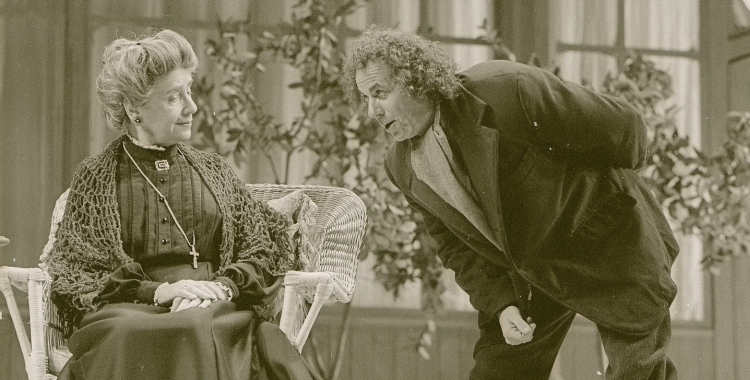
Photo: RSC Archive. From the 1981 production of All’s Well That Ends Well.

Putting the Spotlight on the Audience

leo_cinicolo_photography-1361 (2)

Originally written for The Stage.

As the power of data rapidly grows, we are now used to an increasingly tailored customer experience, whether that might be through personalised online shopping recommendations or targeted email campaigns. What is perhaps more surprising to learn is that the theatre industry is moving steadily in the same direction.

This growing emphasis on audience data and understanding has been reinforced by the recent announcement that Clive Humby and Edwina Dunn, the co-founders of the data analytics company behind Tesco’s Clubcard scheme, are to invest a seven-figure sum into audience research agency Purple Seven. This move into the cultural sector is in response to what the duo identifies as a big opportunity for theatres to better understand, segment and target their audiences, learning from the innovations that have been made in other sectors.

Thanks to developments in digital technology, the audience information potentially available to theatres is now vast. In addition to box office data, which can inform theatres about their patrons’ booking habits, theatrical tastes, pricing preferences and post codes, theatres are now able to gather insight from social media, online questionnaires and the outcomes of digital advertising campaigns, all of which can be broken down through ever more sophisticated analytics programmes such as those offered by Purple Seven. This is not to mention the old-fashioned tactics of focus groups, paper surveys and direct engagement with audiences at the venue.

With new sources of information come new opportunities. Richard Huntrods, client services director at arts marketing agency AKA, is enthusiastic about the possibilities of recent digital developments: “The growth of social media is a fantastic resource for us to understand whether the types of people we were expecting or hoping to attract are the sort of people we really are attracting, because we can see them talking about the show on a minute by minute basis.”

The Arts Marketing Association (AMA), which provides support, training and development for arts marketing professionals, also points to a wide variety of activities that theatre marketers are currently using to glean audience intelligence. These include gathering feedback from existing audiences, implementing and evaluating market research projects, establishing and understanding market segments, and developing and maintaining customer databases. According to AMA’s head of programme Cath Hume, “we have a better understanding than ever of who is engaging with us”.

While there is no doubting the quantity of information and analysis now available to theatres, the link between insight and implementation has not always been clear. As the AMA points out, it’s all very well having the data, “but what to do with it is key”. It is for this reason that the Association has launched CultureHive, a new online knowledge hub of best practice resources for arts marketers. The project, funded by Arts Council England’s Audience Focus initiative and mounted in partnership with the Audience Agency, aims to bring together audience insight technologies and strategies for feeding this insight back into the process of reaching potential audiences. It is an approach that seems to be spreading.

“Understanding audiences is essentially a foundation for any campaign,” says Huntrods, emphasising the importance of a holistic strategy. He explains that AKA’s process for marketing any show begins with looking at previous research for similar productions, followed by identifying five or six different audience segments that they hope to target. Then, using all the various sources of data available to them, the agency will build up a detailed picture of target audiences, helping them to identify how best to reach these potential punters. Huntrods describes this whole process as “rich and creative”.

For those working in the arts, creativity is key, even as audience analysis becomes increasingly scientific. Despite the wealth of data now available at marketers’ fingertips, the theatre industry continues to rely heavily on tried and tested methods, emphasising the importance of direct communication with target audiences. Huntrods explains that focus groups, for instance, remain essential for AKA’s campaigns, and that this feedback often influences the marketing images, copy and pricing strategy for a show. He is also keen to stress the value of firsthand engagement with audiences.

“No other industry has quite the advantage we do – namely, being able to see its customers in one place and at every performance,” Huntrods says. “One of the most important parts of the research we do is going to the theatres and actually seeing the audiences and talking to them firsthand. You can really understand a hell of a lot by just seeing people.”

Similarly, Purple Seven have found that some of their most successful results have been informed by direct audience feedback. Their survey function, for example, provides instantaneous feedback for theatres straight after a performance, allowing them to make immediate adjustments – to sound, for instance – during the run. The company’s co-founder Stuart Nicolle is clear that the desire for a genuine understanding of audiences lies at the heart of what Purple Seven does, saying that “when we understand that actually we’re trying to build relationships with audiences, then we can start to communicate with them in the right way”.

The expertise and investment offered by Humby and Dunn is to be put towards making this understanding even more sophisticated. Whereas historically Purple Seven’s audience analysis has been fairly linear and query-specific, Nicolle explains that the new data modelling they are developing will “make it much more of a story, so you get to understand the customer holistically rather than the different elements that make it up”.

Nicolle hopes that this refined data will then allow the company to advise theatres on programming decisions, such as the length of runs and which shows to programme alongside one another. This is an area that Nicolle admits offers potential conflict with the artistic impetus of venues, but he insists that Purple Seven’s work “isn’t about commercialising the arts”.

However, not everyone in the sector agrees that improvement is needed. Refuting Humby and Dunn’s claims that the cultural sector needs to catch up with other industries, Huntrods argues that theatres are in fact ahead of the curve in understanding their audiences. He points to the example of digital advertising, in which theatre campaigns often deliver twice the average return on investment, and to the success of direct mail. “The return that theatre gets relative to the spend is phenomenal,” he claims, “and I think that’s because we understand our audiences so well and we’ve got such great data on them.”

While there may be differing opinions on the specifics of audience analysis, the one point of agreement is that data and research offer a vital opportunity for theatres to assess who is coming through their doors and why. As Nicolle puts it, “the ethos behind it all is to really get a full understanding of who the audience is for each organisation”.

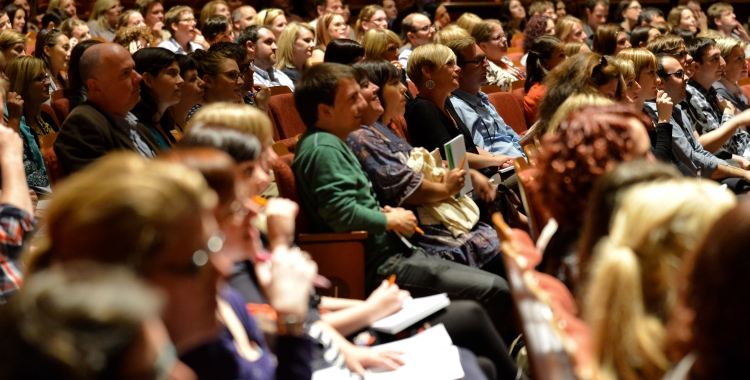
Photo: Leo Cinicolo.