Thinking Outside of the Building

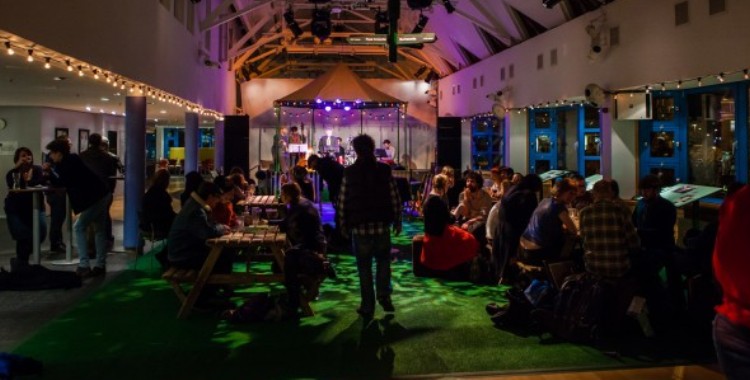
WYP-600x400

Originally written for The Stage.

At Vicky Featherstone’s first Royal Court press briefing, there was an intriguing statement of intent about the theatre’s direction. As well as reaffirming the theatre’s commitment to writers, handing over the keys of the building for a summer season led by the playwrights, Featherstone made a comment with potentially far-reaching implications for the future role of the Royal Court. She said, with a playful grin, “no space should be safe from theatre”.

As the new artistic director went on to explain, she’s interested in utilising different spaces within the building, in taking shows outside the Royal Court’s home in Sloane Square, and in bringing new audiences through its doors. It’s perhaps not surprising that Featherstone, who has led the nomadic National Theatre of Scotland for the last eight years, should want to look beyond the restrictive and arguably exclusive boundaries of the Royal Court’s four walls. What’s more striking is that she’s not alone.

While “audience development” has long been a key part of theatres’ PR arsenal, this can often be just so much empty rhetoric. Now, however, there seems to be a genuine commitment to opening up theatre spaces, venturing beyond bricks and mortar and establishing theatres as a vital part of their surrounding communities. It’s a development that’s sorely needed and one that might, if successful, ensure a future life for theatres within an arts funding landscape that is looking increasingly precarious.

At last year’s Theatres Trust conference on delivering sustainable theatres, Griff Rhys Jones championed the theatre as a place of public assembly in modern day communities, taking on the civic role once occupied by the town hall or community centre. While a vision of the theatre as the beating heart of the community is perhaps a little utopian, there are ways that buildings can connect with local residents through more than just their artistic programme. Just look at Battersea Arts Centre, where experimental performance jostles alongside yoga classes and tea dances. Artistic director David Jubb is keen to retain this diverse make-up of functions, hoping to achieve an overlap between the venue’s two distinct strands of activity, while ongoing improvement works will make the building structurally more open.

Beyond London, this gesture of opening out is even more essential, particularly as other public spaces are threatened. Rhys Jones has pointed to the example of Derry Playhouse, which is open to local people throughout the day, functioning almost like a community centre. There are other similar if not quite so far-reaching examples. Chapter Arts Centre in Cardiff has worked hard to create a welcoming environment that encourages people to drop in, while one of the key pledges made by West Yorkshire Playhouse’s new artistic director James Brining is to open up the building and explore the way the theatre relates to its communities. One of the few things theatres do have is space, much of which lies dormant when not being used for performance. Why not fill it?

As well as inviting audiences in, establishing theatres as buzzing hubs of the community, venues might look outwards. As buildings hold less prestige than they once did, there is the opportunity for theatres to redefine their identity beyond their own walls. West Yorkshire Playhouse has effectively demonstrated this approach with the city-facing programming of this year’s Transform Festival, including a piece of performance made with local residents and performed outside the theatre. The challenge, of course, is to expand this beyond the fleeting festival context.

But does all this shift the focus away from the art itself? There are clearly potential pitfalls for such an approach – particularly if treated as a careless add-on to tick funding boxes – but the community benefits need not be at the expense of the theatre. At their best, each can positively impact upon the other. Fresh influences enter the building, disrupting and invigorating a process of theatremaking that might otherwise become stultified, while new potential audience members are given the opportunity to encounter the work and be surprised.

None of this is to say that theatres should abandon their core activities; rather, as ever, they need to adapt. Buildings have always been one step behind the performances and audiences they host, running to keep up. Think of the exponential growth in site-specific work over recent years, to the point where the National Theatre is now selling tickets for Shunt and Punchdrunk shows taking place miles away from the South Bank. The need from local communities and potential audiences is there, the only question is whether theatres will step in to fill the gap.

In her recent keynote speech addressing the thorny issue of arts funding, culture minister Maria Miller firmly stated that the arts need to make the case for their ongoing importance in economic rather than artistic terms. It’s a statement that has prompted an understandable backlash, pinpointing many of the dangers and inadequacies of measuring the arts’ value in purely monetary terms. But perhaps theatres’ greatest argument for their survival is the role they might play within their local areas – artistically, economically, and as a central component of the community.

Photo: Richard Davenport
Taking Wing: Headlong’s Emerging Director Scheme

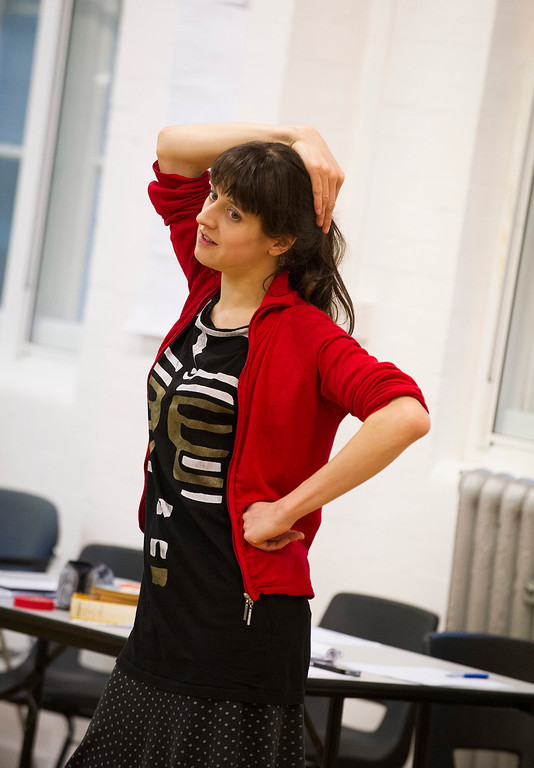
Seagull Reh Shots - Tristram Kenton - Blanche McIntyre-XL

Originally written for The Stage.

Beneath her eloquent enthusiasm, there’s a jangle of nerves in director Blanche McIntyre’s voice as we speak over the phone. It’s easy to understand why. After being widely tipped as one to watch and winning the Critics’ Circle Best Newcomer award, she is now taking on her biggest and riskiest project to date. This spring she is directing a new version of The Seagull with Headlong, touring to main stages around the country. For a director who has cut her teeth on the intimate spaces of the London fringe, it’s a huge leap.

The initiative allowing McIntyre to take this leap is Headlong’s emerging director scheme, which funds an annual midscale tour for a director in the early stages of their career. The programme, now in its fourth year, has previously supported work by Simon Godwin, Natalie Abrahami and Robert Icke, the last of whom is now the company’s associate director. The aim, as Headlong’s executive producer Henny Finch explains, is to stretch the artistic ambition of emerging directors within a touring structure.

“The key difference between this and other schemes is that it’s touring,” she says, keen to highlight the significance of this distinguishing factor. “It’s offering directors an opportunity to direct for a load of different spaces and to find out about how to programme for different audiences up and down the country.” Unlike building-based schemes such as the Donmar’s prestigious resident assistant director programme, Headlong offers emerging and mid-career directors the chance to present work on stages ranging from the Richmond Theatre to Newcastle’s Northern Stage, supported by an experienced creative and technical team.

Headlong’s departing artistic director Rupert Goold also points to the importance of creating work for different venues, explaining how his own early experiences of working both in London and regionally offered him “a great insight into different audiences and spaces”, with a huge impact on his subsequent practice. “I am a firm believer in giving people the opportunity to learn their craft in a practical way,” Goold adds, speaking of his desire to offer directors “chances to test themselves in larger theatres and a route beyond the fringe”.

The scheme that has allowed him to offer those opportunities first emerged through a partnership with the Nuffield Theatre in Southampton, which as executive producer Kate Anderson explains has a long-standing relationship with Headlong and a strong affinity with its work. Seeking to pair an exciting director with a classic text, the project was first trialled with Simon Godwin’s production of A Winter’s Tale in 2010, followed by bold versions of A Midsummer Night’s Dream and last year’s widely acclaimed Romeo and Juliet. Anderson makes it clear that artistic quality has always been at the scheme’s heart: “It’s led by the work and by practising artists, rather than led by a scheme that has a fixed set of rules. That makes its aspirations very high indeed artistically.”

For McIntyre, this has meant the chance to work on a bold and ambitious scale, offering an interpretation of The Seagull that uses a striking design concept to “go back to what the nature of the play is and do something unusual with it that’s going to bring that out”. Scale is key here; by touring to a selection of midscale venues, the scheme offers a rare opportunity for directors to think outside the small confines of fringe theatres and studio spaces.

“It’s definitely working on a bigger scale,” says Finch, who is concerned that many mid-career directors currently get stuck producing work for smaller venues. The scheme also bridges a troubling career gap for directors and, perhaps even more importantly, does so within a specifically regional context. While many talented directors thrive on the London fringe, the step up to regular work for main stages is a massive and often daunting one. As McIntyre acknowledges, being offered an opportunity to take that step is extremely unusual: “The idea that there is a project that exists which allows someone to take massive risks, to allow a director to really test themselves artistically and creatively – and not only to do that, but to do it on a national scale in a whole range of different venues – is absolutely extraordinary.”

Finch sees Headlong’s scheme as a long term strategy, one that is vital in the current environment of funding cuts. She notes the contrast with her own experience of starting out in the late 1990s, pointing to the opportunities that allowed her and Goold to get where they are. “It’s very different now,” she observes grimly. “So we think we need to keep providing opportunities like the ones we had, which were much easier to come by then when there was much more money around. Because otherwise in 15 years time, when we start to look to the new generation of artistic directors, we’re going to be really impoverished.”

With the search beginning for Goold’s replacement, Finch is firm in stating that this scheme will continue under the company’s new artistic director, expressing a commitment that is echoed at the Nuffield. From both organisations, there is a sense that what they are doing is essential – not just for the individuals who directly benefit, but for the whole landscape of regional and touring theatre. As Anderson concludes, with reserved optimism, “none of us can change the world, but we can all do a little bit”.

Photos: Tristram Kenton

Jack Thorne

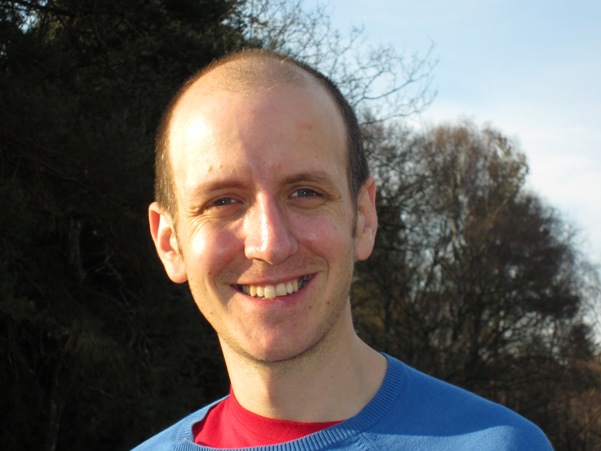
Jack Thorne 1 - high res

Originally written for The Stage.

One of the first things to emerge from conversation with Jack Thorne is his compulsion to multitask. “If I’m not working on at least two scripts at once then I stop sleeping,” the playwright and screenwriter tells me, his voice charged with a jittery energy that makes this easy to believe. The circumstances of our interview are testament to this need to always have more than one project on the go: Thorne is speaking to me over the phone from the set of his latest film in Majorca, while he prepares for the start of rehearsals for his new play.

“If I’m working on just one thing I’m not a good writer,” he says by way of explanation. “When I run into problems, the scene that won’t end or the element of the story that won’t make sense, I’ll just spend a week walking around my house. To be able to swap onto another project and go ‘I know how this works’ saves me every time.”

Multitasking has also informed Thorne’s diverse writing career, which spans from television dramas such as This is England and The Fades, both of which won him BAFTAs, to a recent adaptation of Friedrich Dürrenmatt’s The Physicists for the Donmar Warehouse. “There was no deliberate plan,” Thorne admits of his career path, “it all just sort of tumbled out.”

It is almost impossible to discuss Thorne’s career trajectory without mention of the small phenomenon of Skins, for which he was one of first writers to be recruited by creators Bryan Elsley and Jamie Brittain. While Thorne is immensely grateful for this experience, describing Elsley as “generous and brilliant”, the show’s popularity inevitably meant that it became attached to his professional identity. “There was a while when it was just Jack Thorne, open brackets, Skins, close brackets,” he laughs.

Thorne has since been able to break away from this exclusive association, partly through screenwriting departures, such as his segue into the supernatural genre with BBC Three series The Fades, and partly through his work for the stage. Although one of his earliest writing experiences was the Royal Court Young Writers’ Programme, Thorne continues to find theatre the toughest of the mediums he writes in: “I find that if I’ve been writing a lot for telly or film and then I try to write for the stage I really can’t do it, I can’t remember how it works.”

This difficulty was intensified during the writing of his latest play, Mydidae, a commission by new writing company DryWrite that issued Thorne with a peculiarly specific demand. “They just said we want to do a one act play in a bathroom, what have you got?” The result, premiering at the Soho Theatre in December, morphed into a full-length two hander that Thorne found “somehow liberating” to write. As he speaks about the challenge of adapting Dürrenmatt – “the extraordinary thing is that the more you unpick him the less you realise you can unpick him” – and admires Alan Ayckbourn’s tactic of setting himself rules before writing, Thorne creates the impression of a writer who thrives under creative constraints.

This makes his latest project with DryWrite a perfect fit. As a writer acquainted with film and television, which offer the constant possibility of cutting away to sustain narrative dynamism, the charge to confine a whole play to any one room is a challenge for Thorne, but the bathroom is a particularly tricky space due to its inherent echoes of loneliness. “It’s a place you go to on your own,” Thorne says, “you don’t really share it”. To negotiate this difficulty, he has filled the space with just two people, a couple in the throes of a nightmarish day whose relationship “builds to a pitch”.

Alongside the specificity of the setting, Mydidae has also offered Thorne the opportunity to write for a particular performer, DryWrite’s co-artistic director Phoebe Waller-Bridge. Describing that process, Thorne speaks of Waller-Bridge’s “rhythm”, a word that repeatedly peppers his understanding of writing for theatre. “She’s not quite Christopher Walken, with that level of distinctive rhythm, but there’s a sort of joy to how she talks and trying to capture that rhythm was a great thing.”

This habit of speaking about theatre like a musical score suggests a certain sensitivity to the idiosyncrasies of playwriting, a sensitivity perhaps informed by the contrast with his writing for the screen. This sensitivity is contradicted, however, by a confessed inability to think about an audience’s reaction while writing. Recalling an interview with screenwriter Melissa Mathison, Thorne mentions her working relationship with Steven Spielberg, who would constantly be asking her about the experience of the audience. “That’s why he’s such a genius,” says Thorne with almost boyish admiration. “I don’t have that ability, I don’t think about an audience reaction. Instead it’s what I’m thinking, what I can see, what that feels like.”

It’s a quiet undermining of his way of working that is typical of Thorne’s tone throughout our discussion. Despite his clutch of writing awards and his current foray into film with an adaptation of Nick Hornby’s novel A Long Way Down, the writer often comes across as tentative, grateful for but slightly baffled by his own success. Ultimately, Thorne suggests, his fierce work ethic is simply a way of restoring self-esteem.

“Some writers are blessed with real confidence in what they do and how they do it. I don’t really have that, so I need to be able to restore my confidence at regular intervals – almost daily,” he says. As well as fighting insomnia, “having two projects on the go at once is a way of doing that.”