Measure for Measure, Young Vic

12049405_10153575696093346_2716225082814279593_n-600x401

Originally written for Exeunt.

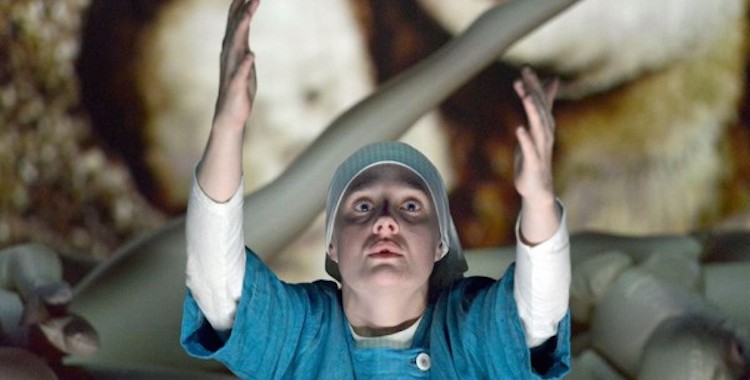
From the moment the house lights fall at the Young Vic, there’s no doubting that this Measure for Measure is about sex. The curtains – plastic, wipe-clean – part to reveal a writhing orgy of blow-up dolls, painted mouths stretched wide, from which the cast emerge. At the show’s opening, Vienna is soaked in sin. The tight fist of the law has slackened and the people are running amok. In one sense, Shakespeare’s prickly, problematic play is one long tussle to reinstate discipline and restraint. Trouble is, sex – like those miniature mountains of blow-up dolls – is impossible to ignore or deny.

In Joe Hill-Gibbins’ production, everything about the characters can be read from the way they deal with this tangle of plastic limbs. Zubin Varla’s “old fantastical duke of dark corners”, dishevelled and wide-eyed, proclaims to “love the people” in the same movement as trampling his inflatable citizens underfoot. He wants to restore order, but he doesn’t want to be the one to do it. Instead, he appoints Angelo, a man who “scarce confesses / That his blood flows”. Prim as a village priest, Bible tucked under his arm like a comfort blanket, Paul Ready’s unlikely leader picks his way carefully through the debauchery, careful to at once ignore and avoid it. Revelling subjects, meanwhile, throw the dolls from hand to hand, finding pleasure wherever they can.

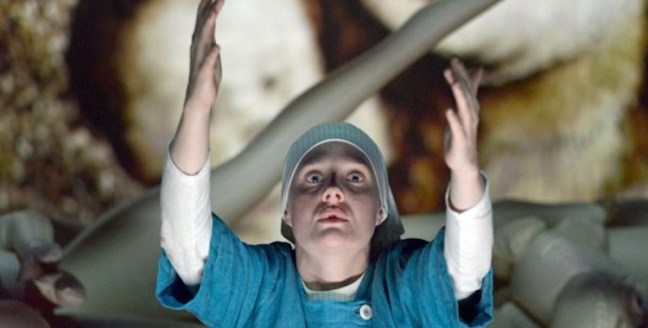
Then there’s Isabella. The first time we see her, Romola Garai’s nun-in-training wearily pushes all relics of earthly temptation out of her way, murmuring reverent words of prayer as she does so. No hanky-panky for her, nor seemingly any desire for it. When her brother Claudio (Ivanno Jeremiah) is to be executed as an example – his pre-marital sexual exploits here caught on tape in a sly nod to surveillance culture – she finds her voice, making a persuasive petition to Angelo. Garai’s Isabella might be forbiddingly austere, but she’s also steely and impassioned, positively spitting out the words “man, proud man”. Although she’s trapped in what is still, for all the modern dress, overwhelmingly a man’s world, she is not a woman to underestimate.

This is a Measure for Measure full of fascinating if sometimes incongruous character interpretations. Ready’s Angelo is a preening, cowardly tyrant, preaching with new-found vanity one moment and shrinking into corners the next. Overcome by desire for Isabella, he grasps uncertainly at one of the pillars enclosing the stage, desperate for something to hold onto in this new world of dissolving morals. For all his seeming meekness, though, the proposition he puts to Isabella is doubly unsettling for its tentative, insidious abuse of power – an abuse that is still painfully resonant. This Angelo could just as well be a smarmy businessman making advances on a young female employee.

On the side of the more open sinners, unapologetic pimp Pompey (Tom Edden) seems to have arrived in Vienna straight from the streets of New York, conning his way out of trouble with fast-talking, ad-libbing wit. His regular client Lucio, on the other hand, is a cynical and surprisingly clear-sighted transgressor in John Mackay’s aggressive performance, pursuing the disguised Duke with dogged suspicion. Stripping the text down to a slender two hours, Hill-Gibbins and dramaturg Zoë Svendsen have cut or minimised many of Shakespeare’s minor, comedic characters, rolling bumbling constable Elbow into Hammed Animashaun’s uniformed Provost and keeping brothel owner Mistress Overdone offstage. Instead, we see this side of Vienna via a brilliantly daft – if possibly superfluous – pastiche of 90s hip-hop videos, as drug- and sex-fuelled anarchy reins in open mockery of Angelo’s new regime.

There are lots of these bold but silly touches in Hill-Gibbins’ production, some more successful than others. When Cath Whitefield’s spurned Mariana rocks out to Alanis Morissette, it’s hard to know whether to read it as an ironic comment on the angry-woman-wronged trope or just a gag designed for easy laughs. Other stage images, like those ever-present inflatable bodies, are both absurd and articulate, making a statement on the play at the same time as revelling in their own strangeness and audacity.

Aside from all the dolls, the most striking aspect of Miriam Buether’s design is its allusion to the fiery and fantastical imagery of medieval religious painting. The back wall of the performance space, periodically sliding aside to reveal the police cell where justice is clumsily meted out, is laid out in three panels like a triptych altarpiece, projected both with scenes from Christian paintings and live streamed video of the performers (now something of a European-flavoured Hill-Gibbins trademark). In one scene, we see a close-up of Claudio’s desperate, pleading face; in another, a cackling painted devil.

And like those paintings, Hill-Gibbins and Buether draw out both the excess and the religiosity – hypocritical or otherwise – of Shakespeare’s play. For all their holy intent, artworks like Hans Memling’s The Last Judgement or Hieronymus Bosch’s The Garden of Earthly Delights are a riot of colour and bodies and flames, as ridiculous in their own way as the piles of plastic flesh on the stage of the Young Vic. There’s no reason why the bizarre shouldn’t knock up against the Biblical.

Crucially, Hill-Gibbins and his team don’t attempt to solve the problem at the heart of Shakespeare’s play. Their interpretation embraces strangeness and ambiguity, its swirling soup of religious and pop cultural references never subsiding into a neat pattern. This is a dark play, for sure, but it’s also sexy and transgressive and funny and ludicrous. As the final scene awkwardly arranges the characters into their unlikely (and likely unhappy) pairings, that spiky contradiction that runs right through the play is slammed – like the dolls – centre stage.

Photo: Keith Pattinson.

RoosevElvis, Royal Court

590x494.fitandcrop


ELVIS: I always saw my life like it was a movie. Ever since I was a little kid.

Ever imagined your life as a movie? Not the movie of your life, all carefully edited highlights and an actor with much better hair in the lead role. Just day-to-day life seen through celluloid: getting ready in the morning, heading to work, going out for drinks. The banality of routine made exciting through the frame of Hollywood.

It seems only right that The TEAM, a company at once in love with and critical of Americana, should go to the movies. The outlines of Hollywood, so often overlapping with those of the American Dream, were there in Mission Drift, but RoosevElvis takes on that most quintessentially American of film genres: the road trip. Except this road trip is one – as per the title – with Elvis Presley and Teddy Roosevelt: two very different American heroes and two very different versions of masculinity.

I mention Mission Drift because it’s hard not to watch RoosevElvis through the remembered lens of that earlier show. Even just thinking about that production exploding across the stage of (the venue formerly known as) the Shed, all sexy chaos and soul-shattering songs, makes my heart beat a little faster. It was a show that locked horns with the American Dream and the history of capitalism by embracing the messiness, the unruliness, the unencompassable hugeness of its subject matter. It was all excess, bursting at the seams with images and ideas, yet the unrestrained aesthetic felt completely apt.

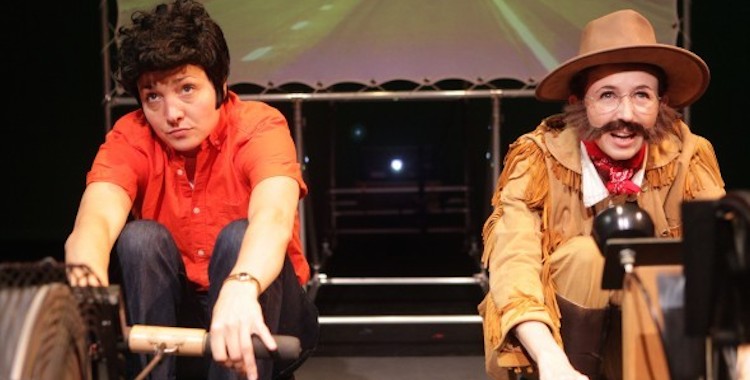
RoosevElvis has just as much going on, but the mash-up is slightly less convincing. It’s grappling with a hell of a lot: gender, sexuality, images of American masculinity, heroes and icons, the mythology of the roadtrip, the intoxication of adventure. As in Mission Drift, there are two main strands: the struggle undertaken by Ann, a lonely and lost 35-year-old in a dead-end job at a meat-processing plant, to find herself on the road to Graceland; and a hallucinatory meeting between Elvis (Ann’s hero) and Roosevelt (Elvis’s own hero in turn). And it’s all performed by two women – The TEAM’s fantastic Libby King and Kristen Sieh – in glorious, pointedly fake drag.

When we first meet Ann, she’s hooking up with Brenda, a visiting taxidermist she met on the internet. Brenda is everything Ann isn’t: self-assured, wisecracking, thirsty for adventure. As she puts it during their three days together, the reserved Elvis fan is “remarkably unbrave”. (That particular choice of words – “unbrave”, not “cowardly” – lands with a surprisingly devastating weight.) As her time with Brenda comes to an abrupt end and she struggles again with her identity, Ann conjures the spirits of Elvis and Roosevelt and the three of them hit the road, making a meandering pilgrimage to Graceland.

This all takes place within a makeshift film set, surrounded by screens playing snippets of Thelma and Louise and a series of movie-like on-location scenes, gorgeously filmed by Andrew Schneider. There’s more than a hint of The Wooster Group to this ubiquitous presence of televisual media, as movies become absorbed into the texture of everyday life. Thelma and Louise is a thematic and aesthetic reference point throughout, in fact, its simultaneous homage to and subversion of the road trip buddy comedy providing a blueprint of sorts for The TEAM. Here, again, two women critique the centrality of very particular ideas of masculinity to the American psyche – only these two women are playing two men.

King and Sieh’s embodiment of the two famous men smashed together in the title is one of the show’s great joys. The aptly named King lends Elvis both swagger and vulnerability; he can entrance the world with a swing of his hips, but yearns for his momma’s love. Also playing Ann, King deliberately blurs the edges of the two roles and the genders they represent, the same submerged melancholy bleeding into both characters. Sieh’s riotous Roosevelt, meanwhile, is a hyperactive pastiche of rugged yet intellectual manliness, burying emotions in books and hunting trips. It’s an incredible comic turn, made all the more impressive by its contrast to the persuasive naturalism of Sieh’s performance as Brenda.

RoosevElvis is a show of fantastic moments. Roosevelt throwing ridiculous punches at projected buffalo on a screen. Roosevelt and Elvis (or “Elvees”, in Roosevelt’s Katherine Hepburn-esque accent) lounging in a motel room, the latter in a monogrammed dressing gown. A finale that flips from the laugh-out-loud to the poignant and contemplative in an instant. Between these moments, though, it often veers from the road, going off into digressions or tipping the absurdity just that bit too far. Teddy and Elvis’s little skits, while ushering in most of the laughs, rarely move the narrative forward. I begin to wonder, as other interesting fragments of ideas around privilege and legacy periodically surface, whether the piece has taken on just a little too much.

But what The TEAM are great at, as ever, is pulling apart the threads of American mythology. In the opening scene of the show, as the two icons at its heart compete for attention like movie stars at a press conference, Roosevelt launches into a segment from one of his speeches. There’s a pause. Then he says, grinning, “what a great quote”. The twenty-first-century portrait of the USA drawn by The TEAM is one of national culture as quotation and national identity as an awkward yet enduring assemblage of freighted symbols.

This all resonates, too, with the construction of personal identity – a fraught ongoing battle for Ann. Whatever the show’s stumbles, there’s something brilliant about the staging of a queer woman’s journey towards self-realisation, in the process hijacking a narrative form that is so often (as the inserted biographies of Elvis and Roosevelt – always gently subverted by the simple fact of the casting – make clear) dominated by (straight, white) men. RoosevElvis might be critical of the traditional markers of American masculinity – guns, aggression, arrogance – but it also opens up the possibility of a new sort of identity, one still connected to but not hemmed in by the long chain of past heroes.

Tribute Acts, Camden People’s Theatre

main

The dad of one of my best friends is a long-time Labour Party member. He’s supported the party for all his adult life and since retiring he’s started getting more involved in local politics. When we were talking about the Labour leadership election, this friend of mine made it clear that her dad wasn’t backing Jeremy Corbyn. I was. So when the vote was announced, she immediately messaged me: “are you happy with the result?”

And I realised, with a little jolt of surprise, that I wasn’t quite sure how to reply.

Hope can be an oddly scary thing. I am, for the most part, a pretty optimistic person. Sure, the world can seem depressingly fucked up a depressingly large amount of the time, but acknowledging that has never stopped me from finding wonderful, beautiful, hopeful things to restore my faith in it. Seeing positives and believing in the possibility of something better, though, is a very different thing from investing hope in a solid person or party or promise. The moment you do that – the moment you shove all your optimism on the shoulders of a Jeremy Corbyn or a Natalie Bennett – you’re opening yourself up to the all-too-likely possibility of disappointment.

Tribute Acts is all about hope, heroes and the heartbreak of being let down. TheatreState’s new show has a fantastic central premise: Cheryl Gallacher and Tess Seddon use their shared disappointment in their once heroic dads as a parallel for the disheartening trajectory of the left. Sam Gallacher and Rodger Seddon, like Tony Blair and Bill Clinton, are men in suits who seem to have all the answers. Cheryl and Tess want to believe in them. They used to believe in them. But betrayal by father figures, whether biological or political, is hard to bounce back from.

On stage, Cheryl and Tess’s dads join them as projected presences, speaking from screens over their shoulders. Each performer has interviewed the other’s father, asking questions about political beliefs and family memories. The two men on screen smile and hesitate, awkward and unsure of what is being asked of them. They tell dad jokes. They struggle to recover memories that are cherished by their daughters. They stick firm to their principles – both are lifelong socialists – but are tellingly unable to locate women in their visions of the future. Asked who they’d want as advisers if they became prime minister, both name a string of men.

We’re invited, then, into the same process of disappointment that has tainted Cheryl and Tess’s relationships with their dads. Gradually, behind the suits and the smiles, we see the repeated failures and the broken promises. Both men left their families, and so the spectres of divorce and adultery still haunt these father-daughter relationships. Even without the experience of a broken family, though, the countless small letdowns that accompany the realisation that your parents are just people, after all – flawed, fallible people – is wrenching. Cheryl and Tess’s performance style riffs on shared silliness and the playful dynamic they have as a duo, yet within that there are startlingly poignant moments.

But what resonates just as much – perhaps more, as I process my ambivalence about Corbyn’s leadership – is the hurt of broken political promises. They might fuck you up, your mum and dad, but so do the false hopes and empty promises of slick, suit-clad politicians. I’m the same generation as Cheryl and Tess. I also remember the heady rush of Tony Blair’s landslide election and the now painfully ironic hubris of the campaign’s blasts of D:ream’s ubiquitous “Things Can Only Get Better”. As a child, not understanding the politics or what the “new” bit of New Labour might mean (everything’s new when you’re seven), that song and the excitement that accompanied the 1997 election had the flavour of prophecy. Things could only get better, surely. (*cue bitter laugh*)

Intertwining those two strands of betrayal – personal and political – is a brilliant idea. First disappointments are always the harshest, and so the slow, painful process of losing faith in parents is a compelling analogy for losing faith in the left. In practice, though, the two halves of the show don’t ever fully knit together. As Cheryl and Tess speak into their microphones about the promises of men in suits with footage of Blair rolling behind them, it’s clear what TheatreState are doing, but this basic conceit isn’t really advanced at all over the course of the show. Instead, the two performers’ family relationships begin to dominate, taking us further and further into the personal while the political lingers like a half-forgotten shadow.

Tribute Acts opens with a reference to one of the iconically naff moments in 90s cinema: Bruce Willis saying his hero’s goodbye to daughter Liv Tyler in the fantastically bad disaster blockbuster Armageddon. As snippets from the movie flicker on screen, Cheryl and Tess enter in ridiculous, billowing space suits (see what I mean about the silliness?), heroes in their own way about to step into the unknown. This daft framing device – nodded to again when both performers don copies of Liv Tyler’s dress – is, oddly, one of the show’s most powerful tactics. It captures, with a distancing dose of hyperbole, what we so often want from parents and leaders alike: someone who will step in and save the day (and possibly, like Bruce Willis, the whole world). Away from Hollywood, though, it’s never quite that easy.

A Room for All Our Tomorrows, The Place

Igor-and-Moreno-photo-bby-Alicia-Clarke-600x337

Originally written for Exeunt.

How often do we really listen to the sounds humans make? Not words. Sounds. Groans, moans, sighs, gasps, screams, howls, screeches, murmurs. All the miniature, half-acknowledged ways in which we communicate without stretching our lips around language. All the daily slips of our vocal chords, bodies betraying what our minds try to conceal.

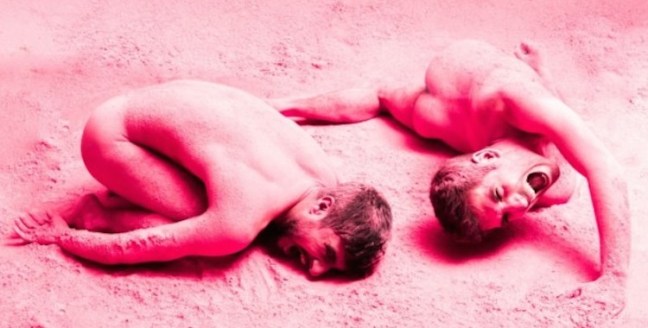
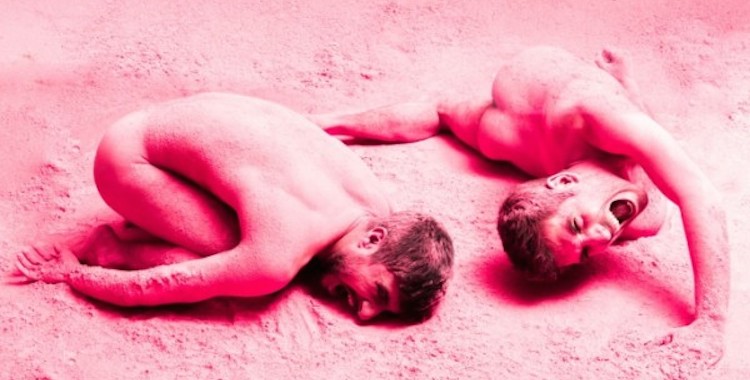
Igor and Moreno make us listen. For at least half of A Room for All Our Tomorrows, the auditorium is flooded with their wordless cries. They burst into the performance space whirling and screaming, voices shredding the air. And they keep going. And going. The shouts are relentless, subjecting us to the kind of sound we never really hear over any sustained period of time – and certainly not in the theatre. It’s astonishing and beautiful and unbearable all at once.

But the cries are far from uniform. One moment they suggest agony or despair, the next surprise or the sharp shock of pain. Igor and Moreno’s impressive repertoire of noises spans grief, excitement, heartbreak, longing, relief … Together and then apart, their yells tussle and enter into dialogue and briefly harmonise. They say everything while saying nothing.

All through the screaming, Igor and Moreno put their bodies through the exaggerated motions of everyday actions: turning, reaching, stumbling, and – most strikingly – drinking scalding cups of espresso, fresh from the coffee-maker plonked centre-stage atop a wide wooden table. It’s as though this daily ritual has been stretched out of shape, suggesting both the strain and the absurdity of these things we construct as the flimsy scaffolding of our lives. Eventually, as coffee spills across the pristine white floor, the construction collapses; something new emerges.

There’s something about effort in Igor and Moreno’s work. In Idiot-Syncrasy, the two men basically just jump up and down for an hour, calf muscles straining and sweat blooming in patterns on their T-shirts. A Room for All Our Tomorrowsputs the same strain on their voices, as they heave up these unrelenting, guttural cries. The movement, too, riffs on struggle and repetition, the same motions enacted again and again. The exertion is palpable, there in the perspiration beading on Igor and Moreno’s faces and in the occasional audible gulps of air between screams. This is fucking hard work.

So why do it? For me, the effort hints at the attempt, however small or seemingly silly, to change something. Igor and Moreno vaguely but appealingly describe A Room for All Our Tomorrows as “a performance and a place to imagine how things might be other than the way they are”. The show is as abstract and open to interpretation as the statement; it’s performance you feel through, not think through. But there’s something in those repeated cries, those repeated gestures of trying, reaching, falling. The same thing again and again and again, until suddenly, somehow, it’s transformed into something different. Things might be other than the way they are.

Nell Gwynn, Shakespeare’s Globe

1a133560-1dfc-4b00-97b7-947d98ccced7-2060x1236

Originally written for the Guardian.

The first time we see Nell Gwynn, she’s one of us. In the Globe’s rowdy retelling of Nell’s rags-to-riches life, the famous restoration actress starts among the groundlings as just another admiring – if mouthy – spectator. Soon, though, she’s treading the boards herself, first at Drury Lane and then on the nation’s stage, as the favoured mistress of King Charles II.

Both Jessica Swale’s text and Christopher Luscombe’s production are playfully conscious of their theatrical surroundings. Nell Gwynn is a play about theatre as much as anything else: its joy, its artifice and its uneasy marriage of entertainment and education. This Nell is a people’s heroine, playing to the stalls and courting laughs, but she also has bigger concerns, boldly demanding more from the simpering roles she’s cast in.

Swale has bigger concerns too, attempting amid the broad comedy to both reclaim her mythologised protagonist and make some sharp political sideswipes. She meets with mixed success, raising cheers with Charles’s “down with austerity!”, yet pressing a little hard on her vital but overworked points about the representation of women both then and now. The self-aware theatricality can likewise overstate its case at times, though there’s something endearing about the show’s evident love for the art form, even in the very process of sending it up.

As played by the effervescent Gugu Mbatha-Raw, Nell is resolutely and joyfully human, recovering the woman from the legend. It’s her sharp wit that charms audience and court alike, while in her relationships she’s more than a match for leading man Charles Hart (Jay Taylor) and later David Sturzaker’s spirited monarch. She is, like the characters she begs an ineffectual John Dryden (Graham Butler) to write for her, a woman “with skin and heart and some sense in her head”. Three and a half centuries later, we could still do with more of those on our stages.

Photo: Tristram Kenton.