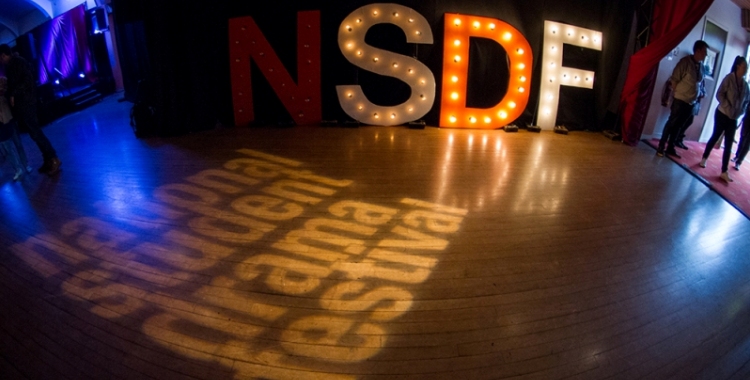
Nothing, NSDF

thumb

*Obligatory disclaimer: I know some of the company pretty well and had heard a fair amount about this show before seeing it, so I can’t claim an entirely distanced position. As far as possible, however, I approached Nothing as I would any other piece of theatre – if perhaps with a little more foreknowledge than the average audience member. Also, for anyone who hasn’t seen the show, it gets a bit spoilery …*

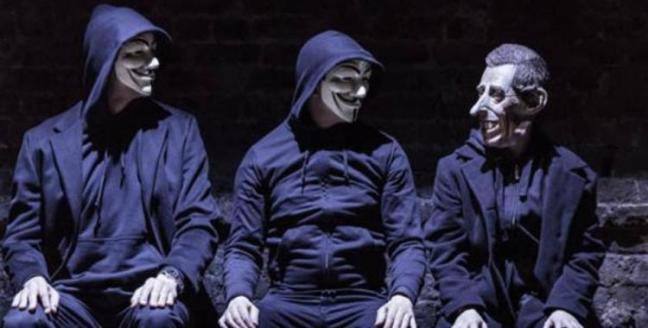
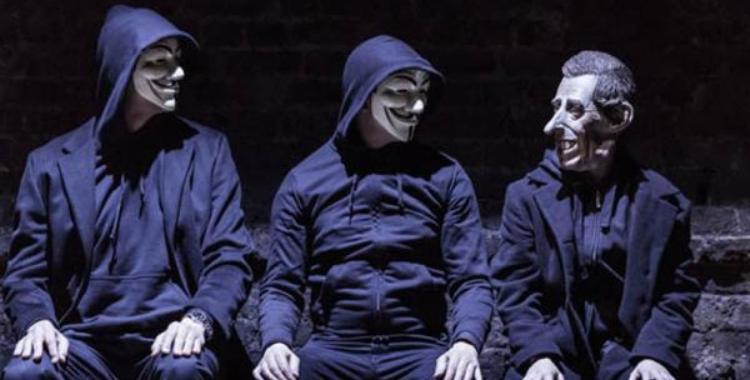
The thoughtful complexity of Barrel Organ Theatre’s Nothing begins right in its title. A gift to pun-happy theatre critics (I direct you to Noises Off‘s excellent selection of headlines), it’s a joke and a statement; a raised middle finger to both theatrical convention and ideological austerity. The single word suggests a void – emotional, ideological, physical. It is also a fierce reference to the current political landscape, in more ways than one: faced with disappearing funding, young companies such as Barrel Organ are forced to quite literally do something with nothing, while nothing is equally a fair description of what these students and recent graduates might feel the world holds for them. The title is an arch reference to the show’s minimal staging and perhaps even a barrier erected against audiences’ quest for meaning.

The multiple layers of suggestion that can be peeled away from these two simple syllables begin to suggest the subtle intelligence of Barrel Organ’s show. Written by Lulu Raczka and created in close collaboration with director Ali Pidsley and the whole company, the deceptively simple structure consists of eight overlapping monologues. Each riffs on a different experience of disconnection in modern society, casually punctuated with sexual and physical violence. This is a world where human shit is gleefully deposited on doorsteps and limbs are hacked off in darkened alleyways. The play’s various transgressions and atrocities, however, demand to be imagined rather than seen. As in The Author, Tim Crouch’s unsettling in-yer-head shocker, we are the ones left manufacturing images of rape and assault, painting nasty pictures in our heads.

The show’s relationship with an audience, however, goes further than this act of mental complicity. In Nothing‘s staging, all physical barriers between performers and audience are dissolved. Unlike in The Author, in which the performers took up residence among the audience, here we are all one amorphous mass gathered together in the space. One by one, the performers reveal themselves, speaking as if seized by a sudden thought. One talks of childhood abuse, another of pointless acts of theft, another of a violent act witnessed on public transport. They are compelled to share, yet awkward in their candour. The monologues are intercut, sometimes by way of interruption, at other times stepping in to fill a silence. When not speaking, each member of the cast retreats into their own sealed bubble, not once acknowledging the speech of one another. These self-conscious outpourings are stubbornly staged as monologues, each addressed to an “audience” rather than to a collection of individuals who might answer back.

While it’s not necessary as an audience member to know the means by which these fractured monologues are constructed, it does shed some additional light on what Barrel Organ are doing and highlight the impressive skill of the ensemble. The piece is significantly different every time it is performed, and the company stress that it is never finished. This is thanks to the fluid order of the monologues, which is not fixed but instead improvised on the spot each night. Performers decide when to speak, when to stop, and in some instances what to say (some performers have learned more than one monologue and only settle on which one to deliver during the performance). Therefore each performance is live in the most unpredictable of senses, generating a tangible charge in the air. It’s a bold, brave, and for the most part brilliant creative choice.

There are, unsurprisingly, some difficulties that come bundled up with this risky staging decision. Containing the audience while also allowing for their input is a challenge, producing the odd stumble, and the rules of interaction are uncertain. But the instability of this performer/audience contract is also what makes this piece so exciting, forcing spectators to remain alert. About halfway through, unusually conscious of my position as an audience member, I begin to regret my default retreat to a chair and wish that I had decided to roam freely around the space as the performers do. It’s striking, as well, how adeptly the eight performers deal with the surprises that this situation inevitably throws up, smoothly absorbing audience responses and environmental noise into the texture of the piece.

In fact, the whole thing comes across as remarkably natural. Raczka has an enviable gift for capturing the cadences of everyday speech in her writing, while the ownership that the performers feel over their monologues is clear in their simple, unaffected delivery. We can almost believe, as a performer fidgets and looks into our eyes, that we really are hearing them spill out their thoughts. At the same time, however, the production sets up a deliberate tension, as the private is aired publicly and isolation is experienced in the middle of a crowd.

Nothing is full of such tensions – between theatricality and authenticity, between rehearsed performance and spontaneity, between alienation and community. It is the latter that is perhaps most significant, constituting the show’s quiet but insistent political intent. The play’s disconnected characters share so much with one another (and, I would suggest, with their young audience at NSDF), but not once are they able to meet eyes, let alone connect. They are, as our society would have them, atomised individuals, bumping against one another without making a dent. Despite the ease and frequency of the text’s jokes, it’s an unblinkingly bleak vision of contemporary Britain, both in form and content.

And yet … there is something innately optimistic about the way in which Nothing is staged. In its arrangement of the audience, its acknowledgement of the community of the theatre, and its emphasis on collaboration, it can’t help but gesture towards the human connection that its characters find so impossible. There are definite echoes of Simon Stephens, and particularly of Pornography, in Raczka’s writing; I am reminded, too, of Stephens’ insistence that theatre is an inherently optimistic art form, no matter how dark its subject matter.

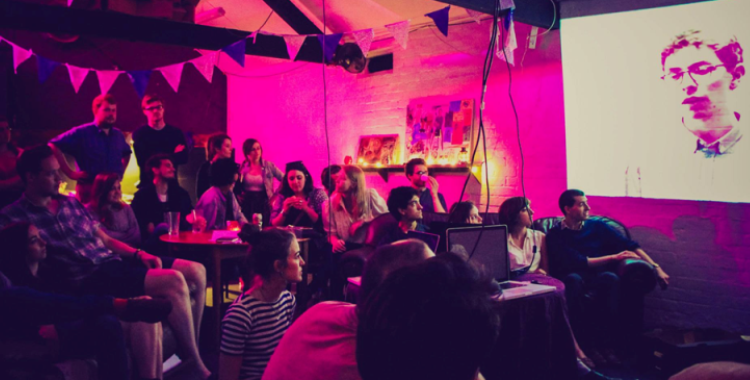
There is also a certain tension in the show’s surroundings. The company describe the piece as “site-unspecific” – it can be staged just about anywhere, and has already been seen in dressing rooms, pubs and car parks – but each performance is absolutely specific to its site in a series of fascinating and unpredictable ways. Of course, I can only discuss those that are particular to the performance I experienced, at the very nerve centre of NSDF in the Spa Complex. I understand that this was the biggest audience that the piece has been performed to, and there is a sense of lost intimacy as a result. Whispered as confessions in a small space, these monologues would suddenly acquire a whole series of different meanings, not to mention a different relationship with their audience. Whereas in a long, cavernous space messily cluttered with people, the show has just the slightest strain of effort, distracting a little from the speeches themselves.

But what is lost in the main set up of this particular staging is brilliantly recouped in its finale. [Here follow the main spoilers] Wisely, the one fixed element of the show is reserved for its conclusion, always closing on the same monologue. In this performance, we are abruptly led outside for the final speech – cue much clattering of chairs and awkward laughter. Ungainly as this transition is, however, it allows for a stunning moment in the Spa Complex’s open-air courtyard, with the sea and the sky adding all the drama and tragedy one could wish for. Against this vast backdrop, the closing speech – beginning with the self-effacing words “nothing ever happens to me” – feels startlingly small in its sad, shrugging attitude to the world. It’s devastating precisely because of its smallness, its inadequacy, its isolation – and its painful familiarity.

Of course, Nothing has its  flaws. The one downside of such thrilling unpredictability is that it must be almost impossible to give the piece dramaturgical shape from performance to performance; its shape emerges in the moment, in response to the conditions in the room, and will inevitably be more effective on some occasions than others. The rules, like the show, need to be constantly remade. But in its malleability, its thoughtful self-awareness, its implicit politics and the natural flair of its writing, this incarnation of Nothing is a tantalising taste of what it – and the company behind it – might go on to become.
Noises Off

8581 (2)

Last week I spent a gorgeous, busy, invigorating few days in Scarborough at my first National Student Drama Festival (NSDF). Thanks to Andrew Haydon, I was lucky enough to be one of the deputy editors of Noises Off, the (mostly online) Festival magazine. This essentially involved seeing lots of student theatre, working with some fantastic writers, and making increasingly inane jokes in the Noffice.

You can read my various musings on the Festival here, and I also recommend that you check out all the other brilliant content on the Noises Off website.

Photo: Giulia Delprato.

King Charles III, Almeida Theatre

KC3-3894-web-Cast-of-King-Charles-III-by-Johan-Persson

Originally written for Exeunt.

It is apt that King Charles III, Mike Bartlett’s brilliantly ambitious “future history play”, is opening in a week that has seen newspapers plastered with photographs of the Royal Family. As William, Kate and baby George embark on a tour of New Zealand, the media fascination would suggest that the monarchy is far from unwanted. If anything, their stock is up. But does the ceremonial head of state really have any role to play in how we define ourselves as a nation in the twenty first century? Or is monarchy today nothing more than a brand, with Wills and Kate as its glossy poster boy and girl?

It is these questions, and a wide assortment of others, that King Charles III thoughtfully and entertainingly poses. The play opens in the near future, at the funeral of the long-reigning Queen. After a lifetime of waiting in the wings, Charles is finally out of his mother’s shadow and thrust into the glare of the spotlight. But while, as he puts it, “potential holds appeal”, the long-awaited throne is a formidable prospect. Barely hours into the job, Bartlett has the tragic figure of Tim Piggot-Smith’s stubborn Charles take issue with a privacy bill that lands on his desk for royal assent, refusing to sign as a matter of conscience. With the wavering of a pen, a whole nation is suspended in uncertainty, poised between the collapse of Parliament and the overthrow of the monarchy.

Bartlett’s deliciously smart invention is as much about our theatrical heritage as it is about the threatened traditions of monarchy. Taking Shakespeare’s histories as its model, the play’s form is wrapped up in the same contradiction as our Janus-like nation: both new and old, looking backwards and forwards at the same time. His script is a witty amalgam of Shakespearean rhythms and sharp modern colloquialisms, threaded with light allusions to some of the Bard’s greatest hits. We get unyielding royal ambition, a free-spirited, Hal-esque Prince Harry in the form of Richard Goulding (who just wants to live like common people), and a Kate (Lydia Wilson) whose backroom manoeuvring has more than a hint of Lady Macbeth – even if her weapon of choice is more Dolce and Gabbana than sharpened dagger.

Rupert Goold’s assured production is cast in the same mould, delicately attuned to its Shakespearean echoes. History is subtly inscribed on Tom Scutt’s simple set, which marries candles, a wide dais decked in plush maroon carpet, and a fading mural of faces that hugs the exposed brickwork of the Almeida’s curving back wall. The figures who anxiously pace under the glare of these painted eyes have all the poise of Shakespearean heroes and the polish of modern politicians, flitting with ease between elegant blank verse and slick press conference spin. And there’s a glorious bit of Bard spoofing (and Daily Express baiting) with the ghostly appearance of a black-shrouded Diana, a contrivance that is both utterly ridiculous and absolutely faithful to the logic of Bartlett and Goold’s chosen form.

It’s often said that retellings of history reveal more about the time they emerge from than the era in which they are set; the same can be claimed for visions of the future, which have a habit of reflecting contemporary anxieties. Perhaps, then, Bartlett has found the perfect form for grappling with some of the doubts clouding our immediate national horizon. With the referendum for Scottish independence looming, British identity is suddenly up for grabs, and with it the whole hodgepodge of tradition that makes up our national character. King Charles III might not offer any answers, but it’s a compelling start to a fresh national conversation about monarchy, democracy and that most elusive and problematic of qualities – Britishness.

Photo: Johan Persson.

Matilda the Musical

MAT-13.5-14

Originally written for the Guardian as part of their Musicals we love series.

In a recent episode of Outnumbered, a headmistress in the mould of Roald Dahl‘s deliciously vile adults announces her desire to ban the beloved author. “He’s probably ruined more children’s lives than polio,” she sneers. “Ruined them with the ludicrous belief that all adults are stupid and can routinely be outwitted by small children and the occasional fox.”

This is perhaps Dahl’s greatest achievement. Adults are fallible, flawed, fickle creatures, and we could all do with an occasional reminder of that. None of Dahl’s resourceful young characters do this quite as well as the heroine at the heart of the Royal Shakespeare Company’s musical adaptation, who outsmarts her adult oppressors with the triple threat of brains, guts and telekinesis.

The irresistible charm of this musical is not so much its music, its book, its design or its performances, but the appealing streak of naughtiness that runs through them all. Listening to Matilda sing “Even if you’re little, you can do a lot, you/ Mustn’t let a little thing like little stop you”, I was suddenly eight years old again, cracking open the pages of Dahl’s book and feeling an instant connection with his bright, brave and bookish protagonist.

Dennis Kelly and Tim Minchin’s version is that rare thing: a stage adaptation that manages to both honour the spirit of the original and confidently stake out its own identity. The insertion of songs is vindicated at every turn as they allow mischief and emotion to explode out of the narrative, from the gleeful rebellion of Naughty to the bittersweet optimism of When I Grow Up. Minchin is an inspired choice as composer and lyricist, marrying his own brand of irreverence with that of Dahl’s and throwing some wickedly clever rhymes into the bargain (see the dazzling pairing of “miracle” and “umbilical” in the opening number).

And there is plenty of substance beneath Minchin’s witty tunes. Dahl’s narrative of a young girl overcoming cruelty and neglect with a little help from the books she voraciously reads carries a number of implicit but never patronising messages – about the importance of standing up for oneself, the value of intelligence and the power of the imagination. Then there are the characters: the smart, plucky protagonist, her fantastically grotesque parents, and the frankly terrifying Miss Trunchbull, who had not a little of the Iron Lady about her in Bertie Carvel‘s interpretation.

The show’s real sucker punch is saved for after the interval, as When I Grow Up hits the stage with a sudden, unexpected wallop of sentimentality. Just like Dahl’s prose, the musical boasts a direct line back to childhood, leaving younger audience members grinning with recognition and their adult counterparts misty-eyed with nostalgia.

What Matilda is strongest on, though, is an aspect that musicals often neglect in favour of razzle and dazzle: storytelling. It says a lot that Kelly, a seasoned playwright, was brought on board before Minchin; the RSC wanted to get the story right. It was a canny choice. Matilda is, at heart, a story about stories. Accordingly, the musical is drenched in narrative and bursting with words, right down to the brightly coloured letter blocks of Rob Howell’s gorgeous set – a Scrabble lover’s paradise.

Despite now being a hit on the West End and Broadway, with a clutch of awards to its name, Matilda’s fate was by no means secured. As Kelly has stressed, no commercial producer would take the risk that the RSC did in commissioning the show and putting it in the hands of two writers with little to no previous musical theatre experience. If ever there was an argument for arts subsidy, this joyous, playful, rebellious musical has to be it.

Three Sisters, Southwark Playhouse

three-sisters1-600x399

Originally written for Exeunt.

A clock is ticking in the Prozorov household. Minutes pass loudly, inexorably, mercilessly. When the hour noisily announces itself, each chime a dagger for the siblings who count the seconds of their self-imposed exile, the purgatorial tenor of the Southwark Playhouse’s new imagining of Three Sisters is made immediately clear. The century might have changed, but precious little else has. As Tusenbach would put it, “life is always life”.

Anya Reiss’ updating, which transplants the Prozorovs to the modern day, is more striking for its fidelity than its revision. All the outlines of Chekhov’s play are there; only some of the shades have been altered. The provincial Russian town of the original is swapped for a British Embassy in an unspecified Middle Eastern country, with queasy echoes of colonialism, while the semi-mythical escape of Moscow has been replaced by London. The modernising touches, meanwhile, are all feather light: a mobile phone here, a newspaper there. Reiss’ take on the play is even – more so than most versions – loyal to Chekhov’s often neglected comedy, tugging on some of the more absurd strands of its protagonists’ situation.

So how do you answer for the sisters’ immobility when they could just hop on a plane home tomorrow? Wisely, the barriers that Reiss and director Russell Bolam erect are all psychological rather than geographical, the greater ease of movement heightening the characters’ own deadening apathy. Irina’s cry of “I want to go home” at the end of the first half, delivered with wine glass in hand by Holliday Grainger, is more whining than despairing. Here, more than ever, the sisters’ own self-sabotage and navel gazing jump to the fore.

It helps that Three Sisters is one of those plays that offers new aspects to the view on each return visit. Even without a bold, bracing treatment, the play is constantly teasing out new emphases, different scenes or lines snagging on the mind each time. Placed in a modern context, it is the speeches about work that catch the ear, acquiring new resonances in a political landscape where the idea of hard work has become a tool for dividing those whom the system disadvantages. Class relations (and, as an added dimension, racial tensions) are also sharpened, with the largely invisible locals hovering like a ghostly presence at the edges of the production. As Olga, Masha and Irina blindly wallow in their own misery, you almost wish for a yell of “check your privilege”.

In Bolam’s straightforward but polished production, slight traces of the past cling to performances that are otherwise grounded in the here and now. Paul McGann’s quietly commanding Vershinin, voice dripping with authority, could almost be dropped into any era, his futile philosophising barely interrupted, as could Michael Garner’s mildly grumbling Chebutykin. The sisters, meanwhile, are largely as we expect them, even if they have acquired new gadgets. Emily Taaffe is the most impressive of the trio, as a painfully bored Masha who finds a violent release in her passion for Vershinin, while Olivia Hallinan as Olga and Holliday Grainger as Irina are suitably maternal and dreamy respectively.

But the shift of time and location, while working surprisingly well, seems at a loss for what it has to contribute to Chekhov’s existential questioning. The parallels are neat, but only occasionally illuminating. If the play’s timelessness is its point, then the historical context is almost irrelevant. For this reason, Three Sisters often works best when located in a sort of nowhereland, a setting with suggestions of both then and now. While Benedict Andrews’ striking production at the Young Vic effortlessly unmoored itself from time, the subtle yet insistent modernity of this version does not quite convince, in spite of all the elegance of its execution. The play might time travel with impressive ease in Reiss and Bolam’s hands, but the question that lingers underneath it all is why?