Macbeth, Globe Theatre

Originally written for Exeunt.

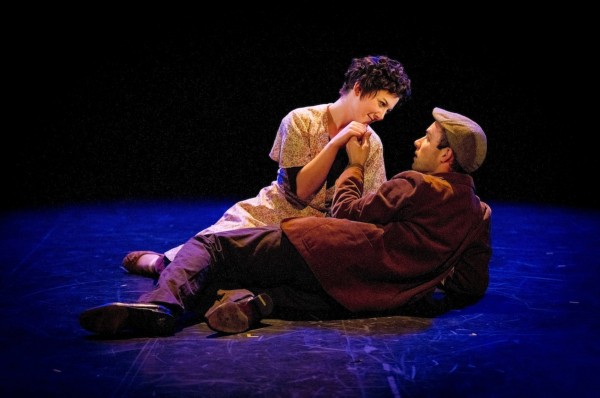
At the Globe to Globe festival, murder has never been such a social event. All of the major scenes in this brashly vibrant Polish production seem to occur at lavish parties, under the watchful if drink-blurred vision of the witches, here recast as a gaggle of gloriously camp transvestites. In these hedonistic surroundings, as a slurring, stumbling Duncan attempts to strip and unapologetically feels up Lady Macbeth, the plot-propelling act of violence seems more of an escalation of well-oiled passions than an act of calculated ambition. This is homicidal guilt figured as one long hangover, as Michał Majnicz’s increasingly dishevelled Macbeth howls his way through murder after murder.

Despite possessing such a familiar plot, little is recognisable about this reimagining of the play. Numerous inexplicable alterations have been made to Shakespeare’s text, including the addition of a scene-stealing witch named Lola, who might well have been inspired by the Kinks track. But while it may bear only a passing resemblance to the Scottish Play that British audiences are used to, this Macbeth has clearly been designed as a visceral experience rather than a linguistic, intellectual one. To overcome the language barrier, Teatrim Kochanowskiego have drawn on pop culture and visual bravado; colourful, explosive images assault our retinas, while music – everything from Michael Jackson to ‘I Will Survive’ – throbs away in the background. It is messily joyous spectacle, tragedy in the style of Steps rather than Aristotle.

Grasping for any overarching metaphorical unity to tame this sensory riot produces empty hands. There are loosely recurring motifs, the most prominent of these being an overt, swaggering sexuality that lends the production its cautious ‘adult content’ warning. Majnicz and Judyta Paradziń as the bloody handed couple crackle with mutual lust, a sexual desire that seems tangled up with their murderous acts, while one witch unexpectedly indulges Macbeth with a blow job following his ascent to the throne. Amid a circus of playful, riotous colour, one of the production’s most genuinely disturbing images is presented in a scene in which Lady Macduff is brutally raped. Yet when reassembled, these strands do not weave into any identifiable shape. If there is a defining texture to the piece, it is one of vague seediness pasted over with sequins and glitter.

No matter how fragile the basis for its interpretation, however, the sheer visual audacity of this production is enough to provoke a wistful yearning for more aesthetic creativity in British theatre. Flaws aside, this is an ideal marriage of production and festival, eventually embracing the party atmosphere that seems to buzz from the Globe. It may not be Macbeth as any of us know it, but this is anarchically beautiful, visually ingenious, vodka-drenched fun.

Theatre Ad Infinitum

translunar-paradise-2-600x398

Originally written for Exeunt.

“Bereavement is a lonely process,” says Theatre ad Infinitum’s co-artistic director George Mann. It is a simple statement and perhaps an obvious one, but a painful truth nonetheless. This bruising observation is at the heart of Theatre ad Infinitum’s latest show, Translunar Paradise, a delicate journey through grieving and letting go that is embarking on an international tour following outings at the Edinburgh Fringe and the London International Mime Festival.

The Lecoq-trained Theatre ad Infinitum have forged an increasingly distinctive path for themselves in physical theatre and mime since their conception in 2007, with work that resists neat pigeon-holing. The company have experimented with an a capella score inThe Big Smoke, physical solo storytelling in Odyssey and spirited clowning in Behind the MirrorTranslunar Paradise is similarly, refreshingly unwieldy, marrying mime, masks, puppetry and music in a wordless love letter to the relationship between one couple and that relationship’s poignant termination through the intervention of mortality.

“You need a constraint when you create,” is Mann’s artistic mantra. He explains to me over the phone that during the long development process for Translunar Paradise, the first seed of an idea for which was born from the W. B. Yeats poem The Tower that lends the piece its title, he found it unhelpful to think of the story in literal terms. While the basis for the show was the simple premise of an elderly man losing his wife and learning to let go, it was clear from an early stage that this was not going to be a traditional, straightforward portrayal of loss. “I was looking for something that was going to force me to think creatively and do something exciting,” Mann goes on.

This was eventually found in the form of puppetry and masks, both of which have had a heavy influence on the finished piece, but Mann’s approach to these elements has directly clashed with the principles ingrained by his own training. Holding a mask up to the face and, in a similar way, exposing the join between puppet and puppeteer both contradict the aim of illusion, flagging up the artificial. These distancing techniques sat uneasily with Mann’s creative background, but he identified something “poetic” about that distance between puppet or mask and performer, as well as a way of “time-travelling” between old age and youth. By holding up masks to their faces, Mann and his co-performer Deborah Pugh can instantly inhabit their characters’ present, elderly selves, whipping them away to jump into flashbacks.

Mann’s careful, considered description of the creative process behind Translunar Paradise, which he conceived, devised, directed and performs in, conjures an image of a theatrical scrapbook, borrowing fragments from various other art forms and pasting these together into something identifiably his. Another, surprising source of inspiration was Art Spiegelman’s graphic novel Maus and the way in which Spiegelman’s black and white sketches movingly evoke the past. “We started working in a comic book, photographic way,” Mann expands. “We picked out the actions that we wanted to use and started creating the back story of this couple and their life together scene by scene as if we were flicking through photographs.”

Was it always intended that this story would be told without words? Mann tells me that the decision to incorporate masks effectively precluded the possibility of speech in his mind, but there was also a deeper reason for this artistic choice; quite simply, “this is something that is really hard to describe”. Death remains one of the last taboos, and particularly in our culture loss and grief are not topics that are openly discussed. More than this, grieving is an experience that is in many senses divorced from verbal communication. As Mann continues, “it’s a lot about what you feel and experience and remember. I wanted to communicate an experience and I wanted emotion to be part of that experience. I felt that words couldn’t say it as strongly in this case.”

In the absence of words, music has taken on an integral role within the performance. More than simply a soundtrack, Mann and his creative team discovered that the music could function almost as a third character. “It interferes, it stops things, it punctuates moments,” he says. “It made the piece so much richer and the music became the soul of the piece, the heartbeat behind everything.” Much like the rest of the process, however, this musical integration was not something that came easily and was the result of much trial and error. One of the most important decisions to be made was what instrument to use; the eventual choice of accordion has clear resonances. “I wanted an instrument that breathes,” Mann explains. “Breathing is such a big part of emotion and it’s such a big part of life that we sometimes forget.”

Grief affects everyone, lending this piece the universality that has so moved its audiences, but it has particular significance for Mann. While ideas were still taking shape, Mann was forced to deal with the illness and death of his own father, a personal experience of loss that has informed the piece in many ways. Mann is extraordinarily open about the impact of this experience upon Translunar Paradise: “I was with my father when he died and that was very quick, very simple and very beautiful, and it made me realise that was what the piece needed as well.” He admits that creating the death scene, however, was challenging. “I didn’t know how to do that moment and I was scared of not knowing,” he shares. “And then it just came to me very quickly and I realised it wasn’t as complicated as I had thought. It’s actually extremely, painfully, beautifully simple.”

Speaking about his process, which is clearly a painstaking one, Mann expresses irritation at the public perception of devised theatre as being “random” or unconsidered. “For us it really isn’t,” he protests with feeling. “It’s such precise work; it takes a long time and a lot of thought.” Despite Mann’s involvement in all areas of the show, it emerges that this piece is in fact the product of extensive collaboration. The company’s other two co-artistic directors have regularly provided feedback along the way and the production has been honed through various scratch performances, at which Mann was surprised and encouraged by the honesty of their audiences. He admits with genuine frankness, “I really needed that outside perspective and I wasn’t going to pretend for a minute that I could do everything by myself.”

Translunar Paradise’s protracted, precise development appears to be paying off, with early performances spawning a full international tour that will be stopping off in Athens, Jerusalem and Sao Paolo, as well as making trips to various festivals around the UK this summer. Taking the show to new audiences is a prospect that excites Mann: “Because I trained at an international theatre school, I’m very aware that there exists a world beyond British theatre and I wanted to be able to share my work with as many people as possible.” Thanks to its lack of words, the play would seem to naturally lend itself to international audiences, but Mann was still concerned that the gestures and references might be too British – “a big part of the piece is set around drinking and making tea,” he laughs. The emotion of the piece, however, translates all too easily.

It is evident from speaking to him that the gradual process of teasing Translunar Paradiseinto life has been an intensely personal journey for Mann, and he hopes that this journey will be reflected by the experience of audience members. “The audience are connected to the piece through their own loss and that’s what I want people to feel,” he explains as our conversation draws to a close. Mann also hopes that the show he has created, despite grappling with death and grief, will depart with an uplifting sensation of relief. “Life goes on,” he says simply. “Every ending is a beginning.”

Photo: Alex Brenner

Someone Who’ll Watch Over Me

someone-over-me

Originally written for Exeunt.

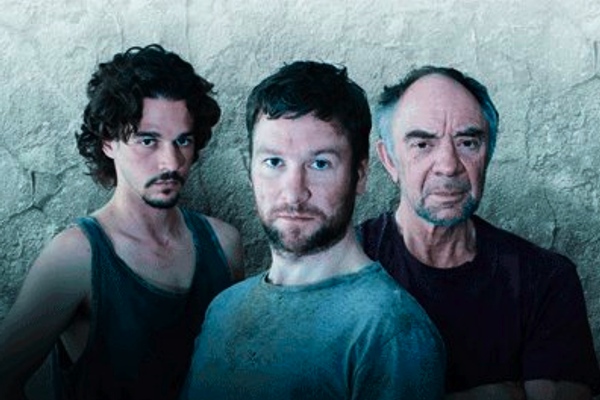
It sounds like the start of a bad joke: an Englishman, an Irishman and an American. This multi-national trio, however, are not walking into a bar, but are instead chained to the wall of a gloomy basement in Lebanon, indefinitely imprisoned by their captors and faced with the all too likely prospect of their own execution. Actor Robin Soans summarises the situation succinctly when he describes the feelings of his character, Michael: “It seems to him that he has awoken in hell”.

This is the premise of Frank McGuinness’ Someone Who’ll Watch Over Me, a play written twenty years ago about the hostage crisis in Lebanon that was then just coming to a close, and which is now being revived by Red Handed Theatre Company and the Southwark Playhouse to coincide with the anniversary. As I chat to the cast in their dressing room at the atmospheric, dungeon-like space under the arches of London Bridge station, Soans admits with a laugh that “you couldn’t find a better space in London to put it on”.

While the action of the play may be rooted in the hostage crisis that gripped Lebanon between 1982 and 1992, during which 96 individuals from a range of different, mostly Western nations were kidnapped and held in captivity, McGuinness’ image of three men trapped in an impossible situation is more notable for its universal resonance. This might, as the actors discuss, be any extreme situation in which the human spirit is pushed to its outer limits. It is the ways in which these three characters deal with their imprisonment and the truths about humanity that emerge through this that provide the true pull of the piece.

“Anyone watching the play could identify with the struggles that these characters go through,” explains Joseph Timms, who plays American captive Adam, the hostage who has been imprisoned the longest of the three. Soans, whose character Michael is an English academic who enters the mix after the other two, agrees: “It’s a universal play and there are situations like this all over the world all the time, even in domestic situations, where people feel locked in or hemmed in”. It does not matter all that much whether these characters are in a makeshift cell in Lebanon or a prison on the other side of the world; what really matters is how they cope.

It is perhaps surprising to learn, as third cast member Billy Carter, who is playing Irishman Edward, tells me, that “the script is heavily layered with lots of humour”. Humour, along with improvisation, role-playing, music and debate, becomes a vital survival mechanism for the three men trapped alone with nothing but their thoughts and one another. Soans emphatically describes laughter as “the greatest tool for survival”, adding that if you don’t make jokes about a hopeless situation “you just collapse, you deflate”. As Timms chips in, “the worst thing to do is to give in and to cry”.

Although the tedium of imprisonment is punctuated with the jokes and play-acting of McGuinness’ script, any production of this play is physically limited by the very situation in which it is staged, with the actors only able to move as far as their chains will allow. This must have been a challenge to keep the performance feeling dynamic? “It doesn’t feel like a static play at all,” Soans protests. “Physically, yes, it’s quite confined, but in every other sense it’s very fluid.” Timms, meanwhile, compares the confined energy of the three men that the actors explore on stage with that of a chained, unpredictable animal.

As Carter goes on to explain, there are tonal shifts between scenes that help to break it up, shifts that director Jessica Swale has used to propel the action forward. Speaking about the dialogue, Carter says, “it’s so sparky and as actors we’ve hit a beautiful rhythm. It’s like a dance.” Continuing the musical analogy, the actors describe each scene as having its own key that needs to be hit, creating something of a challenge for director and cast. To ensure that the necessary precision is achieved, I am told that they have used a method of ‘actioning’ in rehearsals, assigning a transitive verb to each line, which Soans explains was an invaluable process because of the “mercurial” nature of McGuiness’ script.

Also central to the dynamic of the piece is the relationship between the three very different characters, who are thrown together against their will and must learn to support and respect one another in order to survive. Soans describes it as a “pressure cooker version” of any close relationship where people must become accustomed to and absorb one another’s quirks and irritating habits. Such essential, intense relationships demand an atmosphere of collaboration and generosity among the cast, an atmosphere that was actively nurtured by director Swale. This is not a play in which any actor can afford to be greedy.

The result of this closely collaborative effort is one that is intense for both cast and audience. Timms describes the experience of watching this play as that of “watching a human struggling against an inevitability or a darker evil, which we all have in our lives, and we all fight against it and think we’re alone in having to deal with it, but then when you see it on stage it actually gives you a comfort and a strength. It gives you a joy in being alive.” The true aim of McGuinness’ play, at least as the cast see it, is to share something about what it means to be human and the mechanisms that human beings use in order to survive in desperate situations.

Contradicting those who would dismiss the arts as a waste of public money, Soans continues in the same thread as McGuinness by asserting that “drama is absolutely integral to the human spirit”, an assertion that is heavily supported both by the play and by the true accounts of hostages that have informed it. “A number of people left alone will sooner or later make a play,” Soans goes on, “because they want to explore themselves and their predicament. We want self-knowledge, and one of the best ways to get self-knowledge is through drama, through making a paradigm of something similar to your situation”.

Throughout our conversation, what reveals itself as the dominant, uplifting theme of McGuinness’ work, and what has ensured that it remains as relevant and resonant today as at its conception twenty years ago, is the indomitable and endlessly imaginative nature of the human spirit. The play also convincingly positions itself as an argument for the arts, not just as a decorative addition to human life, but as an integral part of our existence. As Soans puts it, with a slight note of triumph, “it’s a very good justification for theatre”.

Tom Attenborough

Tom-Attenboroughfi

Originally written for Exeunt.

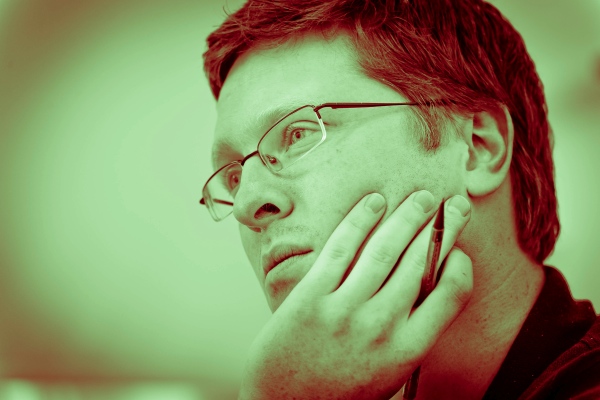
Coming from a showbiz family, for all its downsides, certainly has the odd advantage. While Tom Attenborough, son of Almeida Theatre artistic director Michael and grandson of Richard, backs away from assumptions that directing was a natural career path for him, he does admit, “I was very much exposed to theatre when I was younger”.

The young director, runner-up for the JMK Award in 2011, describes going to the theatre a “huge amount” when he was growing up and remembers theatre being spoken about frequently at home, an influence that has undoubtedly shaped him. But he is also keen to emphasise that “theatre was always very much something that I felt I was passionate about”. Musing about the beginnings of his career, he says, “I sort of fell into it and I don’t know how much was my upbringing and how much was just me and my personal preferences”.

As we discuss this passion for theatre, it emerges that Attenborough’s love affair with the art form was also ignited by the National Theatre’s production of Mourning Becomes Electra, directed by Howard Davies, who he describes as one of his heroes. “It completely changed my life,” he says, without a hint of exaggeration. “It just moved me and affected me so much, even at a young age. I was astonished by the power of theatre as a social event and how it could change hundreds of people in one event.”

Attenborough originally wanted to be an actor, but he reveals that university prompted the “gradual realisation” that he was not good enough to pursue acting as a career. Cambridge, however, was also where he discovered his love of directing when a friend wrote a short play and asked him to direct it. He explains that it was while working on this student production that he realised “there was nothing else that I enjoyed as much or felt as passionate about”.

Since leaving university, Attenborough’s early career has been peppered with assistant directing credits, several of them on large productions. What have these experiences taught him? “Assisting has been where I’ve learnt a lot of my craft,” he tells me, going on to talk about the learning experience of touring with Headlong’s Earthquakes in Londonand his introduction to the West End while working on Butley. “Just watching and working with different directors, different actors, different companies has taught me a huge amount.”

Another learning experience for Attenborough has been the discovery of how difficult it is to stand out as a new, young director. It was this difficulty, he explains, which indirectly led him to set up his theatre company Rhapsody of Words when he wanted to put on Neil LaBute’s play The Shape of Things. “The difficulty was that it had been done before,” he says, “and I didn’t just want to do another run of the mill production.” Attenborough’s solution was to stage the play in the unusual space of The Gallery Soho.

“I started to think about the role of space in theatre today and how we approach it,” he goes on to say. “It’s interesting that a lot of the most successful theatres in London at the moment are in buildings that weren’t initially built as theatres, the Donmar Warehouse being a prime example. Through thinking about that, I wanted to explore a type of theatre that isn’t necessarily site-specific and doesn’t have to integrate the space into the show, but where the space informs the play and makes the audience see it in a new light.”

Venue is also central to Attenborough’s current project, a revival of Conor McPherson’s play Port Authority staged in the Southwark Playhouse’s Vault space. “The amazing thing about the Vault is that it’s so atmospheric,” Attenborough explains. “You walk in there and you can feel the hairs on the back of your neck stand up.” For this very reason, he is keen to let the space speak for itself and is being careful not to do too much to the already evocative setting. This minimalist approach is one that feels appropriate for Port Authority, an intertwined narrative of three monologues that Attenborough loves for “its simplicity and its humanity”.

I suggest that perhaps directing a play that consists purely of monologues is a challenge, a question that provokes a divided response from Attenborough. “It’s easier in some ways in the sense that I don’t have to worry about things like blocking and staging,” he says, “but in another way it’s very difficult because you don’t have actors feeding off each other. I think it has its challenges. It’s about cracking the technique behind the monologue and how to make it as interesting and dramatic and engaging as possible. Once you’ve found that attitude, it’s just about making sure that the story is as clear and as exciting as possible, which is what I do in any show.”

Although projects like Butley and Earthquakes in London are clearly career highlights, along with Rhapsody of Words’ production of The Shape of Things, Attenborough struggles to name a favourite directing project to date. “I’ve enjoyed every job I’ve done in different ways,” he enthuses, and you cannot help but believe him. He also has plenty more to look forward to this year, including directing a new play by emerging playwright Rob Hayes at the Trafalgar Studios in April. But what are his goals for the long term?

Unsurprisingly, I am not the first person to want to know where Attenborough sees his career heading. “It’s a question that you get asked a lot as a young director,” he laughs. Although he says that he is primarily attracted to work that “excites” him, Attenborough does admit that he would eventually like to rise through the ranks to the position of artistic director. “One day I’d love to be part of a building and possibly even run a building,” he tells me. “I’d love to experience how that side of theatre works.”

It is clear from these aspirations that Attenborough is not lacking in ambition. His overriding aim, however, is one of creative satisfaction rather than prestigious status, concluding on the same upbeat note that has prevailed throughout our chat. “As long as I’m doing plays that I really care about in places that I care about with fantastic and talented people, I’m sure I’ll be happy.”

Faction Theatre Company

Faction-Robbers-Richard-Davenport

Originally written for Exeunt.

“The text always comes first.” These emphatic words from artistic director Mark Leipacher might well serve as a creative philosophy for the text-focused Faction Theatre Company. As we chat in one of the rehearsal rooms at the labyrinthine Bridewell Theatre, where the company are poring over Mary Stuart downstairs, I am told that every read-through is conducted “as if we hadn’t read the play before”.

The Faction is an ensemble-based theatre company dedicated to interpreting classic plays, producing their own brand of “big, classical, epic theatre”. When we meet, the company are in the middle of intense rehearsals for their upcoming rep season at the New Diorama Theatre, an ambitious rolling programme of three plays, all incorporating the same cast of ten actors.

Leipacher and executive producer Kate Sawyer recognise that this traditional rep system is one that has largely fallen out of use in the UK. Their artistic inspiration instead comes from across the Channel; they aim to eventually run like a European theatre company, with a permanent ensemble, a home venue and a rolling repertoire of plays. Mounting their first full rep season in January and February is a decisive step in that direction.

“Rather than it being confusing, it actually clarifies things,” replies Sawyer when I ask her about the challenges of rep theatre. She compares the process to writing a university dissertation at the same time as studying additional courses, explaining that the plays all inform one another. Sawyer also believes that a rep season, as well as being more financially sustainable, provides more interest for the audience.

The trio of plays that Faction have chosen to perform in rep – Shakespeare’s Twelfth Night, Schiller’s Mary Stuart and Strindberg’s Miss Julie – are linked by the theme of ‘women and power’ and all three, as Sawyer puts it, “refract each other”. Leipacher explains that while the thematic connection was “not entirely by accident”, the individual plays were selected first before it became clear that there was a gender political thread running through them.

If there is any other key defining element of Faction’s work, other than their attention to classical texts and their revival of the rep system, it is its distinctly physical style. Style, however, is never imposed at the expense of text. “Our style is physical and muscular and very bombastic,” says Leipacher, “but it always comes from the text. This is not a physical theatre piece inspired by a text; this is a production of a text and the aesthetic happens to be physical”.

At a time when there is an increasing focus on new writing, I ask Leipacher and Sawyer what so attracts them to classic texts. The reply is instant and decisive: “there is no better material,” states Leipacher. “If you want a theatrical experience, you need material that has real substance and grit and scope,” he continues. “These texts are still human; they still have universal truths in them.” Sawyer adds that “it might have been written 400 years ago, but it absolutely describes what you went through last week”.

One classic playwright who has had a particular influence on Faction is Schiller, a writer whose work is often neglected in this country. Hoping to turn this around, the company have decided to produce his complete dramatic works, culminating in the first ever London production of William Tell. The aim is to reinvent the public opinion of Schiller’s drama.

“It’s pure guts and passion,” enthuses Sawyer, contradicting the popular opinion of German classics as being heavy and dull. Leipacher goes on to explain that “all of those words that we use to describe our work and everything that excites us about our work, Schiller has those in spades. His characters are impulsive, willful creatures.”

The impression given by Faction, and one that turns out to be overwhelmingly true, is primarily of a hard-working company. There are few other theatre companies that would take on a challenge like the complete Schiller with such tenacity, but hard graft has been something of a philosophy for Faction from the beginning. They have not stopped working since their conception, regularly performing one production while preparing for the next – as Leipacher laughs, “we literally didn’t stop!”

This hard work has recently seen their efforts recognised with the Peter Brook Equity Ensemble Award. Although Faction say that it is too early to measure the real difference that winning this accolade will make to them as a company, Leipacher is quick to admit that “having some sort of marker or validation becomes important” when trying to stand out among the plethora of other young companies.

They attribute a measure of their success, however, to the support they have received, particularly from the New Diorama Theatre. This young theatre in the heart of London has provided a space exclusively for emerging theatre companies of the likes of Faction, who are now an associate company. Leipacher firmly states that “we certainly wouldn’t be at the stage we are at now without their support”.

The creative atmosphere at the New Diorama, I am told, is freeing yet supportive. “They really do enable,” says Leipacher, “it’s not just a case of ‘here’s the auditorium, bye’, they’re with you beyond that”. David Byrne, the theatre’s artistic director, is full of enthusiasm for the company, describing their work as having a “raw, young energy” and explaining that “they’re really dedicated to making sure they do it properly”.

Doing it properly is a concern that seems to be at the centre of Faction’s creative approach. For their next rep season, the company are already asking their audiences what they would like to see, using this input to help them provide what theatregoers are looking for.

As we wrap up our chat, I ask if the company has any tips for other young theatre companies who are just starting out. Leipacher’s response is simple: “just keep working”. After all, it’s a tactic that seems to be working out for Faction.

Photo: Richard Davenport