Inventing Theatre

Three-Kingdoms1-1024x683

Originally written for Exeunt.

Back in 2009, Andy Field wrote a piece on the Guardian Theatre Blog with the bold and frankly brilliant title ‘All theatre is devised and text-based’. His argument, essentially, was that theatre is theatre is theatre. As he explains, “To devise is simply to invent”, making distinctions between devised and text-based theatre ultimately meaningless. Whether something is brought into being based on a set of instructions or a collectively built model that is constructed in a rehearsal room, in the end it’s all just inventing.

It’s extraordinary to look back on this now and realise that Field’s argument was being made so persuasively four years ago, and yet the debate continues to rumble on. Only last month, I attended a conference at Reading University at which an entire heated session – prompted by a provocation from David Edgar that was certainly provocative – revolved around the binary that Field effortlessly dissolves. As blindingly obvious as Field’s breakdown of this dichotomy might seem, the institutional structures supporting British theatre, from development programmes to universities to theatre critics, perpetuate the cleaving of work into these two misleading categories.

Duska Radosavljevic’s refreshing new book, therefore, is more necessary than a glance at Field’s blog might suggest. Theatre-Making lays out its most important intervention in its very title: Radosavljevic proposes this term as the foundation of a new vocabulary for discussing contemporary theatre, bringing it all under the inclusive umbrella of making. While the context of current binaries is acknowledged with frequent reference to genealogies, the book is persuasive in arguing why they are now outdated, with the actual work that is being made often defying the restrictive terms in which it is discussed.

Radosavljevic makes the case for transcending existing binaries by documenting a range of different contemporary practices that challenge the straightforward categories of devised and text-based. The book moves through the staging of Shakespeare, processes of devising and adaptation, new writing, verbatim theatre and relational practices, demonstrating in turn how each of these different practices bridges the gap between devising and playwriting, as well as inviting audiences into a kind of co-authoring. Examples range from the Royal Shakespeare Company to Tim Crouch, from Simon Stephens to Ontroerend Goed.

As well as making the case for doing away with the devised/text-based binary more clearly and succinctly than any other text I’ve read on the subject, Radosavljevic adopts a striking and perhaps telling approach to the supporting criticism she draws on. While it is not uncommon to see newspaper critics referenced in academic texts on theatre, thus far the new forms of criticism that are evolving online have been largely ignored. It’s intriguing, therefore, to see an almost perfect balance in Theatre-Making between print and online writers – if anything, that balance is tipped slightly towards the latter.

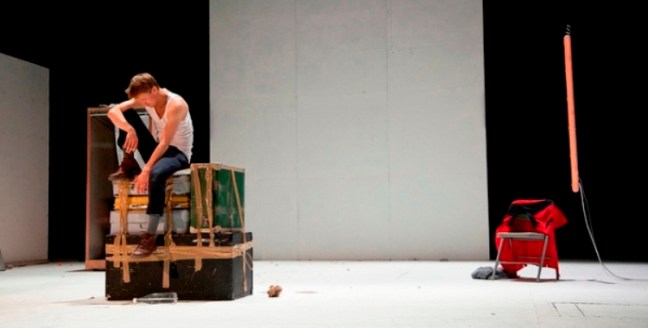
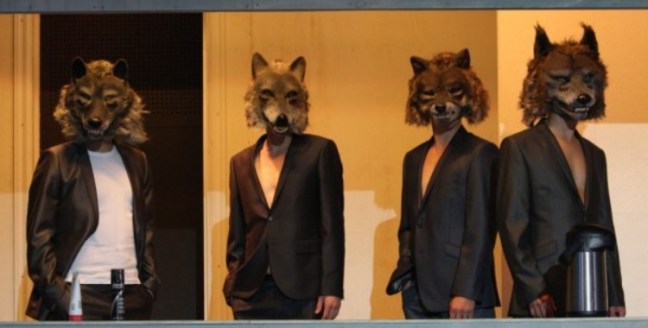
This shift is highlighted in a section on Three Kingdoms, which is the production to provoke perhaps the most vociferous online reaction to date. After considering the critical debate at length, Radosavljevic concludes that “the most important outcome of the controversy around the Three Kingdoms reception […] was the way in which the blogosphere managed to outweigh the mainstream press in the depth of insight and its intellectual enquiry”. While this is one very specific example, it suggests that the potential for a new vocabulary of the kind advocated by Radosavljevic might lie in new forms of criticism rather than in the mainstream theatre press.

Having traversed a wide variety of contemporary theatre-making practices, Radosavljevic eventually concludes that these works, “emerging through the encounter between theatre and performance-making strategies”, represent a convergence of what Patrice Pavis defines as “text” and “mise-en-scene”. The implication of this convergence is that it “finally makes it possible for the text to be understood as one element of the theatre or performance-making idiom, thus transcending previously entrenched hierarchies”.

In light of developments that just happened to coincide with my reading of the book, Radosavljevic’s observations and suggestions seem to be vindicated at every turn. Returning again to Field, Forest Fringe (which he co-directs) have recently published the second issue of Paper Stages, described by them as “a festival of performance contained within the pages of a beautifully designed book”. This is not a blueprint for a performance event, but an event made into paper, ink and imagination.

This project demonstrates a deliberately playful approach to the text, with a gleeful lack of regard for the categories it has previously found itself forced into; Paper Stages is neither script nor record, but a set of suggestions for performance – even the word instructions feels too prescriptive. The book is what its reader makes of it, requiring them to reconfigure their own understanding of the relationship between text and performance.

Around the same time, I was also intrigued to see that Bryony Kimmings had published a script of Credible Likeable Superstar Role Model to coincide with the show’s run at the Soho Theatre. This is the culmination of a conversation between Kimmings and publisher Oberon that started last year, when Kimmings began to wonder how her work might take textual form. Would it be a kind of documentation, or a set of instructions that might allow others to reconstruct her shows? I have yet to see a copy of Credible Likeable Superstar Role Modelmyself, but I understand that large chunks of it take the form of poetic descriptions of the onstage action, acting not as stage directions, but also not quite as a straightforward record.

These are just two examples that spring immediately to mind. Everywhere artists are subverting restrictive and prescriptive understandings of the theatre text, but many of the structures around them remain out of step. The hope is that, following Radosavljevic, our critical vocabulary might begin to catch up.
Open dialogue

Colchester 24.4.13 Theatre Arts Society and Frequency Theatre ViTW Reception 2 (2)

Originally written for The Stage.

The post-show discussion does not have the best of reputations. What should be an opportunity to share thoughts and gain artistic insights often becomes a stilted Q&A, a one-sided stream of anecdotes, or an unspoken contest to see who can ask the most intelligent question. But what about a post-show discussion for people who hate post-show discussions?

One of those people – by her own admission – is Lily Einhorn, project manager of the Young Vic’s Two Boroughs community engagement scheme. The project offers free tickets to residents of the boroughs of Lambeth and Southwark, many of whom Einhorn noticed were attending the theatre on their own. Recognising the lack of opportunity these theatregoers might have to discuss the work they were seeing, and acknowledging that the usual post-show format might alienate or intimidate them, Einhorn set about creating an alternative.

The Two Boroughs Theatre Club is modelled on the book club format: rather than being plunged straight into discussion immediately following a show, recipients of Two Boroughs free tickets are invited back after they have all had a chance to watch and reflect on a production. And just as a book club would never dream of inviting the author, Einhorn is firm that no members of the artistic team should be present for the discussion facilitated by the Theatre Club.

“I thought it would be really nice to have a group where the creative team are strictly not allowed,” Einhorn explains, “because I wanted it to be a comfortable atmosphere where people felt like they could say anything they wanted without fear of offending anyone, but also without fear of feeling like they’re stupid.” She continues, “it’s about unlocking something in them and saying: ‘your opinions are as valid as anyone else’s opinions’”.

Einhorn’s brainchild has been run in partnership with Guardian writer and Dialogue co-creator Maddy Costa, who has similar reservations about the traditional post-show format. “We all kind of hate the post-show discussion where everyone’s trying to ask the most interesting question,” she says. “So Lily and I both agreed that we don’t even go to those things; what we wanted to create was something different.” Their Theatre Club is designed to be as welcoming as possible, doing away with the hierarchies that usually characterise post-show events and creating a space that allows for relaxed, open discussion. The response has been enthusiastic, prompting Costa to try it out at other theatres, both through Dialogue and in association with theatre producers Fuel.

Einhorn and Costa are not the only ones seeking alternative models to the post-show Q&A. Camden People’s Theatre, for instance, has created a format it calls Talk Show Club, in which discussion is led by another theatre-maker who has not been involved with the show in question. China Plate, meanwhile, has adapted the post-show events surrounding its latest tour of Mess to suit the specific needs of both production and audience. Caroline Horton’s show is based on her own experiences of anorexia, opening up numerous issues around eating disorders. In recognition of this, China Plate are currently touring the show in association with the charity BEAT, taking it into schools and colleges as well as theatres and running a tailored series of discussions and workshops designed with psychiatrists from Kings College Hospital.

While numerous practitioners are currently experimenting with different formats, the idea of a model that eschews the post-show set-up of questions and answers is not entirely new. The National Theatre’s Platforms programme, which has been running almost as long as the theatre itself, is decidedly not post-show. Instead, the building runs regular events in the slot before its evening shows, ranging from straightforward discussions about the productions in the current repertoire to conversations that address the programme more obliquely. In the past, for example, Platforms have hosted numerous comedians and politicians, as well as a memorable encounter between atheist writer Philip Pullman and the Archbishop of Canterbury.

“It isn’t about being immediately reactive, audience wise, to what you’ve just seen,” says Platforms programmer Angus MacKechnie. “It’s either about making a choice to learn more about what you have seen on a previous occasion or coming to prepare yourself in advance of seeing it, usually on that night.” As a result, MacKechnie suggests that “it’s a different kind of commitment from audiences and we get a different kind of relationship with the audiences”. Because of the absence of an educational focus, MacKechnie explains that these events also offer audience members the opportunity to ask questions that they might not normally voice.

The desire to make critical conversations around theatre more inclusive and accessible is a feature that many of these initiatives share. The Theatre Club discussions might be guided by Costa, but the principle is that everyone in the room is equal and free to share their thoughts. “I am not the person with all the answers,” Costa makes clear, “I go in with as many questions as anyone else.” In line with this approach, Fuel’s co-directors Kate McGrath and Louise Blackwell make it clear that the Theatre Club events represent “one of the key ways that we are building new audiences and making our work more accessible”. Lorna Rees, one of Fuel’s local engagement specialists and a regular organiser of post-show events, puts her attitude simply: “for me there are no ‘silly questions’”.

Crucially, all of these events are about contact and conversation. MacKechnie insists that at the National Theatre “we don’t just drop the curtain and that’s it, you haven’t got any more contact with us”, while for Einhorn the Two Boroughs Theatre Club is about “prolonging and enriching” the theatregoing experiences of its participants. The conversation itself, meanwhile, is one in which exclusive, specialist vocabulary is exchanged for straightforward, honest expression. For Costa, it all comes down to a simple but vital distinction: “Theatre Club is a place where we don’t ‘speak’ theatre, we talk about theatre, and those are two very, very different things”.

Conversation Starters

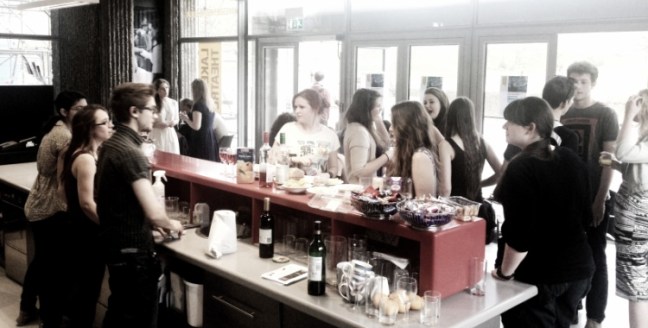
  • Maddy Costa and Fuel have found that offering refreshments instantly shifts the mood of a post-show event, transforming it into a welcoming social context. As Kate McGrath and Louise Blackwell put it, “you don’t have to spend a lot on hospitality, but you do have to be hospitable”.
  • It can also help to move the discussion out of the theatre space. While the National Theatre’s Platforms have successfully used the stage, Lorna Rees suggests that sometimes the auditorium “can be quite intimidating and not conducive to discussion”.
  • Involving the audience does not have to be difficult or complicated. Costa explains, “I always start by just getting a quick show of hands, did you like it, did you not like it, something very simple like that”.
  • Angus MacKechnie recommends experimenting with the format and fitting it to the context of discussion. “In terms of format, form should follow function,” he says.
  • Fuel point out that it must be clear where and how the event is taking place, so they recommend sending out invitations, putting up flyers and making sure box office staff are fully briefed.

Photo: The Lakeside Theatre, Colchester.

Keeping the Secret

9802714633_caebd5356a_z

Originally written for Exeunt.

There has always been a certain tension at the heart of the Lyric Hammersmith’s new project. One manifestation of this tension emerged in the opening lines of Sean Holmes’launch speech, which was paradoxically required to contain both arrogance and humility – “Arrogance because there is definitely something provocative and cocky in the gesture we are making, and humility because we are aware of that arrogance and hope that it reflects a desire in our audience”. Secret Theatre is a project that strives to both explode and build, to create something new while drawing inspiration from past endeavours, to maintain secrecy at the same time as being inclusive, to challenge the supremacy of the text while not entirely departing from its spirit. It’s no easy task.

There is also something a little disingenuous about assessing this task now, after the first two shows have opened. Secret Theatre is taking place over a year, establishing a permanent company of ten actors and ten creatives to work on a series of shows in repertory, through a process that is continually adapting to the space, the people in it and the audiences coming through the doors. It is a structural shift over many months, and its real value lies in its impact as a whole endeavour rather than in the individual shows that are emerging from it. So the current view is necessarily a limited one – just the first glimpse of a much wider picture. This response, therefore, must also be a glimpse, an early set of impressions rather than a comprehensive critical overview.

The element of the project to receive most attention at this stage is embedded in its very name – the “secret” part of Secret Theatre. One of many risks the Lyric is taking with this season is the decision not to release the names of the shows, instead referring to them as Show 1, Show 2, etc. The stated aim of this decision is to “counter a prevailing culture saturated with information”, allowing theatregoers to experience work without the burden of expectation. Since its launch, however, the secrecy of the project has come to acquire lots of other connotations, many of them highlighting that central tension. It functions as a sexy marketing tool, but it is also in danger of implying exclusivity. It erodes at the notion of theatre as commodity, yet it is problematic in the risk it asks audiences to take in shelling out money on an unknown.

It remains uncertain just what effect this secrecy will have in the longer term, although it’s unfortunate – not to mention a little ironic – that this has so far overshadowed the shows themselves. To approach the work in the spirit of its creation, however, I’ll be keeping the secrecy intact as far as possible. Whatever the other implications of the “secret” tag, it feels churlish to deprive anyone of the heady thrill of sitting in an auditorium buzzing with the kind of anticipation that only comes from going in blind. Anything might happen.

And this spirit – this breathless sense of the unexpected – runs right through the metabolism of both productions, even once they reveal their titles. Show 2 does not remain a mystery for long, with an early line clearly determining the familiar classic text, but the revelation takes nothing from the vitality of this interpretation. It might not be quite the theatrical hand grenade that Holmes promised to lob in his interview with Matt Trueman, but it somehow manages to strip itself of the kind of baggage that its iconic female protagonist drags on in a towering collection of suitcases.

In common with the troublingly clinical, synthetic eroticism of Three KingdomsShow 2manages to be at once achingly sexy and stylishly cold. The plot is centred on two sisters (Nadia Albina and Adelle Leonce), both of whom find themselves far from their privileged rural upbringing in the cramped claustrophobia of the city, and both of whose lives are shaken by the impulsive violence of the younger woman’s husband (Sergo Vares). In this version, sexuality is repeatedly foregrounded, as performers undress at the front of the stage and Leonce suggestively licks ice-cream from a spoon. But any sensuality is underscored with a hard edge of menace. No one exemplifies this better than Vares, whose muscular presence hints at the animalistic traits attributed to his character, but who maintains a deeply unsettling aura of control even in the fiercest of his rages.

Alongside themes of sex, gender and violence, this production also draws out a thread of fragile hope and imagination. Hyemi Shin’s clean, pleasingly minimalist set is something of a blank canvas, onto which Albina’s delicate, damaged escapist can project her desires. Brightly coloured balloons are symbolic as well as celebratory: hopeful and captivating, but easily punctured and deflated. The aural landscape of the production, meanwhile, is filled with a series of intoxicating Motown tunes, each truncated as abruptly as the protagonist’s dreams. It all makes perfect sense, but as metaphor rather than literal representation. As Albina declares “I don’t want realism, I want magic”, it’s hard not to nod emphatically.

Show 1, while grappling with an equally revered play, has the benefit of reimagining a text that is already fragmented and incomplete. This is where the non-literal, symbolic approach of the Secret Theatre team really pays off, exposing an ugly, oozing wound right in the middle of a play whose implicit social critique is suddenly painfully explicit. Here, the central character (Billy Seymour) is stuck on a punishing treadmill, trapped in a life of unremitting poverty and toil. To eliminate any doubt about the impossibility of his situation, Seymour is tethered to the middle of the stage, able only to go round and round on a pre-determined path, always running but never getting anywhere. The only way to sever this tie is through violence, an answer that is really no answer at all.

The dark, desperate world presented on stage is one in which individuals like the protagonist have been mercilessly dehumanised by the system they exist within. This is clear right from the captivating animalistic struggle of the first scene – as startling an opening as you’re likely to witness – and is insistently compounded by the images that follow. In one of the rawest, messiest moments of the show, the cast pull on animal onesies and dance furiously under flickering strobe lights, flinging water across the stage. It’s a thrilling yet devastating stage image, capturing both the giddy intensity and the furious despair of this hedonistic release.

The real punch to the guts, however, is reserved for the conclusion. In the aftermath of the play’s climactic scene of violence, Albina – who has spent most of the show hovering above the action like a mocking angel – steps up to a microphone. In the most haunting of the show’s many striking music choices, she launches into a bitter rendition of a song that suddenly shifts the nature of what we have been watching for the past 75 minutes; something previously abstract is made uncomfortably specific. Through the insertion of these bile-coated lyrics into the text, a brilliant and disturbing new reading is revealed.

One of the great joys of both shows is to see unexpected ingredients of the text wrenched out and realised anew. In place of literalism, a rich symbolic language illuminates new facets of the plays. In Show 2, a repeated line about metaphorical “coloured lights” is visually translated into gorgeous, colour-shifting neon bulbs; the grim, relentless cycle that is implicit in the narrative of Show 1 finds expression through Seymour’s compulsion to walk in endless circles. Rarely does theatrical metaphor combine such careful thought with real visual excitement.

My initial thought, on emerging from Show 2, was that this is theatre that turns the text inside out. Theatre that grabs something from deep inside the guts of a play and holds it up for an audience to see; theatre that excavates from within rather than imposing from outside. But on reflection, perhaps even to distinguish between internal and external is a misguided project which continues to implicitly judge a production based on its relationship with the text. It might be more accurate to say that this is theatre in which the text is in dialogue with the rest of the stage vocabulary, neither raising its voice nor dwindling to a whimper.

And here is where the much discussed secrecy that surrounds the project suddenly seems vital. The first two shows are productions of famous, frequently revived texts, each carrying not just baggage but voluminous trunks of the stuff. Some have expressed surprise that Holmes has opted for two such behemoths of classic drama, but in the light of Secret Theatre’s aims, nothing could be more logical. How better to challenge the structures of literalism and “serving the text” than to reimagine a pair of plays with a long lineage in this tradition?

The names of these plays, however, inevitably conjure a whole range of associations and expectations, influencing their reception and perhaps even putting some people off entirely. In the case of such well-known plays, the decision to keep their titles under wraps is more than a mere gimmick; it allows for a viewing experience that does not immediately hold the production to the example of the text. Instead of measuring the show up to an imagined ideal, we are freed to watch what is actually happening on stage, in this moment, now. Whether we enjoy watching that or not, central to the gesture is a refreshing liberation from pinning the entire production down to one supposedly fixed element. All of a sudden, everything is up for grabs.

Of course, none of the work that has come out of Secret Theatre so far is perfect. Much of the emerging aesthetic remains in the swaggering shadow of Three Kingdoms, from the drenching of water to the abundance of suitcases, while the promised explosiveness could still do with a bit more of a bang. The secrecy is perhaps mishandled and the right vocabulary to discuss it is still being shaped. But this is theatre that is not afraid to be messy, theatre that refuses to be quiet and well behaved. It’s theatre that demands to be watched – really watched – and that respects its audience’s ability to think and interpret. It’s rough, it’s sexy, it’s interrogative, it’s thrilling. It’s theatre to make the heart beat a little faster. And that, surely, is something to get excited about.

Photo: Alexandra Davenport.

Long-distance relationships

???????????????????????

Originally written for The Stage.

Look at the programme of any regional receiving house and the line-up is typically scattered with popular musicals, famous faces and hits touring out of or into the West End. But beyond these crowd-drawing headliners, touring is often difficult for other areas of the UK theatre industry.

For those artists and companies working slightly below the radar, without big names or familiar shows to pull in audiences, touring is becoming an increasingly challenging and expensive activity. As everyone feels the squeeze on their funding, touring companies get hit twice, as struggling venues can no longer afford to pay guarantees and instead shift the risk onto those bringing in the work. It is difficult to build a relationship with audiences where engagement is often shallow and fleeting, while theatregoers with shrinking budgets are leaving it later and later to book tickets.

As I discovered in the process of researching a report for theatre producer Fuel, challenges faced by the non-commercial touring sector are manifold, but one particular area of difficulty is around the notion of collaboration – or lack thereof. Many touring companies express frustration about the reluctance of venues to cooperate on marketing strategies and share information about local audiences, with the level of collaboration varying wildly from theatre to theatre. At the ITC’s conference in February of this year, meanwhile, the difficulty of accessing audience data was identified as one of the key barriers for UK touring.

“We don’t always have access to audience data from all the venues,” explains Hanna Streeter, an assistant producer with Paines Plough, “so it makes it difficult for us to build relationships with those audiences.” This same frustration is shared by Jo Crowley, the producer of theatre company 1927, who identifies “how tricky it is as a company to access information around your audience” as one of the primary challenges of touring. Somewhere along the line, relationships between companies and venues are breaking down.

There are, however, those working towards a solution to these problems. Fuel’s New Theatre in Your Neighbourhood project, one of a number of initiatives funded through the Arts Council’s new Strategic Touring Programme, offers one possible model. As part of their aim to strengthen relationships with audiences on tour, the theatre producers are hiring local engagement specialists in each of the areas they visit, who then act as Fuel’s main presence in that region.

These individuals, chosen for their knowledge of the local community and its arts ecology, can serve as a central point to bring together more collaborative relations between Fuel and the venues they work with. In the project’s assessment, this approach and the “camaraderie” it created was identified as one of the key achievements of New Theatre in Your Neighbourhood’s initial six-month research phase, shifting the way in which the way in which the venues in question work with visiting companies.

Going hand in hand with the need for audience data, a number of producers stress the importance of trusting in venues’ knowledge about those who attend their performances. For English Touring Theatre, who are also being funded by the Arts Council’s Strategic Touring Programme to support the roll-out of quality large-scale dramas to regional receiving houses, this is central to the success of their scheme. “Issues with touring, I think, come down to the fact that you’re dealing with such different venues,” says associate producer Caroline Dyott. “It is not the case that one size fits all and so we just slightly have to acknowledge that and trust venues to know their audiences.”

Streeter agrees, explaining that Paines Plough are using their Strategic Touring grant from the Arts Council to build a sustainable base for small-scale touring in close partnership with venues. “It’s a challenge for a touring company to understand the audiences in all of the different places that they’re going to,” she acknowledges. “That’s where the collaboration with the venue is really important, so we don’t just feel like we turn up, we do a show, we leave; we want to have a relationship with the audiences in all the places that we’re going to.”

This sharing with theatres can go both ways, as Crowley suggests: “There’s a huge intelligence and resource that touring companies have that would be really interesting to share.” Instead of acting like competitors, venues and companies might be able to learn more about their respective audiences from one another. Crowley adds: “There needs to be a better conversation between venues and funders and companies about how we work better to collect the information we need and to nurture our audience collectively.”

As Crowley points out, central to the success of these collaborations is a shift in attitude to view the audience as a shared audience. In many cases, this is a shift that is already taking place. Streeter explains, “we’re working with the venues on how we can support them and help them to grow audiences, not just for Paines Plough, but for other touring companies and for the venue and for new work in general.”

Fuel’s co-director Louise Blackwell agrees, expressing her hope that the work Fuel are doing will provide benefits “not only for what we produce but for the wider theatre landscape”. Through closer collaboration and a recognition that venues and companies are ultimately working towards the same goal, perhaps the challenges posed by touring can be collectively overcome.

Photo: Lizzy Watts in the Paines Plough production of Wasted. Richard Davenport.

London Stories: A 1-on-1-on-1 Festival

London-Stories

Originally written for Exeunt.

“We all want to connect, I think,” Richard Dufty muses as we chat in one of Battersea Arts Centre’s many cosy, secluded corners. The last time I was face to face with Dufty was in his company Uninvited Guests’ show Love Letters Straight From Your Heart, as he shook my hand and offered me a glass of sparkling wine on the way into the performance. Now, in a new festival of intimate storytelling, the senior producer at BAC is interested in interrogating just those kinds of theatrical encounters – the moments where the mask slips and a more genuine connection between performer and audience member might just be possible.

“A lot of the performance that we’re interested in here is performance that is reaching for the real,” he says, quickly adding, “whatever that means.” Dufty and his artistic colleagues at BAC are fascinated by “the power of directness and honesty and immediacy”, a power that they have explored through a number of building-wide projects. The One-on-One Festivals in 2010 and 2011 questioned the nature of theatre and the relationship between performer and spectator, offering a series of encounters that shifted participants’ perspectives on the theatrical event. In BAC’s latest foray into intimate performance, however, Dufty and his co-producer Rosalie White are also interested in the intimacy that might be possible between audience members.

“There’s so much talk about the kind of community that you can get in an audience and what happens when you experience things together, and often it feels like a load of guff,” Dufty says frankly. By shrinking this down to an audience of two, the 1-on-1-on-1 Festival will go beyond this empty rhetoric and look at “the intimacy in what happens in a very small audience”. Each audience member will experience the event in the company of a series of strangers, entering each encounter alongside another person. The hope is that this will foster a closeness that is usually absent from larger performances; as Dufty points out, it’s hard to ignore your fellow audience member when they are the only other person in the room.

Another shift from previous One-on-One Festivals is in the nature of the encounters themselves. Rather than commissioning professional artists to create work for the 1-on-1-on-1 Festival, the theatre issued an open call for Londoners willing to share their stories, receiving over 100 responses. Dufty explains that the reasoning behind this approach was driven by the same desire to strip away layers of artifice from the theatrical event.

“There is something exciting about people who are not necessarily trained performers telling their stories,” he suggests. “If you’re interested in the frisson of something feeling like it’s actually happening there and then rather than being perfectly rehearsed, then there’s something to be said for not always working with professional performers.” There was also an attempt on the part of the theatre to tell the stories that we might not usually hear. Dufty recognises that the life experiences of those who make and regularly attend theatre at a venue like BAC are likely to be fairly similar; he and White wanted to open the building up to other stories, issuing an invitation to “come look at the rich variety of lived experience just in this one city”.

And the city itself is key. While the original focus was on stories rather than on place, Dufty and White soon discovered that the narratives they had collected from Londoners were all “saying something quite beautiful about this city”. In a sprawling metropolis where we usually avoid meeting each others’ eyes at all costs, London Stories forces us to take a closer look. Dufty is not expecting audience members to leave and immediately strike up conversations with strangers on the Tube, but he does hope that “you can at least wonder what their back story is, where they come from, how they came to be here, and what happiness and sadness and hope and tragedy is in their lives.”

The festival’s relationship with its city extends to its layout within BAC. The “building-wide adventure” will take audiences on a labyrinthine journey through candlelit rooms and corridors, dimming the light inside to allow some of the world outside to seep in through the windows. “There’s some idea that London is bleeding both ways,” explains Dufty, “from the storytellers out to the city and in again.” In many ways, the old Victorian town hall is the perfect location for this evening of urban storytelling; as Dufty suggests, London Storiescontinues in the building’s tradition of democracy, activism and community.

The stories themselves range from the heart-lifting to the heartbreaking. Dufty tells me that many of the narratives are deeply emotional for the storytellers – “it’s partly therapeutic” – but that in even the bleakest tales there is an element of hope and redemption. In selecting and curating the stories that make up the event, Dufty and White have dedicated thought to the texture and mood of the evening, contrasting the melancholy with the joyous. Dufty admits that “the curating job has been, on a very crude level, about mixing the heavy ones up with the lighter ones, the sad ones up with the funny ones”. There has also been a responsibility towards the storytellers, who are committing themselves to a necessarily exposing series of encounters by sharing their own experiences.

For all his talk of honesty, however, Dufty acknowledges that through the repeated telling of these stories, they will inevitably be transformed into a kind of performance. No matter how intently we tear away at artifice, a thin layer will always remain. Despite his instinct to reach for the real, Dufty cautions that “we shouldn’t be naive about ever being able to reach it”, adding “there are always masks”. But this should not stop us from reaching nonetheless. “Whilst you recognise that getting to absolute honesty is impossible, the pursuit of it is beautiful – the honest, genuine pursuit of it is a beautiful and very human thing.”

While unadorned honesty might be impossible, what London Stories – and intimate performance more widely – does have the potential to do is delicately reconfigure the theatrical contract. In these surroundings, there is a sense that the audience is indispensible and that the event itself “doesn’t feel too pre-determined”. And as Dufty emphasises, there is something fascinating about this not just theatrically, but also politically. “Things don’t have to be like this. It could be different.”