Word Up

27223_large

Originally written for Fest Magazine.

“I don’t really know what it is, spoken word. What the fuck is it?” jokes Kate Tempest, her infectious laughter ringing down the phone. But she has a point. What is spoken word? Despite gaining its own section in the Edinburgh Fringe programme last year and being stamped as a burgeoning cultural scene, the genre straddles a huge range of artistic practices. It’s an artform that revels in mixing influences.

“There’s a lot of snobbery,” Tempest reflects on her own experience of the spoken word label. “If you’re a spoken word poet, you’re not quite a real poet; if you’re a spoken word artist, you’re not quite a rapper; if you’re a spoken word theatre-maker, you’re not quite a theatre-maker.”

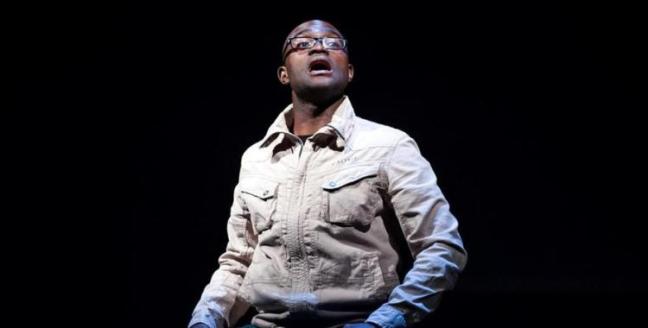
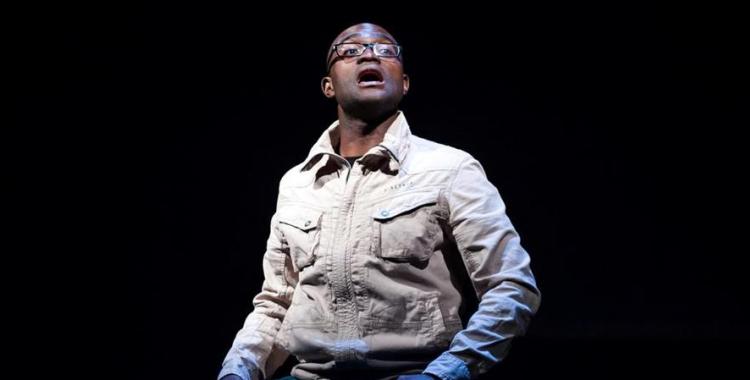
Whatever snobbery spoken word might have faced in the past, however, the Fringe is an increasingly welcoming place for performers whose work falls into this boundary-blurring space. As well as an expanded range of offerings in the second year of the spoken word section, 2013 sees two spoken word performances make it into the British Council Showcase: Tempest’s Ted Hughes Award-winning show Brand New Ancients and Inua Ellams’ Black T-shirt Collection.

Despite growing up performing her poems—“it’s never been surprising for me that people stand up and tell their rhymes”—Brand New Ancients marks something of a departure for Tempest. Blending storytelling, poetry and an electrifying live score, the show intertwines the tales of two modern day families, spinning an epic narrative out of ordinary lives. “I’ve never done anything like it,” says Tempest. “I’ve never sustained a narrative for that long; I’ve never tried to tell a story like this.”

Her starting point, she explains, was the idea of myths. “I’ve always found a lot of comfort in reading myths,” she says. “In the myths I recognise friends of mine, recognise my family, recognise myself.” Wondering why these characters that she recognised all around her could not have myths of their own, Tempest set about the task of creating just that. Her heroes are compassionate barmaids and dissatisfied advertising execs; they drink pints down the local and hang out at the betting shop. As Tempest points out, “you don’t really get to hear epic narratives about people who aren’t epic heroes”.

As well as drawing heavily on storytelling and poetry, the live score is central to Brand New Ancients. Music appeals to Tempest because, unlike with poetry, “you’re straight in, there’s no faffing around with language”. Uncharacteristically, she fumbles slightly for the words to express music’s narrative power. “There’s just something that happens when you hear a violin soaring and when you watch a drummer going for it – there’s something that happens to you,” she says.

Inua Ellams equally identifies a range of different influences in Black T-shirt Collection, which combines the simple art of telling a story with poetic and multimedia elements. “I don’t even necessarily think of it as spoken word or as performance poetry,” he says, shaking off the spoken word label as restlessly as Tempest. It’s just a story, he shrugs.

Criss-crossing the globe from Nigeria to Britain to China, Ellams’ story follows two foster brothers—one Muslim, one Christian—who travel the world selling their T-shirts. While Ellams is keen to emphasise the simplicity of the tale, along the way the brothers’ experiences touch on issues as diverse as sectarian violence, homophobia and the ethics of the fashion industry. “The story covers so many things and does so very honestly,” he reflects.

Ellams’ aim, similarly to Tempest’s, is to identify the human narrative at the heart of his subjects. “Whenever I read stories about politics they tend to bore me,” he admits, pointing to the lack of a human connection. “That’s what I try to do,” he continues, “just tell stories about two guys and how the world happens to them.”

As well as being a consummate storyteller, Ellams very much identifies himself as a poet, explaining that the page is usually his first consideration. He describes the range of his work in terms of transformation. “Usually I think of myself as Bruce Banner,” he grins, seizing with glee on the superhero metaphor. “When I write a poem I think of myself as this scientist, this geek with glasses, conducting literary experiments with paper and pen. And then I think of myself reading poems as somewhere in between.” It’s only in his solo shows, when harnessing theatrical elements, that he’s the Hulk – “the monster is entirely unleashed.”

Elsewhere in the spoken word programme at this year’s Fringe, the offerings are equally varied. From the chaotic spontaneity of an ad-libbing show at the Assembly Rooms to a range of one-off talks from speakers such as Jeanette Winterson and Jon Ronson, spoken word is a patchwork genre. Among the highlights are the return of Scroobius Pip, poet John Osborne’s follow-up to the acclaimed John Peel’s Shed, and Luke Wright’s new show Essex Lion.

As Wright explains, his show was born from the inspiration of the false lion sightings in Essex last year and has ended up bringing in a range of poems about the things we want to see. “I think we’re always looking for those things in the next field, those things on the horizon,” he says. “All the poems are quite unrelated in their subject matter, but they’ve all got that at their core; they’re all about longing in some way and wishful thinking and self-deception.”

Discussing the spoken word scene, Wright is more pragmatic about the terms in which it is described. “Labels exist for a reason,” he points out, and he speaks of the launch of the spoken word section in the Fringe programme as “hugely symbolic.” For all these artists, however, the work itself is more important than the words used to discuss it.

“Hopefully there are a lot of writers coming through who are exploring new places and having new ideas and going on this huge adventure with text,” says Tempest. “Whatever form that comes in, if that’s happening we should be really, really, really glad.”
In It To Win It

27452_large

Originally written for Fest Magazine.

Just take a stroll down the Royal Mile and you quickly notice that competition is right at the heart of the Fringe. Flyerers trip over one another to slap their leaflet in your hand, performers all fight for attention and the ultimate prize is the five-star review. Like it or not, there are winners and there are losers.

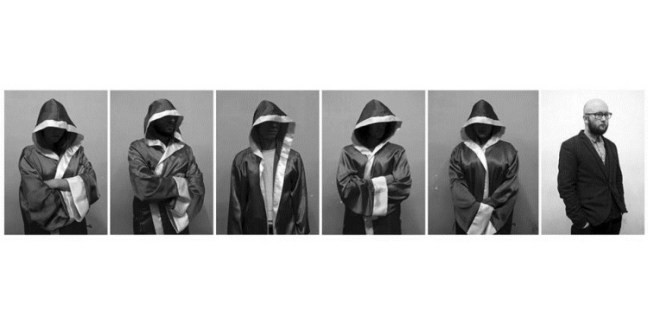
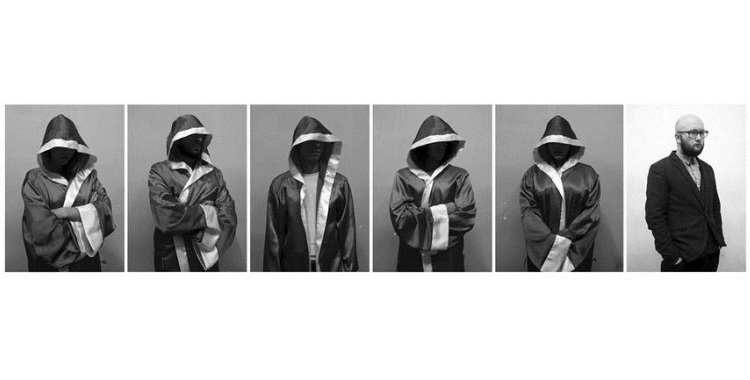
For two shows at this year’s festival, that competitive element is dragged into the foreground. Made in China’s new show Gym Party, a dark and funny dissection of the desire to win, describes itself as a “three-way battle to the death” between its grimly competitive trio of rivals. In Fight Night, meanwhile, regular Fringe provocateurs Ontroerend Goed pit five performers against one another in a popularity contest where the audience have the final say.

“People have always been competitive and competition is not an inherently bad thing,” says Jess Latowicki, one half of Made in China. What she and fellow theatre-maker Tim Cowbury are troubled by, however, is the extent to which competition now drives our society. “It’s a mindset that has brought the world to its knees in the last few years,” Cowbury observes, pointing to the failure of free market competition in the financial crash and subsequent recession.

While Made in China’s starting point was politics, and in particular David Cameron’s “aspiration nation” speech, Gym Party draws on myriad types of competition. “When you say you’re making a show about competition, people are like: ‘what do you mean?’” Latowicki laughs. “It’s a really, really big topic.” Not aiming to focus on any one type of competition, the show instead critiques the underlying desire that drives it all, bringing in references to everything from competitive sport to television gameshows and talent contests.

Like Gym Party, the initial inspiration for Fight Night was political. Reflecting on the situation in his home country of Belgium, Ontroerend Goed’s artistic director Alexander Devriendt was struck by how far the cult of personality could sway elections and found himself wondering if it might be possible to explore these impulses in a theatrical setting. “I wanted to see what happened if I left behind all party colours and society issues,” Devriendt explains. “What if I take them all out, what do you vote for then?”

The resulting show fills the stage with five performers—or “candidates”, as Devriendt refers to them—who must persuade audiences to keep them in the game. Voting decisions are made based on “their presence, what they believe in, how they look, how they sound”, with Devriendt emphasising that the performers are playing versions of themselves rather than defined characters. Perhaps because of this, there is a genuine desire to compete. “The actors who perform in the show all want to win, because if they don’t win they’re out,” says Devriendt. “I like this real drive of the actors – they really want to perform and they want to win you over.”

The structure of different rounds and the very real element of competition bear certain resemblances with Made in China’s show. As it stands—Latowicki and Cowbury are still in the final stages of making the show when Fest speaks to them—Gym Party moves through three distinct phases of competition. The first offers a playful take on sports day, with performers competing in a series of silly physical tasks, while the second section moves into what Latowicki calls “subjective competition”, asking the audience to become the arbiters. In the third and final segment, the piece takes a dark turn.

Through this grim and admittedly “nasty” material, Gym Party asks just how far we will go in order to win. But Latowicki stresses that what they show the audience is no more shocking than the world around them. “These things happen,” she says. “People are horrible to each other for the sake of getting ahead, and all we’re doing is taking things from real life and framing them in a way that allows the audience to go ‘oh shit.’”

Similarly, Ontroerend Goed hope that there will be a darker political resonance to the competition in Fight Night, unveiling some of the motivations that trigger us as voters. However, it is important for Devriendt that this interpretation is never explicitly defined. “You can see it as a game, but you can see it as a metaphor for what you want,” he says. “I try to leave that open.”

Latowicki and Cowbury agree that they would rather leave the conclusions up to their audiences. “Some people want shows to give answers, but we’d much rather ask questions,” says Cowbury. “Our job is to provoke people to think about things they might not otherwise think about, or challenge their preconceptions and unsettle them.” He pauses. “As well as entertaining them, of course.”

Reinventing the C Word

A Midsummer Night's Dream Full company - Credit Simon Annand (2)

Originally written for Prompt.

Something quietly extraordinary is happening in Bristol. While around the rest of the country stories flood in about the plight of precarious arts organisations and the cuts being passed down by local authorities, here there is a genuine conversation taking place between the arts community and local government about how they might move forward together in the face of reduced funding. In Bristol, the ‘c’ word is not cuts, but collaboration.

The healthy discussion that is currently taking place around the arts in Bristol is largely driven by the passionate commitment of new Mayor George Ferguson. Bringing with him experience from a range of architectural regeneration projects and a personal history of heavy involvement with the arts and cultural scene in Bristol, Ferguson has taken on the role with a firm belief in the importance of the arts to the city and its ongoing revitalization. He is keen to emphasise that he is “absolutely determined that I work with the arts to defend them as much as possible at a time when money is extremely tight”.

While the primary focus of concern might be on squeezed central funding from the Arts Council, money from local authorities also forms a vital part of theatres’ financial make-up. As councils everywhere face slashes to their budgets, the arts are one of the areas up for review in local government spending. One need only look at examples such as Newcastle Council’s widely publicised proposal to make a 100% cut to arts funding in the city and now Westminster’s decision to do the same by 2015 to understand the difficulties that theatres are currently facing.

“Like everywhere else in the country, the landscape is pretty bleak in terms of support for the arts in Bristol and particularly in the region around Bristol,” says the Bristol Old Vic’s artistic director Tom Morris, acknowledging that the city is no exception in terms of funding decreases. “But the exciting thing – and for me the completely new thing – is that in Bristol there is a way of thinking about arts provision and the cultural life of the city which is holistic.”

In marked contrast with the attitude of many other local authorities, Bristol City Council views the arts as a vital component in the life of the area. As Morris puts it, “the premise that the cultural life of the city is an irremovable part of what makes it viable, an irreducible ingredient in its ongoing success, is already made here”. Comparing Bristol to other cities across the UK, Ferguson adds, “maybe we’re the least apologetic of all the cities about the importance of investment in the arts”.

To illustrate his argument about the regenerative power of the arts, Ferguson points to the example of the Tobacco Factory, a once derelict and abandoned industrial building that he took over and renovated 15 years ago. Replacing the old tobacco industry with a hub of cultural activity, the Tobacco Factory is now home to a thriving theatre and has helped to revive the surrounding area, providing economic stimulus in the form of bars, restaurants and other businesses. As Ferguson observes, “it’s a completely different place to the one that I found 15 years ago”. He is also emphatic about the financial value of the city’s culture, suggesting that “every pound that goes into the arts is probably resulting in £10 of regeneration benefit within the greater community”.

But this focus on the arts as a key element in the regeneration of an area is more than a simple economic argument. While there is proof that a flourishing arts scene stimulates economic activity, it is also an attraction for people to move to the area and therefore sustain it going forward. Morris argues that this is something that arts organisations need to recognise just as much as local authorities. “The arts need to be part of a holistic conversation,” he insists. “There isn’t a separate conversation about the arts; there’s a conversation about the health and regeneration and growth of the whole city, which includes the arts.”

One current example from Bristol effectively demonstrates what can be achieved when the arts become an integral part of wider considerations about an urban area. Following the success of last year’s production of Treasure Island on an outdoor ship, the Bristol Old Vic is once again taking to the streets of the city for its summer family show, creating an ambitious open-air woodland set. Meanwhile, as part of an entirely separate initiative, the Mayor is introducing traffic-free Sundays in the city centre. Thanks to the atmosphere of open discussion, these two projects have been able to link up, benefitting all parties involved.

In order for these holistic conversations to take place, however, arts organisations need to work together. Rather than competing for a decreasing pot of funding, Morris suggests that the arts community has the best chance of survival when venues join forces. He provides the example of the Bristol Old Vic and the Tobacco Factory Theatre: “We’ve discovered that both of our cases for funding are stronger if we’re collaborating in how we strategise them. That’s not necessarily an easy position to get to, but it’s really vital.”

Speaking about the need for collaboration, Ferguson positions the local authority at the heart of such relationships. “It’s a four-way partnership between the arts organisation, local government, the Arts Council and business,” he explains, stressing the urgent need to bring business into this equation as government funding contracts. “I think the local authority can be the enabler that helps those four-way partnerships to happen,” he adds.

This enabling might take the form of making introductions to local businesses, initiating discussions between the various different parties, or simply ensuring that the arts remain part of the overall conversation about an area. What Ferguson makes clear, however, is that the relationship between arts organisations and their local authority cannot be about funding alone.

“We don’t want to hear that they want loads of money throwing at them, because that is the scarcest resource at the moment,” he says, injecting a stark note of realism. “But we do want to hear that they would like to work in partnership with us in order to seek maybe a more social-entrepreneurial way of proceeding.” Returning to that notion of collaboration, Ferguson continues, “it’s not a patronising partnership, it’s a partnership of equals, in that we both have the common interest of drawing audience activity and investment”.

Bristol is not entirely alone in this collaborative attitude. Further north, where cuts to local authority funding are even deeper, there are also positive stories. While the threat to arts funding in Newcastle rightfully received much media attention, below the radar other councils are working productively with arts organisations to weather the challenging financial environment. In Bolton, for instance, the local council has worked hard to maintain standstill funding to the Octagon Theatre since 2009, despite reductions in overall budgets. The theatre is unequivocal about the importance of this support.

“Since I arrived in Bolton a year ago the support of the town has been remarkable,” says chief executive Roddy Gauld. “During my first meeting with the Council Chief Executive he said he was proud that Bolton had three things: a major football club, a university and a producing theatre.”

As well as protecting funding as far as possible, Bolton Council has worked collaboratively with the Octagon in other ways. The theatre has recently received a £50,000 grant, for example, which will go towards refurbishing the theatre’s cafe and bar this summer. Beyond financial assistance, the council has also been able to think more creatively about alternative ways in which to support the Octagon, offering practical help such as IT and property services. According to Gauld, this all stands as proof of Bolton Council’s recognition of the role that the theatre plays in attracting visitors to the town.

Once again, the example of Bolton has as much to do with a valued relationship between the theatre and its local community as it has to do with money. “I think the Council is totally aware of the value the theatre brings to Bolton,” says Gauld. “It’s obviously important to them as an asset, and of course there’s the social and economic impact we make, but they also see and feel the town’s sense of pride and affection for the Octagon.”

Commenting on the similar sense of pride that people in Bristol hold for the arts in their city, Morris talks about the “character” of a place and the need for local government to understand the individual character of its local area. It is ultimately this understanding that is key to any relationship between local authorities and the arts. “In significantly different ways, cultural activity is a really important part of the character of every city,” Morris argues. “There’s a lesson to be learn from looking at a city, trying to work out what its particular cultural character might be, and then trying to invest in that.”

Photo: Bristol Old Vic’s A Midsummer Night’s Dream, Simon Annand.

Touring theatre: a risky business for audiences too?

Two-dice-displaying-on-a--008

Originally written for the Guardian Culture Professionals Network.

Risk is a word that regularly gets aired in arguments about the arts. We talk a lot about risky work, about venues and companies taking risks, about the current economic environment making many organisations risk averse – but it’s rare that this vocabulary is used in discussions aboutaudiences. At a time of punishing austerity and squeezed budgets, what do theatremakers ask audiences to risk when persuading them to buy tickets to their shows?

This question is particularly pertinent for touring companies, many of whom are struggling to reach and engage with audiences through the current touring model. As lots of these theatremakers recognise, touring is challenging, not least because of the limited time spent in each of the areas they visit. Without the time and resources to build a deeper engagement with local audiences, touring companies demand even more risk on the part of the audience than their building-based counterparts.

However, as a number of new initiatives funded by Arts Council England’s strategic touring programme are exploring, there might be ways for these companies to reduce the risk involved for their audiences without having to become artistically conservative.

One method is that of the tried and tested. “The things that are doing well anecdotally are things which have known writers and known faces,” explains Caroline Dyott, associate producer at English Touring Theatre (ETT), who also notes that audiences are “booking later so that they can take less of a risk on something”.

Picking up on this trend, what ETT hopes to do through its National Touring Group is to offer audiences large-scale, ambitious work that has already been successful elsewhere. Instead of offering famous names, it is saying to audiences: “Look at all these quotes and star reviews; this is taking away this element of risk for you.”

There is also room for improvement in the ways in which theatremakers connect and communicate with their audiences. This can be as simple as ensuring that the work is being taken to the right people. Ed Collier, a producer at China Plate, says that “touring and making for us are always completely intertwined … right from the start of the making process we’re already thinking about the audience and how we’ll reach them, through whatever dissemination or touring model that might be.”

As well as targeting appropriate audiences, another way of breaking down the sense of risk is to adjust the way in which work is discussed and marketed. “There are some pretty simple things we can do, like looking at the language we use,” suggests Gavin Stride, director ofFarnham Maltings and a key figure behind touring consortium House. “What [companies] might think makes their show sound esoteric and clever in their world isn’t necessarily the same language that needs to be used to get a show to an audience.”

Reducing perceived risk for audiences can be as simple as building familiarity through return visits. “Most of the venues that we talked to said that returning companies do better,” notes Hanna Streeter, an assistant producer with touring company Paines Plough. “It’s about building that relationship up with the audience and returning, which is what we’re trying to do.”

Taking this one step further, Fuel’s New Theatre in Your Neighbourhood project is reaching out to form deeper connections with each of the areas it visits. The idea is to establish a relationship with the producers, allowing audiences to take risks on new work because they trust that Fuel will give them a good night at the theatre.

As co-director Louise Blackwell explains: “When we return to each of these places, we hope that people there will have made a connection and will maybe have been to see one of the shows and say, ‘that’s by Fuel, I don’t know this new artist that they’re bringing, but I’m going to go because it’s a Fuel produced event’.”

The approaches differ, but it is all about building a sustainable audience base for future work. “It’s got to be about audiences,” says Collier, “so it’s got to be about finding ways of making theatre more popular.” Streeter stresses that Paines Plough’s work is essentially about “trying to develop audiences’ taste for new work”, while Dyott agrees that ETT’s key aim is to create an audience that will outlive the length of this project.

As Fuel is keen to emphasise, the fruits of this labour could offer benefits for the whole theatre ecology. Speaking about the company’s aim to grow a wide community of audiences who trust and return to the Fuel brand, Blackwell adds: “We hope that by having a deeper engagement with the people that live in these places that will be possible, not only for what we produce, but for the wider theatre landscape.”

Peeping Behind the Scenes of Peep

99Pic

Originally written for A Younger Theatre.

“There’s something particular about not being watched, not being seen,” muses Donnacadh O’Briain. The director of Natural Shocks, the theatre company behind unique Edinburgh Fringe project Peep, is discussing what he thinks gives this piece its impact. Placing its dramatic action within a sealed box, Peep invites a select audience of spectators into individual compartments, in which they watch the actors through two-way mirrors – peep-show style. They can see the performers, but the performers cannot see them, offering a distinctly voyeuristic experience.

“What’s interesting about the audience experience here is, because you’re unobserved, I feel like there’s an interesting lack of self-censorship happening,” says O’Briain. He insists, however, that his primary concern was always how to interrogate his chosen subject matter rather than how to create a novel experience for audiences. “Peep is really about the exploration of a subject and a theme more than it’s about putting people in private booths and having them watch a two-way mirror – that’s incredibly important and pivotal, but that’s not what it’s about, really, that’s just a means to engage an audience.”

Closely marrying form with content, the peep show set-up provides a space for exploring sex, relationships, intimacy and sexual politics. With a concept born from a conversation about male-female relationships and a desire to spark conversations around sex, O’Briain had already commissioned plays from Pamela Carter, Kefi Chadwick and Leo Butler before deciding to construct a purpose-built space in which these dramas would unfold.

“Peep changed around January last year as we were really looking at Edinburgh seriously,” O’Briain explains. “It changed from an idea for a play to an idea for a much bigger project. From there I began to think about it as a cross-art-form space, a space which was for the conversation about sex and about intimacy, and about what it is to be intimate with someone – our fears of that, our hopes for that – and then also a space for discussion of sexual politics and the body and objectification and voyeurism.”

Taking Peep and its three short plays to the Fringe last year, O’Briain certainly provoked the discussion he was hoping for, creating a buzz of conversation that he did not quite anticipate. “I think because they watch it completely alone, when they come out people tend to want to talk,” he says, “so I ended up having lots of conversations with people about the subject matter, which was great. That was a surprise, I didn’t expect that. Theatre doesn’t normally work like that.”

This year that conversation is being continued on a larger scale, as Peep moves from the Pleasance Courtyard to Assembly George Square Gardens – right at the heart of the Fringe – and opens with an expanded programme. All three plays from last year will be revived, alongside new plays, a dance piece, a spoken word performance, live art segments and a cabaret programme in the evenings. All in all, the space will play host to around seven-and-a-half hours of performance every day throughout the festival, all viewed through the venue’s intimate peep-holes.

“In order to talk about what we want to talk about, there are many, many ways of having that conversation other than text-based theatre,” O’Briain elaborates on his decision to widen the programme. “I wanted to free up the aesthetic this year and open myself as a programmer up to the whole bunch of possibilities for how we can have this conversation.”

O’Briain speaks excitedly about a “beautiful” dance piece by Argentine company Diego y Ulises, “about intimacy and about love and about a physical relationship”, which has been specially adapted for this space, and about Peep’s collaboration with renowned cabaret artist Empress Stah. “One of the things that’s fantastic about Stah is that she’s actually worked in a peep show for real and she works very much on the naughty end of performing arts,” he says. “The pieces that she’s making are really responding to the relationship between art and sex and where the lines are blurred and how that’s changed.”

The variety in the programming plays very much to the festival atmosphere, where visitors are looking to be surprised and are more willing to take a chance on new work than they would be elsewhere. O’Briain explains that he sees Peep as “fundamentally a festival piece”, adding, “I think people are at a festival to experience stuff and we’re offering that”. While he sees the Edinburgh Fringe as a great opportunity for a project like Peep, however, he suggests that it might not be the right destination for all work.

“I had no intention of going back to the Edinburgh Festival unless I had something that absolutely belonged at the Edinburgh Festival, because it’s silly otherwise,” he says. “Things die a death in Edinburgh because they’re not really right for it.” Peep, on the other hand, has been programmed with Edinburgh firmly in mind, and even includes a location-specific collaboration with a live art organisation based in the city.

Whether talking about the specific demands of the Festival or the unique opportunities of the venue he has built, O’Briain keeps coming back to the audience. Although there is a certain dialogue taking place between this year’s diverse range of different acts, he is keen to leave any interpretation of this programme to spectators. “For me those conversations are for the audience,” he says. “I think those conversations are going to be specific to people’s experiences of the programme, which again is really exciting. People will make their own meaning from those interactions. What we’re trying to do is stimulate a conversation in a whole bunch of different ways.”

And O’Briain hopes that festival-goers will come back again and again to continue that conversation, deliberately keeping ticket prices low in the hope of attracting return visitors. “It’s priced in such a way that it encourages people to come back for more – just like a peep show does.”