Subsidy, Patronage & Sponsorship

Originally written for Exeunt.

“It’s been completely miserable.” Such was playwright David Edgar’s wry assessment of the Victoria & Albert Museum’s three day conference on the state of funding for theatre and performance, examining everything from Arts Council subsidy to the ubiquitous rise of crowd-funding. It is not, on the face of it, a rosy picture. Even in the so-called “golden years” of state subsidy during the New Labour era, substantial investment did not yield new audiences – a predicament that is unlikely to improve now that budgets are being brutally slashed – while the alternatives of sponsorship and philanthropy are attended by a whole plethora of ethical concerns.

There is, however, cause for discussion, and perhaps even a faint glimmer of optimism. To borrow a hackneyed proverb, necessity is the mother of invention; if nothing else, the current crisis is proving to be a stimulating catalyst for new and creative ways of thinking. WhatSubsidy, Patronage & Sponsorship has made clear, at least across the sessions on the day I attended, is a need for new, non-monetary ways of thinking about the value of theatre, a need to ask the awkward questions, a need to engage with and question the inter-linked nature of Arts Council policy and artistic trends, and a need to break through the false binaries that hamper theatre in this country.

Many discussions inevitably revolved around money, or more often than not lack of it. Yet there was also an undercurrent of resistance, a tug away from the imposition of economic measures on an art form that is essentially ephemeral and as such proves more robust against the efforts of commodification than, for instance, the visual arts. As one attendee pointed out during the concluding plenary, the theatre community needs to refocus its efforts on engaging people to value theatre, and not just attempting to persuade governments of its price tag.

Shifting away from the present gloom, the 1970s provided a compelling historical hook on which to hang the difficulties faced at this current juncture. This was a decade which similarly experienced financial crisis, mass unemployment and a Royal Jubilee, but one in which theatrical culture was characterised by a burgeoning alternative movement made up of the likes of Inter-Action, whose founder and former director were among the day’s speakers.

As well as playing with performative experiments in living, this generation of artists questioned the ways in which theatre is assigned value, from the eschewing of box office culture by the Almost Free Theatre to theatremakers’ reminiscences of planning tours around signing on for the dole, delicately captured in Susan Croft’s Unfinished Histories project. One thing that these artists spoke about strikingly in Croft’s recordings was their passionate work ethic – a work ethic outside of and not recognised by the dominant structures of capitalism.

This prompted unspoken questions about the valuing of artists today, a tender and topical subject. Bitter disputes continue to circle the widespread use of unpaid performers by projects such as You Me Bum Bum Train, disputes that often raise valid and urgent questions, but that in their admirable mission to defend the right of artists to be paid often ignore the equal right of artists to refuse payment. If the only artistic endeavours we allow are those that reimburse their participants, not only are we eliminating certain passionate but penniless pockets of innovation; we also rob artists of the option to reject monetary exchanges and pursue a definition of art that sits firmly outside of the capitalist figuring of labour.

This idea of being outside, of being alternative, is one that continued to resurface throughout the conference. But while creeping around the edges of otherwise underexplored issues and ideas represents one of theatre’s great strengths, there was also a warning against accepting marginality. Robert Hewison’s data-chewing key note speech aired some bleak if perhaps unsurprising figures, revealing that more than 60% of the adult population in this country does not engage at all with theatre and performance. While audience sizes should not necessarily be the driving motivation of artists – creativity needs, as Peter Brook would argue, a few empty seats – Hewison’s point was that the theatre community must confront the uncomfortable questions that will be asked of it if it is to formulate answers.

One proposed answer, as already touched upon, is to engage directly with that 60%. Hewison’s interrogation of survey evidence also revealed that while the typical theatregoer profile ticks many of the expected boxes – well educated, white, middle-class – it is in fact an elusive concept of identity that drives engagement with theatre and performance more than any demographic factor. For people who regularly attend the theatre, that theatre both speaks to them and says something about them. Such a component of identity cannot be easily engendered by marketing campaigns or ticket price initiatives; it was argued that instead social interaction could be the key to producing this engagement.

London Bubble Theatre Company’s Jonathan Petherbridge put it nicely when he analogised the theatre as a restaurant. For all that the chefs might proclaim the deliciousness of their food, it will always seem not to be to some people’s taste, but once you invite people to cook, their engagement rockets. This engagement need not necessarily be with the entire creative process, but it was put forward by several different voices at the conference that theatre as an art form needs to be more sociable and to reach out to new audiences, whether this involves working directly with local communities or simply taking the work where it can be seen.

The conference also trudged back over well covered ground in the very British division between “new writing” and “new work” that continues to dominate current conversations and was in this context seen as a division that is holding back progress – a “poisonous binary”, as David Edgar emphatically put it. There was even an attempt during the final open discussion to move away from these familiar debates, with the playwrights on the panel themselves expressing exasperation with this seemingly evergreen topic.

This binary, however, is one that has been perpetuated by an odd, mutually influencing relationship between Arts Council policy and the dominant creative output of this country’s theatre, as explained by Edgar in referring to the split that occurred between text and performance based work during the new writing heyday of the 1990s. Now we have too many writers and a skewed perception of authorship, neither of which is a small problem and both of which contribute to the wider problems faced by theatre today.

So what, if anything, can we conclude? It was generally agreed that subsidy is still important, but playwright David Eldridge hit the heart of the issue succinctly when he said that “artists need to be willing to bite the hand that feeds them in a heartbeat” – whether that be the hand of the Arts Council, private philanthropy or corporate sponsorship.

There was also a feeling that to move forward we have to smash down barriers; barriers between text-based and performance-based work, between the falsely oppositional concepts of the avant-garde and the popular, between artists and audiences. And whatever we might need to smash to get there, we need to find ways to make sure that those artists are still there, occupying the liminal spaces, feeling at the edges of society, finding room in which to play.
 

Northernmost Stage

st-stephens1-600x329

Originally written for Exeunt.

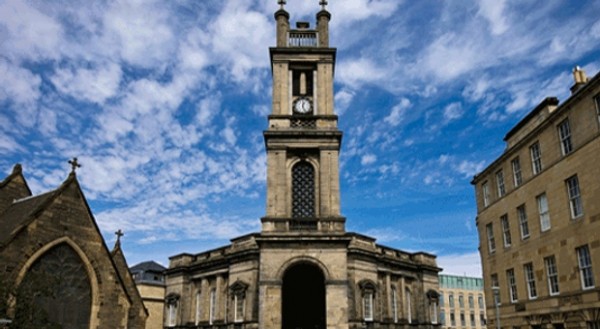
There is professional fervour for the Edinburgh Fringe, as an international platform on which to present new work, and then there is pure, unfettered love for the festival in all its chaos. Erica Whyman, the artistic director at the helm of Northern Stage’s ambitious Fringe programme at St Stephen’s this year, falls firmly into the latter camp.

“I just love the energy of it,” she tells me over a snatched lunchtime phone call. Unsurprisingly, Whyman – who has also just been announced as the Royal Shakespeare Company’s first deputy artistic director – is a very busy woman at the moment. Northern Stage’s pilot project at St Stephen’s is due to take sixteen separate productions up to Edinburgh, where the venue is providing accommodation for all performers involved, not to mention converting the atmospheric church into a performance space. It is a massive undertaking.

“If you’re going to arrive in Edinburgh, you need to arrive with a bit of a bang,” says Whyman by way of explanation. Her initial intention was to test this collaborative model with just three productions, but the project rapidly snowballed into a full season of work over the month of the festival. The idea was born out of Whyman’s love for Edinburgh, an existing relationship with St Stephen’s, and the feeling that artists in the North needed an affordable platform to present their work to Edinburgh’s international audience.

There was also a funding incentive. “In 2011, when we were applying for Arts Council funding for Northern Stage, I was conscious that it was important to try and demonstrate a growing relationship across the region,” Whyman explains. “It struck us that we could kill two birds with one stone. We thought that there was a lot of interesting contemporary work coming out of the North and that if we bundled that together into one venue we could have a really striking programme.”

The various pieces compiled by Whyman for the festival appear, at least at first glance, to have little in common other than geographical location. They range from RashDash’s bold cabaret transformation of Cinderella to the gentle, biscuit-fuelled audience participation of Faye Draper’s Tea is an Evening Meal. Asked about the programming, which she characterises as one of the easiest components of the whole process, Whyman admits that she did not grasp at any unifying thread or theme.

“It wasn’t terribly …” Whyman trails off, chewing over her words, before continuing: “I was going to say conscious, but that’s not quite true. We didn’t set out to find a particular kind of work.” One characteristic that the productions do share, however, is a direct relationship with their audiences, which Whyman explains was intentional. She hopes that these choices will have the power to surprise theatregoers and to subvert any clichés that exist about Northern theatre, breaking away from the stereotype of gritty kitchen-sink realism to embrace more contemporary, internationally minded work. Instead of being concerned exclusively with the region they originate from, many of the works, like Third Angel’s What I Heard About the World, exhibit “an outward-looking curiosity”.

If the programming has been relatively straightforward, the logistical challenges of transporting sixteen productions to the Fringe are proving more demanding. Northern Stage has booked a total of 59 bedrooms for its artists across the festival and is creating two performance spaces and a café within the environs of St Stephen’s – and that’s without even factoring in the coordination of marketing and press, the organisation and training of volunteers, the feat of teching sixteen separate shows. As Whyman laughs grimly, “there are a lot of spreadsheets”.

This nightmare of organisation responds, however, to what Whyman feels is a deep need within the region. Ultimately, this is a venture driven by artists. “We did a lot of listening and asking artists what made Edinburgh valuable for them,” Whyman tells me. The response was overwhelming in its enthusiasm for the artistic opportunities offered by the festival, but the associated costs, particularly of accommodation, emerged as a major barrier, even for more established companies. To lower this barrier, Northern Stage is taking on many of those costs through a collective, collaborative approach. In Whyman’s words, “this model has just shifted the balance”, spreading the load to make the festival more affordable.

Is this an approach that other venues and artists might adopt in order to take work to Edinburgh? Whyman’s answer is careful. “It’s up to every project and every region to work out what’s best for their artists,” she says, acknowledging that this is not a realistic or desirable model for everyone. She goes on to explain that “there’s a kind of logic” to the project that Northern Stage has mounted: “In the case of the North, we happen to be a venue that already presents, develops and co-produces a great deal on a small scale, which isn’t true of everybody.” Conversations sparked by the St Stephen’s season have, however, revealed an interest in other parts of the UK, raising the possibility that we may see more regional or venue-based programming at Edinburgh in future years.

Such conversations tap into a growing obsession with collaboration, a preoccupation born from the difficulties imposed by recent and forthcoming cuts to Arts Council funding. Not only is Northern Stage participating in its own collaborative activity by bringing together artists from across the North at St Stephen’s; the theatre will also be harnessing these discussions during the festival at Stronger Together, a day of debate and provocations about collaboration in the arts. Following last year’s symposium at Northern Stage’s Newcastle home, Edinburgh would appear to be the perfect forum in which to throw these discussions even wider.

This year’s conversation, I am told, will differ from 2011 in more than just location. “Unlike last year, when we were all still reeling from the funding decisions, good or bad, this year it feels like there’s a need to talk differently about collaboration and to make sure that we are in charge of it in this sector,” says Whyman. Collaboration has become such a ubiquitous buzz word in the arts that it is vital for platforms such as this to take a step back and interrogate it. “We’re posing the question that day: can collaboration change the game, and if so what game do we want it to change?”

The day will feature speakers such as David Jubb, Vicky Featherstone, Chris Thorpe and Lucy Ellinson, as well as a case study from Globe to Globe organiser Tom Bird, offering an international lens on what collaboration can mean on a large scale. The format partly borrows from the Open Space Technology that has become synonymous with Devoted & Disgruntled, allowing attendees to put forward topics for discussion and weave freely in and out of different conversations.

Whyman explains that the day is less about the collaboration that Northern Stage has forged and more about how all artists can collaborate better – as well as when they should avoid collaboration altogether. One intriguing contribution is to come from Andy Field, who will discuss the experiences of Forest Fringe since losing their Edinburgh venue, exploring “the idea that you might move the conversation forward more effectively by resisting and by not necessarily doing what people expect you to do”. It is a provocative challenge to the popular feeling that collaboration is always positive.

Doing the unexpected and confronting new challenges brings us back to Northern Stage’s own ambitious model of collaboration. Only through execution will it be made clear whether such a model can work, but this is undoubtedly a bold move from Northern Stage and one that could mark a shift in the way in which artists approach Edinburgh in future years. Vitally, Whyman’s approach to collaboration is one that is not only asking “how can we do it better?” but also “how can we resist if necessary?”

Hotel Medea

ZERO-HOUR-MARKET-2-credit-LUDOVIC-DES-COGNETS-600x400

Originally written for Exeunt.

Not long into our interview, Jorge Lopes Ramos, co-creator of ambitious overnight theatre experience Hotel Medea, is at pains to stress the collaborative aspect of the durational piece he has helped to coordinate. “This is not my work,” he says firmly, “but ours”. He is referring specifically to his fellow director Persis-Jade Maravala, who is unable to join our chat, but he might as well also be speaking more widely about everyone involved in each performance, right down to the last audience member. Because if one thing is vital to this extraordinary night of theatre, it is the collaboration of its audience.

It was not initially clear, however, whether such an audience would even exist. “This is not – no pun intended – an overnight success,” Ramos insists. Despite emerging from its premiere at Edinburgh as a much discussed hit, it took a lengthy development process to translate Hotel Medea from a bold embryonic idea to a finished six-hour show. At first, Ramos explains, it met with a lot of scepticism and reluctance from industry programmers, mainly because of the sheer impractical audacity of staging a production between midnight and dawn. As a result, Hotel Medea became a self-proclaimed “act of resistance”, a stubborn placing of trust in the belief that audience members would want to take this theatrical endurance test.

“If you ask anyone who has seen the show, the fact that it’s six hours long never crosses their mind,” Ramos claims in response to my suggestion that keeping audiences engaged during the night must be a struggle. The length certainly seems not to have put off the many theatregoers who have happily jumped into their pyjamas for a night at Hotel Medea during its numerous runs, the latest of which takes place at the South Bank Centre this summer. In the minds of its creators, Ramos tells me, the experience is one connected with the unique quality of night time rather than with the number of hours it lasts. “Whether it’s four or six or eight hours long makes very little difference, because the engagement is with midnight and daybreak, so however long that is, you’re moving towards dawn.” It creates, as much theatre does, a fluid relationship with time.

Ramos does admit, however, that a fair amount of thought has had to go into sustaining the energy of audience members throughout the performance. “The whole dramaturgy of the event, which we call dramaturgy of participation, is centred on how a person reacts or engages with events at every time of the night,” he explains. Through a rigorous process of audience research, Hotel Medea is meticulously crafted to keep its audience actively and passively engaged at the right moments, judging when to recruit them in role play and when to give them a breather. Even more ingeniously, this structure of participation and rest has been carefully woven into the narrative of the myth that is being told.

So why this myth? Before answering my question, Ramos is quick to emphasise that this is not an adaptation of Euripides’ text – “we’re dealing with a myth, not a version of a myth”. Of all the Greek myths handed down to us, the tale of Medea’s betrayal and bloody revenge courts possibly the most enduring fascination, becoming the subject of recurring artistic interpretations. Ramos thinks that it’s all to do with the shock factor. “In other Greek myths, because of the time context, you almost need to redesign the taboo for today. With Medea you don’t; it’s still as fresh and as full of impact.”

But impact is not the only reason for selecting this particular myth. It also just so happens that all of Medea’s revenge against philandering Jason is wreaked overnight, rendering it the perfect story to tell in this nocturnal environment. As Ramos goes on to elaborate, the inexorable approach of the dawn holds equal significance for their presentation of the myth. “The arrival of the sun is symbolic,” he says. “The sun god is Medea’s grandfather, who has given Medea’s father the golden fleece as a birth present, which is what attracts Jason to invade Medea’s land in the first place.”

Hotel Medea’s attention-grabbing staging might have the slight whiff of a gimmick, but speaking to Ramos, I sense that these elements ultimately serve the show they are trying to create rather than the other way round. The same goes for the production’s use of audience participation. Immersive and interactive theatre are undeniably in vogue at present, which can hardly be doing Hotel Medea any harm, but it is a fashion that Ramos has little patience for. “It’s inevitable that you get branded and categorised with companies whose work people find, in a superficial way, similar to what you do,” he concedes, before frankly stating that he does not enjoy much of the work that typically falls into this camp.

“The point of immersivity for us was as a direct answer to the question of how we look after an audience overnight,” Ramos continues, seeing their interpretation of immersive theatre as intimately tied up with the unique demands of the piece they have created. “I dislike work that brands itself immersive,” he says, “because it tends to rely on that category to have an impact and a relevance.” Instead, Ramos and Maravala are interested above all in theatre that puts the individual experience of the audience member at its centre.

“I just like to be looked after,” Ramos says simply. “It doesn’t matter if it’s an opera, a musical, a highly participatory event – I just want to know that someone actually thought about me.” He and Maravala have applied this mantra to Hotel Medea, with the aim of putting their audience at ease and considering the individual experience of each theatregoer. This is partly achieved through the rather novel idea of an “audience training camp”, where tentative audience members are supportively put through their participatory paces before the show proper, the theory being that they then approach the performance with a more relaxed attitude.

But even without this, the very format of the show immediately nurtures a different relationship between performers and audience. Before arriving at the venue, theatregoers have made the conscious decision to lose a night’s sleep, to go on an overnight journey with a group of strangers. As Ramos puts it, “we already have an implied contract of trust”. This implicit contract is essentially what has driven the development of the show, prompting ways to first of all attract that audience and then to encourage those theatregoers into participation.

It seems to be working. Not only has Hotel Medea found its audience, it has taken its hand and led it through the early hours, allowing it to claim some ownership over the resulting creation. As Ramos makes clear, this new engagement with the audience is the desired culmination of six years of collaboration and hard work and of six sleepless hours. The ultimate hope is that, in Ramos’ words, “we are able to go quite far together”.

Utopia

utopia1-600x329

Originally written for Exeunt.

What might a perfect world look like? A new and unlikely project conceived through a collaboration between the Soho Theatre and Newcastle’s Live Theatre sets out to ask just this. Utopia is a reaction against the current overwhelming mood of pessimism, both in the world in general and in theatre in particular, charging its team of writers – including Simon Stephens, Janice Okoh and Dylan Moran – with dreaming up a vision of a flawless society.

As contributor Thomas Eccleshare tells me, the Soho Theatre’s artistic director Steve Marmion, who helmed the show together with Live Theatre’s Max Roberts, “wanted to create a piece of political theatre that wasn’t cynical or pessimistic”. Their aim instead was “to challenge people to write a view of the world in a completely optimistic light and to think ‘what would perfection look like?’”

I suggest that it seems a slightly incongruous time to be thinking about perfection, in light of a strikingly imperfect world, but Eccleshare disagrees. His research has revealed that “utopias have often come out of pretty dark places”; it would seem to be human nature that when the gloom is at its thickest we are most intent on glimpsing that faint glimmer of hope for a better future. Eccleshare echoes this: “I don’t think it’s impossible to view the light at the end of the tunnel just because we’re in such a dark place”.

Marmion and Roberts both agree that the timing is important, precisely because of the prevailing atmosphere of doom and gloom. As they see it, people have forgotten political optimism and seem content to accept imperfection. Offering the example of socialism, they contest that a few years ago this concept “wasn’t seen as fantastic but simply as the other option, to be followed and tested and explored. We seem to have lost some of that urge for solving our problems rather than just enduring them.” The directors go on to explain that the project also sets out to differentiate itself from the similarly abundant pessimism in much of today’s theatre. “So much of the theatre that we see nowadays is essentially dystopian with a small chink of hope offered at the very end; Utopia is something very different”.

Unlike Thomas More and other authors of early utopias, however, the writers involved in this project have had to grapple with a pervading atmosphere of cynicism and a generally accepted recognition that there is no one utopia that can satisfy everyone. Conceding this, the directors tell me that “the only option for us as we created this show was to present each writer’s vision truthfully and then celebrate the moments of humanity that shone out in each”. As a result, this is necessarily and perhaps wisely a patchwork of several different, personal utopias rather than one grand, unified vision of a perfect world.

Eccleshare admits that he struggled somewhat with the inherent subjectivity of the idea at this show’s centre. “There’s an awareness of how many people there are in the world and an acceptance, at least in the liberal leaning Western world, that there isn’t one right way of doing it,” he says. “If you’re looking to write about perfection, you inevitably come up against the problem that one person’s perfection is someone else’s imperfection.” As a result, it is a struggle to approach the concept of utopia without a healthy dose of irony, and Eccleshare tells me that, even with the directors’ brief, a lot of the pieces have “a sting in the tail”.

This evening of theatre is also more political than it might appear at first glance. “I think there’s something quite political about the idea in itself,” Eccleshare suggests, going on to ask, “who is imposing this utopia?” His words point to the inherently complex nature of what this project is attempting to do; if one individual’s paradise can be another’s idea of hell, how is it possible to even begin to approach the idea of an overarching utopian ideal without imposing this? The problematic nature of the endeavour has been confronted head on by Marmion, who has inserted a political speech by Hitler as a counterpoint to the plays being presented and, as Eccleshare puts it, as “a reminder of how dangerous utopian visions can be”.

Rather than being presented one by one in a line-up of separate entities, the project’s resulting short plays have been chopped up and sewn together by Marmion and Roberts, all contained within a framing narrative of “six fools creating utopias in a world of blueprints”. These are also intersected with a variety of other wildly different utopian visions, from More to Shakespeare to, perhaps most strangely of all, The Village People. The directors have embraced this ideological messiness, while at the same time acknowledging that what they have produced is only a snapshot: “a show that tried to accommodate all the subjective visions of utopia would quickly become a logistics presentation of town planning and psychotherapy. Instead, Utopia is about the fruitless, stubborn hope that leads us to create such perfect plans in the first place.”

Despite speaking enthusiastically about the way in which this piece has been put together, Eccleshare has personal reservations about projects that ask writers to create work separately and then present that work together, expressing concern that if not done carefully it can become “a bit of a talent show”. Instead of the end result being viewed as a collaborative effort, there is the danger that audiences come along to contrast and compare, to rank the individual elements against one another. “It’s a really interesting form of political theatre,” says Eccleshare, “but whether I think that the best way of reacting to a theme is getting ten writers to work in isolation and create different plays …” He hesitates, before diplomatically adding “that’s a very delicate process”.

Plugging into current debates about new writing and new work, Eccleshare believes that the issue is primarily down to the inflexible definitions that are typically imposed upon British theatre. “The problem is that because the way in which theatre is divided up in this country is so rigid, people will see this as new writing, they won’t see it as a co-authored show,” he explains, his frustration palpable. Eccleshare argues that had this same show been produced by a company who were all in one room together at the same time, it would be seen as an organic whole rather than a mechanical construction of individual parts. He chooses not to dwell further on the point, other than to say that the divide between new writing and new work is “an unhealthy and unhelpful division”.

During our chat about the concept of utopia, what that might mean and how it is investigated through this piece of theatre, Eccleshare muses that theatre itself is a sort of “mini-utopia”. As he goes on to explain, through theatre “we see these impossible visions that are kind of real but not quite real at the same time.” By creating a vision of a perfect society within the essentially ephemeral space of a theatre, Utopia is implicitly recognising both the human capacity to conjure perfection and that perfection’s material insubstantiality. It is telling that the Greek term originally coined by More, which now forms this show’s title, literally means “no place”.

It may be an ultimately unattainable ideal, but Marmion and Roberts believe that the concept of utopia is integral to the human imagination. “Primarily, it is what lies at the end of all our politics and altruism,” they claim. “Without the hope for perfection, or at least the ability to aim for it, our willingness to cooperate diminishes and with that our empathetic relationship to the rest of humanity. Utopia is also the reconciliation of our religious visions with our practical ambitions. It allows us to build Nirvana rather than blindly hoping we will get there someday.”

So what does the project aim to achieve by building these utopias? Acknowledging once again the subjectivity of this concept, Eccleshare’s main hope for the show is that it will inspire debate. “I hope that audiences will be inspired to talk about it afterwards, that they’ll go with friends to the Soho Theatre bar and have a good old discussion about what their utopia is and whether it’s possible to have a utopia now.” Although he recognises that many audience members might simply think “that wasn’t my vision at all”, Eccleshare is confident that it is a positive outcome to get people talking about it at all. “And of course,” he adds with a slight laugh, “I also hope people will say ‘he nailed it’.”

Marmion and Roberts also hope to get their audiences talking. “As theatre producers, we’re at our best when we provoke argument in the bar afterwards. Not necessarily a sectarian, glass-smashing brawl, but a passionate discussion across generations, ethnicities, between strangers or friends, and one that has real content.” Utopia may not come up with any solid answers, but it is asking that vital, challenging question: “how good can we make it?”

Wasted, Roundhouse

Originally written for Exeunt.

If nostalgia is a disease, then poet and rapper Kate Tempest’s explosive debut play is a startling reminder of just how sick we all are. This bitterly funny snapshot of modern life takes as its subject a lost young generation already busy reliving a past when they used to feel something, haunted by untouched dreams and paralysed by indecision. As one character puts it, “we spend life retelling life”.

Ennui plagued twenty-somethings Ted, Danny and Charlotte are marking the tenth anniversary of the death of their friend Tony, to whom they each confess their fears, frustrations and limitations in a series of lyrical monologues. Everyman Ted, played with a groan of recognition by Cary Crankson, is trapped in a tedious, nausea-inducing office job and a comfortable but unexciting relationship. His best friend Danny, a swaggering yet emotionally delicate Ashley George, is his arty antithesis, the eternal dreamer lazily intent on being a rockstar and winning back Lizzy Watts’ frustrated teacher Charlotte. Each is like a fragment of an old friend, the familiar melded with the idiosyncratic.

Much is familiar in Tempest’s evocative ode to modern London, a concrete playground where the routine is as grey as the pavement and streetlamps blink down instead of stars. In the richly textured, quick-fire speech, shot through with distinctive rap-inflected rhythms, the poetic is often found in the pedestrian. The profound and the mundane are never more than a hair’s width apart, as the three characters question over the course of 24 hours whether happiness lies in chasing youthful dreams or in dull yet companionable trips to Ikea. There is a refreshing honesty to Tempest’s earthy writing, which intelligently recognises the penetrating human truths that can be found in ordinary experience. The resulting vision of life’s inevitable disappointments, sharply funny as it often is, hits close and hard.

Tempest’s persuasive collision of realism and spoken word gig is given punchily paced direction by James Grieve, who with the excellent performers has tapped into a rhythm that rarely falters. Transporting us to the clubs where Londoners drink to escape, Cai Dyfan’s simple yet striking design is all speakers and boom boxes, redolent of the constant noise that plays over empty lives and that pulses powerfully through the Roundhouse courtesy of Kwake Bass’ soundtrack. In another clever touch, close-up film projections of the actors’ blank expressions accompany their fevered monologues, a reminder of the repetitive boredom that they are desperate to break out of.

While this lean, muscular creation could do with some fleshing out, Tempest’s first foray into theatre is an undoubtedly impressive one. Her words paint a vivid, pulsing mural of a city writhing with its own restlessness and discontent, yet straitjacketed by a numbing sense of inertia. Her broken characters, hands wrapped protectively round microphones, warn us upfront that there will be no incredible truth, no deeper meaning in what they are about to relate. Instead the truth they reveal is all too credible.