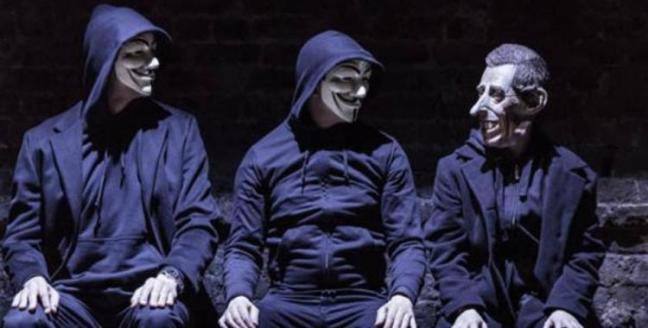
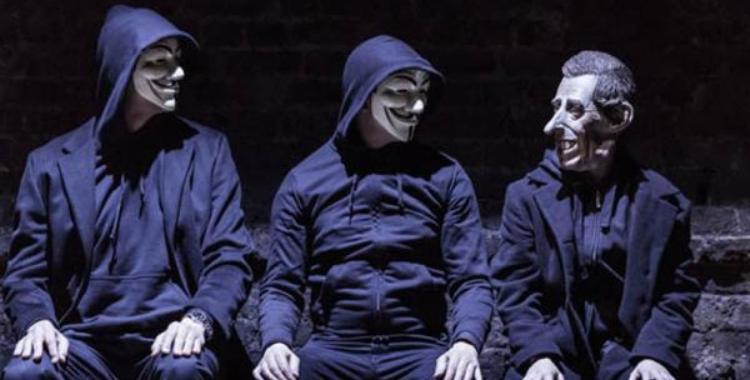
King Charles III, Almeida Theatre

KC3-3894-web-Cast-of-King-Charles-III-by-Johan-Persson

Originally written for Exeunt.

It is apt that King Charles III, Mike Bartlett’s brilliantly ambitious “future history play”, is opening in a week that has seen newspapers plastered with photographs of the Royal Family. As William, Kate and baby George embark on a tour of New Zealand, the media fascination would suggest that the monarchy is far from unwanted. If anything, their stock is up. But does the ceremonial head of state really have any role to play in how we define ourselves as a nation in the twenty first century? Or is monarchy today nothing more than a brand, with Wills and Kate as its glossy poster boy and girl?

It is these questions, and a wide assortment of others, that King Charles III thoughtfully and entertainingly poses. The play opens in the near future, at the funeral of the long-reigning Queen. After a lifetime of waiting in the wings, Charles is finally out of his mother’s shadow and thrust into the glare of the spotlight. But while, as he puts it, “potential holds appeal”, the long-awaited throne is a formidable prospect. Barely hours into the job, Bartlett has the tragic figure of Tim Piggot-Smith’s stubborn Charles take issue with a privacy bill that lands on his desk for royal assent, refusing to sign as a matter of conscience. With the wavering of a pen, a whole nation is suspended in uncertainty, poised between the collapse of Parliament and the overthrow of the monarchy.

Bartlett’s deliciously smart invention is as much about our theatrical heritage as it is about the threatened traditions of monarchy. Taking Shakespeare’s histories as its model, the play’s form is wrapped up in the same contradiction as our Janus-like nation: both new and old, looking backwards and forwards at the same time. His script is a witty amalgam of Shakespearean rhythms and sharp modern colloquialisms, threaded with light allusions to some of the Bard’s greatest hits. We get unyielding royal ambition, a free-spirited, Hal-esque Prince Harry in the form of Richard Goulding (who just wants to live like common people), and a Kate (Lydia Wilson) whose backroom manoeuvring has more than a hint of Lady Macbeth – even if her weapon of choice is more Dolce and Gabbana than sharpened dagger.

Rupert Goold’s assured production is cast in the same mould, delicately attuned to its Shakespearean echoes. History is subtly inscribed on Tom Scutt’s simple set, which marries candles, a wide dais decked in plush maroon carpet, and a fading mural of faces that hugs the exposed brickwork of the Almeida’s curving back wall. The figures who anxiously pace under the glare of these painted eyes have all the poise of Shakespearean heroes and the polish of modern politicians, flitting with ease between elegant blank verse and slick press conference spin. And there’s a glorious bit of Bard spoofing (and Daily Express baiting) with the ghostly appearance of a black-shrouded Diana, a contrivance that is both utterly ridiculous and absolutely faithful to the logic of Bartlett and Goold’s chosen form.

It’s often said that retellings of history reveal more about the time they emerge from than the era in which they are set; the same can be claimed for visions of the future, which have a habit of reflecting contemporary anxieties. Perhaps, then, Bartlett has found the perfect form for grappling with some of the doubts clouding our immediate national horizon. With the referendum for Scottish independence looming, British identity is suddenly up for grabs, and with it the whole hodgepodge of tradition that makes up our national character. King Charles III might not offer any answers, but it’s a compelling start to a fresh national conversation about monarchy, democracy and that most elusive and problematic of qualities – Britishness.

Photo: Johan Persson.

Three Sisters, Southwark Playhouse

three-sisters1-600x399

Originally written for Exeunt.

A clock is ticking in the Prozorov household. Minutes pass loudly, inexorably, mercilessly. When the hour noisily announces itself, each chime a dagger for the siblings who count the seconds of their self-imposed exile, the purgatorial tenor of the Southwark Playhouse’s new imagining of Three Sisters is made immediately clear. The century might have changed, but precious little else has. As Tusenbach would put it, “life is always life”.

Anya Reiss’ updating, which transplants the Prozorovs to the modern day, is more striking for its fidelity than its revision. All the outlines of Chekhov’s play are there; only some of the shades have been altered. The provincial Russian town of the original is swapped for a British Embassy in an unspecified Middle Eastern country, with queasy echoes of colonialism, while the semi-mythical escape of Moscow has been replaced by London. The modernising touches, meanwhile, are all feather light: a mobile phone here, a newspaper there. Reiss’ take on the play is even – more so than most versions – loyal to Chekhov’s often neglected comedy, tugging on some of the more absurd strands of its protagonists’ situation.

So how do you answer for the sisters’ immobility when they could just hop on a plane home tomorrow? Wisely, the barriers that Reiss and director Russell Bolam erect are all psychological rather than geographical, the greater ease of movement heightening the characters’ own deadening apathy. Irina’s cry of “I want to go home” at the end of the first half, delivered with wine glass in hand by Holliday Grainger, is more whining than despairing. Here, more than ever, the sisters’ own self-sabotage and navel gazing jump to the fore.

It helps that Three Sisters is one of those plays that offers new aspects to the view on each return visit. Even without a bold, bracing treatment, the play is constantly teasing out new emphases, different scenes or lines snagging on the mind each time. Placed in a modern context, it is the speeches about work that catch the ear, acquiring new resonances in a political landscape where the idea of hard work has become a tool for dividing those whom the system disadvantages. Class relations (and, as an added dimension, racial tensions) are also sharpened, with the largely invisible locals hovering like a ghostly presence at the edges of the production. As Olga, Masha and Irina blindly wallow in their own misery, you almost wish for a yell of “check your privilege”.

In Bolam’s straightforward but polished production, slight traces of the past cling to performances that are otherwise grounded in the here and now. Paul McGann’s quietly commanding Vershinin, voice dripping with authority, could almost be dropped into any era, his futile philosophising barely interrupted, as could Michael Garner’s mildly grumbling Chebutykin. The sisters, meanwhile, are largely as we expect them, even if they have acquired new gadgets. Emily Taaffe is the most impressive of the trio, as a painfully bored Masha who finds a violent release in her passion for Vershinin, while Olivia Hallinan as Olga and Holliday Grainger as Irina are suitably maternal and dreamy respectively.

But the shift of time and location, while working surprisingly well, seems at a loss for what it has to contribute to Chekhov’s existential questioning. The parallels are neat, but only occasionally illuminating. If the play’s timelessness is its point, then the historical context is almost irrelevant. For this reason, Three Sisters often works best when located in a sort of nowhereland, a setting with suggestions of both then and now. While Benedict Andrews’ striking production at the Young Vic effortlessly unmoored itself from time, the subtle yet insistent modernity of this version does not quite convince, in spite of all the elegance of its execution. The play might time travel with impressive ease in Reiss and Bolam’s hands, but the question that lingers underneath it all is why?

Once, Phoenix Theatre

?????????????????????????????????

Originally written for Exeunt.

Once is a quiet revelation of a film. Running at a brisk 86 minutes, it is a shimmering sliver of a thing, played out in muted, almost documentary style naturalism. While very little happens and even less is said, it quickly but gently grasps at the emotions, stubbornly refusing to let go.

Replicating this subdued and intimate experience on a big proscenium arch stage would be an impossible, thankless task, and it is one that adapters John Tiffany and Enda Walsh have wisely avoided. Instead, delicate watercolours are traded in for broader, brighter brushstrokes, in a production that adds plenty of colour – perhaps too much – to John Carney’s film. Staged entirely in a pub, this bittersweet tale is subjected to lively and occasionally raucous storytelling, helped along by a skilled chorus of actor-musicians.

The plot is simple enough. A Guy and Girl – we never learn their names – meet on the streets of Dublin. He’s a busker and hoover repair man on the point of giving up his music, while she’s a Czech immigrant who plays a mean tune on the piano. In exchange for fixing her broken vacuum cleaner, the Girl prevents the Guy from throwing in the towel, injecting both his music and his life with fresh energy. Inevitably, the two begin to fall for one another, in spite of the Guy’s unfinished business with an ex-girlfriend in New York and the Girl’s daughter and absent husband. In other words, it’s complicated.

While Markéta Irglová in the film was a quietly enigmatic, inscrutable figure, Walsh’s book has added new, vivid lines to the female character, transforming her into the driving motor of the story. Zrinka Cvitešić is an electric presence, charging the Girl with an overflowing, infectious energy, but this new characterisation has more than a touch of Manic Pixie Dream Girl about it. Cvitešić is the kind of kooky romantic interest that has become a Hollywood staple: mysterious, intelligent, daydreamy, and ultimately inserted to enable the male lead to discover his purpose in life. This now feels less like their story, and more like his.

This irritating niggle aside, Tiffany and Walsh’s adaptation makes clever, playful use of the conventions of the stage. The Irish pub, a setting that is also proving effective down the road in The Weir, creates an instantly convivial environment, even inviting audience members on stage with the musicians for a pre-show pint. Smartly embracing the simplicity of the storytelling form, it never pretends that it is anything other than theatre, having fun with the juggling of basic props to transport us from scene to scene. Steven Hoggett’s movement, meanwhile, explores a tender physical language that begins to communicate some of the many things left unsaid in the film, though Walsh’s script still succumbs to the urge to spell things out more explicitly than the quietly reserved original.

One of the main attractions of this particular incarnation of the show is Arthur Darvill, of Doctor Who fame, who has taken over the role of the Guy after a stint in the Broadway production. He makes an expressively awkward male lead, hands frequently stuffed in pockets, packing layers of meaning into a single shrug of the shoulders. And there’s no doubt he can sing, belting out the opening number with the kind of furious intent that instantly dispels any reservations.

Glen Hansard and Markéta Irglová’s Oscar-winning music translates comfortably onto the stage, with some charming, unobtrusive added orchestrations by Martin Lowe. It is still the poignant and rousing “Falling Slowly” that dominates the score, with many of the other folksy, Mumford and Sons-esque tunes fading quickly from the memory. There is a fresh musical highlight, however, in the gorgeous a capella rendering of “Gold”, which weaves a haunting choral tapestry in the second half. As in the film, it is through the music that emotion is most simply and powerfully communicated, with little need for added frills.

And it is the few frills and flourishes that have been added which, for me, let the piece down a little. The need to flesh out the supporting characters is justified enough, but the humorous edges added by Walsh have a tendency to feel forced, while joviality occasionally threatens to smother emotion. It’s hard to protest against Once‘s intoxicating charm, but I could have done with a little more of the film’s sighing wistfulness.

Birdland, Royal Court

700x650.fit

“I don’t believe this,” Andrew Scott cries, gaze directed unwaveringly at the audience. “None of this is real. None of this is really happening. This whole thing is made up.”

Reality and its subjective mutability is a persistent theme throughout Birdland, Simon Stephens’ new play for the Royal Court. So too is liveness and its ever-present flipside, mediation. More audience members at a stadium gig today can see the big screens than the miniscule, far-away figures on stage; fans are more eager to snap selfies with their famous idols than to actually speak to them. Our glowing screens are never far from the edges of Stephens’ play, reminding us that it is not only rock stars who are encouraged to shape and enshrine their own image. We are all constantly sharing, editing, performing for our own personal audiences; blurring the lines between the real and the made up.

Birdland opens in the final stages of an international stadium tour, as its unnamed band stop off in Moscow. Lead singer Paul, reeking of charm and boredom, can have and do anything he wants – and he knows it. Stripped of limits and obstacles, the boundaries of his identity are slowly slipping away from him. He is, in every possible way, losing it. The play traces the escalating carnage of his existence as he careers unstoppably towards a personal and professional car crash, gathering the wreckage of other ruined lives around him on the way.

It’s no great stretch of the imagination to believe that Andrew Scott, charisma oozing from every pore, is a worshipped rock star. From the moment he struts on stage as Paul, he fixes the attention in that way that all the best frontmen do, making it almost impossible to look away. It is this magnetism that makes him ceaselessly compelling, even as he royally fucks over all of those close to him. Jenny, a waitress whom Paul whisks off her feet before spectacularly mistreating her, is generous when she describes him as a cunt; Stephens really has crafted an astonishingly despicable, broken character. Though, as Paul coolly retorts to an accusation that he is a “fucking animal”, he is very much human. That’s the terrifying thing.

Equally terrifying is the play’s verdict on the world we currently live in. While Birdland is superficially “about” the world of rock and roll and the personal crisis of one of its demigods, it is also about the bankrupt place in which society now finds itself. Paul, in all his power, disorientation and self-destruction, is the apex of rapacious capitalism and the cult of the individual. Whether he is a rock star or a celebrity of any other breed is less important than the fact of his fame and the value pinned to his personality. He is more commodity than person, displayed every night for the public’s consumption while record label executives gamble on his worth. No wonder he is losing a grip on his own identity, when all he can see in the mirror is a price tag.

Carrie Cracknell’s striking production both amplifies and tussles with these ideas about identity, individualism, celebrity and capitalism. From the very beginning, the space in which she locates Paul’s crisis is non-specific, strange and slightly dislocated from reality. Ian MacNeil’s typically stylish set consists of a shimmering golden archway and a row of electric blue chairs, the sleek simplicity hinting at the corporate sameness of hotel lobbies all over the world. Everywhere looks the same. There is, wisely, no attempt at naturalistic representation of the succession of hotel rooms, bars and restaurants in which the action takes place. Instead, everything happens in a knowingly theatrical arena; other performers remain on the stage when not in a scene, occasionally casting arch looks over their shoulders, while Scott takes time to flirt with the audience.

By starting out with such a deliberately odd and disorientating aesthetic, however, Cracknell is in danger of leaving herself with nowhere to go. An obvious but useful comparison is Three Kingdoms, which despite dodging an audience’s expectations from the off (and starting in a decidedly strange place with Risto Kubar’s haunting singing) managed to establish one reality which could then increasingly unravel throughout Ignatius’ journey to Germany and Estonia. There is a gathering momentum to Paul’s mental turmoil, signalled by ever brighter and more frequent photographic flashes and the rising tides of inky liquid seeping in from the sides of the stage, but this is a jerky breakdown, one that comes in sharp bursts, rather than the sense of spiralling out of control that the narrative seems to be asking for.

That said, in other ways Cracknell finds incisive and imaginative visual metaphors for the story Stephens has written. The cartoonish, plastic quality of the people Paul finds himself surrounded with (perhaps with the exception of down-to-earth band mate and best friend Johnny and the aforementioned Jenny, who reminds him of the girls he used to know at home) enhances his alienation from the world around him, which appears unreal and fantastical through his eyes. Meanwhile, the script’s understated yet unsettling preoccupation with bodies – their illness, disfigurement and inevitable decay – is hinted at by the slowly encroaching black liquid, which might as well be the creep of disease.

Given the subject matter, one of the most surprising things about this rendering of Stephens’ script is that we never hear so much as a bar of Paul’s music. In fact, aside from a couple of stylised movement sequences backed with pulsing beats, there is very little music at all in Cracknell’s production. The other exception is a deliberately terrible rendition of Sam Cooke’s ‘Wonderful World’, sung by one of Paul’s fans at his request and elevated to the same sort of scene-breaking moment as Steven Scharf’s memorable performance of ‘Rocky Raccoon’ in Three Kingdoms. The suggestion, perhaps, is that it is not really Paul’s music that matters – it is his fame, his monetary worth. Still, we never get a real sense of the muscular excitement and visceral thrill of a live rock concert, which feels like a shame. Theatre has overwhelmingly proved that it can offer the same intoxicating buzz as a live gig (see Beats or Brand New Ancients), but we don’t get that here. (It’s especially disappointing having heard Stephens speak at length about his own enthusiasm for rock music, little of which is allowed to come through – but perhaps a certain ambivalence about the world of rock and roll is appropriate given the events of the narrative.)

The plays’ surface message, that celebrity can fuck you up, might not be anything new. But there is so much more to Birdland than this familiar, oft-repeated observation. What it manages to do so well is convey the tortured complexities of Paul’s character, whose messy contradictions only make him all the more real, at the same time as making a sharp, implicitly political point about modern society. The production could push this second aspect further, shining a spotlight on us as much as on Paul, but it still stands as a damning critique of our globalised, brutally individualistic, fame-obsessed world.

Photo: Kevin Cummins.

Pests, Royal Court

????????????????????????????????????????????????????????????????????????????????????????????????????????????????????????????????????????????????????????????????????????

There is something a little uncomfortable about watching Pests. While playwright Vivienne Franzmann, who wrote the play as a product of her residency with Clean Break and her visits to women’s prisons, insists that it is not voyeuristic, it is hard not to feel a little queasy about the experience of watching two damaged, vulnerable individuals sink further and further into poverty and addiction. The roles of victim and observer are difficult to shake off, even if we as audience members are made to feel increasingly complicit.

The two individuals in question are sisters Pink and Rolly; both in and out of prison, both struggling with heroin addictions. At the play’s opening, it is Rolly who has just finished doing her time, returning home to Pink heavily pregnant but puffed with hope. The tidal pull of her old life, however, is hard to resist. Rolly might want to move away and get a job, but Pink has other ideas, and their familial bonds are tough to sever. Possibilities slowly ebb away as the sisters’ “nest” closes in around them and their mutually dependent relationship becomes ever more toxic. Abuse, meanwhile, lurks around the edges of the play, never far from sight. It’s almost unremittingly bleak stuff, yet brutally compelling with it.

All of this said, the play’s harsher edges are tempered by humanity and – surprisingly – humour. The volatile central relationship is one built on fantasies, affectionately traded insults (“you lazy flea-infested skank”) and a shared past that knits them inextricably together. The sisters also share a unique slang-based language that Franzmann has invented, which combines childlike utterances, playful flourishes and hard urban edges. In performance, it’s initially disorientating but easily picked up, quickly enveloping us in Pink and Rolly’s world. There is the sense that this language protects them somehow, offering a retreat back into childhood while simultaneously acting as a kind of armour. It can be fierce one moment (“totalicious cuntface”) and tender the next (“I is blue wiv sorrows that I ain’t a better girl for you”). Some coinings, like “gnaw” for heroin, bring with them a startlingly apt series of associations.

The relationship between the two sisters is made all the more compelling by the electric performances of Sinead Matthews and Ellie Kendrick. As Pink, Matthews is all vulnerability and jagged edges, parading her toughness while she breaks inside. The mental illness that she wrestles with is delicately handled; Kim Beveridge’s video projections hint at a world only Pink can see, while Matthews’ frantic raking of her hair suggests a woman scrabbling to hold her thoughts together. Kendrick’s Rolly is gentler and quieter, with moments of girlish charm and wonder, yet she has a hardness about her that is resolute where Pink’s is brittle.

One of the triumphs of the production is Joanna Scotcher’s set design, which carries the heavy burden of realising Pink and Rolly’s whole world. Their “nest”, a striking mound of stained mattresses, is poised between naturalism and fantasy, at once displaying very real signs of squalor and nodding to childhood dens and dreams. Despite using decidedly ordinary objects, their combination creates an appropriately surreal sort of space that is both playground and prison for the two women. Surrounding the room is a skeletal framework, full of gaps, suggesting an open but imprisoning cage. The physical bars may have gone, but others still remain.

And if Pink and Rolly are in a cage, that leaves us on the outside looking in. After a while grappling with this perspective, how it made me feel, and its ethical complications, it feels no less knotty. But it’s worth briefly pausing over Franzmann’s title. The single word, Pests, implies the way in which society (particularly a society in which those disadvantaged by the system are cruelly pitted against one another) might see these women. Pests, vermin, drains on the state. But these characters are just women; strong, funny, vulnerable women; women who have been let down at every turn, not least by the prison system. If Clean Break can make more people see that, then maybe the queasiness is justified.